
Between Seas, Beyond Borders
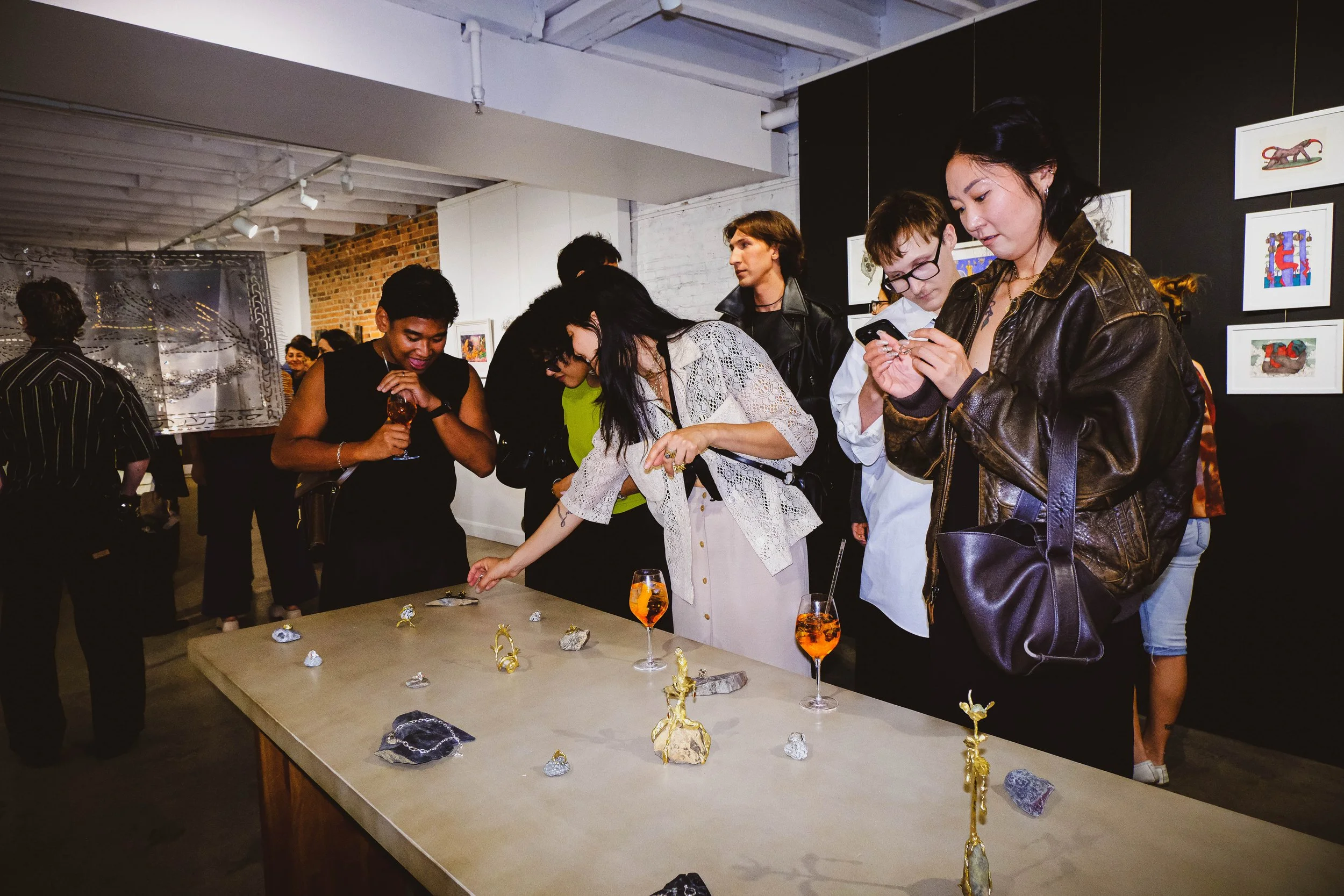
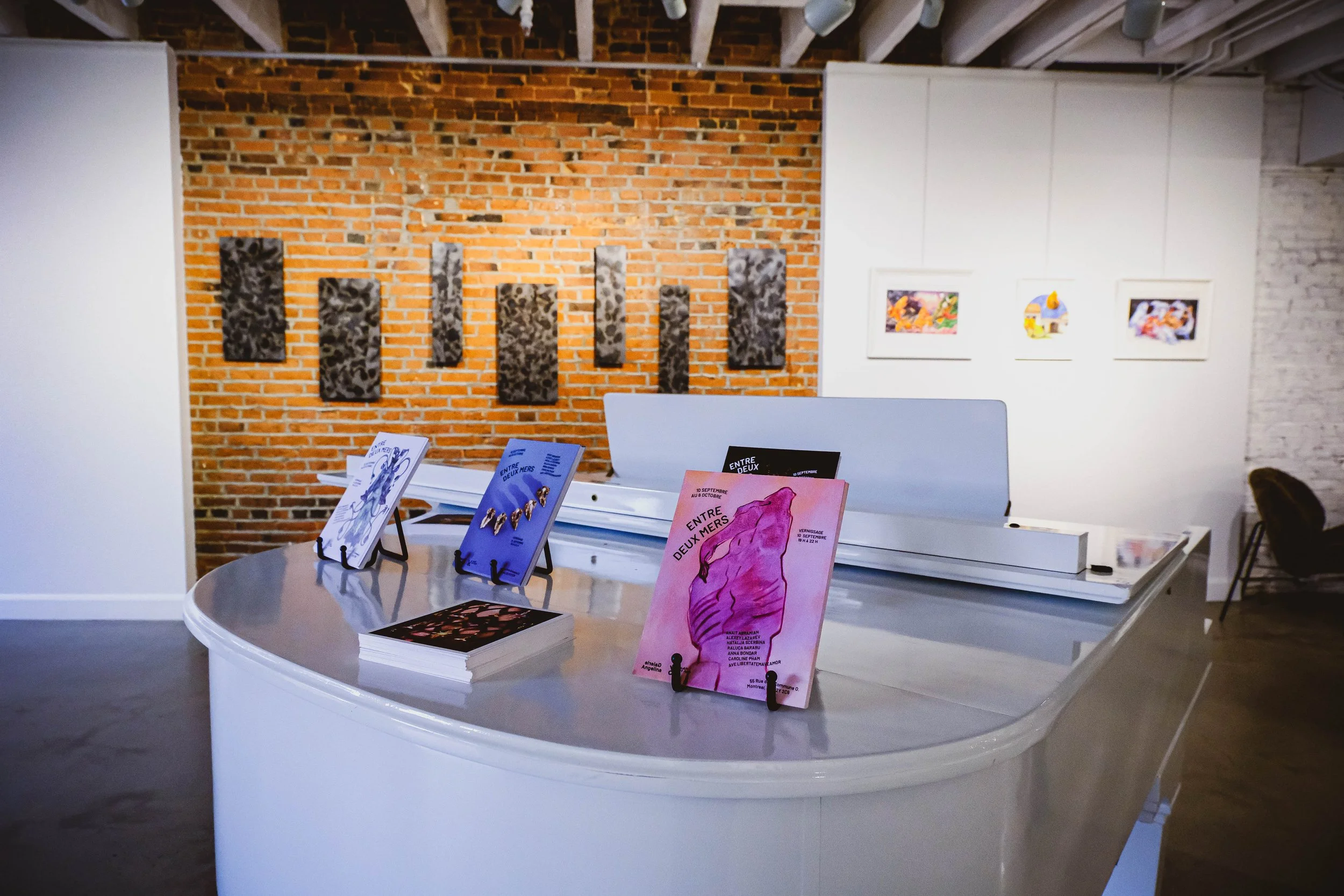
On September 10th, I attended the opening of Between Two Seas: a collaborative exhibition presented by the New York-based Rukh Art Hub, a women-run creative initiative, and Galerie Angelina. Located at the heart of Old Montreal, Galerie Angelina sits between a boat-tour agency and a dentist's office, facing a street where the last few tourists of the summer are walking past. Once in the space, I am immediately greeted by an imposing, large metal tapestry hanging in the middle of the room, calling my attention to the discoloration of the metal and my subverted expectation that this metallic tapestry would move in the wind as if it were made of fibres. After maneuvering around the grand piano at the entrance, I noticed a variety of pieces across mediums displayed in the space: cyanotype on canvas, oil paintings, jewelry, and prints. The vibrant colours of the ones hung on the walls contrasted drastically with the otherwise sterile feeling of an old port gallery; my eyes were drawn to a variety of shapes, both abstract and literal, that evoked a sense of familiarity, even when looking at unknown cultural references.
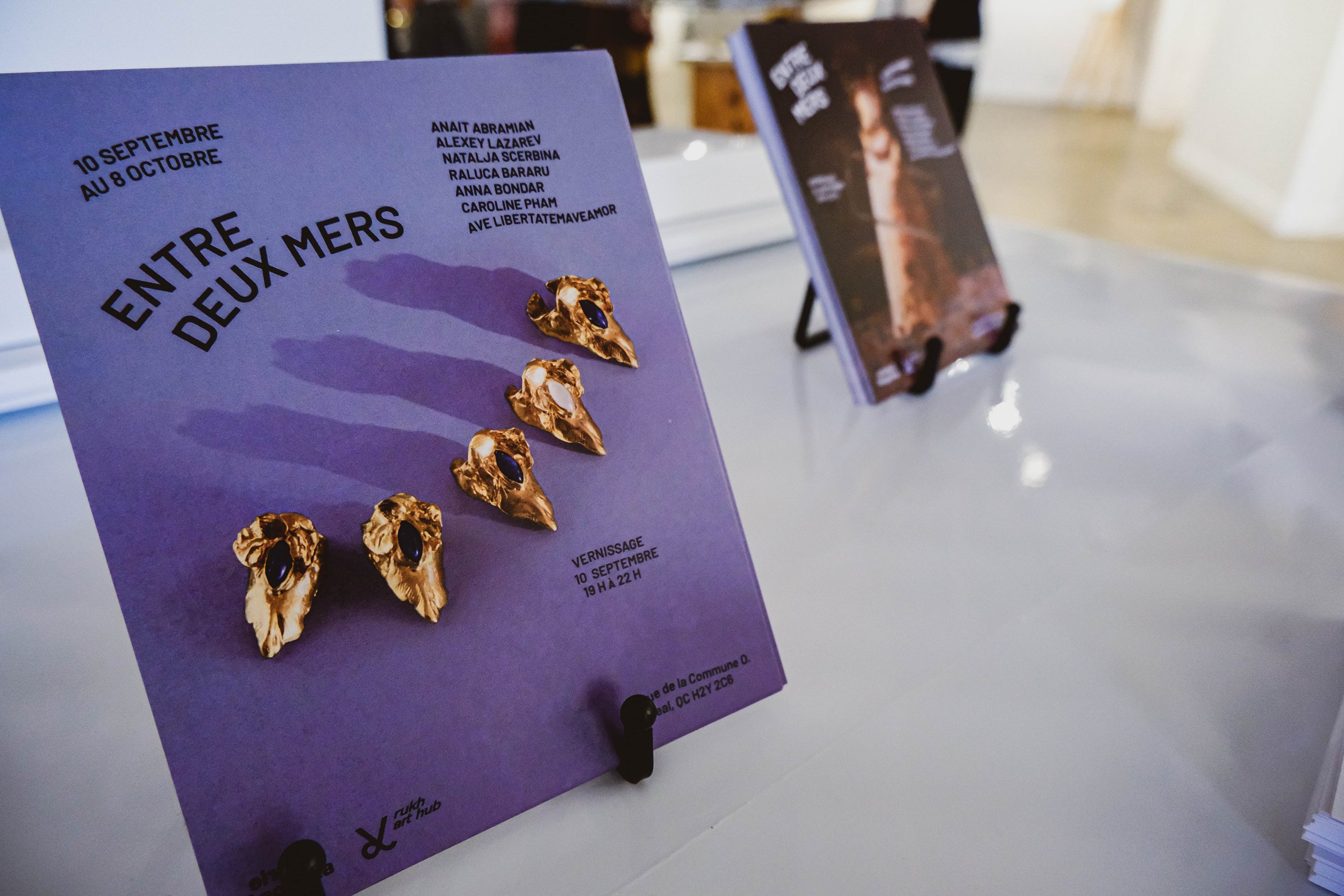
Co-curated by Alexander Pidzamecky, Between Two Seas showcased the work of Ukrainian, Armenian, and Montreal-based artists: Anaït Abramian, Alexeï Lazarev, Natalja Scerbina, Raluca Bararu, Anna Bondar, Caroline Pham, and Ave Libertatemaveamor. The exhibition name alludes to the Black Sea and the Caspian Sea, focusing on themes of cultural identity, heritage, storytelling and the limits of the real and the imagined. It felt like a constant back-and-forth between the folkloristic understanding of the world through myth and popular belief, and the material circumstances that drive artistic practices, such as forced displacement, immigration and consequential transformation. The pieces featured spoke to ideas of storytelling as transformation: of metamorphosis as a consequence of understanding culture from a personal perspective rather than a prescriptive one. Weaving through the “sea of dreams,” co-curator Alexander Pidzamecky spoke of the importance of showcasing diaspora artists outside of a historical and inaccessible perspective (which can fall into the impersonal and reductionist): bringing contemporary artists into the scene in order to address these themes and questions from an experimental, nuanced and new perspective.
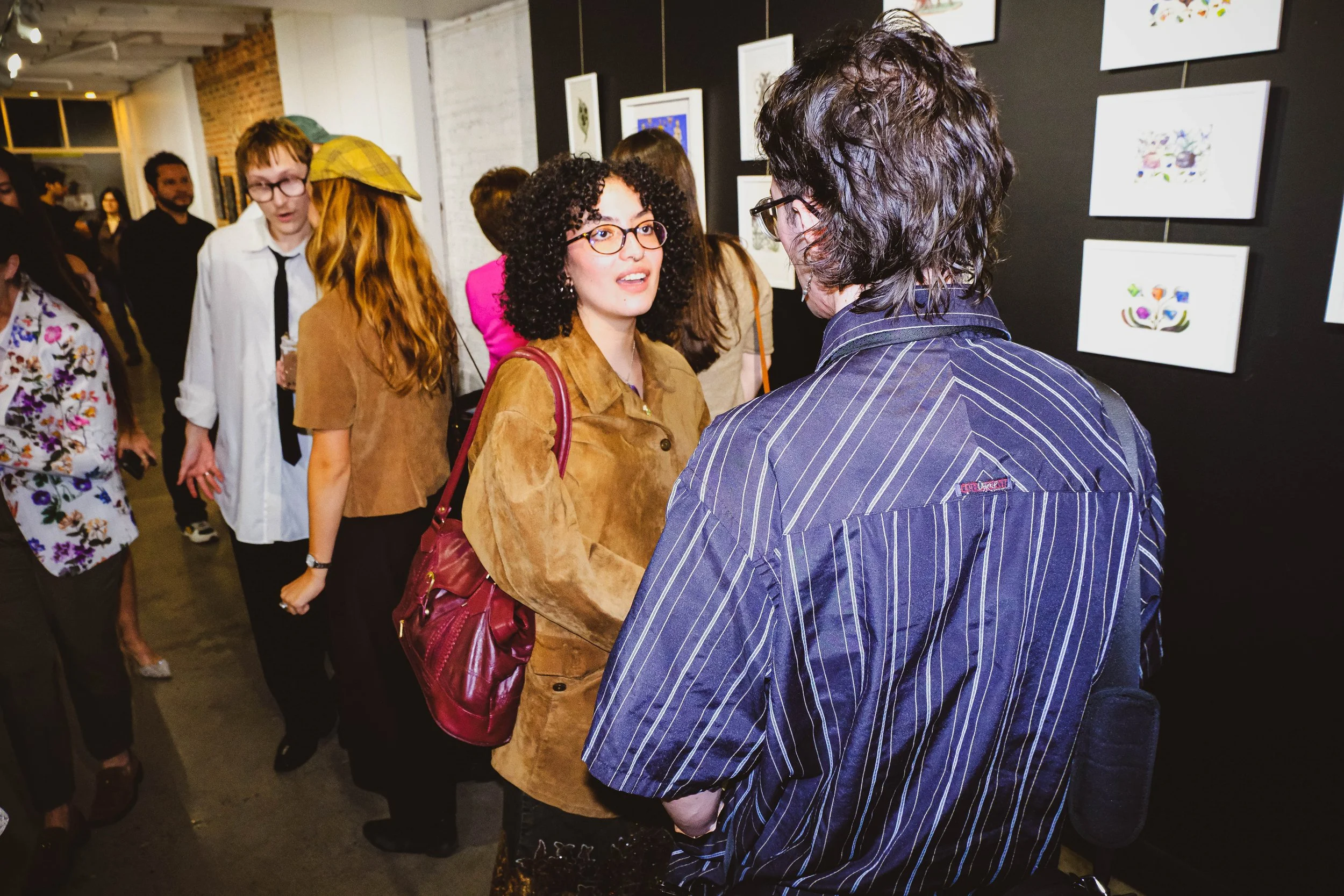
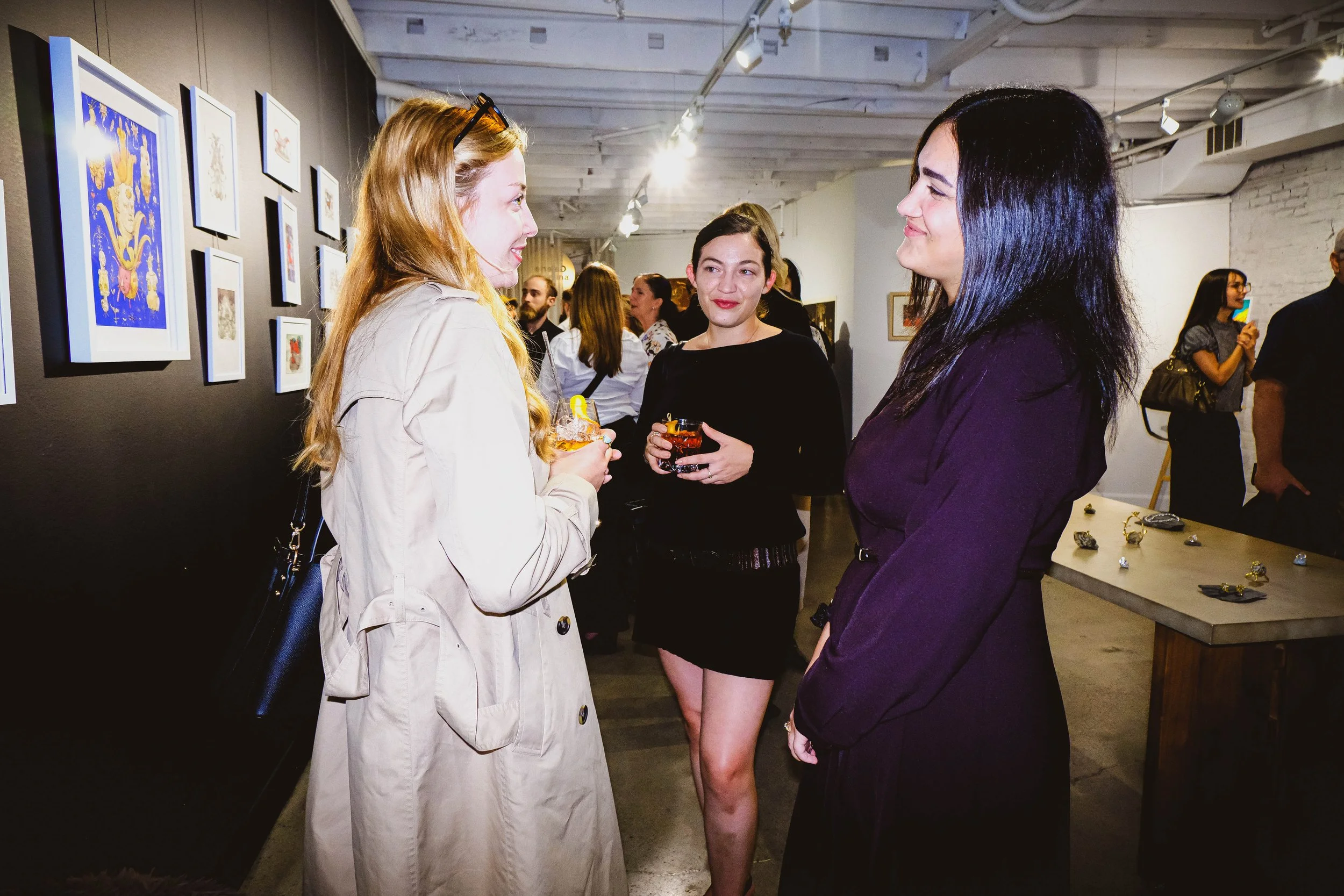
Before the cocktail bar was set up and the space became bustling with laughter, voices, and kisses on both cheeks when greeting one another, I had the opportunity to discuss the process of three Montreal-based artists who were featured in the exhibition. Beginning with the artist behind the metal tapestry, Alexey Lazarev, whose work speaks to the idea of experimentation with the historical by presenting pieces on transformation and the passage of time, as well as the natural aging that occurs in quotidian objects. Titled “Soft to Touch. Fireweed,” the tapestry carried a record of its own, since there were certain metal markings inflicted throughout the process of creation that provided it with its own artificially created history. Lazarev stated that this project started after looking through old Canadian postage stamps from the 60s and finding a depiction of fireweed, a wildflower native to both North America and Russia. Finding natural and artistic elements that are somehow familiar and bring memories of one’s background, even in foreign cultural symbols, was a key theme in these pieces. I believe these pieces live within a contradiction: portraying the familiar through something found in the foreign, depicting a soft, inviting household item in a cold, still metal sheet. Of allowing the markings on the tapestry to be a testament to the process of its own creation.
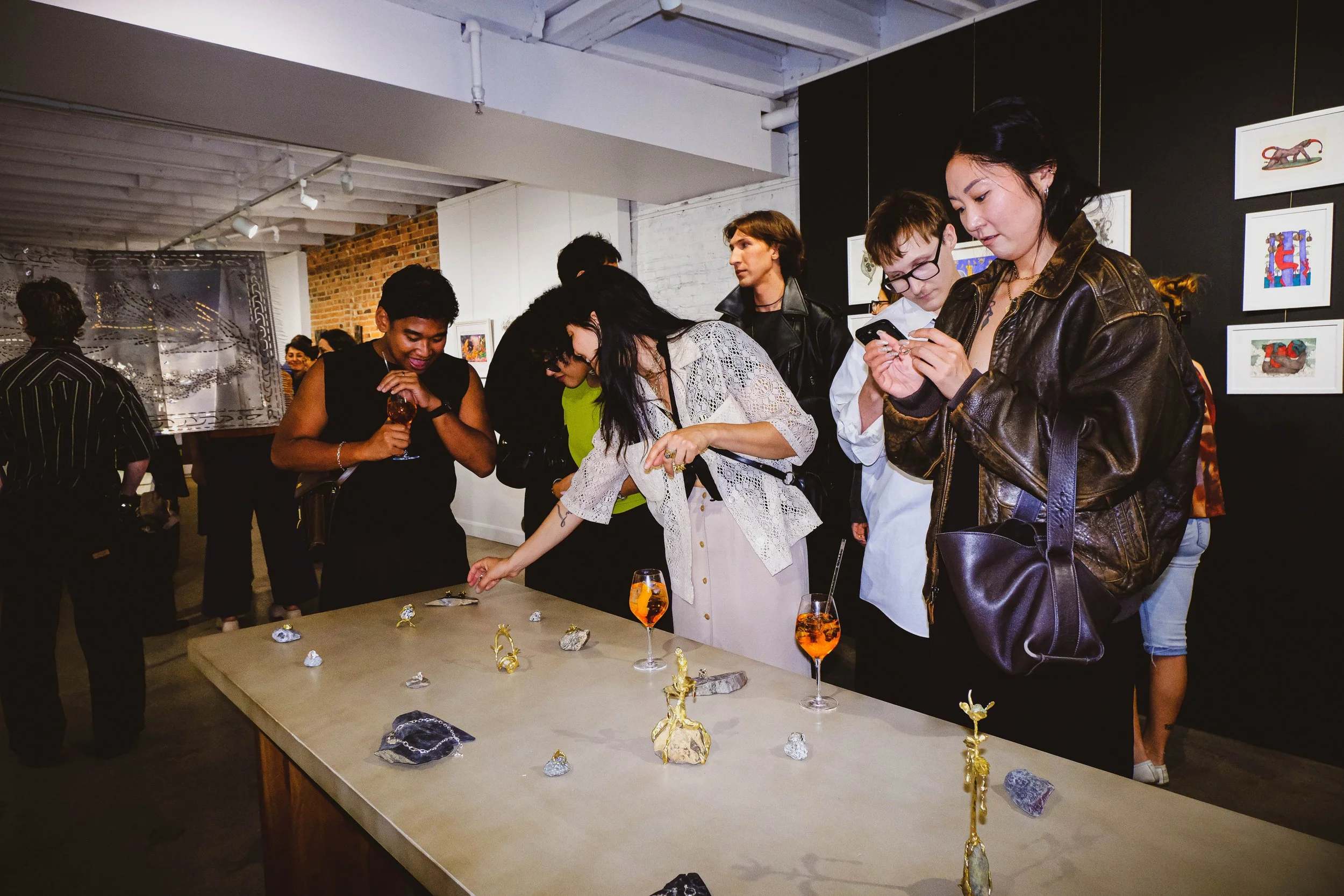
The idea of self-crafted history through artistic creation was central to the works featured; mythical figures hid in every corner of the gallery, depicted alongside their human counterparts and the wild elements traditionally found in folklore stories. In opposing corners of the room, the work of artists Ave Libertatemaveamor and Anait Abramian demonstrated the thin line between the human and the magical world, the idea of reality and unreality, and how these are embedded and dependent on each other through pieces depicting human-esque bodies interacting with nature and the imagined world around them. This prompted me to think about what is left of our folklore once we make it our own. Where does this metamorphosis from the universal into the hyper-personal take us? I believe many of the works presented could be understood as abstractions of history through subjective experiences that cannot necessarily be unified, but are constantly changing through personal identifications to culture. Caroline Pham’s work examined these ideas of identity as something co-created with the self, and ever-changing: her work consisted of various sculptural jewelry pieces, unburdened by the limitations of functionality and spilling through the edges of what would be “wearable.” These pieces were presented upon rocks and stones of various shapes and sizes, which made it look as if the jewelry pieces were sprouting from these: like weeds growing in between concrete slabs. The metamorphosis of the unmoving, the emphasis on cycles of life, all demonstrated within the imperfect metallic shapes across the table. In a similar way to Lazarev’s work, Pham’s pieces also carried a degree of historical marking by making the decision not to polish off her fingerprints from some of the pieces, making the petals of a flower have a texture that can only be crafted by the care of a hand.
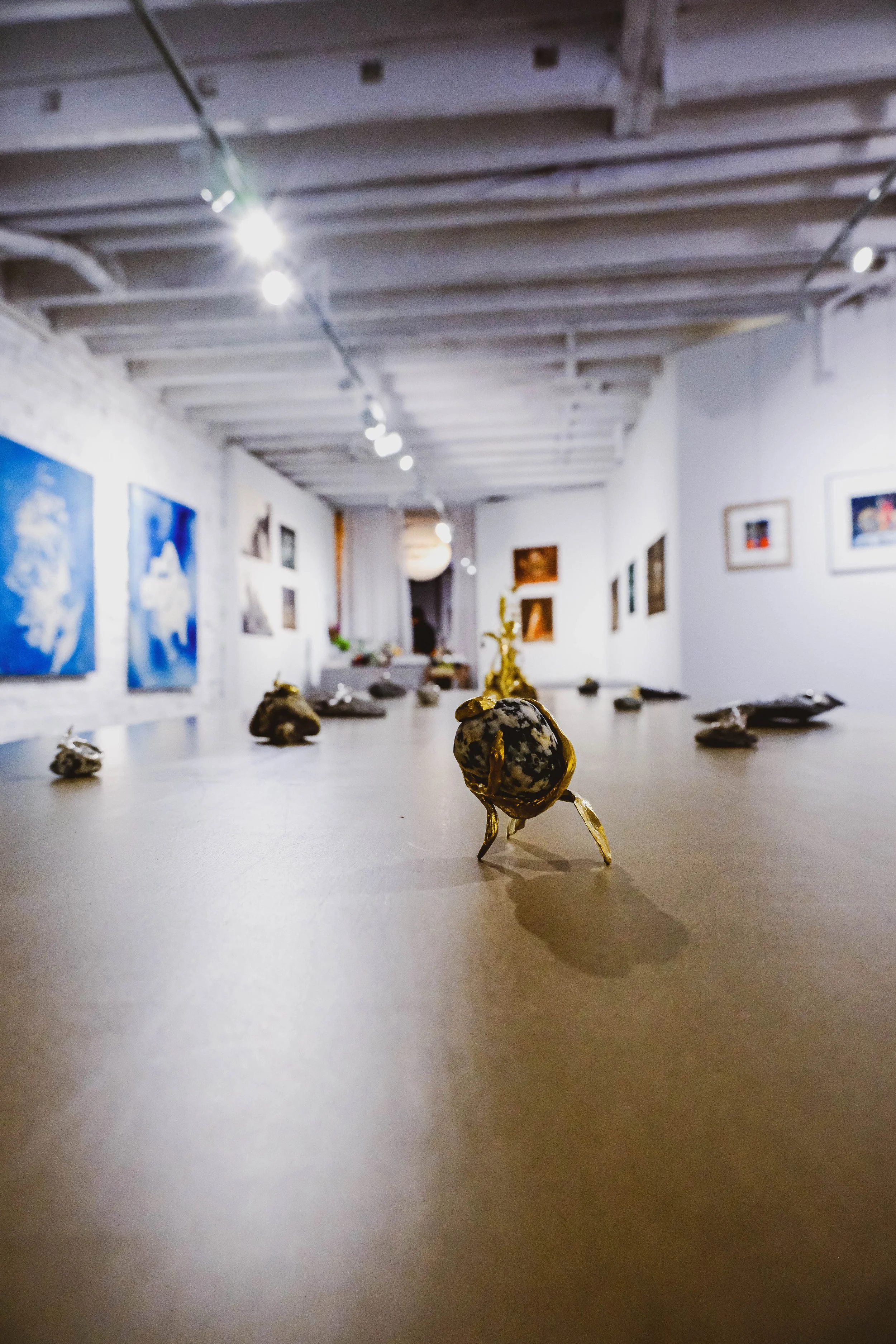
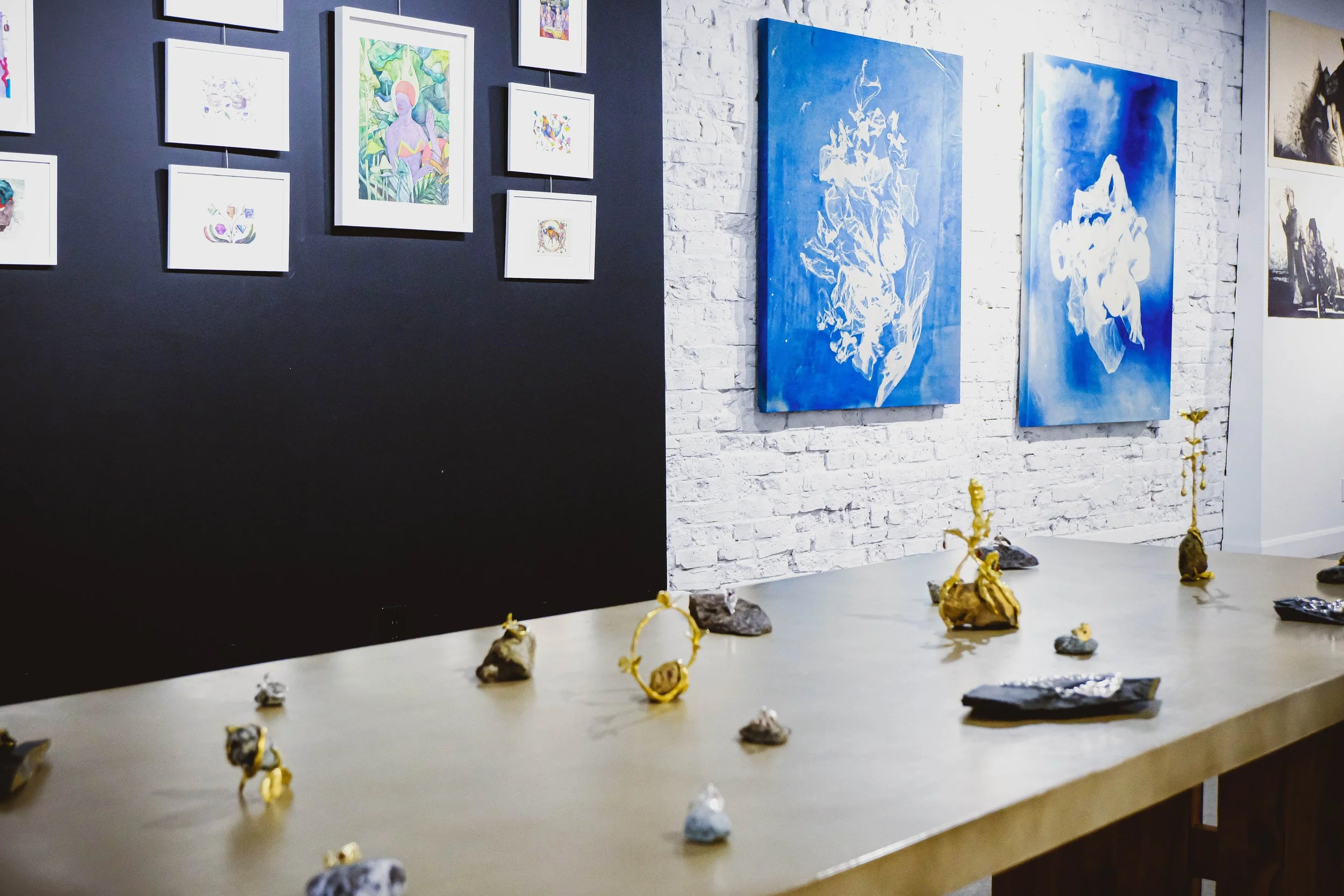
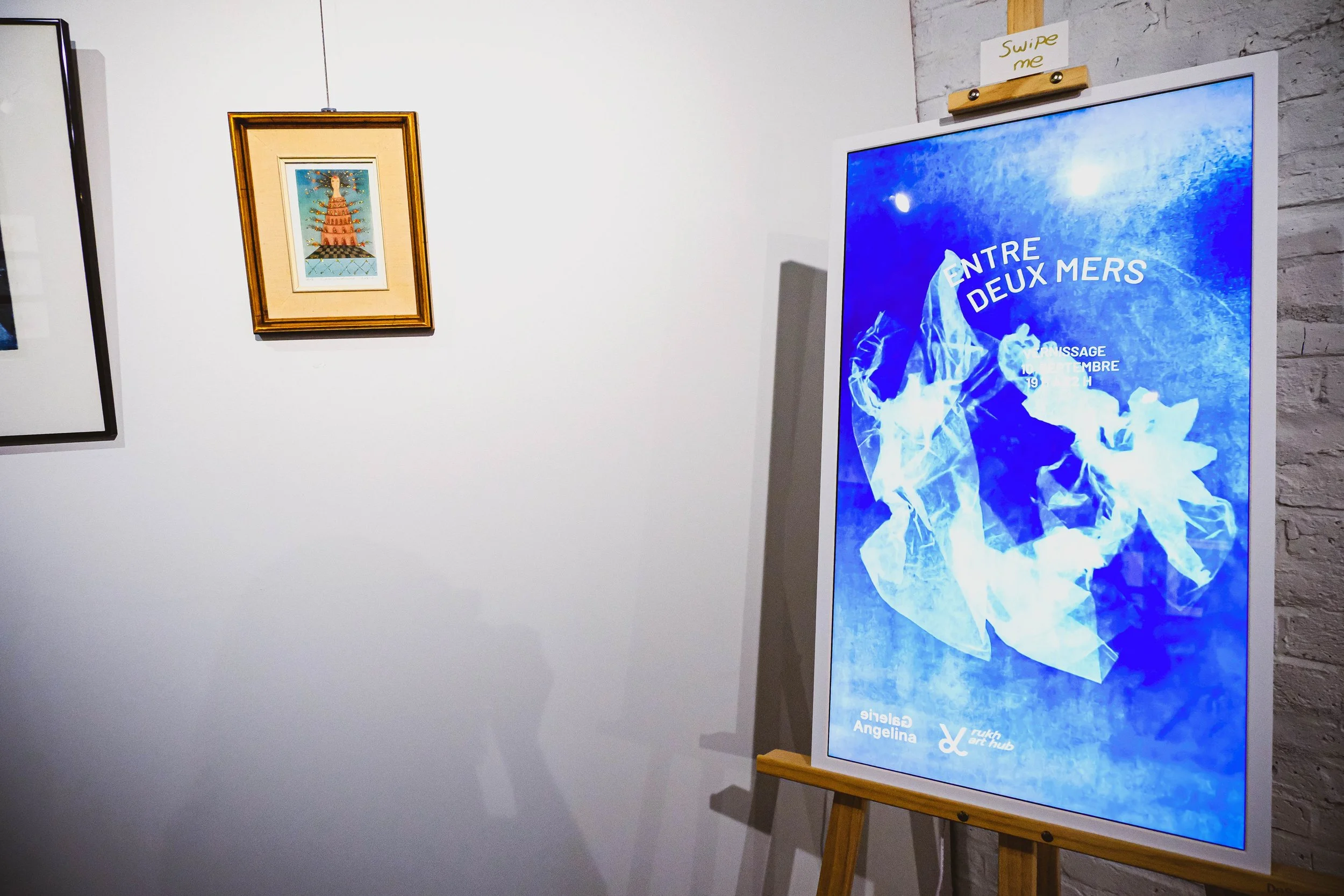
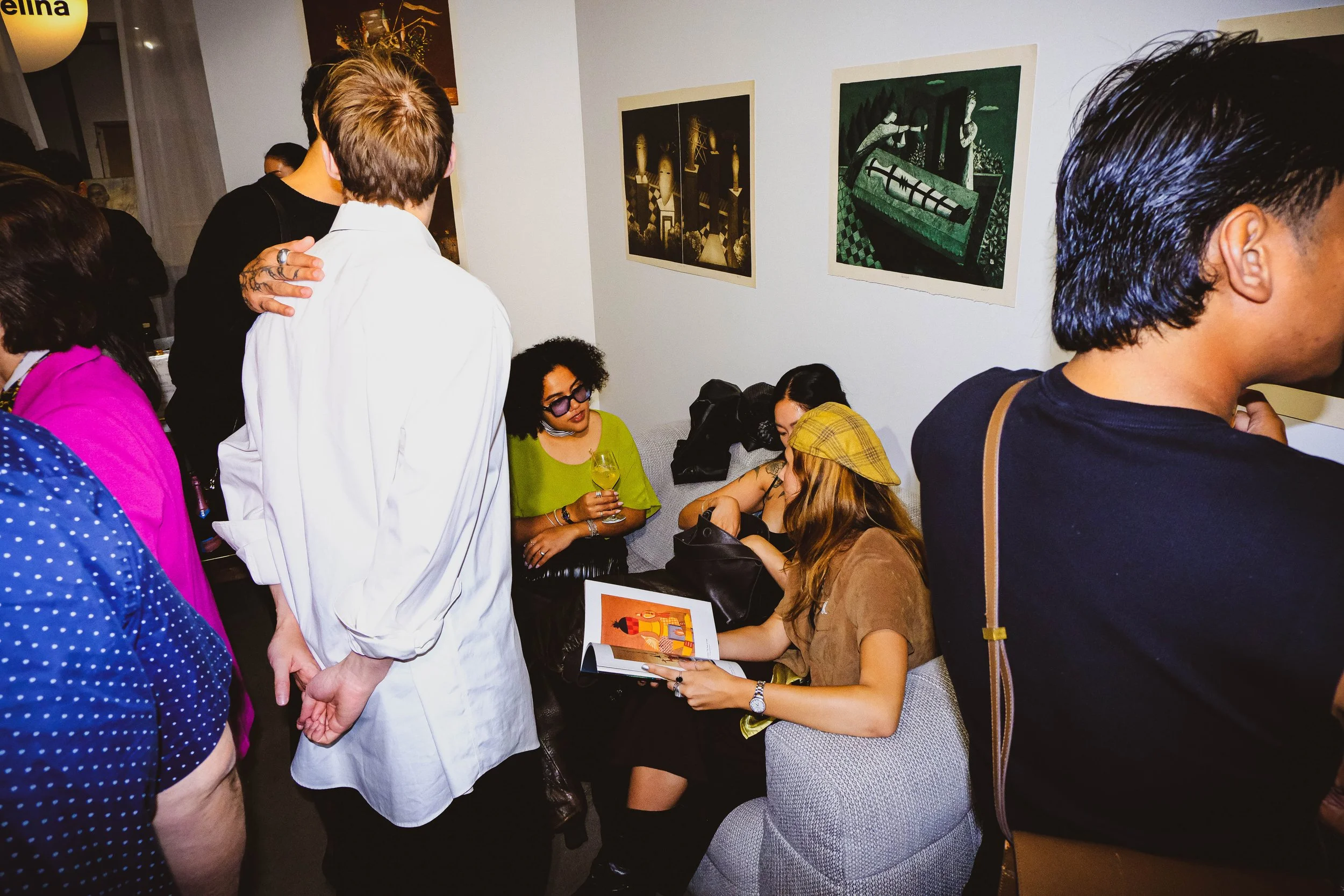
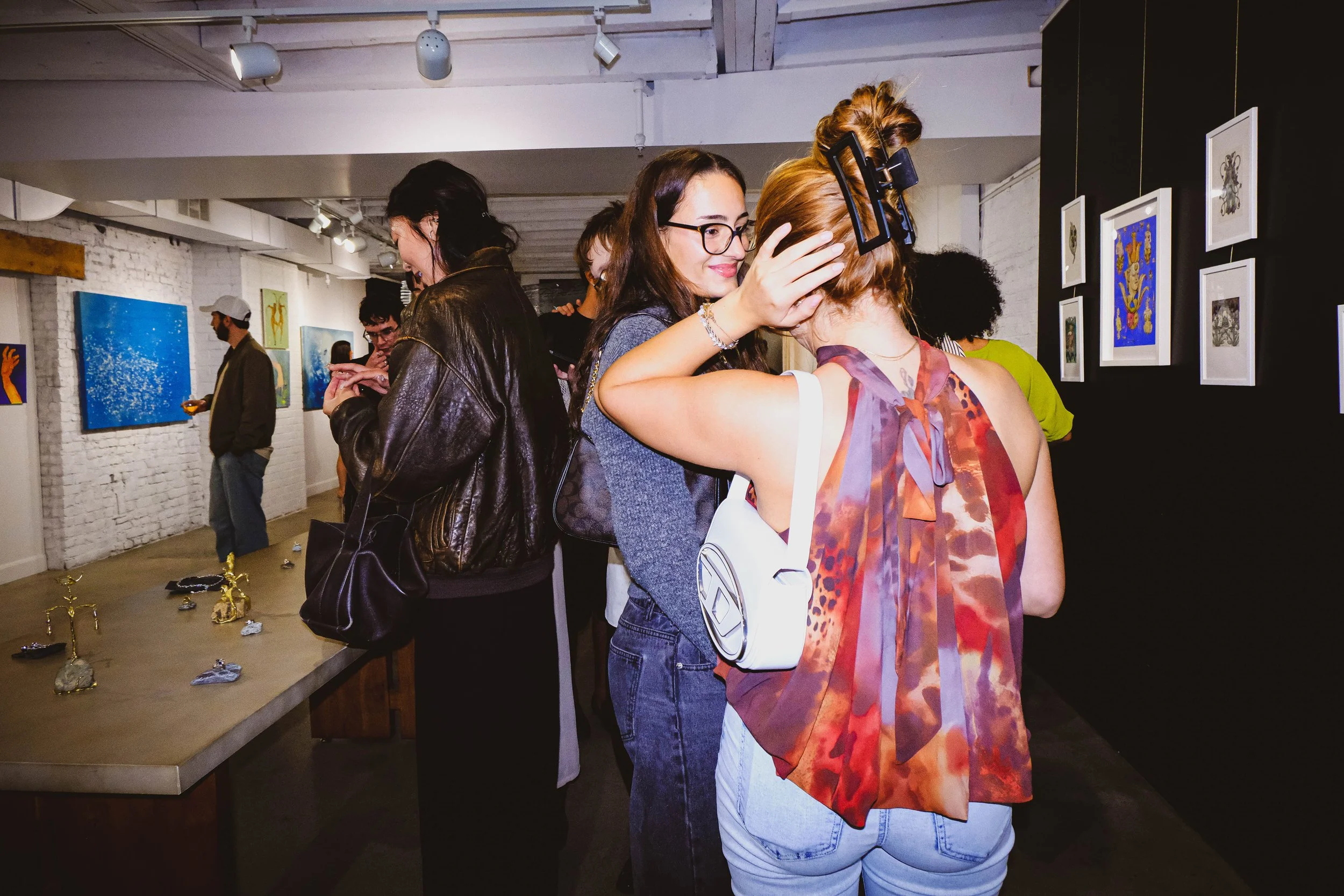
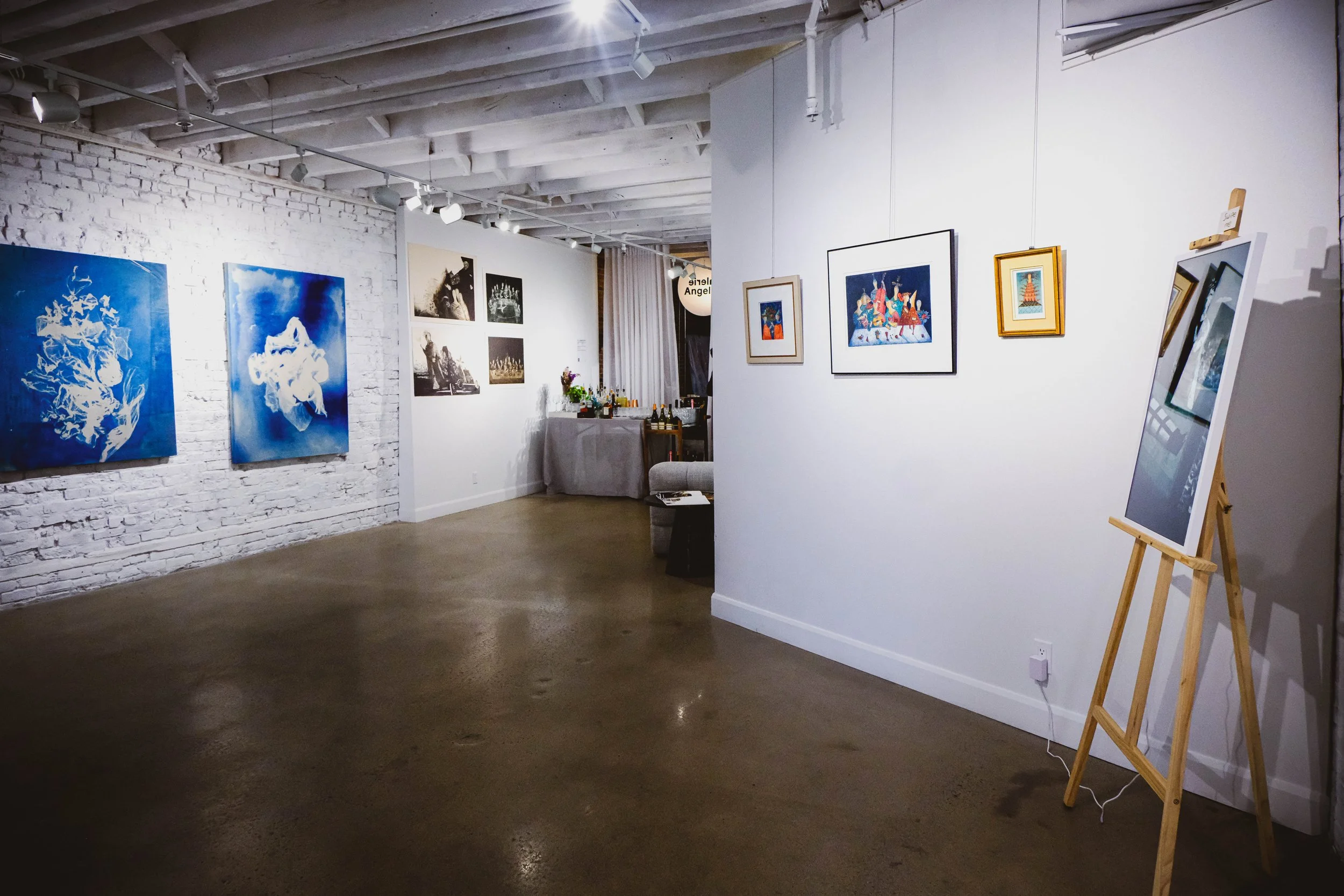
Thus, natural elements gain significance when understood through the very concept of storytelling: of a given and inherent record of the passage of time found in the details of the natural world around us, and consequentially, in ourselves. This brings me to Natalja Scerbina’s work: four cyanotype printings on large canvases depicting abstract naturalist shapes. The themes of her work reflect a question of what is considered beautiful and how it attains meaning: utilizing weeds, plastic and used paper, upcycling pieces of gift wrappers and displaying them in a manner that forces the audience to look at objects that are discarded or seen as unusable. Scerbina stated that “In Canada, nature is beautified”, bringing forth ideas of art and nature in conjunction with each other as always inherently collaborative, and the tendencies of the Global North to give a “facelift” to the natural world surrounding us (why are there always new decorative flowers on the sidewalks in the spring?). Scerbina spoke about the history behind cyanotype as a technique used mostly in botanical encyclopedias to catalogue plants before photography was widely used; yet her work engages with cyanotype not through a functionalist approach, but one of appreciation. Underlining how, within contemporary art, we have the responsibility to not be materially hungry and selfish within one’s practice: creating with the purpose of ascribing meaning to the unimportant, and collectively re-defining what art can be. Yet I wonder, how do we foster these discussions with the broader population and not only those of us who RSVP for a vernissage? How can we make these hyperlocalized spaces an inviting place for questions? How do we make an old port gallery not only a home for high-end art and catalogues but a place for conversation, or even community?
The pieces featured in the exhibit demonstrated a critique of the functionalist categorizations of objects with all their contradictions, to ascribe them a new meaning: a tapestry becomes worn out by its own process of creation rather than by usage, a bracelet becomes an organic form attached to a stone rather than to a hand, a scrap of gift wrapping paper becomes an eco-feminist manifesto that gives life to trash, and symbols are ascribed significance by being placed upon a canvas. We give significance and symbolic meaning to weeds that would otherwise be discarded because they speak to something that matters to us: a personal history, a myth, or an idea of identity. This is invariably how culture forms, leaving us questioning how we give meaning and value to the objects that we’ve been conditioned to see as more meaningful than the natural world, the quotidian, and the unimportant. The curatorial decisions behind the exhibit demonstrated the commitment to opening these discussions and questions through a hyperlocalized lens, which, despite its specificity, can be understood and recognized universally.
WHAT: Between Two Seas
WHERE: Galerie Angelina, 55 Rue de la Commune O., Montréal, QC H2Y 2C6.
WHEN: From September 10th until October 8th
METRO: Place-d’Armes (Orange)
DETAILS: Between Two Seas
