
Twelve Years of Queer and Trans Stories
Two years ago, I trudged through the autumn chill along Verdun’s Wellington Street. The kitschy thoroughfare has been a front line against gentrifying forces for ages, and sometimes its shifting facades have reflected a losing battle.
But that night, I had been invited out by my friend, author Christopher DiRaddo, who was hosting the tenth anniversary celebration of a local publisher. A queer writer myself trying to break into Montreal’s literary scene, it hadn’t taken long for me to learn about Metonymy Press. A passion project and lovechild of two friends, Ashley Fortier and Oliver Fugler, the Press has been on the scene since 2014 (Fortier has since stepped down from her role). In those twelve years, they’ve shared stories that are starkly humble and authentic to a breadth of queer and trans life experiences. My bookcase is lined with a good chunk of their catalogue. So when I reached the warm, musty air of Pulp Bookstore, I wasn’t surprised by the high turnout.
Crammed between the bookshelves along rows of foldout chairs were faces I recognized from social media posts and panel talks; titans within Montreal’s anglophone literary community. And yet as Metonymy’s team of publishers and editors swerved through the crowd and bantered with old friends and new acquaintances like me, I sensed with some relief that they hadn’t let their notable reputation swell their heads.
Today, Metonymy has entered its second decade of highlighting LGBTQ+ stories that “transgress boundaries” and “undermine the status quo.” I had the privilege to check in with Fugler, one of the press’ founding members, and Eli Tareq El Bechelany-Lynch, an editor with the press whose book The Good Arabs (winner of the Grand Prix du livre de Montréal) was published by Metonymy in 2022.
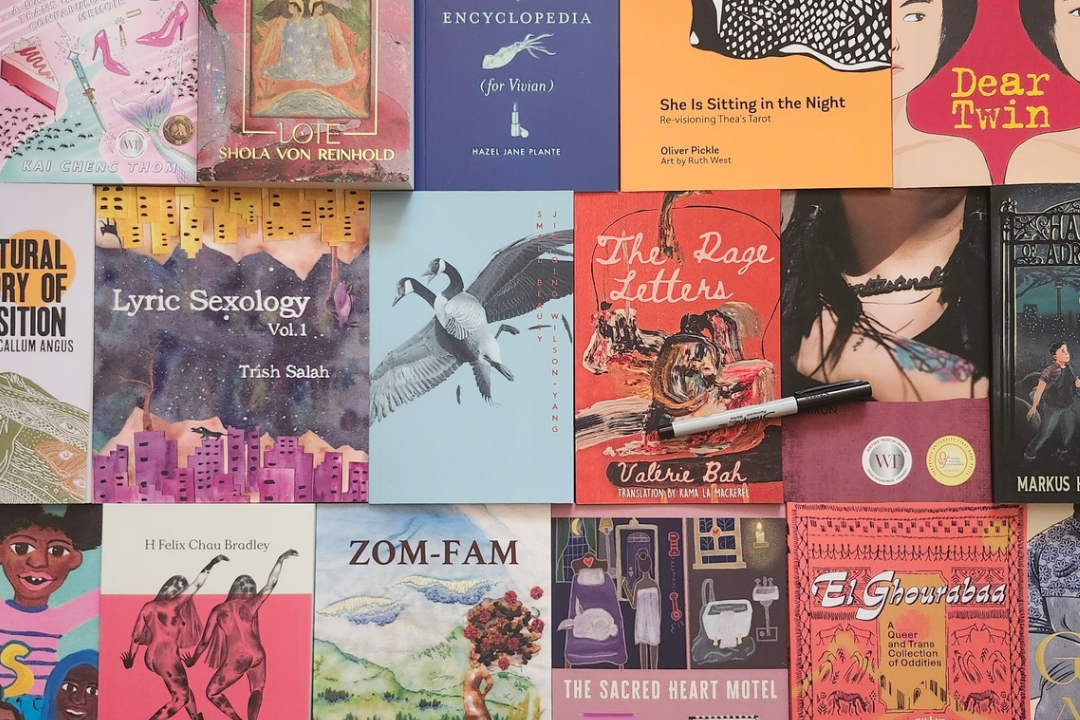
“I lost my mom around when my first—and Metonymy’s first—book came out,” Fugler told me. “So I think themes of death, heartbreak, and the nonlinearity of grief […] continue to intrigue me.” Such themes are endemic to life and the queer experience, reflected with fresh honesty in Metonymy’s books like nîtisânak, Little Blue Encyclopedia, Small Beauty, and, my personal favourite, The Sacred Heart Motel.
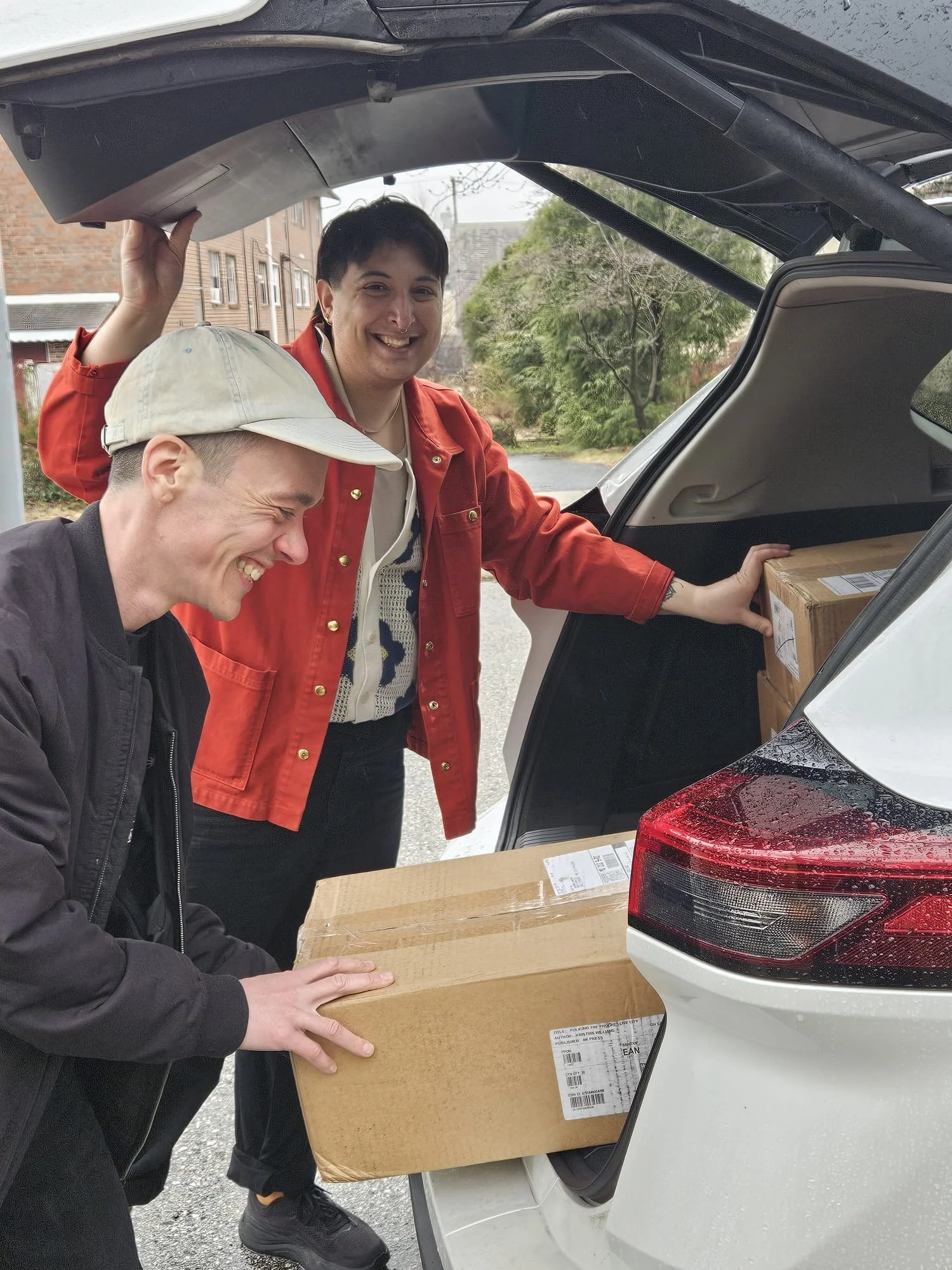
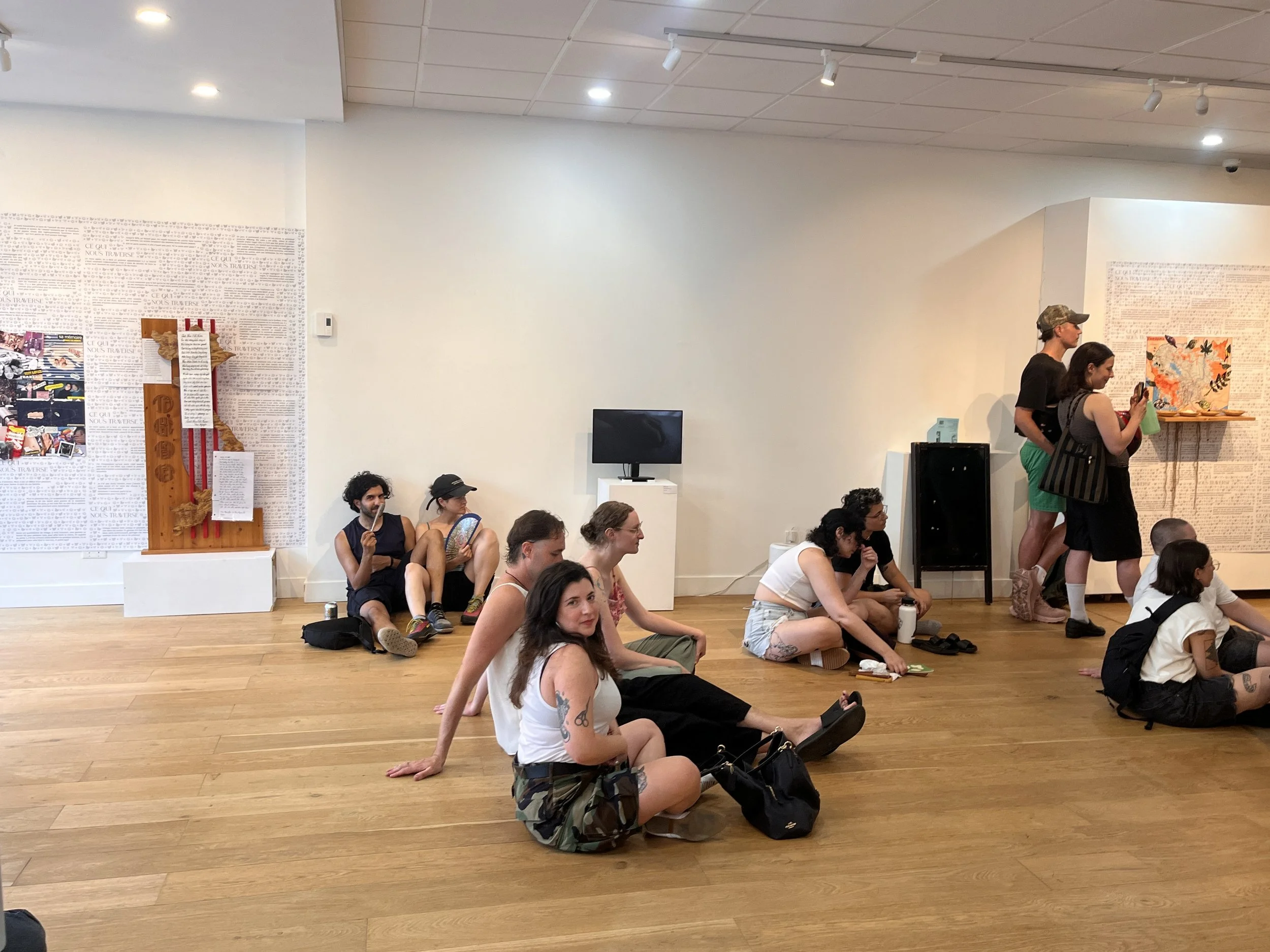
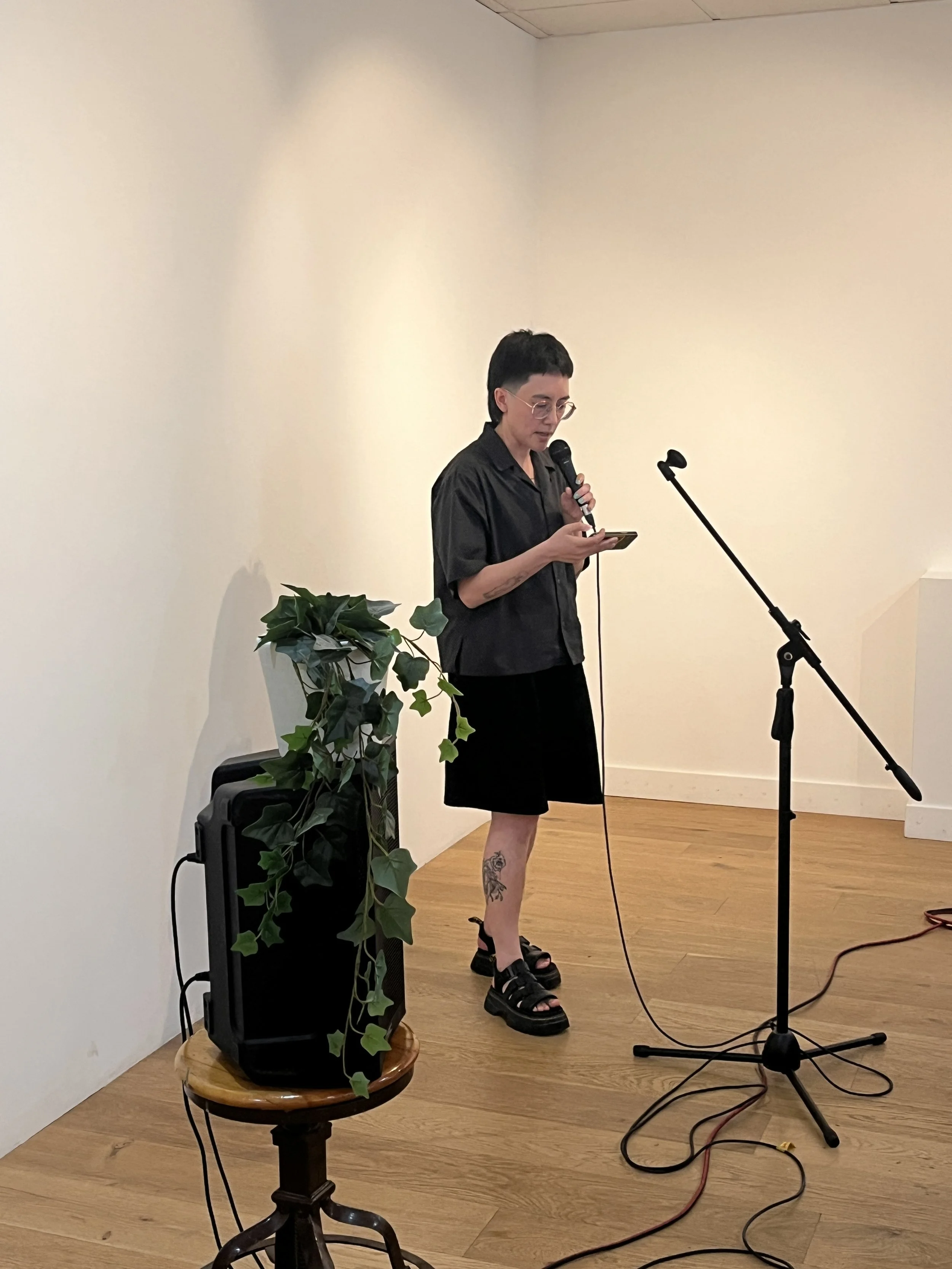
Yet keeping its mission firmly grounded in the works of writers from so many walks of life and stages of their writing careers is what helps Metonymy shine apart from the rest. All the writers who gave readings at the anniversary event—from Ralph Haddad to H Felix Chau Bradley to Kama La Mackerel to Leila Marshy—all raved as much about their relationship with the press. Indeed, El Bechelany-Lynch described their own experience: “Metonymy really helped me […] through the administrative aspects of publishing, like contracts, advances, […] this isn’t always a given. And while I don't blame other presses much for their poor communication—small indie presses are often run by one or two people at most—I’ve always felt that [the team at Metonymy] wanted to be the guide that many debut authors need.”
In the years of rising recognition of the press in various literary circles across the world – a bespoke catalogue, numerous awards, established authors, distribution relationships – the team at Metonymy has not forgone their humility and welcoming atmosphere for every author, both established and aspiring. “I personally hope that Metonymy Press can continue to demystify the publishing process for the debut writers we will publish in the future,” El Bechelany-Lynch said. “And for any established writers we choose to publish, I hope the experience can be refreshing for people who have had a less warm, collaborative, or attentive experience of publishing in the past.”
“Some things we do are try to listen for voices that are absent,” Fugler added. “We bring authors and artists into decision-making roles around their work. We try to be present.”
Fugler has credited Montreal with being a distinct influence on the practice of the press. The city, he explained, provides “a relatively safe and historically affordable place where I’ve been part of a queer community that has allowed for this project to exist. Quebec also has a particular history with popular uprising, which always remains in the periphery of our consciousness.”
Even as I wrote this piece, I couldn’t help but reflect on Fugler’s words. Close to home, we’ve all observed how fascism percolates into facets of the everyday. Even Montreal, which once enjoyed affordable housing and a lower cost of living, made it a haven for artists of all stripes to congregate and hone their skills. Yet rising income inequality has enabled powerful people to scapegoat marginalized communities for political and financial gain, namely immigrants, racialized and LGBTQ+ individuals. I am comforted somewhat, however, in the fact that despite this emerging era of hyper-conservatism and ethno-nationalism, Metonymy stands tall still, a pillar of this haven for writers to find friends and allies in written resistance.
“Contested spaces are spaces of change,” Fugler said. “If there were no homophobia or transphobia, Metonymy wouldn’t exist. The press has a celebratory vision, one that builds outside of the structures that aim to suppress us, but if there’s a rise in homophobia and transphobia, there’s a continued need for us to exist.”
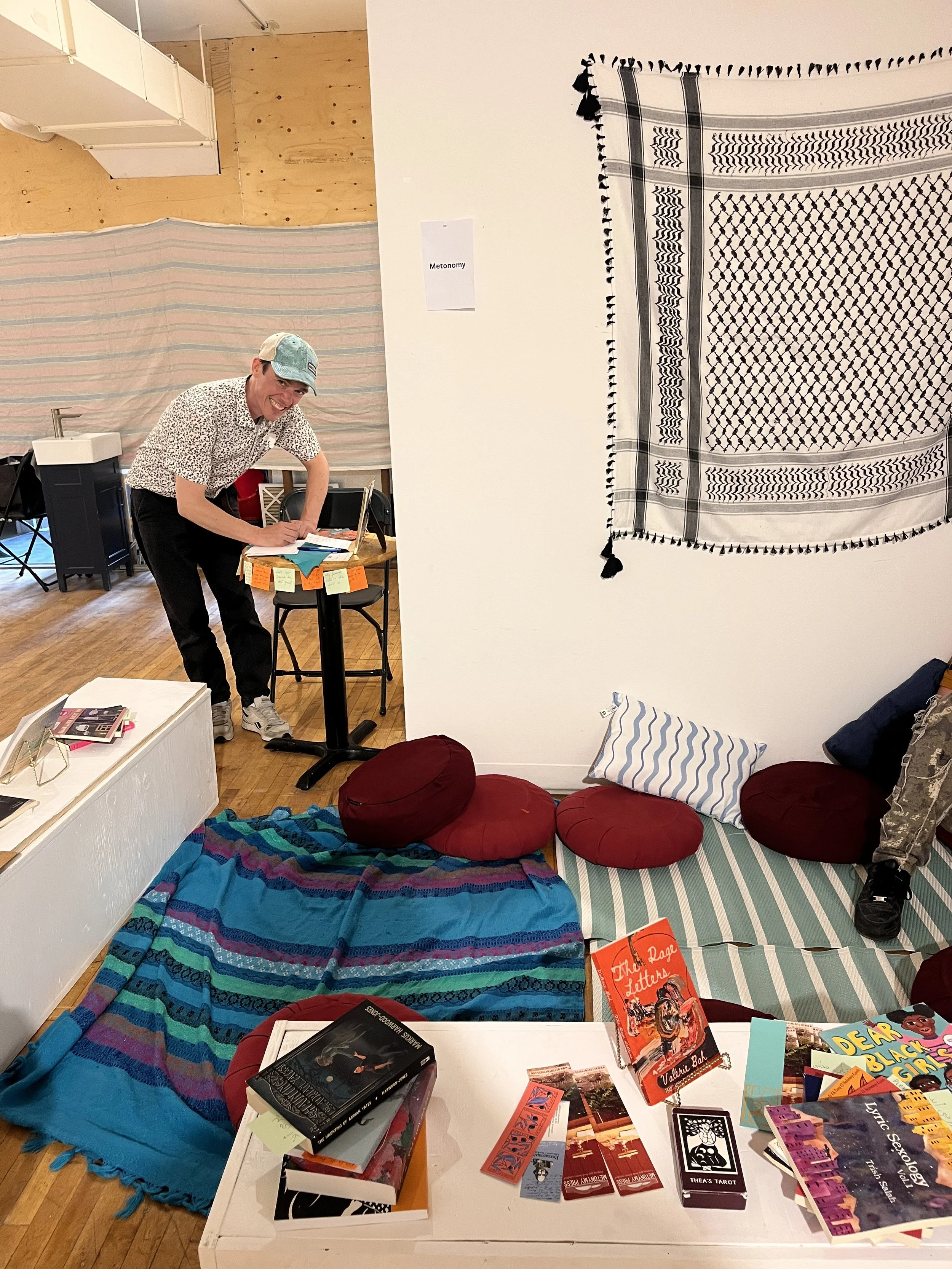
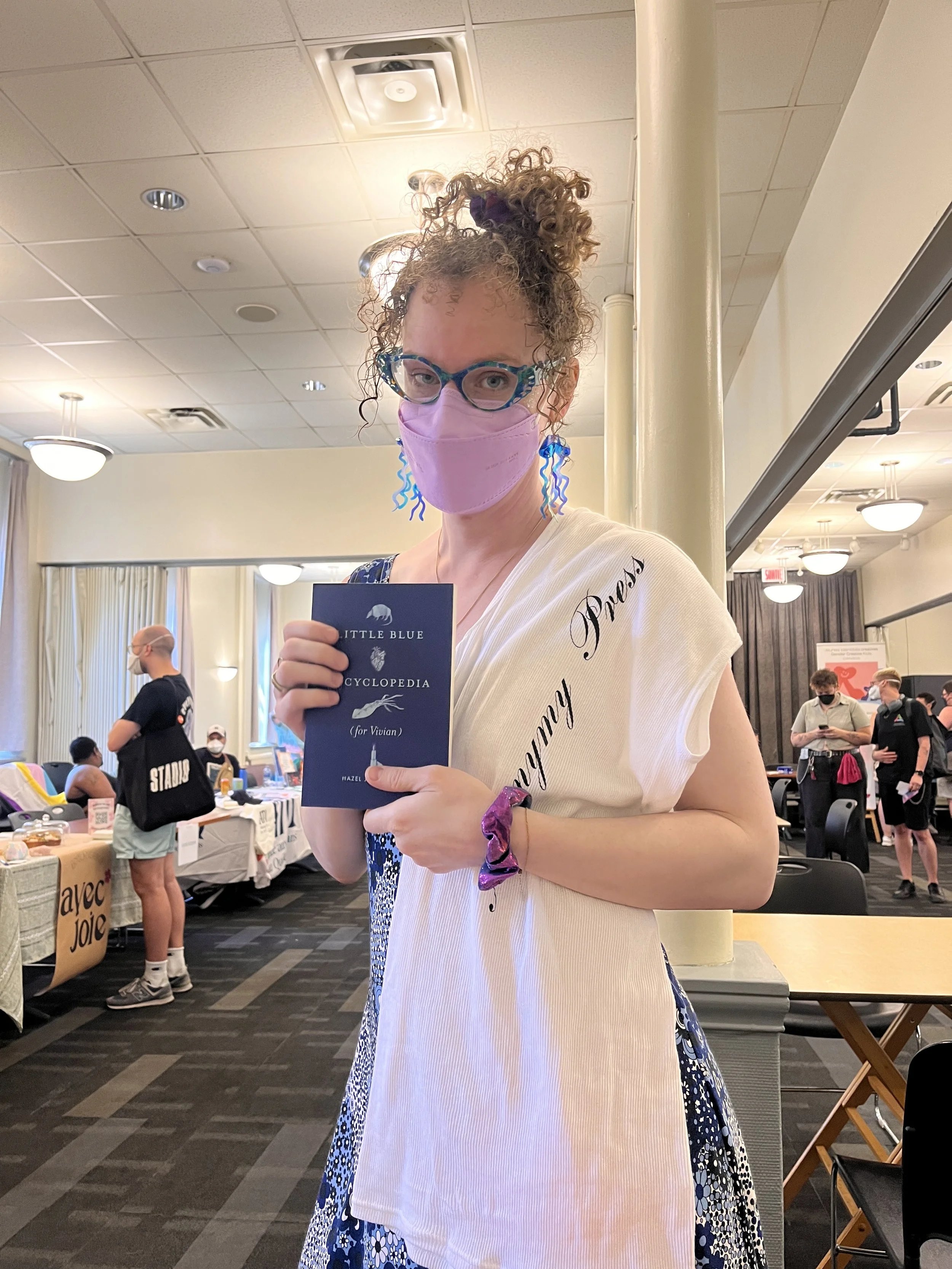
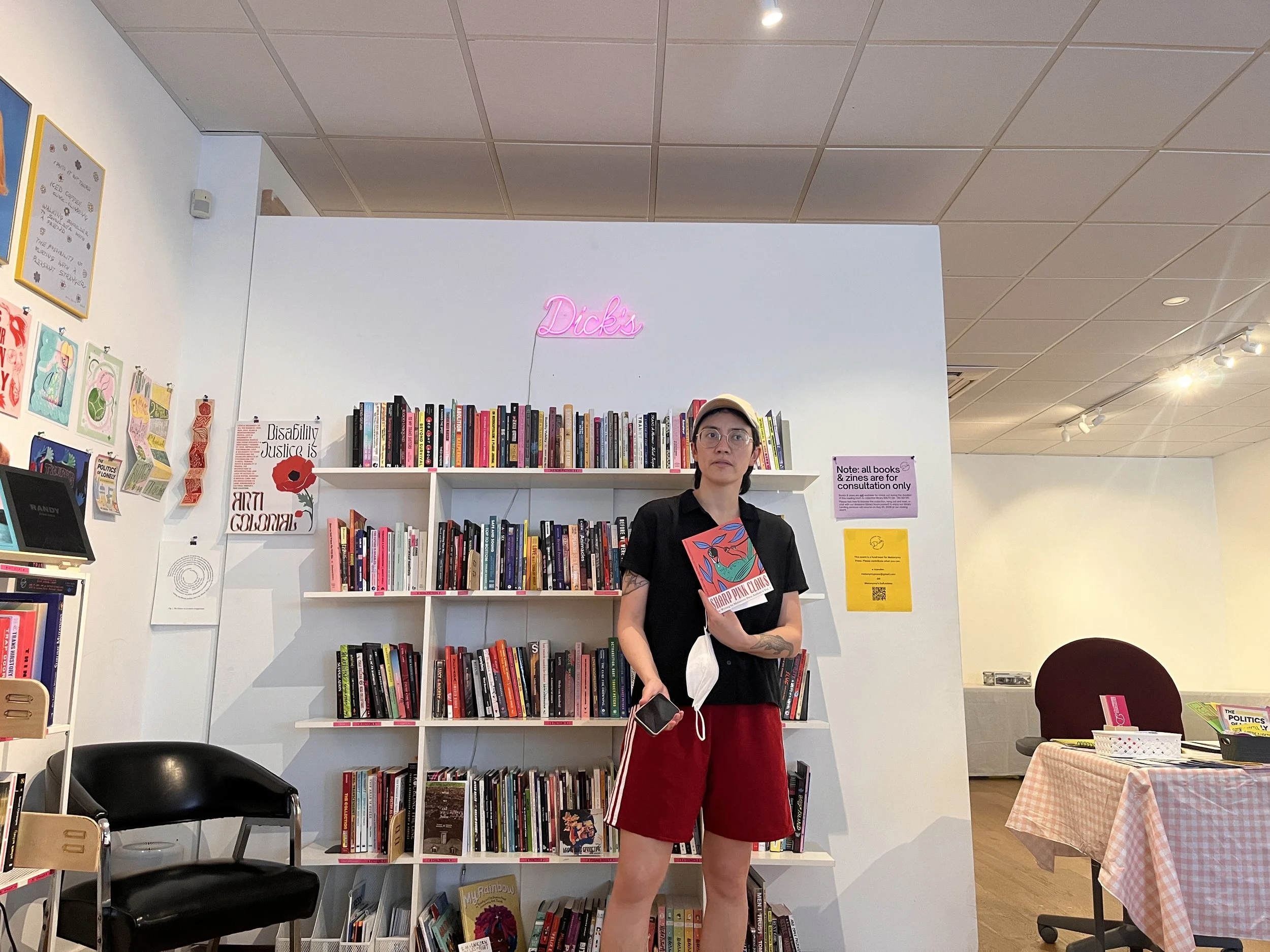
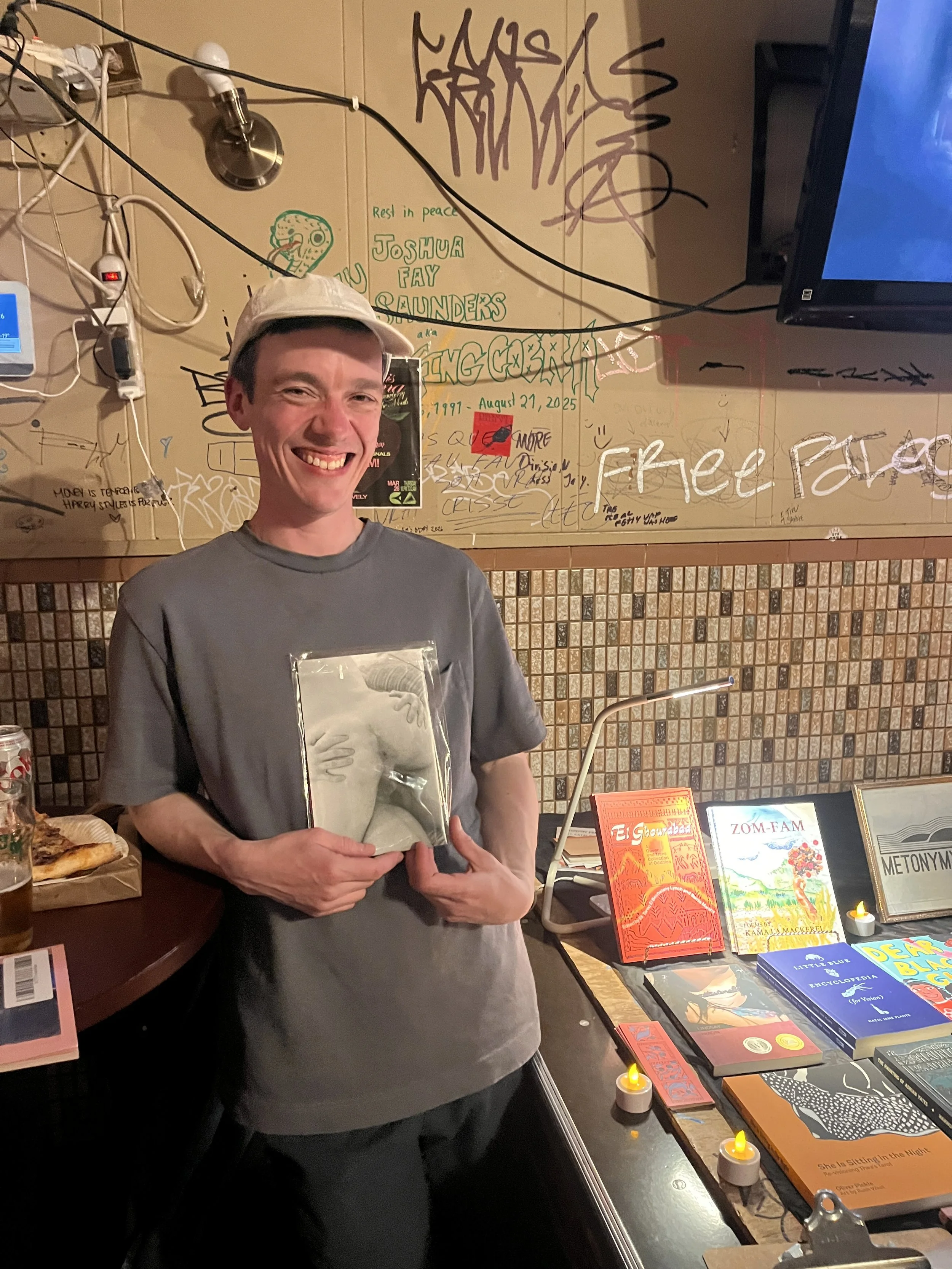
Fugler confided that Metonymy has fallen on tough times: rising costs and financial struggles have made continuing to maintain usual operations an ever-growing challenge. “But,” Fugler said, “I’m also still driven by many of those things that inspired this project initially—increasing access to good queer writing in Montreal.” El Bechelany-Lynch agreed, wanting to “care as little about making money as [they] can” while “publishing tons of racialized writers, to keep promoting cutting-edge work that’s also pleasurable to read.”
Fugler said it best: “We publish so few books, but the ones that we have decided to pursue are ones we can back wholeheartedly, in terms of theme, style, and the inevitable ‘fuck-you’ to the systems that dominate us, however that shows up.”
Metonymy has left such an indelible mark on Canadian literature, reaching readers from across various spectra of identity. Their work has been so influential in my own growth as a writer, so I was determined to know what I could do to help garner support for this small but mighty press. Blissfully, there’s such an opportunity for us all to come together for Metonymy, through word and dance.
El Bechelany-Lynch let me in on the party that celebrates Metonymy and one of its fellow presses, Metatron: “I wanted to provide a daytime space for people to let loose a little, joining it with readings [from local queer writers]. We’re asking our community for help during a difficult financial time for both presses.”
Beyond the great works they help showcase to the world, Metonymy has strived in its twelve years to foster space for friendship and camaraderie for those who may feel dejected by other literary artistic spaces, queer or not. “I think building community and collaborating outside of just publishing books feels much so important and in some ways transformative,” El Bechelany-Lynch said. “I hesitate to use the word because it feels loaded with meaning, but in many ways, Metonymy is trying to transform what publishing can look like for queer and trans people, what sustainability can look like for a small press during continued financial struggles that mirror the struggles of other small publishers all over the country.”
The Metatron x Metonymy Press Fundraiser party is going down on October 18th from 3pm-9pm at Le Système (7119 Rue Saint-Hubert, a short walk from Jean-Talon métro station). Tickets can be purchased for either the readings, the dance, or both. Exclusive merch by local talents will be on sale to support the presses and their search for more needed queer voices.
Let’s help keep Metonymy steadfast in their mission. We hope to see many of you there.
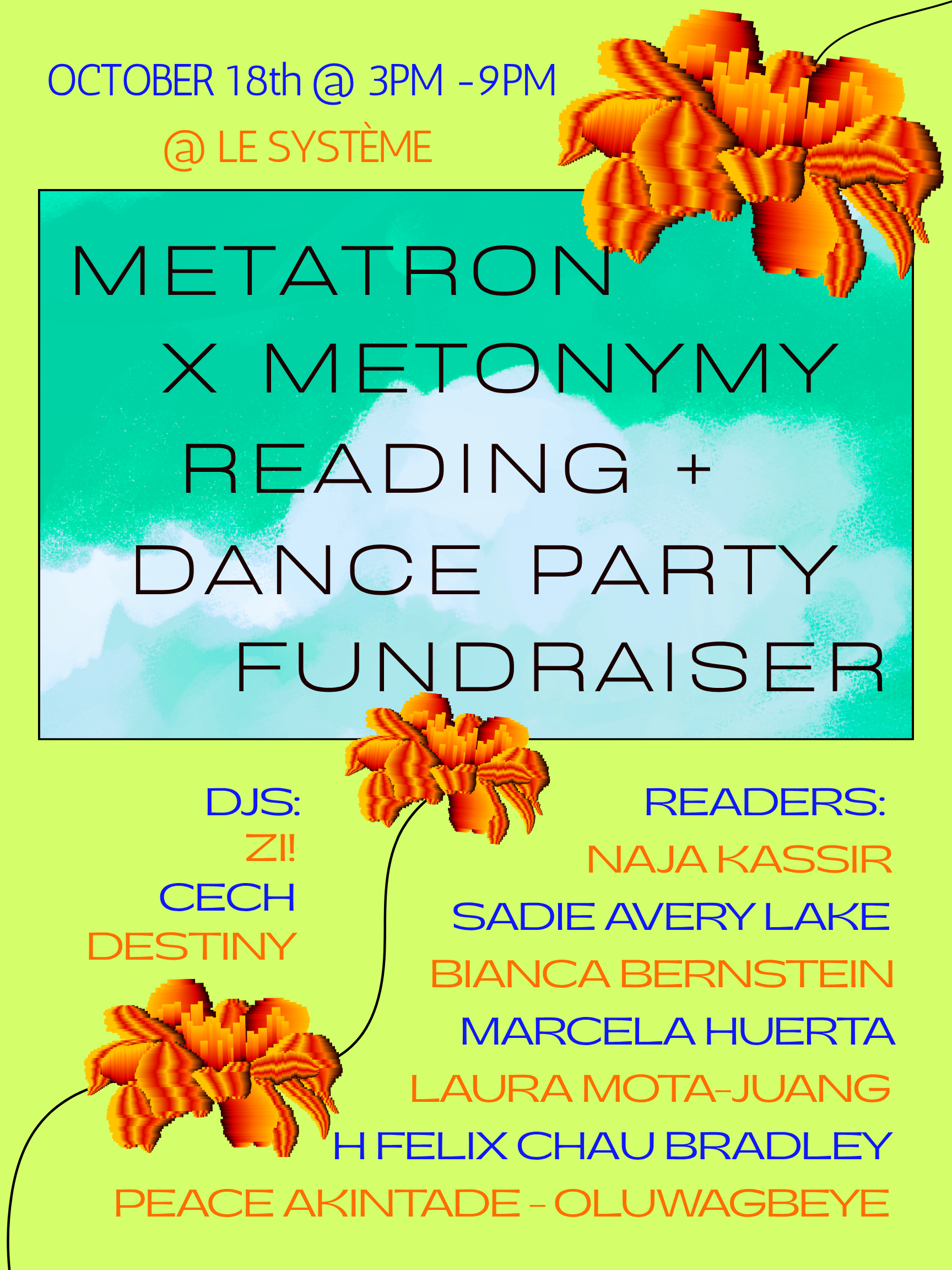
WHAT: Metatron X Metonymy Reading + Dance Party Fundraiser
WHERE: Le Système, 7119 Rue St-Hubert, Montréal, QC H2S 2N1
WHEN: 18 October 2026 @ 3-9PM
METRO: Jean Talon (Orange/Blue)
DETAILS: Eventbrite
