Feature Friday - Anthony Portulese

Name
Anthony Portulese
Pronouns
He/Him
Bio
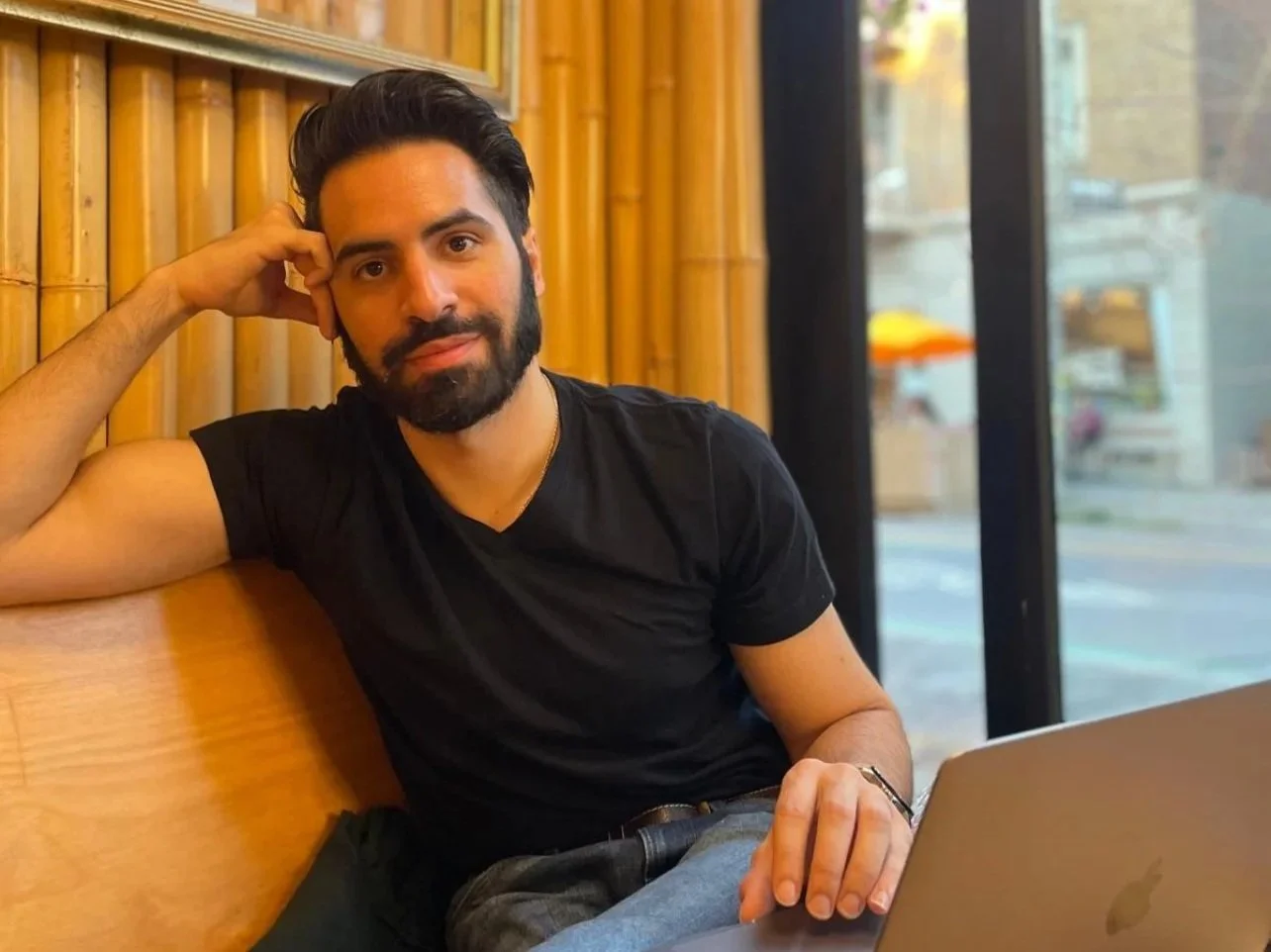
Anthony Portulese is an emerging queer Italo-Québécois writer raised in the East End of Montreal. He first believed his future was destined for the health sciences, and studied pharmacology before taking a radical turn into art history, much to the shock of his family. Setting his ambitions for fiction aside, he pursued academia for a number of years. His M.A. thesis on Monet’s Water Lilies collection at the Orangerie Museum in Paris was later published in 2021in the Rutgers Art Review, the same year he completed his studies at McGill University’s Faculty of Law. While working as a policy analyst and now as a legal editor, his writings have been featured in Accenti, Panoram Italia, and Maisonneuve. Most recently, his short story “The Stars of Saint-Léonard” was a finalist and came in second place for the 2025 carte blanche Prize. He recently completed the manuscript for his first novel.
Where in Montreal are you located?
Little Italy, a stone's throw from where my grandparents first lived when they first immigrated to Canada in the early 1950s.
What do you love about that neighborhood?
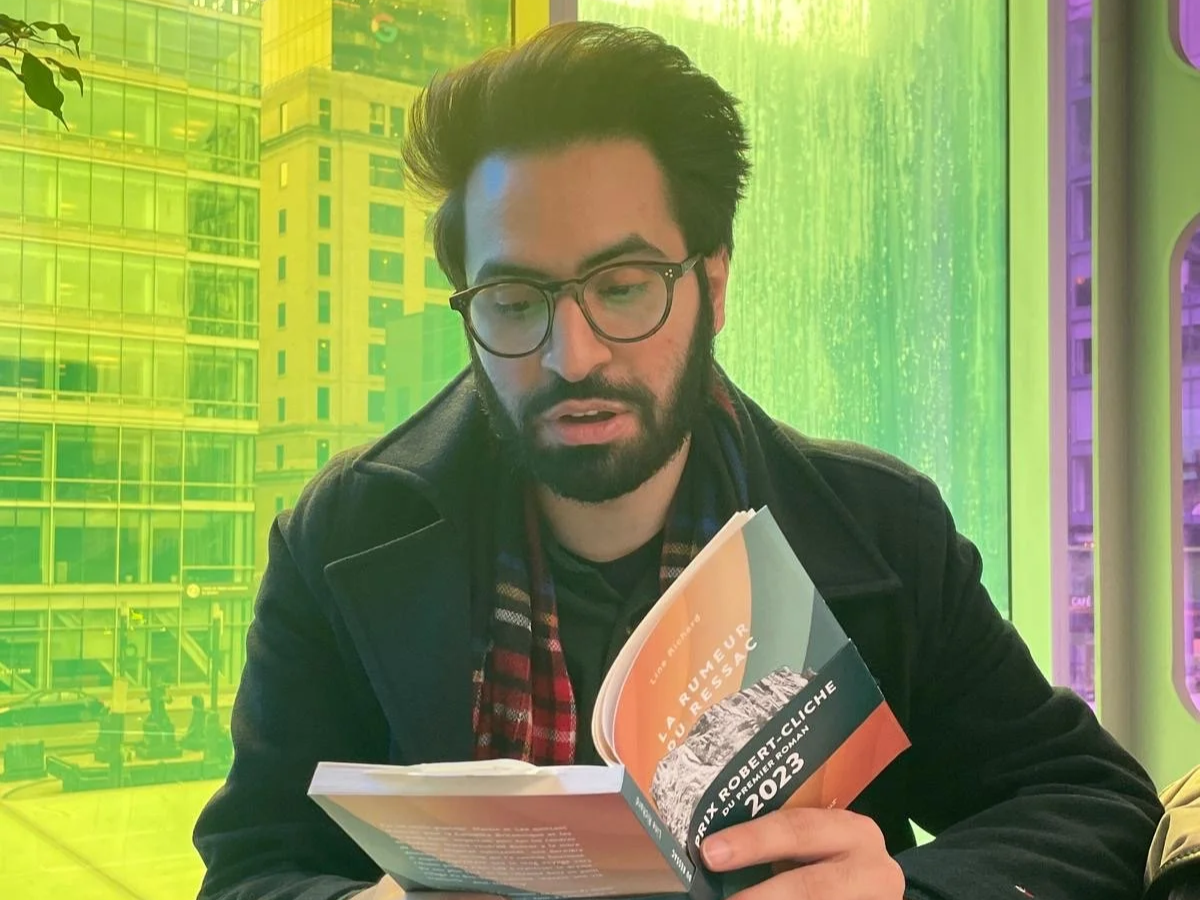
Little Italy rests in a geographically and culturally convenient spot in Montreal. Tucked between the East End and the Plateau, it offers me proximity to the cultural spots of my upbringing, of my family’s heritage, and of the city’s current literary and artistic scenes. The neighbourhood itself is deeply inspirational to me, and having the privilege to live here has profoundly influenced my writing. Aside from the Jean-Talon Market, bakeries, and shops - all of which are obvious treasures - the café culture here is very conducive to creatives and are wonderful sites of artistic collaboration. One such spot, Café Ferlucci, is owned by a fellow East-End Italian who also attended my high school. I wrote most of my novel in this café, many days from opening till closing, and it's the backdrop to one of that novel's chapters. Many first-generation Italo-Quebecers left the neighbourhood in the last half century, and it’s refreshing to see how their grandchildren are reclaiming these spaces in our community’s historic first stomping ground.
What’s your favourite art space in Montreal and why?
Sadly, many of the art spaces that have coloured my creativity no longer exist. Mainline Theatre, Le Cagibi, other sites of congregation for artists, lost to unfettered urban redevelopment and gentrification. Which is why I feel very protective over any places where local artists gather to share their work. Kawalees has been a great place to hear spoken word, music, and contemplate visual art. I've been welcomed with open arms as someone who fears public performance, and been allowed to share writing for a supportive small community. It spaces like these that forge friendships and collaboration. We should do everything in our power to support these spaces.
Describe your art in your own words.
I began my literary journey studying the “classic” Canadian writers: Hugh McLennan, Lucy Maud Montgomery, Michel Tremblay, Gabrielle Roy, Mordecai Richler, to name a few. Despite the glaring problems in some of their depictions of women or Indigenous peoples, there is something in their styles of writing that deeply attracted me. In the years since, I’ve strived in my own writing to speak to this tradition while addressing contemporary issues in Quebec: identity, culture, politics, and belonging. What is means to be a Montrealer, a Quebecer, a Canadian, has made up the essence of my work so far. I hope to create compelling and heartfelt stories that leave on readers’ hearts and minds, forcing them to question what they’re feeling and why they’re feeling it.
What drew you to writing?
This is a difficult question to answer. For one, I suppose the desire to create fictional stories came from a need to make sense of my own lived reality, that of myself and of the people and my communities. For me, personally, my characters aren’t fabricated piece by piece to serve as a conduit in some larger intellectual or philosophical exercise guised in prose. My characters manifest themselves to me as fully fleshed human beings. I fall in love with them, their virtues and their flaws, their trials and their journeys, so intensely that I develop this unstoppable compulsion to transcribe their likenesses through pen, to share them and my love for them with the outer world. That’s why I write, I guess: I have all these imaginary friends, and I want my readers to love them and be friends with them too.
What have you been working on recently?
My personal journey to understand my own place in Quebec - the province in which I was born and have lived my whole life - as an Italo-Anglophone and grandchild of immigrants, has been paramount to the novel I just finished writing after six years of work. And though the story is specific to this time and place in Quebec's history, it's a story to which I know many Quebecers and Canadians of all backgrounds can relate: one of identity, culture, legacy, and belonging. As xenophobic, far-right, ethno-nationalist rhetoric ramps up in Quebec, with the prospect of another referendum on the horizon, discussions of what it truly means to be a Quebecer will be paramount in the public conscience once again. Through a romance and an intergenerational family epic, I hope this story will play some small part in that crucial conversation.
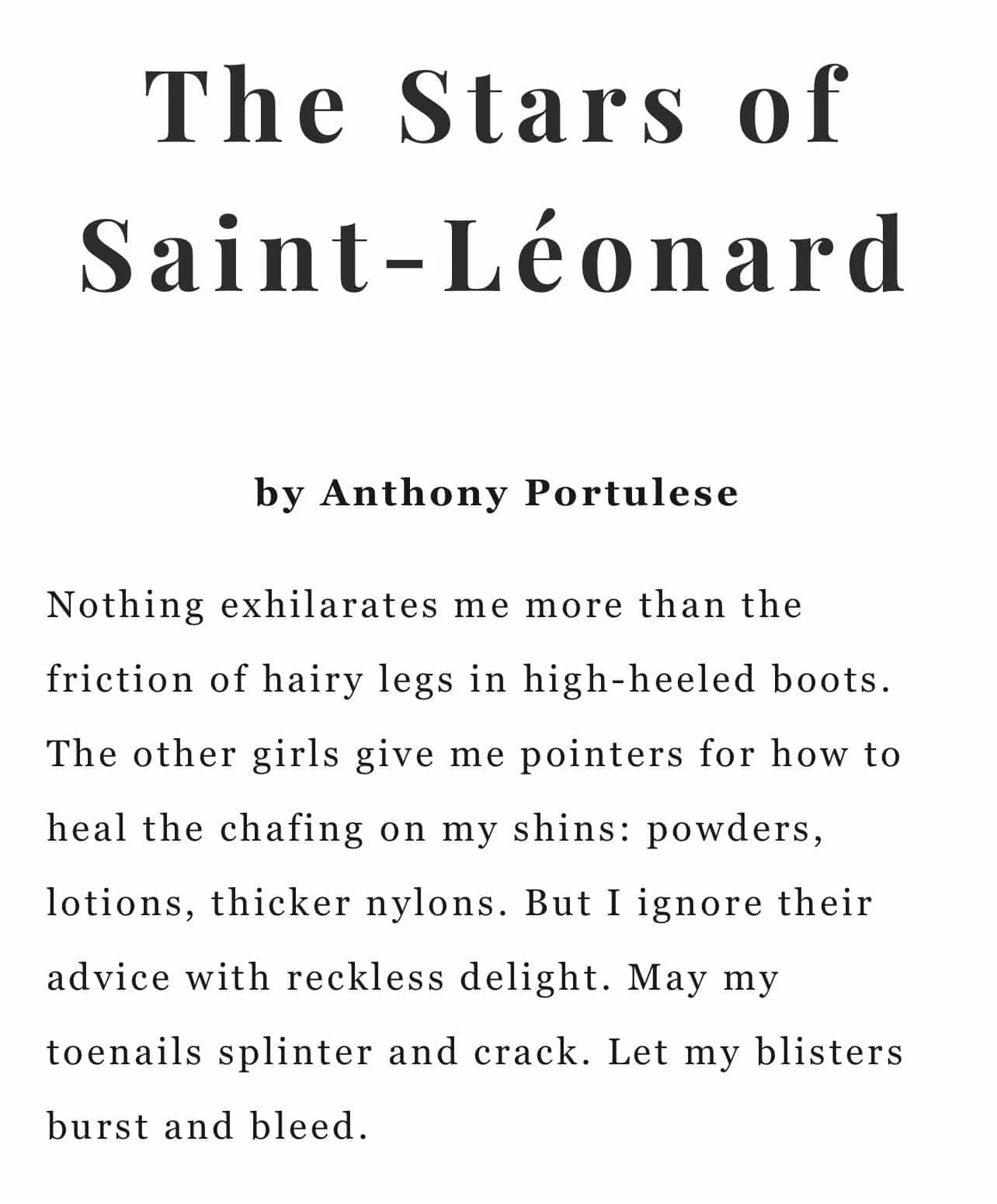
Read the full piece in Issue 53 of Carte Blanche magazine.
How would you describe your voice?
Melancholic and nostalgic, tough but loving, warm and inviting. I want to write wholesome stories that contemplate difficult cultural and political issues of our time. As fictional dystopias begin to more closely resemble our daily lives, I don't want to read characters who are greedy, power-hungry assholes but described as "complicated", "nuanced", or "anti-heroes". My characters are flawed but aspirational, messy but hopeful. Reading my stories will feel like having a serious but bonding conversation with a loved one, safe and snuggling together under a blanket by a fire.
Where do you find your inspiration?
In people, places, and activism.
Describe your writing process.
I wish I could say I set aside an hour or two every day to write. I wish I could say I get a draft done before I begin revisions and edits. Setting aside the fact that I wrote much of this novel while in law school, my process is as follows: write, delete, write, delete, write, sleep, re-read, delete, write, scream into pillow, sleep, delete, write, cry, write some more, revise, pull my hair out, delete, revise, delete, and finally settle down out of sheer exhaustion. Sometimes I think it's a miracle I can get anything down on paper at all.
Who are some of your favorite writers?
I've focused most of my recreational reading to local authors these last five years. Christopher Di Raddo, Dimitri Nasrallah, Anaïs Barbeau-Lavalette, Kim Thúy, Leila Marshy, Éric Chacour, Gabrielle Boulianne-Tremblay, Claire Holden Rotham, Fanny Britt, and Hélène Dorion have all left an profound impression upon me and my writing.
What do you love about Montreal's literary scene?
I deeply adore the two facets of the gem that is this city's literary scene. On one side, we have writers from across Quebec and Canada who come to Montreal to exchange diverse ideas and perspectives, writing introspective examinations of the human condition. One another side, we can find writers from Quebec, writing one the many ways one can exist here and call it home, examining questions of Quebec/Canadian identity, culture, the complex nature of our communities, and bridging gaps between them. I think my writing rests in the liminal space between these two literary scenes: drawing inspiration from both, though not part feeling fully a part of either. It can feel like both a gift and a curse at times.