
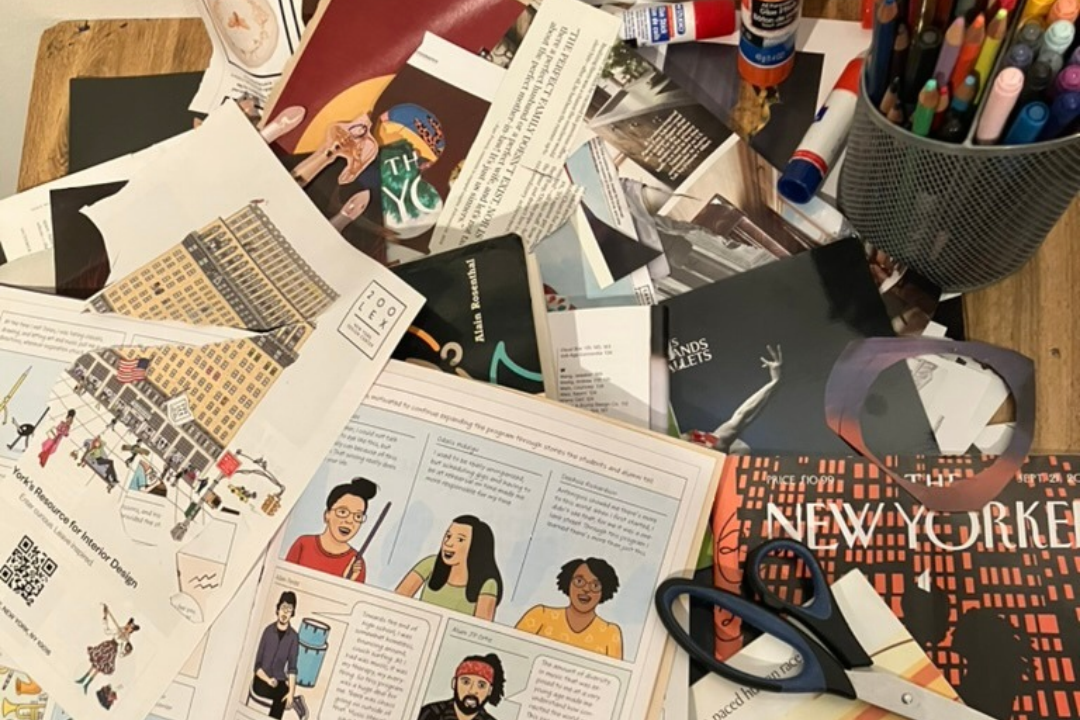
Photo by Hannah Adeline Gardiner
I could have gone up Mount-Royal but I wanted a quiet walk, so I followed Marie-Anne street from Saint-Denis to Papineau instead. I passed windows lit in yellow hues and some reds, cozy lamps on the inside of homes, my body still adjusting to the temperatures outside, lately getting increasingly cold.
I would not have known where to go if it hadn’t been for the small poster taped to the fogged door: FORWARD, a vernissage of Melanie Godel’s collaged works at La Casa Obscura, which I learn when I enter the door, is up the stairs.
I wait at the bottom of the pastel, graffitiesque landing as three elderly women descend from above. The last of the three apologizes to me for being slow.
“No need,” I say.
She says: “My bad ankle and bad hip are on opposite sides. I can’t help it. This is what it is like to grow old.”
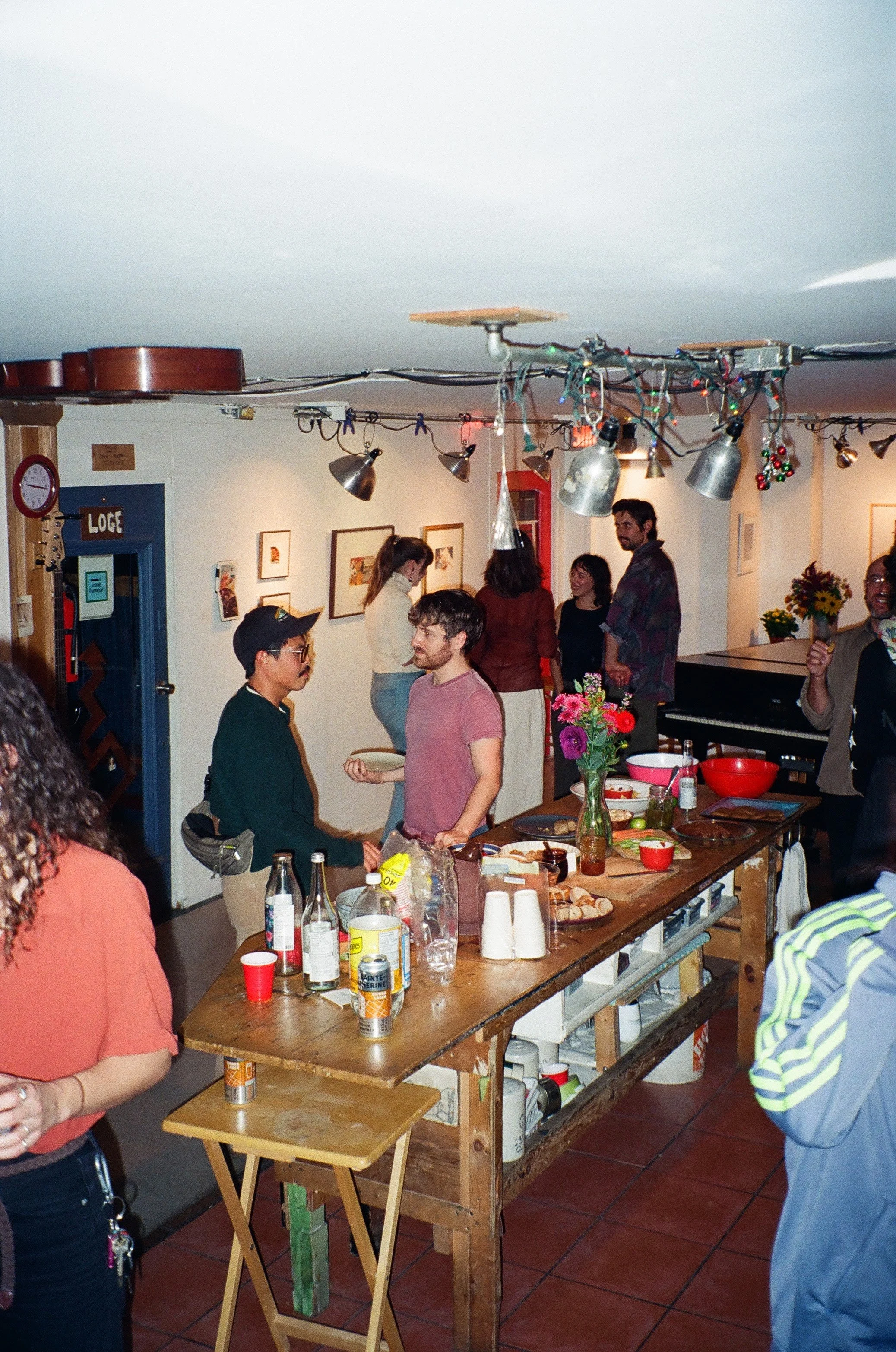
It is warm inside and people gather upstairs in the centre of the open rooms around a long table covered with drinks and food plates, chatting amongst themselves. I look for the friend who invited me here, but she is not yet around, so I move towards Godel’s artist statement that is mounted and hung above a couch.
The statement describes Godel’s mostly private art practice that she developed in journals over the last eight years she’s lived in Montreal. The statement points to the subjects I would soon see in her work, “expressive dancers, life models, limbs, faces and fabrics” she explains “resonated with [her] emotional state.”
What Godel had previously used as “a tool for personal reflection and processing, tucked away in private journals,” is now out in the open. Mounted on the wall and lit by silver clamp lights are a mix of original collages, open journals, and prints. I walk around, at first, taking it all in.
I see a man and woman kissing but the woman is composed of red flowers, and the man’s form seems like it’s disappearing too. I stare at a woman’s body where half of her ass looks like it's collaged out of maps, but I look closer and see they’re actually hieroglyphics. A woman beside me runs her finger illicitly over a collage displayed in an open journal, feeling the layers we can see; desiring, perhaps, to know what the work is really made of.
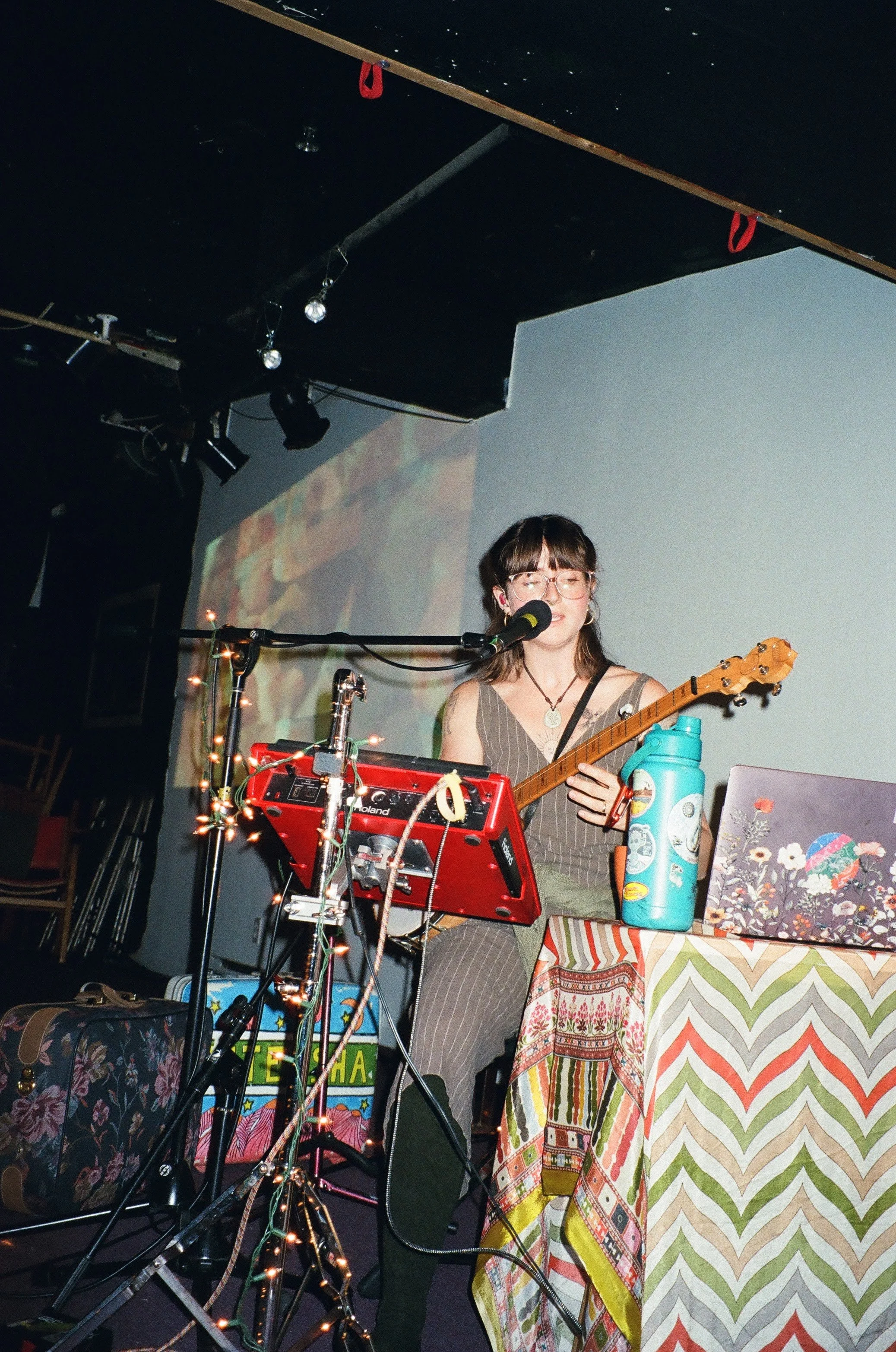
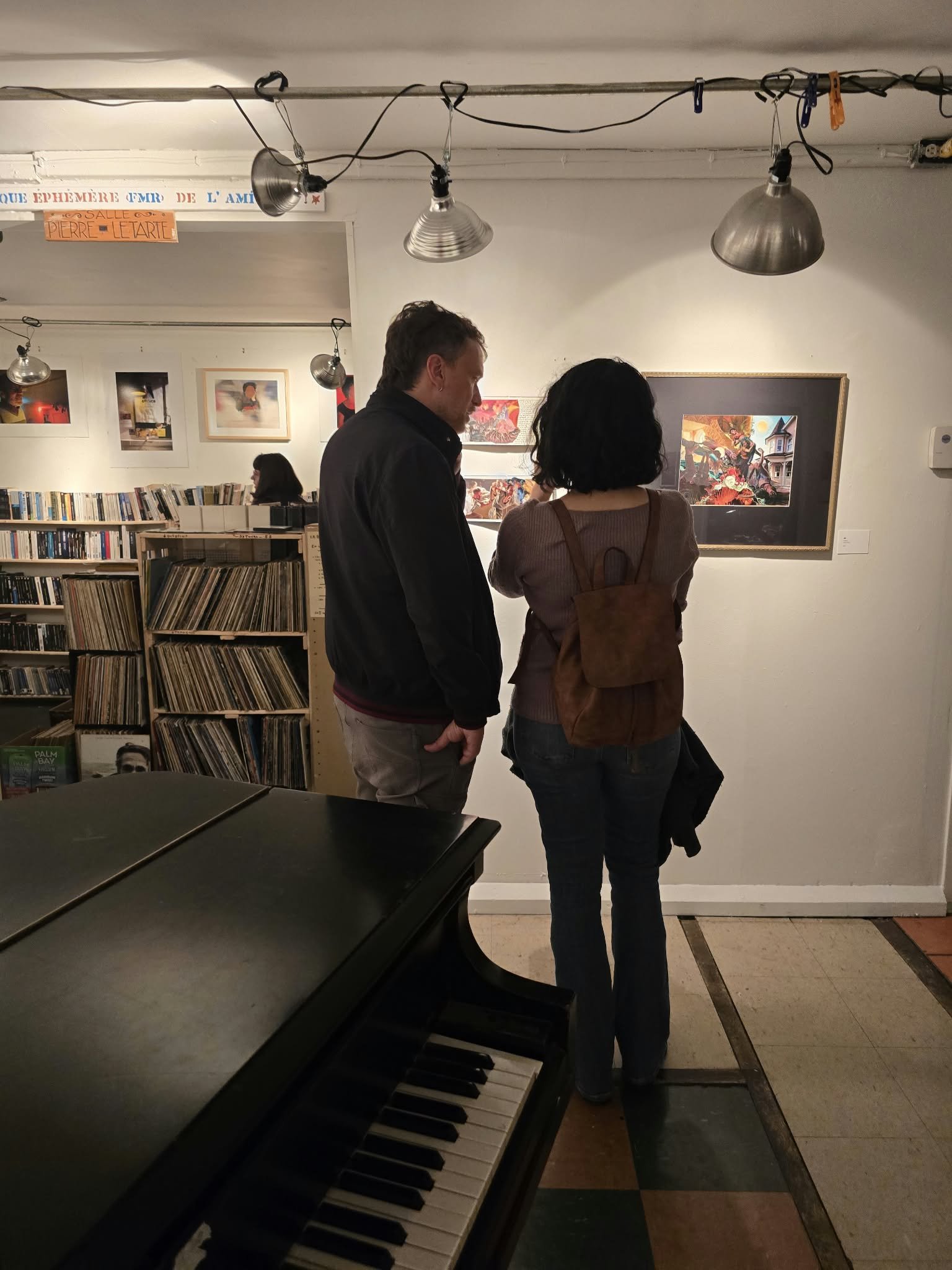
A musician begins to play, and we all seem caught on the moon or in the colour periwinkle blue or in the arms of a distant lover now. The majority of Godel’s work is mounted on the three walls surrounding a grand piano. I lose myself in four collages there.
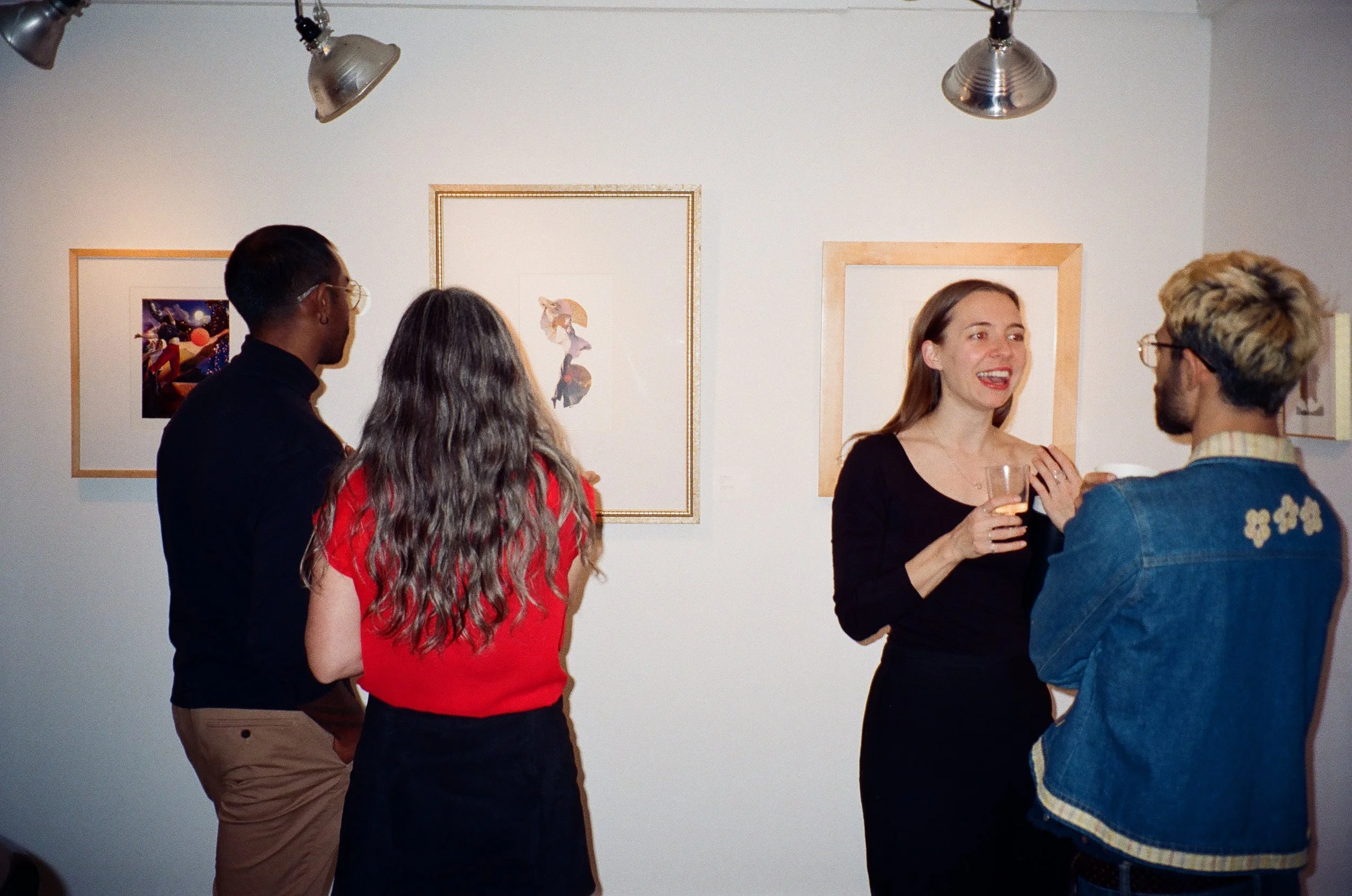
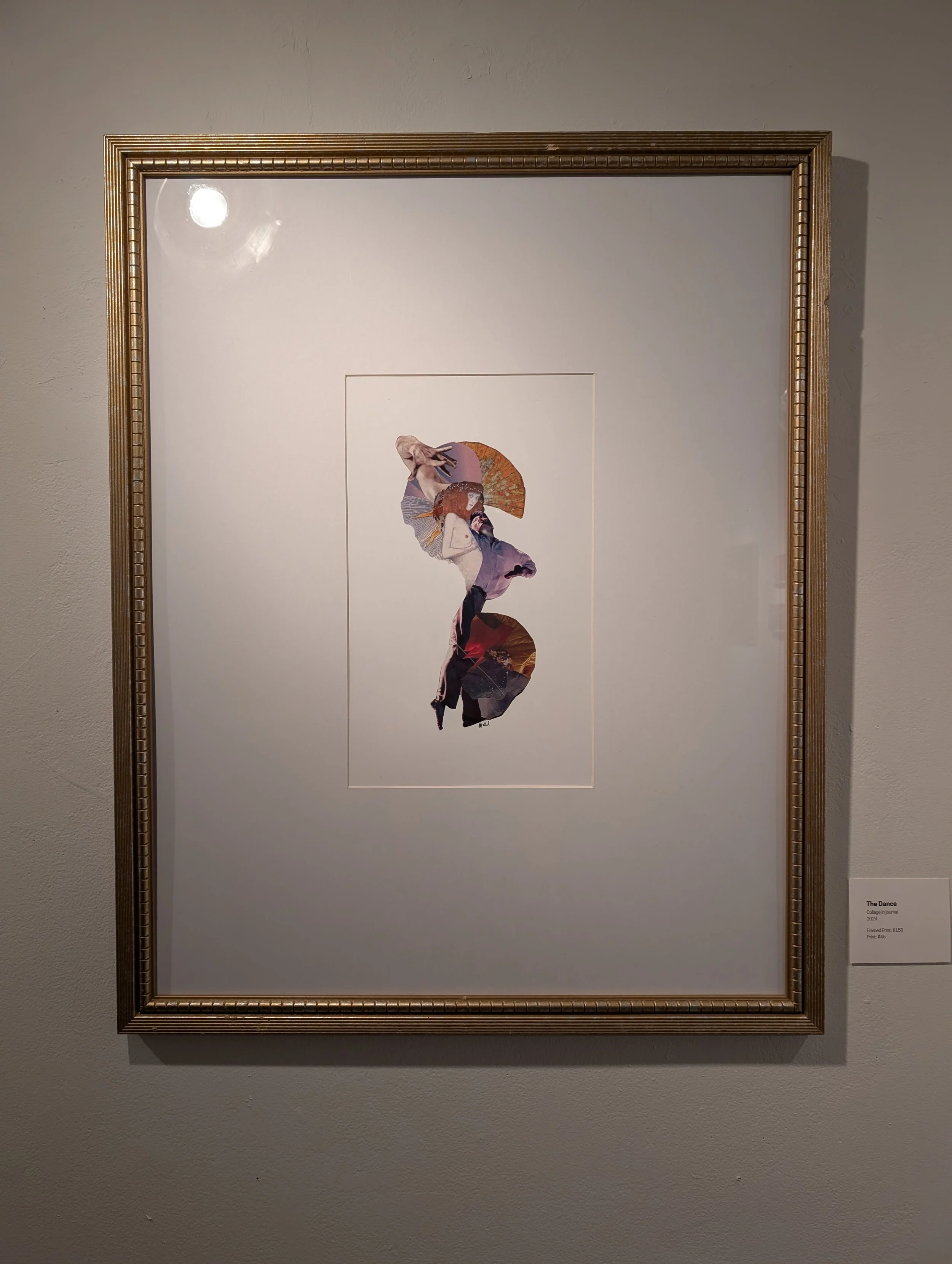
The Dance (2024) is a framed print, an almost s-movement on the page, beginning with an arm, elbows bent but fingers reaching out into a quarter-open pastel aureole that surrounds Gustav Klimt’s pregnant woman from Hope I. A male dancer directly beneath her face looks up at her ghostly figure in his own sharp light and shadow. His descending body marks the end of the collage, beside it another half circle of dark colours, weighing the work down.
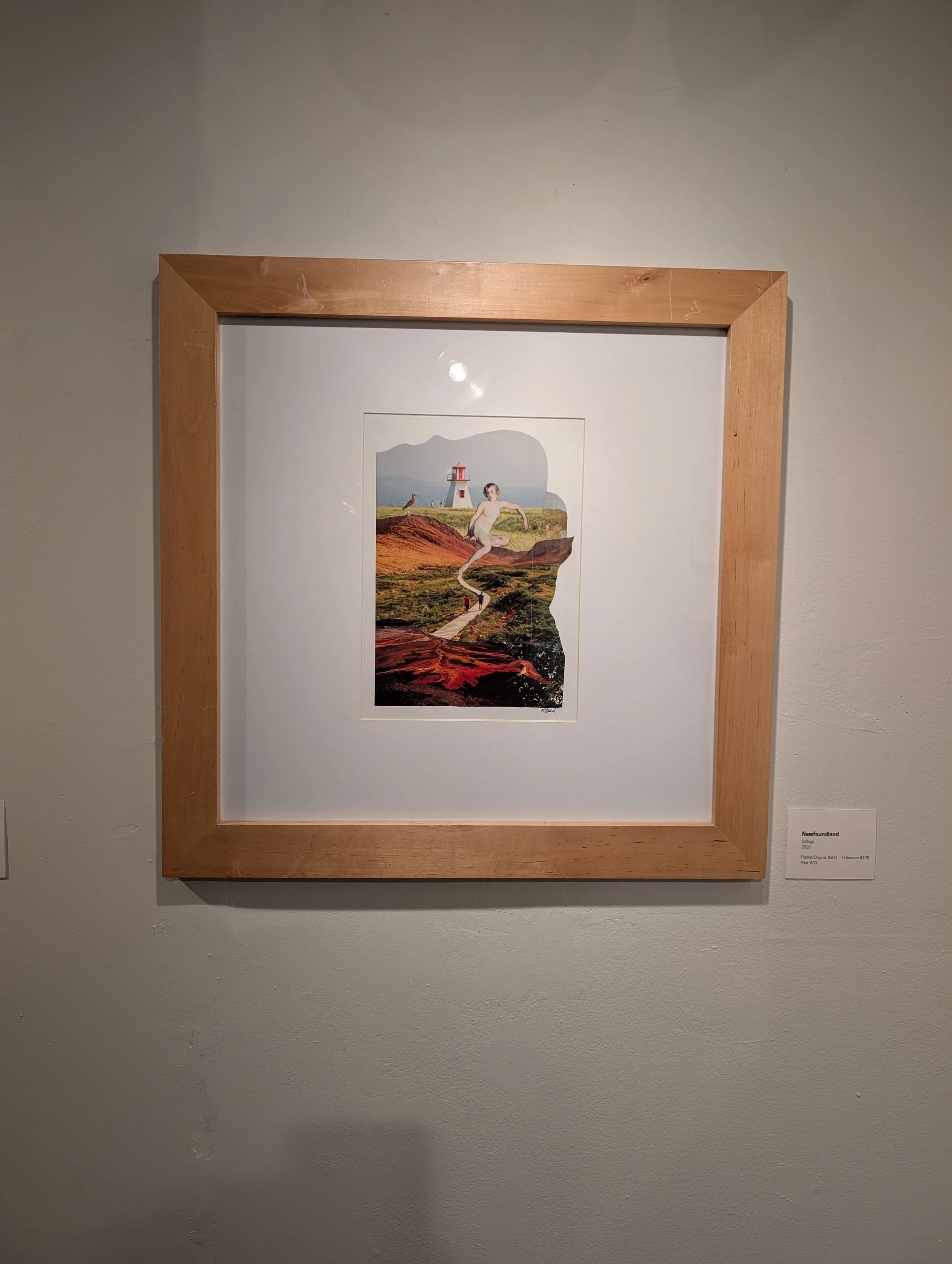
Beside The Dance is a lighter work, where the woman’s body remains a central theme. In Newfoundland (2025) two small people hike with their backs to us through a changing landscape on a boardwalk that transforms into an outstretched leg of pale, naked, pensive woman leaning on the grassy field as if it is her backrest in front of the backgrounded sea. In the foreground is lava, encroaching on the whole of the work, everyone in it seemingly unaware.
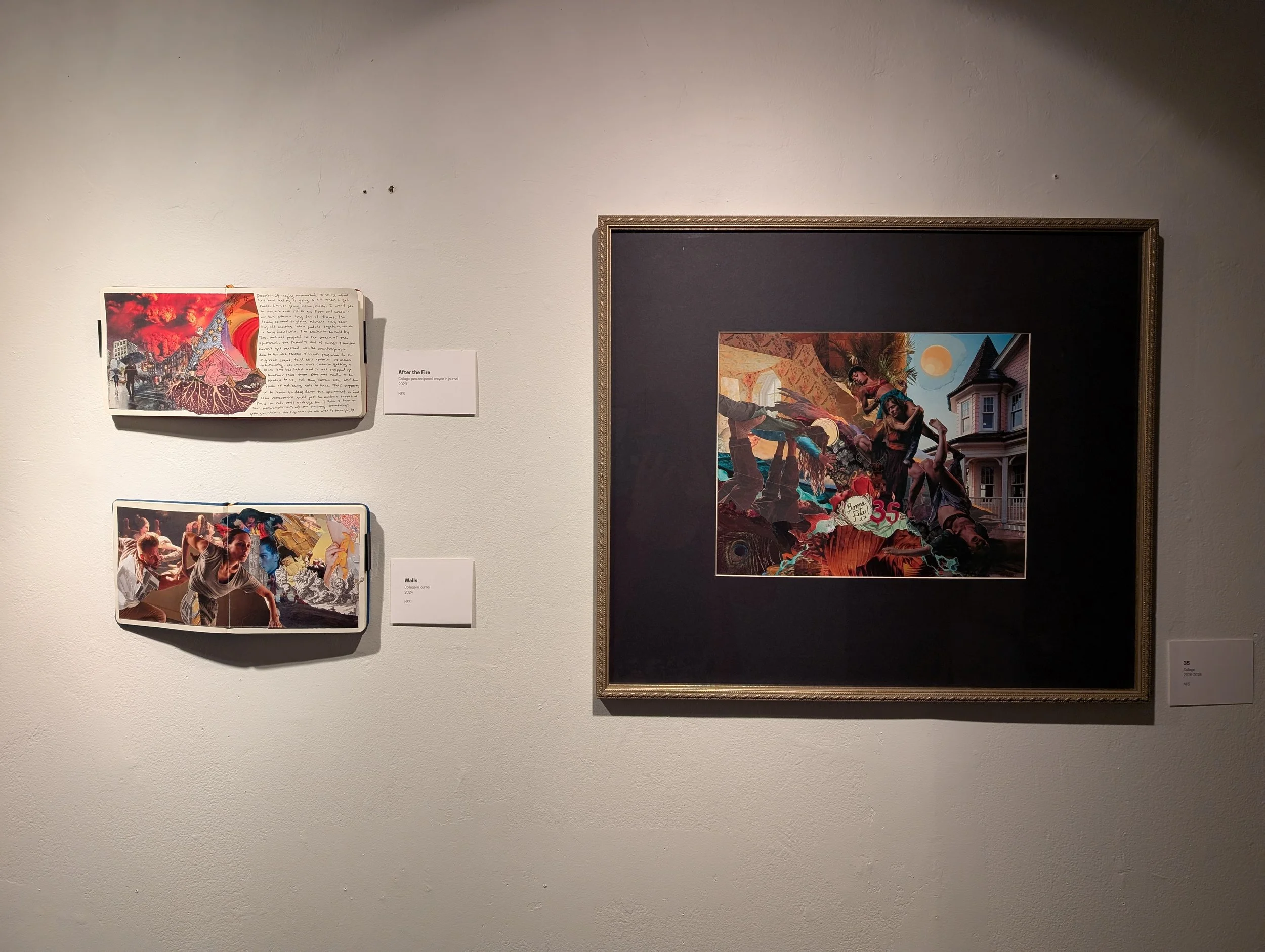
After the Fire (2023) is mounted in its original journal; in the middle-left of the page is a figure I learn later is a woodcut pilgrim who crawls through a covering of stars, staring up at a fire in the distance. This is the only work here with text. It is a journal entry dated “December 29 – Flying homeward.” A woman with curly brown hair asks me if I know anyone here and tells me that the artist made this after her apartment had a fire. There are grey people walking along the road on the left half of the collage with umbrellas. They do not see the sky is red.
This is the tension I experience most in these collages: obliviousness, bordering on ennui, to the intensity of what surrounds the figures depicted here: the gaze of others, the threat of nature, the emotional experiences of people directly within their reach.
I see my reflection in the black matting of the collage 35 (2025-26): a birthday cake sits in the centre of the frame. To its left is a woman being lifted up like an airplane by another on the ground; behind the cake is another woman swung over the shoulders of another; to the right is a woman being dragged, who could be in pain or pleasure. Furthest right in the collage is a pink house with white windows and a turret, idyllic beneath a bright yellow sun and clear blue sky. This work, especially its saturated colours, really unsettles me.
When I leave, I try to find the words for what this all means and keep landing on one, titillation, but I don’t get there quite yet. I am still at the vernissage, caught up in the visual language of emotion.
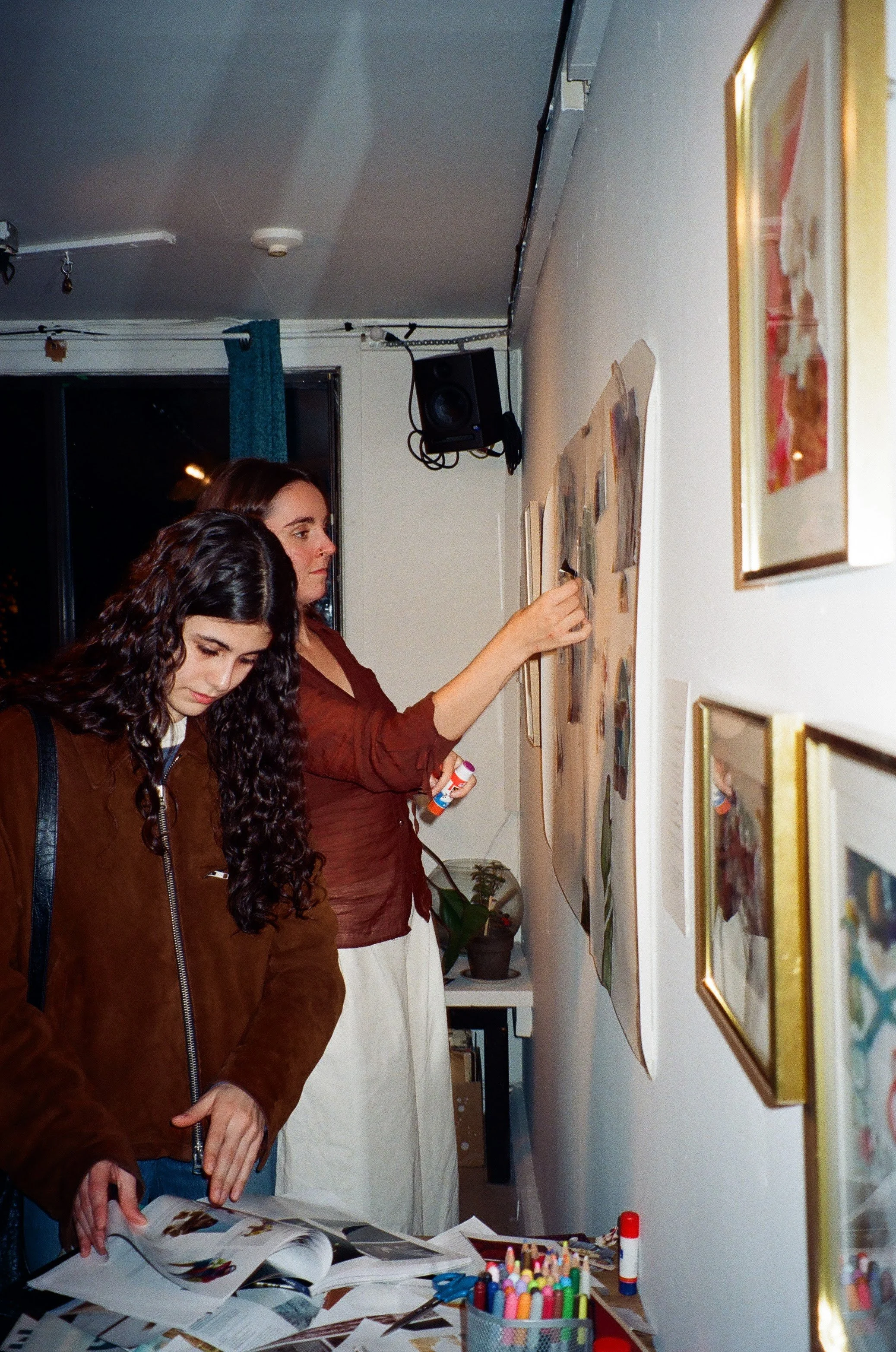
There is white paper taped to the wall and an invitation for guests to participate in a Collective Creation Collage. Magazines are open with cut-up pages on a small table; bright colours, faces, landscapes, animals, now fill up the wall. The room is warmer now. People are still chatting. The bowl of a gluten free apple oat square is empty. Beside the bowl, pistachio shells are littered on a grey plate previously filled with food.
I realize I am getting tired and decide I should go home soon. I go to the washroom and when I leave I see the friend who invited me waiting in the unlit hallway to use the washroom next. In the dark, she tells me lots of things have changed since she first moved to the city, but this place still feels so quintessentially Montreal.
