
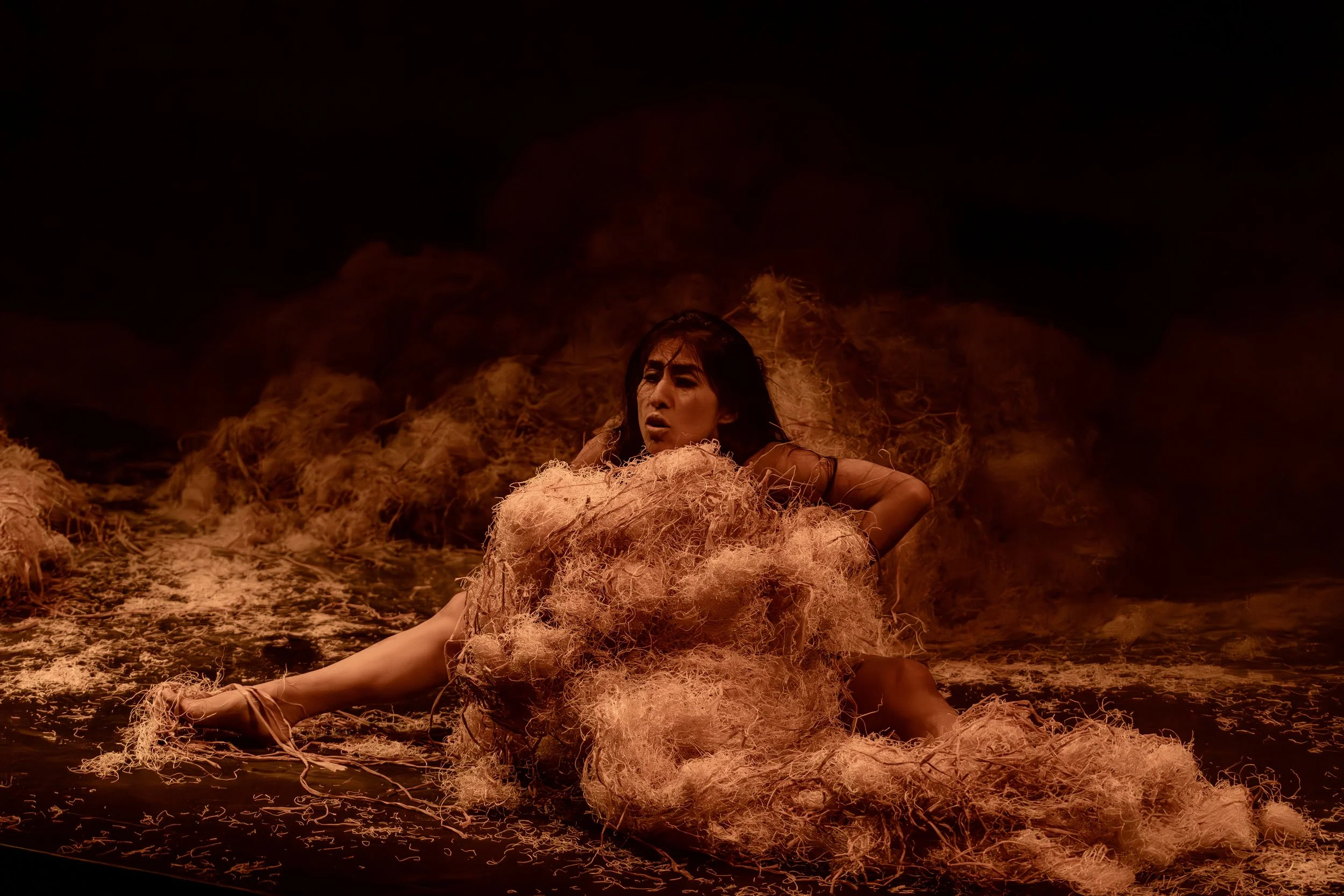
Photo by Alfredo Alves
On Wednesday, November 11th, I attended the premiere of Rosa: a dance and theatre performance by Indigenous Nahua director Carlos Rivera Martínez. Rivera is the co-artistic director of the indigenous theatre company Ondinnok: Canada’s first French-language Indigenous theatre company. The performance took place at MAI (Montréal, arts interculturels), a non-profit organization that fosters the promotion of intercultural arts for diverse audiences. The performance was shown from November 11th to the 14th, as a part of their season titled Liberation: attracting a growing crowd on opening night. After walking around the building a couple of times, I finally found the entrance, which for some reason had eluded me, and immediately met Carlos Rivera and his family, along with the team behind the production most of whom travelled to Montreal from Mexico and many other cities.
The piece is a 60 minute long multidisciplinary exploration of Rosa’s story Carlos’ paternal grandmother. The narrative around the performance centers on themes of assimilation and loss of identity as a consequence of migration, since Rosa immigrated from the highlands region in Puebla, Mexico, to Mexico City. The shift from the community of Ixtacamaxtitlán to the urban beast that is Mexico City was filled with challenges and resilience. The play demonstrates the conflicts of identity shaping and loss, but also of the sheer determination exerted by Mexican women under the weight of a historically patriarchal society.
After meeting Carlos, I had the chance to speak with Patricia Rivera, the woman who embodies Rosa through the performance, She is a multidisciplinary artist, dancer and choreographer based in Mexico City, co-founder of the Ts’ook Danza dance company. As the sole dance performer during the piece, Patricia Rivera carries the weight of not only depicting her grandmother’s legacy, but also finding room for healing, grieving and movement within the same stage. Patricia and Carlos are cousins, and were accompanied by Carlos’ parents. Justino Rivera, Carlos’ father, was the force behind putting Rosa’s story in words. Due to this, the performance read to me as a co-constructed narrative of family history and heritage: where remembrance is only possible if all the threads of the tapestry that makes up one’s life are woven together by those who loved them.
The performance begins with Justino providing a brief introduction about who Rosa was: describing her physically, her hair, the clothes she wore, and what she endured. She fled (or rather, decided to rebuild her life) from the marital abuse she was experiencing within her community, and brought her six children along with her on a journey to Mexico City. Despite not knowing how to read or write, she built a life there for them in hopes of providing them with a future. After this brief introduction, Patricia walks onto the stage accompanied by a delightfully created score by Francisco Carrera. All the senses become activated within the room as soon as the lights dim, for Patricia carries the movement of generations of matriarchs into a piece where she interacts with herself and with the set. The set design consisted only of a couple of organic-looking structures that resembled softened tumbleweeds, which Patricia engages with in masterful ways — sometimes, taking shelter in them. Other times, carrying them over her shoulders, and most impressively: tearing them apart with her body, leaving her long black hair matted and transformed into a sculptural image of itself.
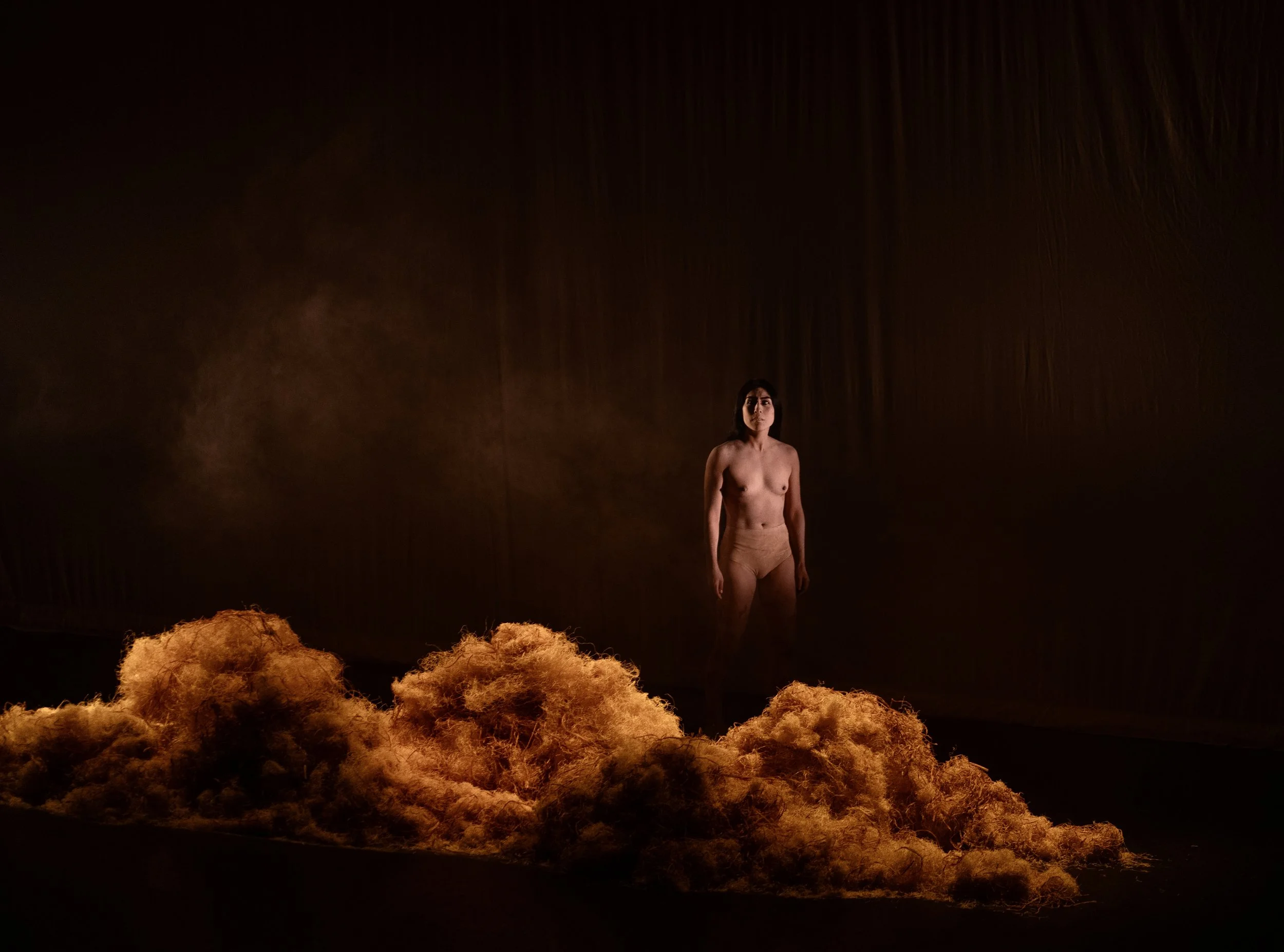
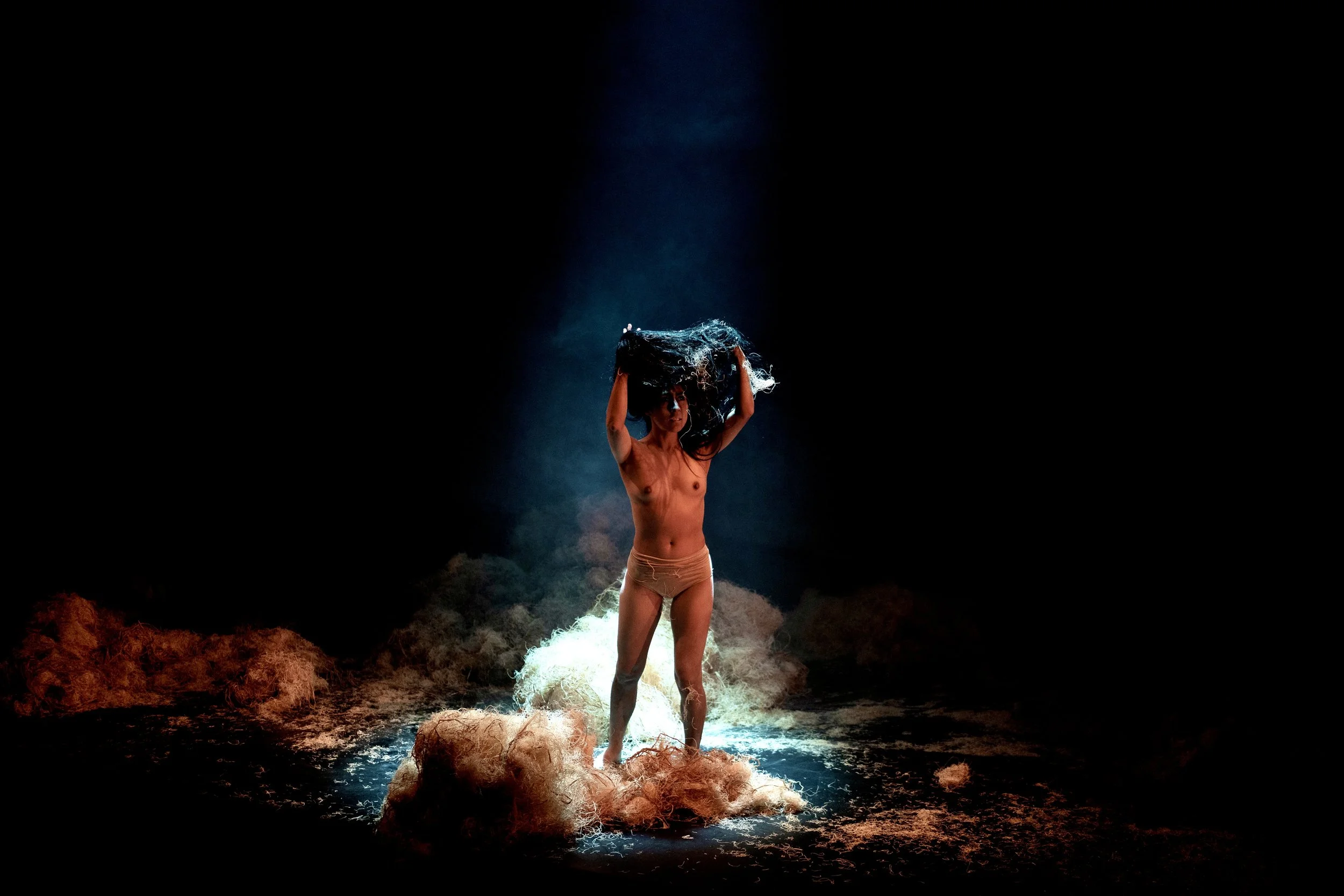
The performance featured some videomapping of images taken by Carlos of the highlands, in an attempt to depict the places that bore Rosa. The director stated that these projections function as “A door that aids in expanding the piece. Opening the possibility for an imaginary world for the audience that only those who have set foot in the Sierra de Puebla can see. They are able to feel the fog”. Throughout the piece, there is a distinct, almost herbal smell in the air that allows for the viewer to become entirely immersed in the experience of witnessing Rosa’s story. This combination of mediums was described by Carlos as “the dance being the heart, the main river of the piece, and the photography and projections interacting with it”.
Before the performance, I had the opportunity to interview the Rivera family including Carlos’ mother. We sat at a table far too big for all of us while MAI staff walked back and forth setting up the bar and all the little details for the premiere, asking us repeatedly if we needed more water. Most of my interest surrounding the piece was fixed on the transformation of a familiar story into an abstract art piece, so I asked them about what pushed them to tell Rosa’s story in this manner. Carlos stated that this piece began with an image of Rosa’s death ten years ago. Explaining that after her passing, her granddaughters were the ones who carried her casket to the grave; in opposition to tradition where the men in the family are the ones endowed with this responsibility. For Carlos, this was a demonstration of the strength and union between the women in his family as a consequence of Rosa’s soundness and matriarchal position. These ideas prompted Carlos to begin developing an exploration of this piece in 2023 during a residency at the Banff Centre.
For Patricia, the responsibility to tell Rosa’s story through her body has been a process of healing and finding oneself back at one’s origins: “it’s like getting to the marrow. To one’s origin and how it's shared with a person who was so essential in the family.” Rosa was a pillar, a necessary force that Patricia describes as a “whole cosmos of her own”. This return to familial history is necessary, for Rosa’s story deserved to be told. Carlos speaks to this by stating that the importance of telling Rosa’s story lies in the fact that “there are many Rosas since the story of migration as a consequence of poverty, violence and isolation experienced by women who are the sole caretakers of their children is fairly common within our country.” Carlos states that this piece has led to audiences finding an element of relatability in the narrative, “People feel identified with the piece. They think ‘this could be my mother’, or ‘this could have been my grandmother’”.
The performance touched on elements of indigenous identity from the pueblos originarios in the Sierra de Puebla, particularly by looking at the loss of language and traditions when assimilating in the cities. Patricia explained that her grandmother arrived in Mexico City speaking in a “borrowed tongue” (Spanish as opposed to Náhuatl), and that these assimilation processes are directly embedded with a negation of one’s identity. The creation of Rosa felt like a reckoning. Of acknowledging one’s responsibility to know and embrace where we come from. To see our background as not something distant but as a defining part of who we are and how we interact with the world around us. In relation to this, I asked the artists about the Canadian response to such an undeniably Mexican story: since the performance has been presented mostly in Canadian events (such as the festival Rutas in Toronto). To this they said they believed this is a story that could be universalized through a lens of identity and familiar connections: particularly, by focusing on the themes of maternity, migration and resilience.
After the performance, the café/bar at the MAI was bustling with people chattering, some with glasses of orange wine in hand and others grabbing the free posters on the table next to the door. The bar menu featured tamales, and I wish I had stayed long enough to try the tamal de mole.
Upon leaving the center, I stood before the poster right outside the door and thought about Rosa and her departure: both into the city and into death. Rosa decides not to flee, but to rebuild her life. In the same way the piece is rebuilding Rosa’s legacy. And I believe that Rosa’s story can be universalized. I have my own personal ties to it because my maternal grandfather was born and raised in a town quite close to Ixtacamaxtitlán. I remember the fog, and I remember the waterfalls. And I am sure that those who have the opportunity to see Rosa will recognize something about themselves within it. The piece is, in Carlos words, “an altar to her spirit”, and those who get the chance to see it will feel her essence in this hypnotic performance of grief, love, and memory.
