
The Hidden History of Foufounes Électriques
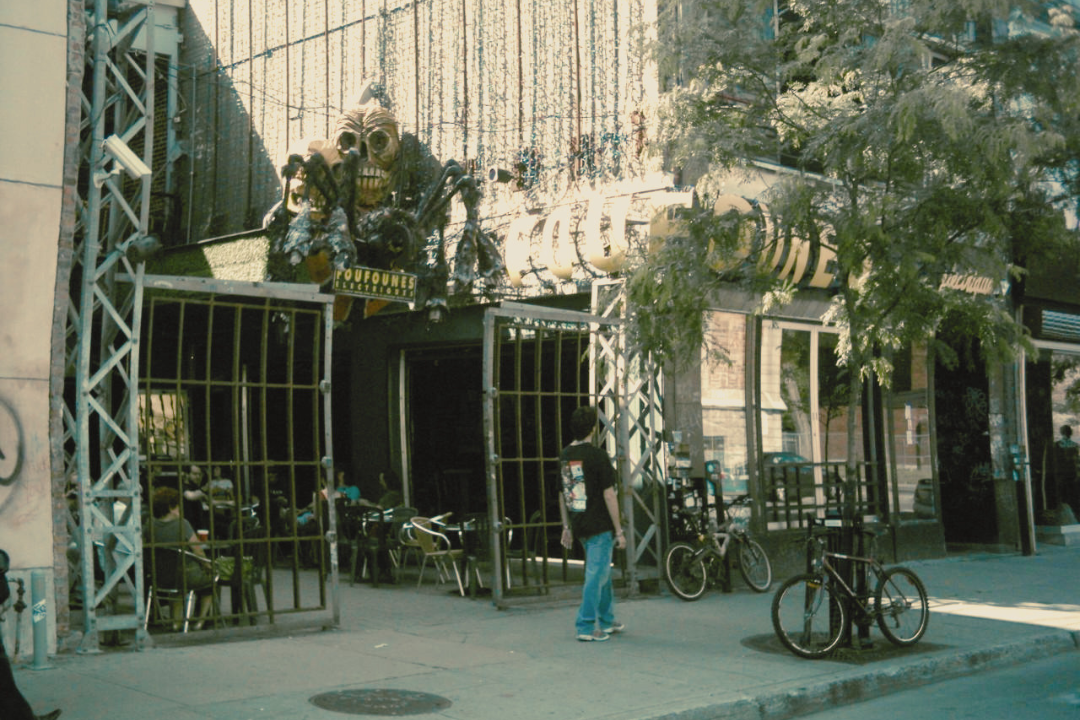
Image Courtesy of Wikimedia Commons
This Wire, written by Sarah Beaupré, with editorial assistance from Holly Rhiannon, appears as a collaboration with Stygian Media, an independent horror and paranormal press, media and video production company based in Montreal. Sarah is the host of Backstage After Dark, a show produced by Stygian Media and featured on their YouTube channel. Holly is the founder of Stygian Media, and the host of the Haunted Montreal YouTube series.
I chose Foufounes Électriques for an episode of Backstage After Dark for one selfish reason: it's my favourite bar in Montreal.
Located at 87 Sainte-Catherine East, Foufs has been home to Montreal's alternative community for more than forty years. Punk, metal, goth, rock, new wave: basically all the loud music our parents hated has passed through its doors. Green Day, Nine Inch Nails, The Offspring, Misfits, GWAR, Nirvana and countless others have all played here.
But the history of Foufounes is much older than Foufounes itself.
When I started researching the venue, I expected to find a few old businesses and maybe a fire or two. Instead, changing civic numbers, renamed streets, demolished buildings, and structures expanding into one another forced me to research 17 different addresses just to understand the history of this block.
So let's go back to the 1890s.
The Theatre
Before the bars, the punks, and the giant metal spider, there was a theatre.
A short-lived venue called Eldorado became the Palais Royal and eventually the Théâtre de l'Opéra-Comique. By 1900, the Opéra-Comique was presenting French-language opera, plays, and live performances.
During its first year, a backstage gas lantern ignited and set part of the theatre on fire. Scenery and sections of the interior were destroyed, but thankfully nobody was reported hurt. Repairs were made, and the theatre reopened.
Financial problems followed. Sheriff sales, legal disputes, and unpaid bills started piling up, and in 1905, the northwest corner of Sainte-Catherine and Cadieux (today de Bullion) was purchased by L.O. Grothe for $38,000, a major real-estate transaction for the area.
The theatre was expanded and reborn as the Théâtre des Nouveautés, a beautiful three-storey theatre with two balcony levels. It offered theatrical productions, moving pictures, and a café. A billiard hall was also operating nearby, and the block was quickly becoming an entertainment district.
Then the fires came back.
In 1915, a fire at Hôtel La Patrie spread through neighbouring buildings and damaged the theatre and café. They repaired it again.
Surely this poor building was done catching fire?
Nope.
In 1920, another major fire tore through the block during a freezing winter morning. Several buildings were destroyed, and this time the theatre's interior was essentially lost. Exterior masonry, beams, and parts of the basement survived.
Some of that older brickwork can still be seen within the modern building today. Inside storage areas, old window and doorway openings sit beside newer construction, physical evidence of a property that has been rebuilt, divided and expanded repeatedly for more than a century.
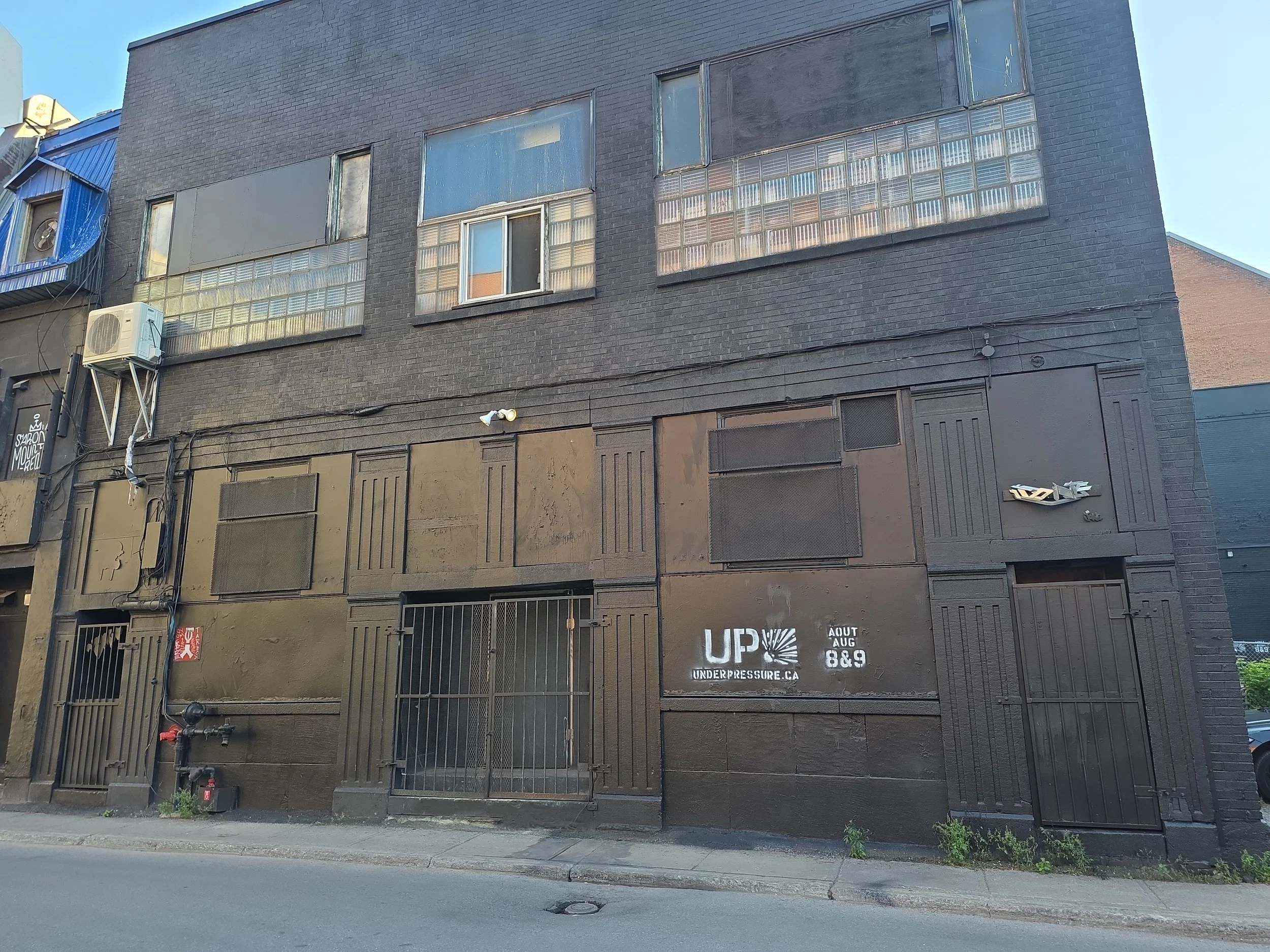
The doors of Theatres Des Nouveautes on de Bullion (previously Cadieux)
The Billiard Hall (And a Very Different Kind of Club)
After the fire, the address history becomes an absolute nightmare, so I followed one business I could trace more easily: the billiard hall.
Known first as the Atlas Billiard Hall, it later became the Grand Central Billiard Hall, which appears in directories into the late 1930s. Upstairs, a phonograph business occupied space for years.
This is when things became considerably more interesting.
A private social club called the Métropole Charter Club eventually operated at 87 Sainte-Catherine East. Its provincial charter dated to 1937, and by the early 1950s, records clearly connected the club to this address.
On paper, it was a private social club. However, in testimony years later, it was described as a place where gambling took place, including barbotte and card games, and where police conducted repeated raids.
One of its former managers was Giuseppe "Big Pep" Cocolicchio. By the early 1970s, Big Pep was testifying before Quebec's Commission of Inquiry on Organized Crime about his years in Montreal's gambling world. He spoke about managing the Métropole, its police raids and his friendships with some very recognizable names from Montreal's criminal underworld, including the Cotroni brothers.
So this little billiard-and-phonograph building had officially taken a turn.
The last major event I found involving the Métropole itself was a 1960 police raid that resulted in dozens of arrests. And the club was hardly alone. By the 1940s and 1950s, Montreal's Red Light district was packed with gambling rooms, cabarets, brothels, bars, and nightclubs.
Café Royal, Café Vic, Café Pal
A few doors away, at 97 Sainte-Catherine East, another important part of this story was taking shape.
In 1942, Café Royal appeared, with Armand Courville and Vincent "Vic" Cotroni later advertised as proprietors. Courville was a businessman, politician, and former professional wrestler. Cotroni was an Italian immigrant who had also wrestled and worked as a bouncer before becoming one of the most influential organized-crime figures in Canada.
When a journalist once asked Cotroni what kind of work he had done throughout his life, his answer was considerably less dramatic: "A company that makes pepperoni for the pizza."
He was referring to his involvement with Reggio Foods, which sounds incredibly innocent compared with everything else connected to his name.
Café Royal eventually disappeared and was followed by Café Vic, with Cotroni identified as one of its owners. Café Vic was a full cabaret, hosting gala nights, dancing contests, live music and comedians. One of its recognizable managers was Eddy Sauvageau. Newspaper advertisements promoted birthday celebrations for him at the club, making him sound like one of the faces of Café Vic.
In 1957, Sauvageau was murdered in his apartment in what later accounts described as a contract-style killing. Later reports would even refer to him as one of the early "kings of the Main."
Around this same period, Café Vic was changing. Advertisements began appearing for a contest to give the café a new three-letter name, followed by notices announcing: "New Administration!"
Soon, Café Vic became Café Pal.
And Café Pal was a VERY different place. It advertised 20 exotic dancers, no cover and no minimum. Police records involving the club started piling up: after-hours violations, gambling investigations, prostitution investigations, morality-squad raids, licensing problems, and reports of minors being found inside. At some point, it seems like practically everybody who walked through the door risked ending up in a police report.
Then came 1960.
Frank Ouellette, 35, was fatally shot near the entrance of Café Pal. Police investigated the killing as a possible gangland settling of accounts. Not long afterward, Marc-Aurèle Mongeau was found fatally wounded nearby, close to Sainte-Catherine and de Bullion, in another case police associated with Montreal's criminal underworld.
By 1969, authorities seized and suspended Café Pal's operating permits after determining that licensing conditions had not been respected. The business appears to disappear from the record soon afterward.
The Time Capsule
And then the space went quiet.
When musician John Sobol was brought into the abandoned club area in 1979, he later described something close to a time capsule. Behind a metal gate and heavy door were years of dust, peeling silhouettes of showgirls, martini glasses still behind the bar, and an old office containing a large safe. Beside it was a fading photograph of none other than Vic Cotroni.
François Gourd, one of the future founders of Foufounes Électriques, later remembered an old bulletproof door still being present on the second floor.
Instead of leaving the space to collect dust, musicians began using it again. A project called Les Clochards Célestes developed into an experimental theatre and creative space, hosting jazz, theatre and unusual performances. By 1982, the Zoobar had arrived, leaning further into new wave, rock, film screenings, poetry, and alternative art.
Zoobar was creatively ambitious. Financially? Less successful. It went bankrupt.
Foufs
And finally, in 1983, François Gourd, Normand Boileau, and Bernard Paquette took over the space and created Les Foufounes Électriques.
Their idea was simple: they wanted their own playground. A place where they could create shows, music, visual art and whatever strange project interested them without constantly asking somebody else for permission.
And apparently Montreal was READY for it.
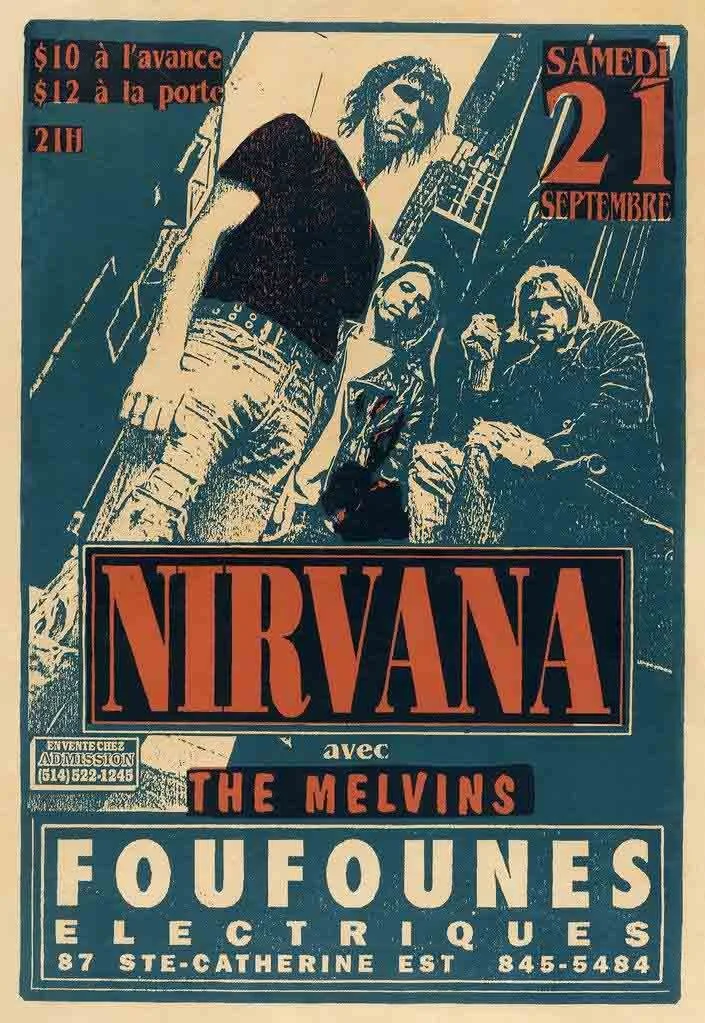
Nirvana Poster (1991)
Foufounes became an alternative arts laboratory. At live-painting events, artists were handed enormous canvases and created work in front of crowds surrounded by smoke, noise and music. Finished pieces were displayed and auctioned.
The music scene exploded too. Nirvana played Foufounes in 1990 and again in 1991, shortly before becoming one of the biggest bands in the world. Smashing Pumpkins, Pixies, Black Flag, Primus, and many others would also pass through. The name Foufounes Électriques was beginning to travel.
Unfortunately, being culturally successful does not necessarily mean being financially successful.
In January 1993, Foufounes filed for bankruptcy. Businessman Georges Guart purchased it shortly afterward, keeping the venue alive.
Then came one of its ugliest battles.
In 1994, police alleged that the Rock Machine had gained influence inside the club and claimed large quantities of drugs had been sold there during the previous summer. Authorities brought forward dozens of allegations connected to the venue. New management, including Samuel Turcotte, argued that many of the problems predated their arrival and began implementing police recommendations.
It wasn't enough. The liquor board revoked the venue's alcohol permits. Around 50 employees lost work. A petition opposing the closure gathered roughly 15,000 signatures, and about 350 people protested outside the Palais de Justice.
And this wasn't just a crowd of punks. People from completely different parts of Montreal showed up because by this point, Foufounes wasn't simply another bar in the old Red Light district. It had become a cultural home for Montreal's alternative community. They weren't fighting to protect a gambling room or some old mob club. They just wanted somewhere to make weird art and bang on some drums.
The business failed in 1995, but even that did not kill Foufs. A new corporation, Le Krash, took over and received a new liquor licence under strict conditions, including not being allowed to have "violent decor." Despite the legal changes, the Foufounes Électriques name survived.
And that might be the most consistent part of this entire story.
By the time a UQAM master's thesis examined Foufounes in 2008, the venue had gone from "underground" to what the thesis called "overground." Tourists photographed it. Longtime regulars debated whether it had become too commercial. New generations kept arriving. But the art, music and weirdness stayed.
Foufounes continued hosting concerts, visual artists, and live painting, while its relationship with Montreal's “Under Pressure” graffiti and street-art festival became part of the neighbourhood itself.
It went through another liquor-board suspension and survived COVID, and in 2023, Foufounes Électriques celebrated its 40th anniversary.
Today, it still operates at 87 Sainte-Catherine East.
After more than a century of theatres, fires, billiards, gambling rooms, cabarets, organized crime, police raids, bankruptcies, punk shows and changing generations, the most surprising part of this entire story may simply be that the place is still here.
Foufs is still Foufs.
