
Connection Through the Passage of Time
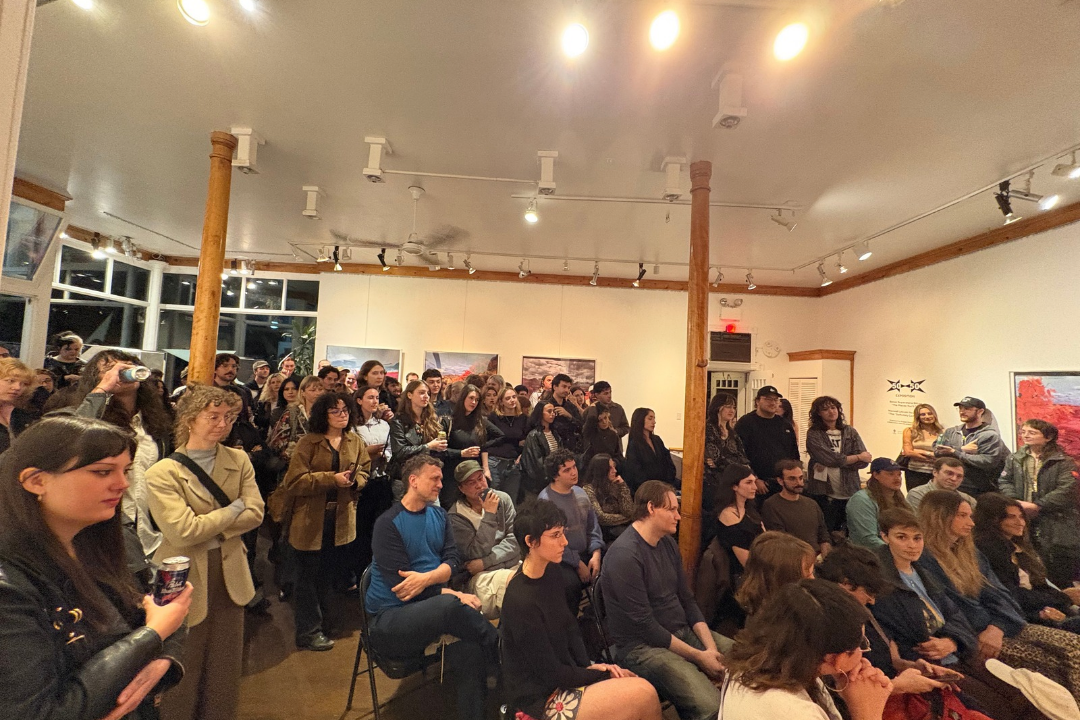
On October 1st I attended the opening night for the 50/50 Exposition, held at Galerie le 1040, a small neighbourhood gallery tucked away in a corner of Marie-Anne Street and Av. Christophe Colombe — an otherwise quiet intersection buzzed with sound, people, and light. It was impossible to miss, as much as it was impossible to walk through the sidewalk that served as a smoking area later in the evening. Upon entering, I saw a baby crawling on the floor, friends hugging, people laughing, and was greeted by the smell of fresh lilies coming from a bouquet by the front door.
The photography exhibit was curated by Maggie Rossy-Aulman, bringing together the work of Simon Suparatana Blitzer and Maxwell Lincoln Neubacher, whose works contrasted in form and style, but met at the intersection of themes like belonging, coming of age, and identity formation in unfamiliar spaces. Inside the gallery, Blitzer’s and Neubacher’s pieces differed in size, colour, and subject matter, facing one another from opposing sides of the gallery. On the right, Neubacher’s pieces hang against a white wall. Depicting an interesting progression of day-to-day photos of people in front of bodies of water, at the forefront of a house, a car, and finally just people (a trio). Followed by a second section of photographs against the gallery’s brick wall where the subjects of his practice become narrower and narrower through portrait images of people in intimate settings, with a candid earnestness to the composition. The photographs evoked a sense of familiarity in the faces of strangers and I thought to myself, these images felt like people I had met before, places I had seen, colours vibrant enough to jog a false memory into place. Neubacher’s collection This *Definitely Can’t be it, shows a progression: a conjunction of slice-of-life photographs and remnants of a past that feeds the present, a peek into someone else’s memories that can feel as one’s own.
Blitzer’s pieces hang side by side on the left wall walking in: depicting naturalist rural images of Alberta with pink, red and orange hues, pointing at imaginary roads leading somewhere. The first piece on the left showcased a pink grassy field with an orange treeline, adorned with barbed wire that feels more like an invitation rather than a warning. Next to it, yellow grass and greyish skies draw the viewer to look into the deep shades of blue of the water running in between the two halves of land. According to Blitzer, shooting with infrared will make blue look almost black, allowing for this illusion of depth that led me to stand very close to the pieces to see the cyan undertones beneath the darkened waters. Blitzer’s collection The Places You’ll Go, points the viewer towards the imaginary, the unreal and that which allows us to make sense of the unknown through cultural references made our own. By finding potential in the spaces beyond the familiar, Blitzer’s work felt like an ode to possibility.
As the night went on, crowds continued to enter and move through the space, greetings were exchanged, and the bar at the far left end of the gallery never seemed to be empty. With a selection of wines and the quintessential Zamalek, people hung around the space for several hours, shifting from one corner to another in a gallery that suddenly seemed too small to hold everyone in. In the midst of the bustle, I had the opportunity to speak with Maggie Aulman about the curatorial process behind the exhibit, as well as her approach bringing together Blitzer’s and Neubacher’s practices in such a cohesive visual and thematic way. Aulman laughed at the first question and stated that in the beginning, when the artists approached her, they themselves did not see a lot of similarities between their work: “they wanted to put down a line of tape in the middle of the room so their work would be separated.” Yet she prompted them to choose a shared, undivided space, where their practices could exist in conversation with one another. Aulman commented on the fact that most of the similarities and thematic undertones to the exhibit were explored during the grant writing process (since the exhibit was supported by the Refugee Center of Montreal and the Canada Council of Arts) where the artists started to see more duality in the work and the deep-seated focus on belonging and finding identity in the in-between.
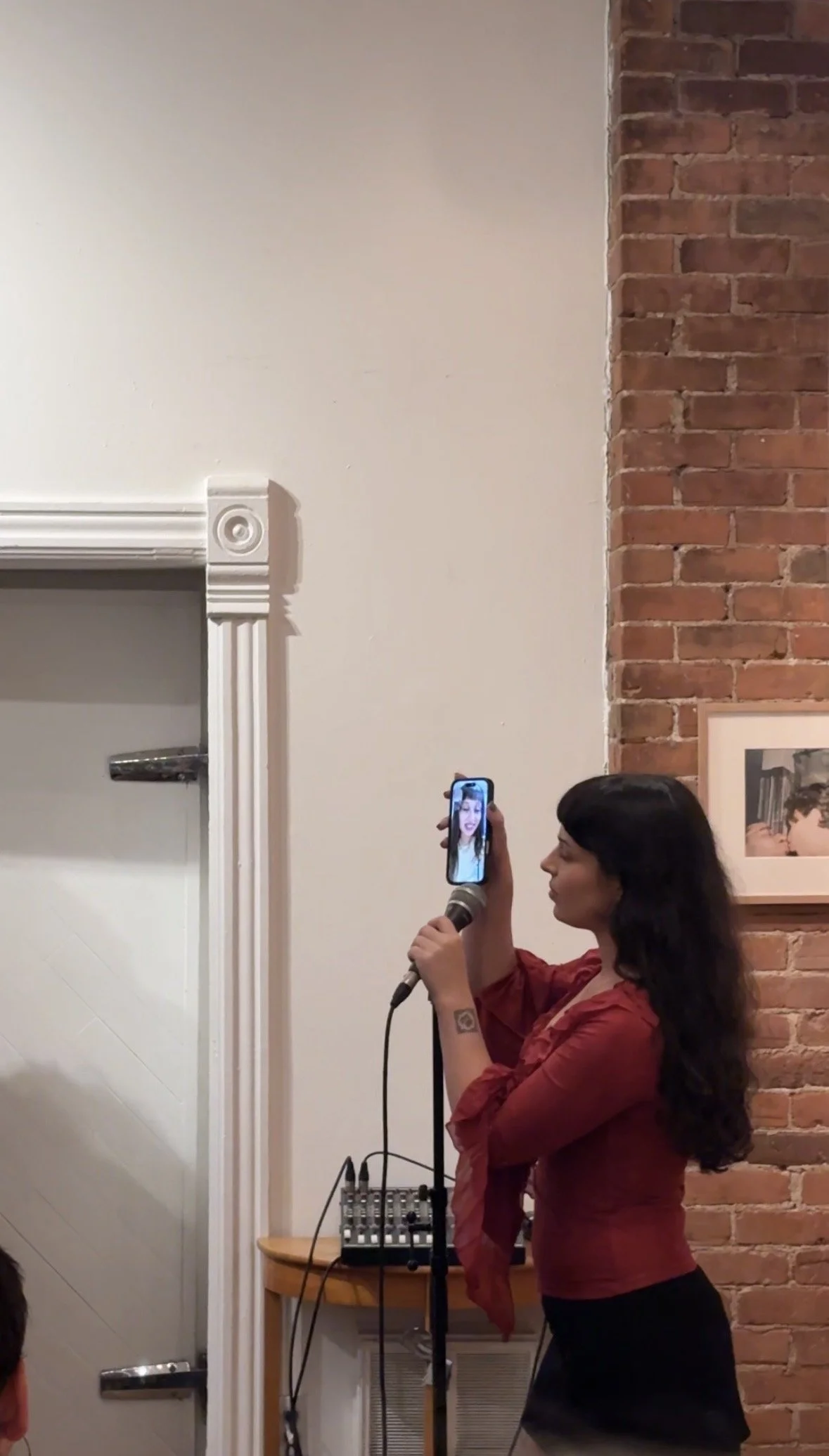
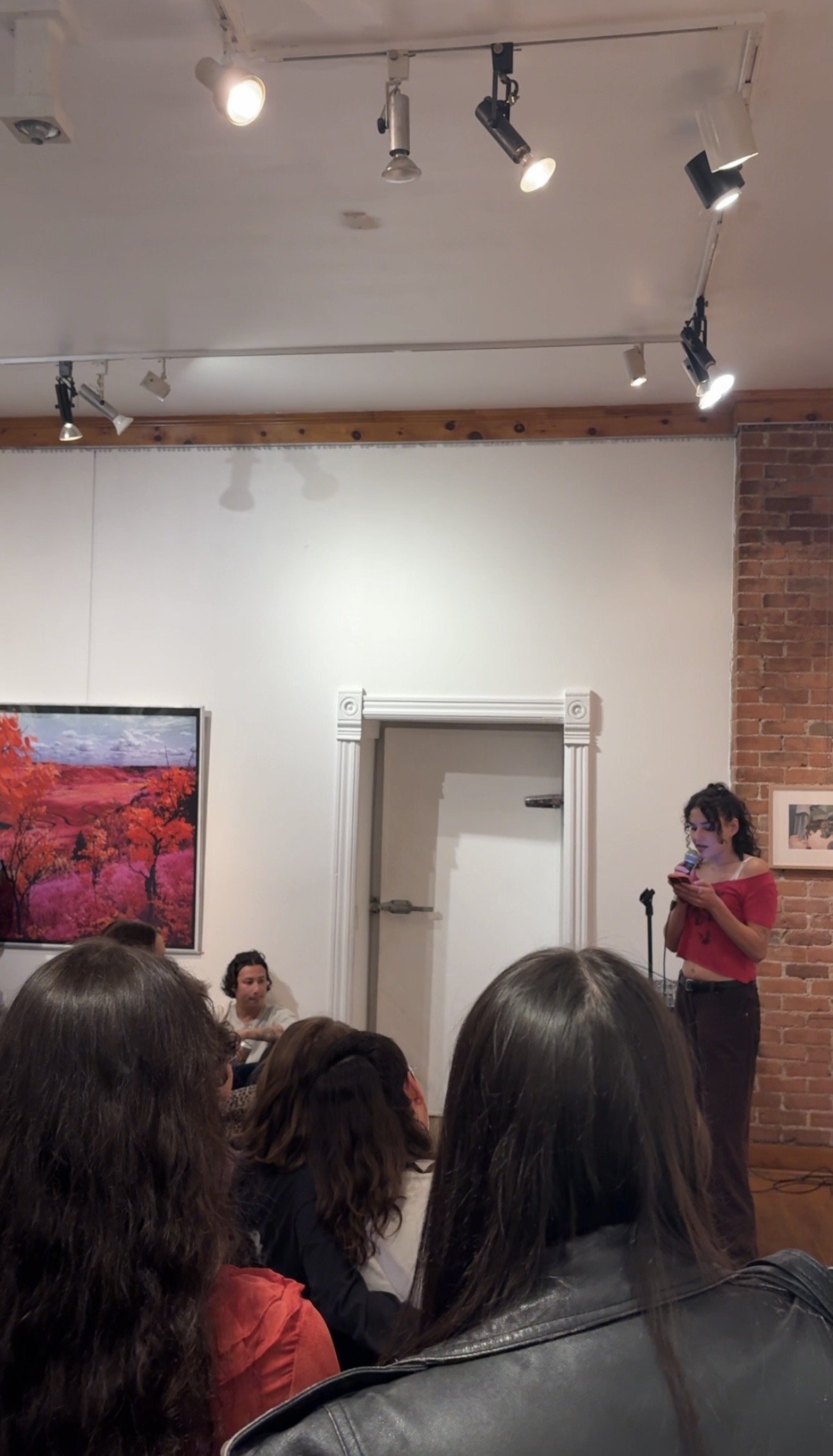
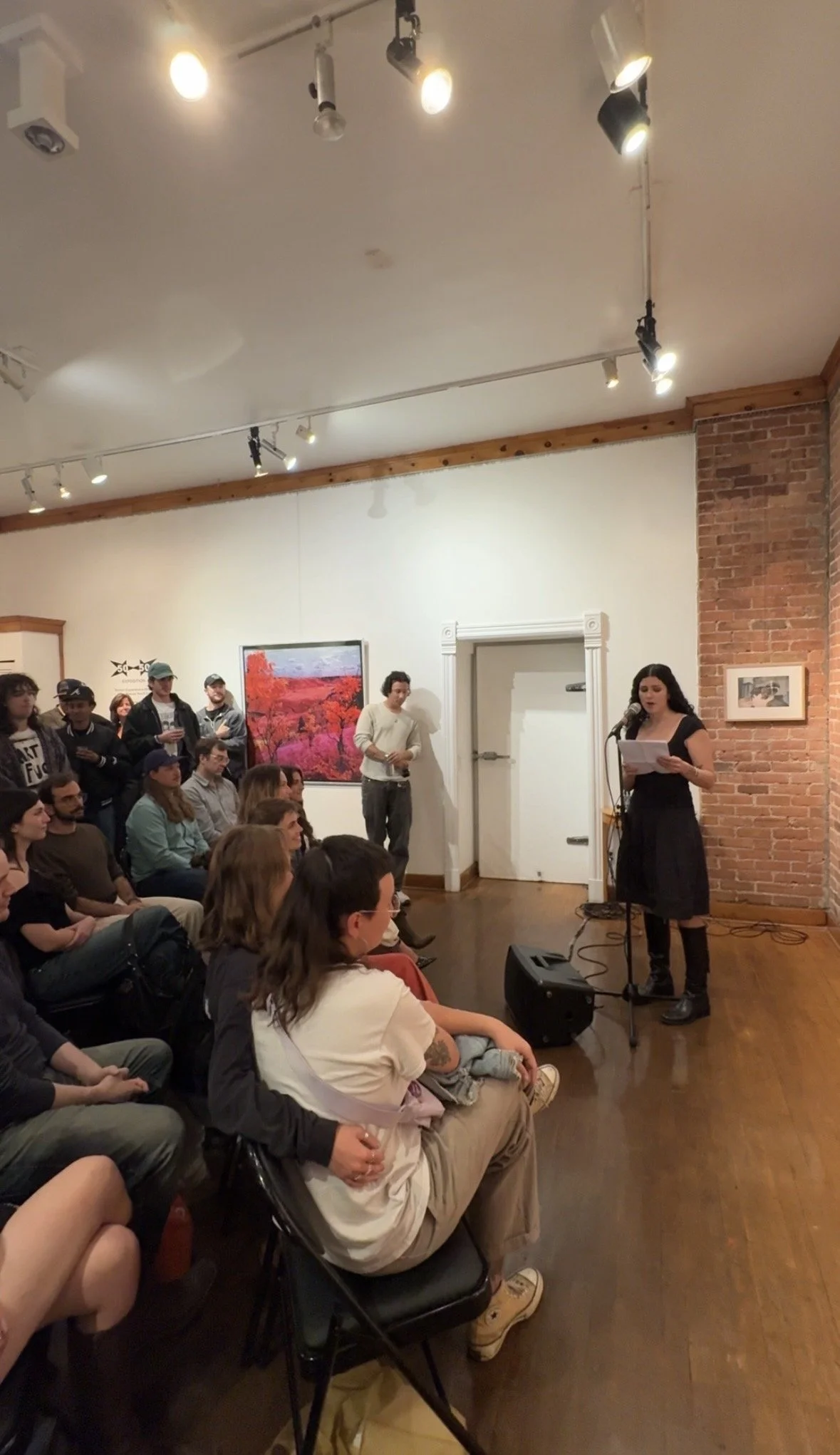
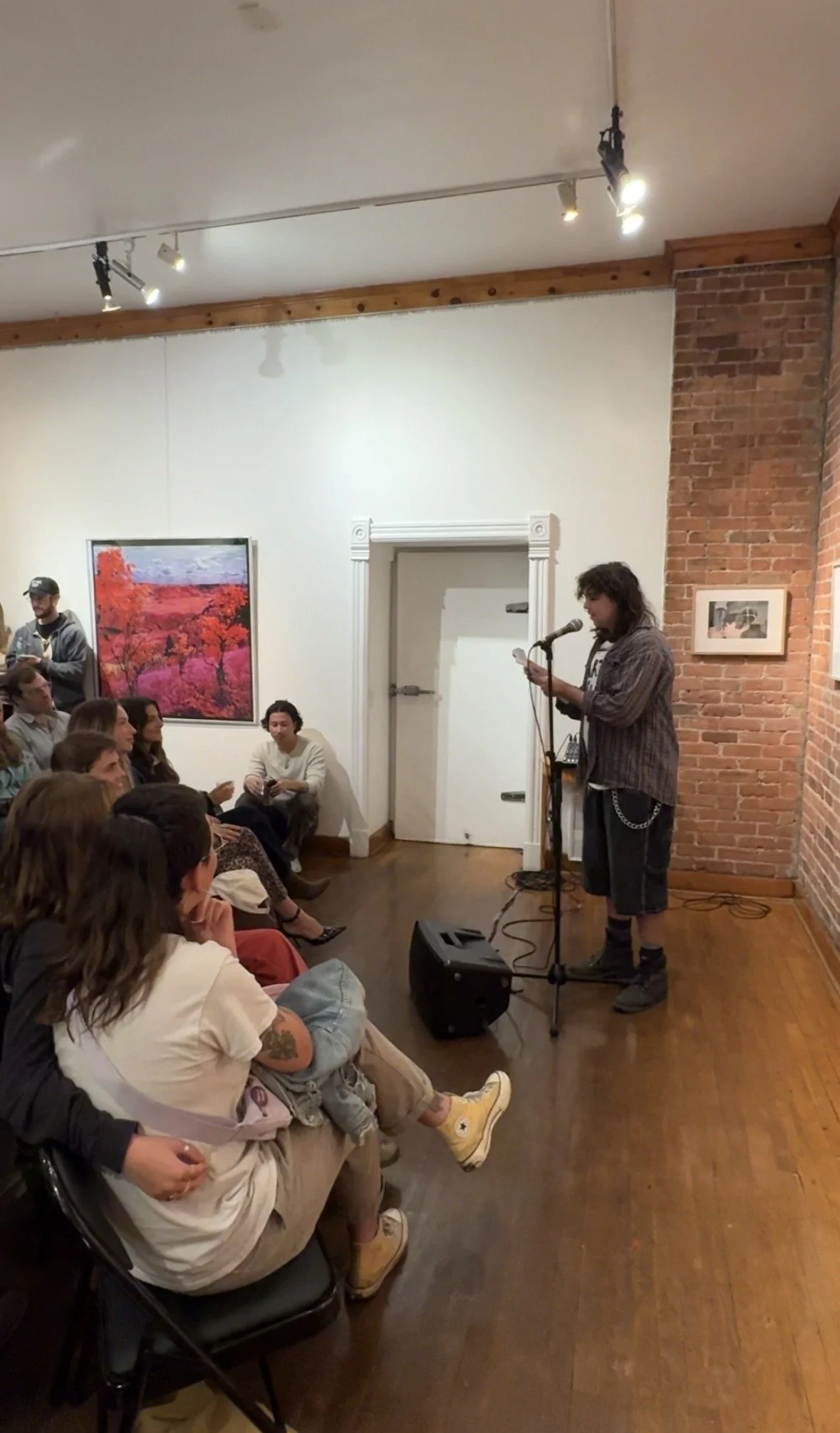
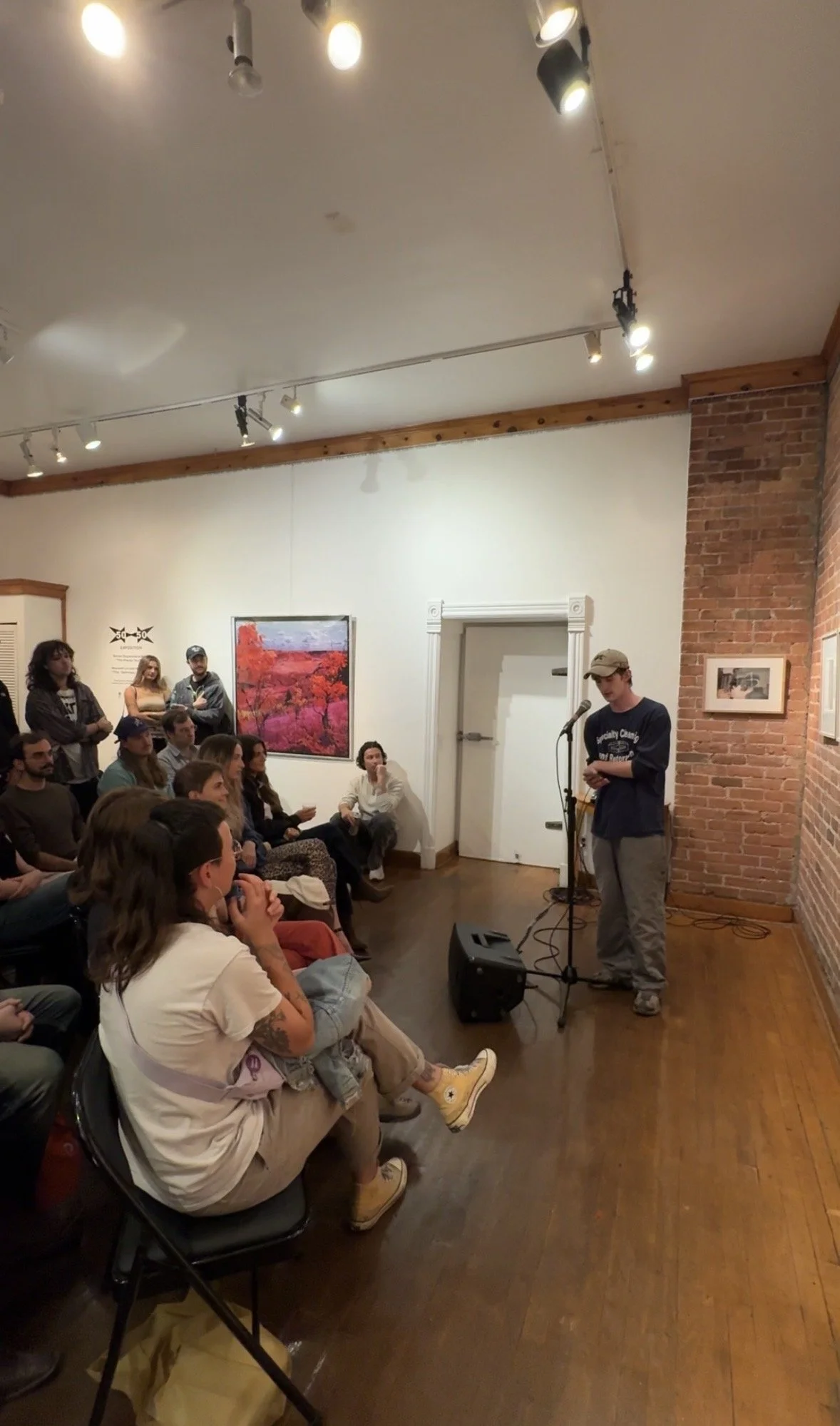
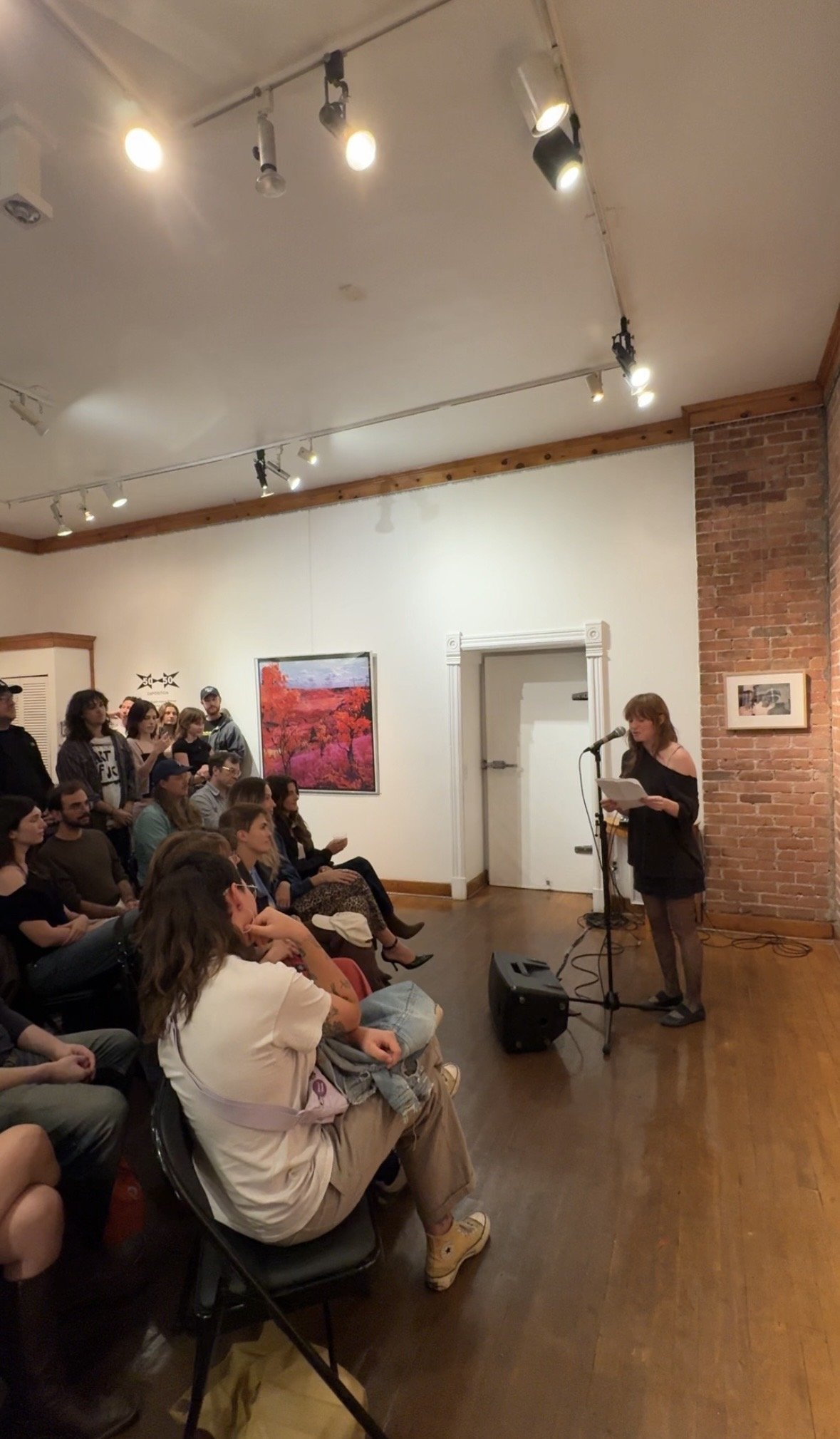
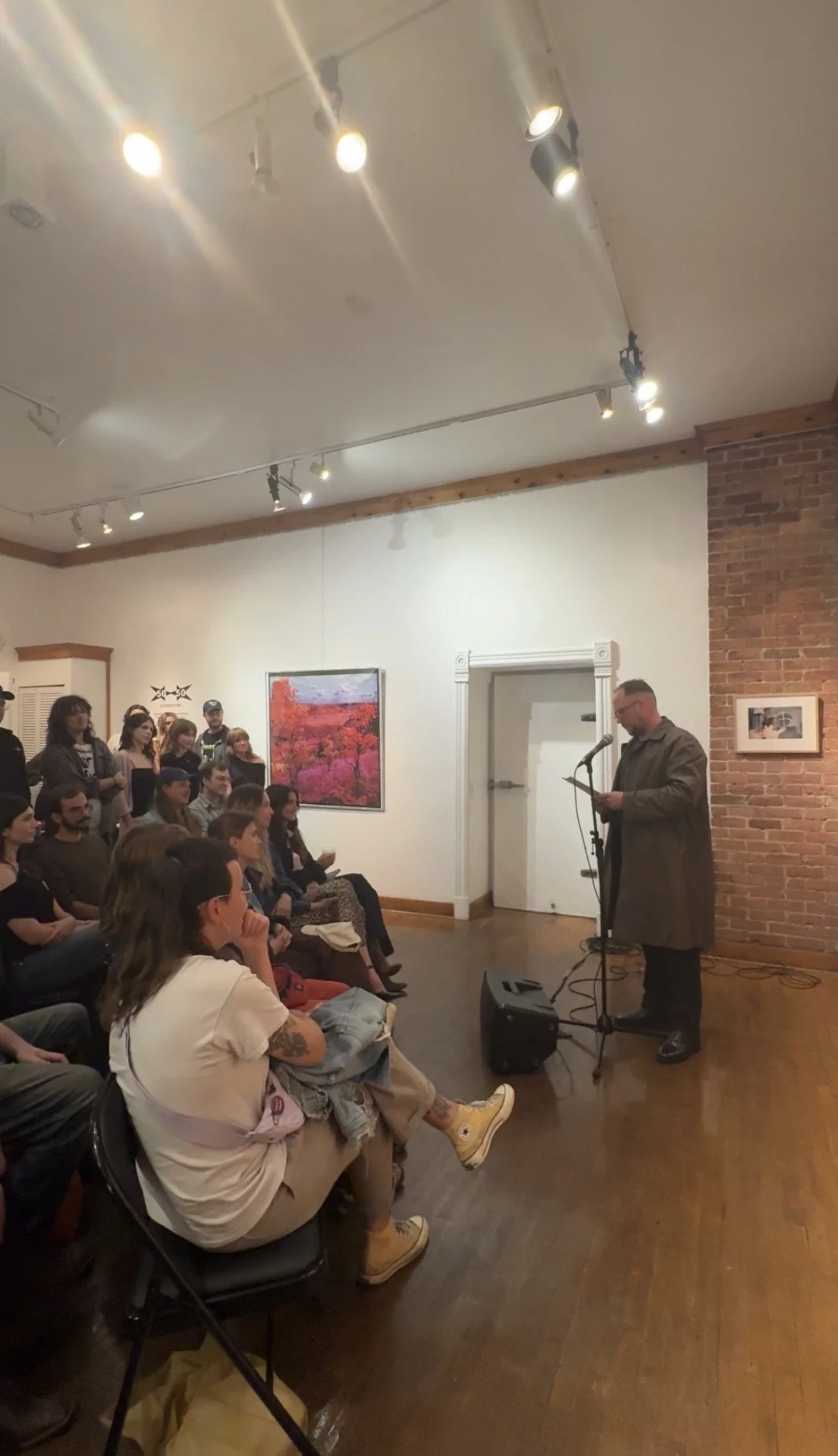
The exhibit has a stacked programming for the days following the vernissage, ranging from literary readings to movie screenings and artists' talks. I asked Aulman about the aim behind the variety of events, and she expressed that she was highly compelled to have an interactive aspect to the expo. She is interested in creating spaces where “all the senses are activated” by having music, reading, eating, films and talks. The exhibit engages with the attendees in a way that goes beyond the passive engagement with art pieces in a gallery. Additionally, having such a wide variety of events allows for different kinds of crowds to come and enjoy the artwork. Aulman hopes that people get to appreciate the art and reflect, especially by physically reacting to it: “I like seeing people smirking or pointing, having a physical reaction to the work and taking home something new”. Alongside this, Neubacher hopes that people from the neighbourhood will stop by and come into the exhibit throughout the week, which is something that was already happening on the night of the vernissage. I saw people walking dogs, holding hands, and simply stopping by the door to take a picture of the poster.
On Friday, October 2nd, day two of the exhibit after what reportedly was a very late night after the vernissage (Aulman said they had to send people home by 11 pm), the second event in the programming took place: a reading hosted by Punisher: a New York-based reading series created by Sarah Velk and Kennedy Wright. Upon arriving on the 2nd, the gallery space remained almost as busy as the previous night: the three rows of chairs set up for the audience were already full an hour before the readings even began. Most of the attendees ended up standing in every bit of the empty space around the gallery (which was not a lot). Attendees chit-chatted in groups and exchanged greetings with each other, while a DJ set by Blessed Gotti filled the room. The reading featured Montreal-based authors and writers, namely Zak Jones, Mel Kornfield, Pip Morrison, Meatball and Eva Rizk, with a piece by Sarah Velk in between. At 9 pm, Velk commanded the attention of the room for the reading to start, and highlighted how Canadians are much nicer than New Yorkers when being asked to pay attention (no “fuck you’s” were heard when asked to be quiet). After a brief introduction to the reading series, the readings began creating a whirlwind of flash fiction, autofiction, and short stories that bridged the cynical and the comedic. Following thoughtlines about how time is a flat circle and contemporary references will be obsolete in 5 years, the readers presented pieces that made writing in the current era ever so relevant: lodging in personal experiences in between metaphors of large language models or Jesus delivering the gospel through a street interview on Instagram Reels. The audience laughed at the irreverence of some of these texts, and giggled at the comedic nature of fictional stories taking place at the glue factory or at the Canadian American border crossing.
After an hour that seemed to pass in an instant, the readings finished, and the gallery returned to its natural state of chitchat and background music. Leaving the audience with the remnants of the words brought by Punisher only in our memory. In the end, 50/50 was about connection and the passage of time. It seemed to me like the in-betweens are only as transitory as we want them to be: for there is certainty and familiarity in the community to be found in strangers and in the unknown. If you still have time to catch it, go check out 50/50 Exposition and the events to come in this upcoming week: such as the Finnisage BBQ at 6 pm on October 8th, followed by an Artist Talk with both Neubacher and Blitzer starting at 8 pm.
WHAT: 50/50 Exposition
WHERE: Galerie le 1040 at 1040 Marie-Anne St. Est.
WHEN: From October 1st to the 8th.
METRO: Mont Royal (Orange)
DETAILS: 50/50 Expo, Punisher
