
Stolen Voice: How Illness Reshaped My Art
Aimee Louw is a writer, journalist and creative writing teacher. This is part one of four of a series on how writing short poems connected her to Montreal's arts communities and her own artistic practice.
What happens when a broadcaster loses her voice? When a writer loses the ability to write or read?
Watch the liquid reach up toward the first red line. Hold your breath as it reaches farther.
‘Keep going, no more red lines’ recites my inner monologue.
But I already know that the second red line is going to appear. Sure enough it does within five minutes. I wait the obligatory 15 minutes before officially declaring that yes, I have Covid for a second time. It’s such a common experience that it’s not newsworthy. The World Health Organization’s data on the total reported number of cases worldwide is 779, 339, 266 as of September 7, 2026. They believe it’s actually much higher because so many cases are asymptomatic or mild and go unreported. But I promise my story will be newsworthy.
I laugh as I register the positive test result. You know when you laugh at something because you don’t know how else to react? Because the first infection a year prior had given you asthma and breathing problems and you are too afraid to face what the second one will bring head-on so you laugh.
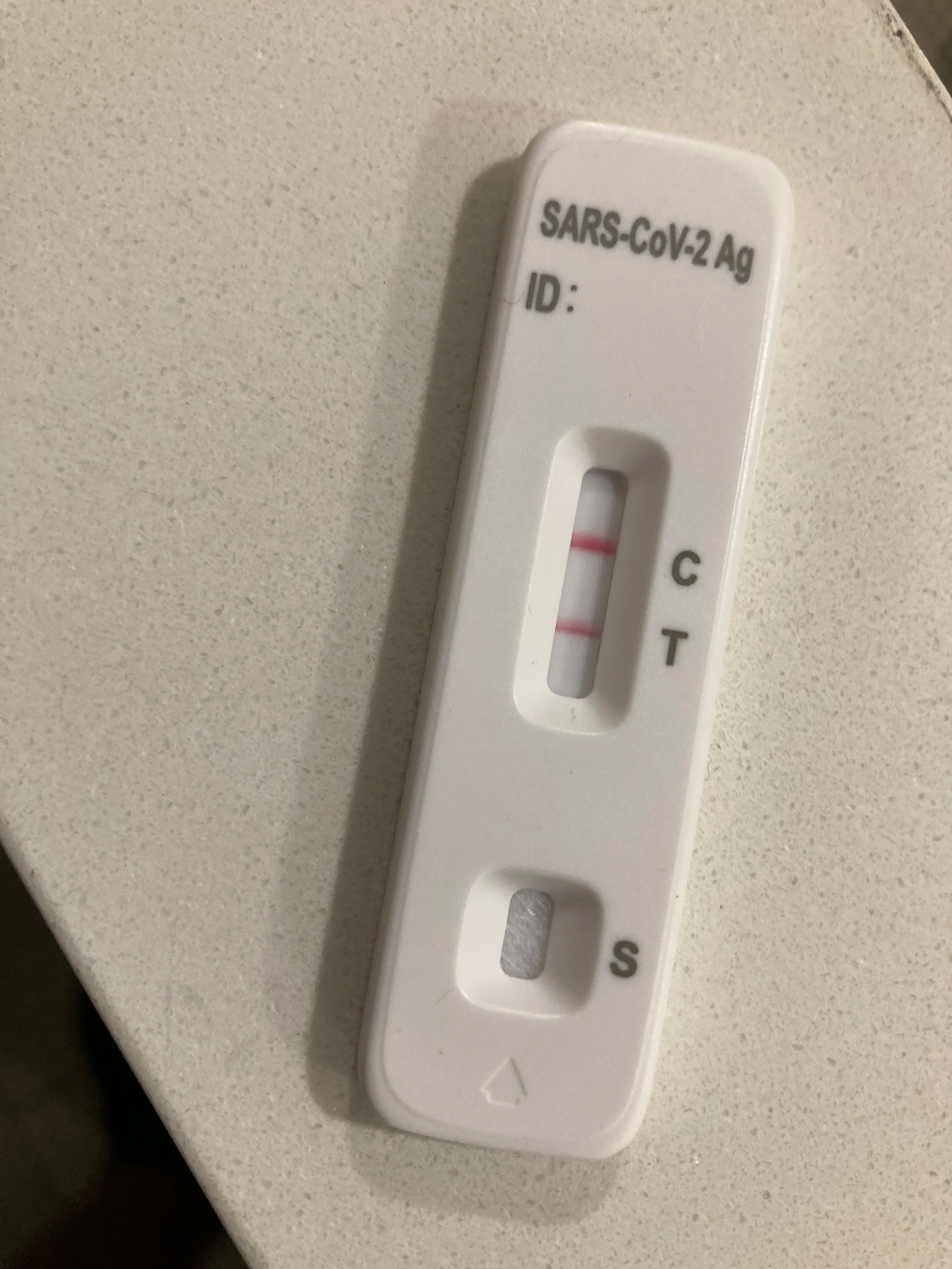
With a straight face, my partner asks why it’s funny.
“It's just that the person that I interviewed the other day said she was sick and I was too stressed about deadlines to take the time to put a mask on.” At that time I was masking everywhere in public and I still do. Except that night.
“It’s kind of funny.”
He doesn’t think so.
I was working at CBC my dream job as a broadcast journalist and writing on the side.
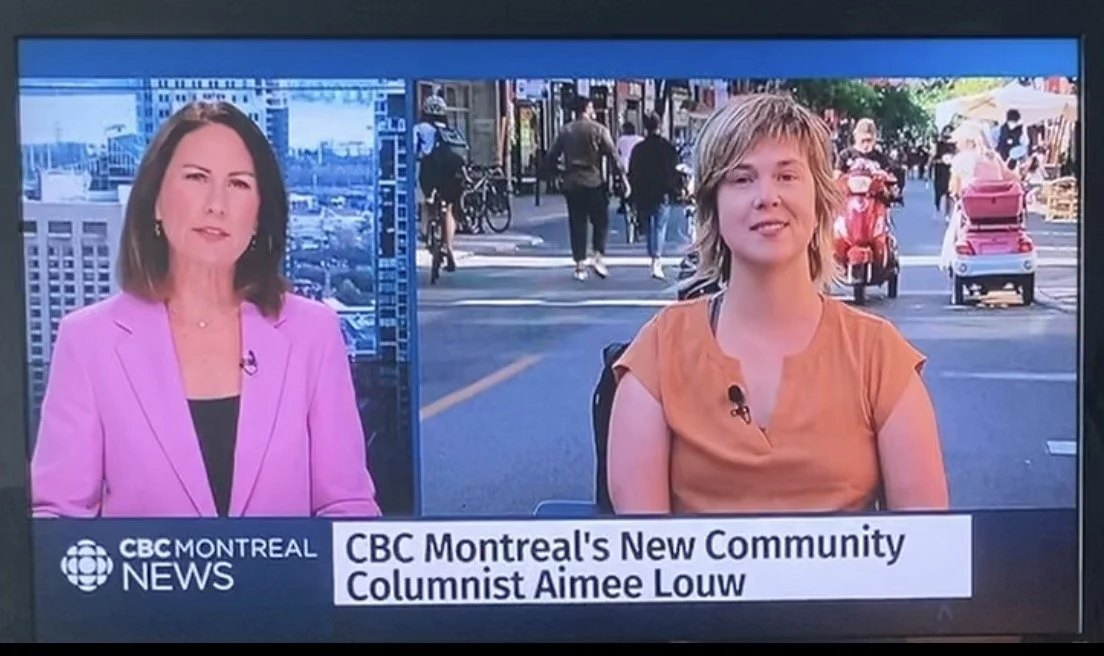
I identified with my work, like so many people do. I was Montreal’s Community Columnist. There was the metal singer using growling to deal with mental health, the Kanien’kehá:ka chef combining traditional French and Mohawk cuisine, and my wheel-along interview with musician and writer Rae Spoon.
Being one of the only wheelchair-using journalists in CBC/ Radio-Canada’s Montreal station. I wanted to do a good job and open the door wider for other disabled journalists. I felt a lot of internal pressure.
Having grown up in a household where CBC Radio was always playing in the kitchen, I was proud to work there. This is the kind of job people actually understand. Whereas if you say, ‘I write poetry’ they just kind of glaze over.
How illness gets in the way of life and art.
At the same time, I had been developing a series of writing workshops building on the knowledge I’d gained from working at The Walrus, producing events for the Growing Room festival and in story meetings to break down the barriers for other creatives to tell their stories. I had just been awarded a Canada Council grant for a poetry project. And as if that wasn’t enough, that fall I was to finish a part-time creative writing diploma at Simon Fraser University.
A lot was happening at once.
To say I was an overachiever is an understatement. To say I dealt with anxiety and a sense of work scarcity by doing so much and pitching and delivering and being productive is obvious. A major way of coping with being one of the only visibly disabled people in my role was by expressing it through poetry.
I was getting notifications on my work phone as I texted my manager.
I’m sorry, but I just tested positive for Covid so I won’t be in to work tomorrow.
She sent me the link to declare my sick leave to our insurance company.
Please take care and see you soon.
What to do when Long Covid takes art away from you.
The first few days after infection can be deceiving. After that second red line appeared, I didn’t feel that sick. I had a dry cough and a headache. I had to cancel my Halloween plans to hand out candy with friends on Lasalle Ave that week. I didn’t even feel sick enough to argue my way into getting Paxlovid the second time like I had the first. I really wish I had because for years I have wondered whether the outcomes of this infection would have been reduced if I had taken it.
But shortly after, I realized that this was serious. I lost my voice. I couldn’t concentrate. I couldn’t stand up for fear of fainting.
I’ll try my best to describe the next few weeks, but I have no record of it because I couldn’t access my regular form of coping — writing. In fact, I could barely read short text messages, let alone a paragraph or poem. Consequently, my relationship to art and storytelling felt severed.
Writing workshops and events are a major way I connect my art practice to community.
The writing groups I was a part of witnessed three minutes of me online before I had to go to bed. The writing workshops I had planned, the pitches, my art communities, poetry events, queer variety shows, they kept going, but for me everything was on hold.
My writing certificate program was wrapping up and my final portfolio was due a few weeks after infection. When I would try to sit down and finalize it , the wires in my brain glitched and thoughts dissipated. The things I normally prided myself on - creativity and artistic expression, were lost to me. My partner, a software engineer, got a real taste of the writer’s life when I recruited him to format my portfolio because I simply couldn’t.
There may have been a thin line of spider web filament still connecting me to writing but my Covid-altered visual processing didn’t allow me to see it. And if there was filament connecting me to the artistic communities I was a part of, I couldn’t sense it anymore.
Was I still an artist if my art form and communities were out of reach?
How do you deal with a body that changes in unexpected ways?
The only writing I have from this time is in my notes app from me writing keywords telling my partner what to say to the 811 doctor during my appointments.
Let me back up.
I didn’t have a family doctor at this point, so in order to see a doctor we had to call 811. But after those first few initial days of not feeling too sick, I lost my voice and my capacity to think or be upright.
My partner called 811 for me as I sat silent. The nurse on the line arranged an appointment for me at a walk-in clinic the next day.
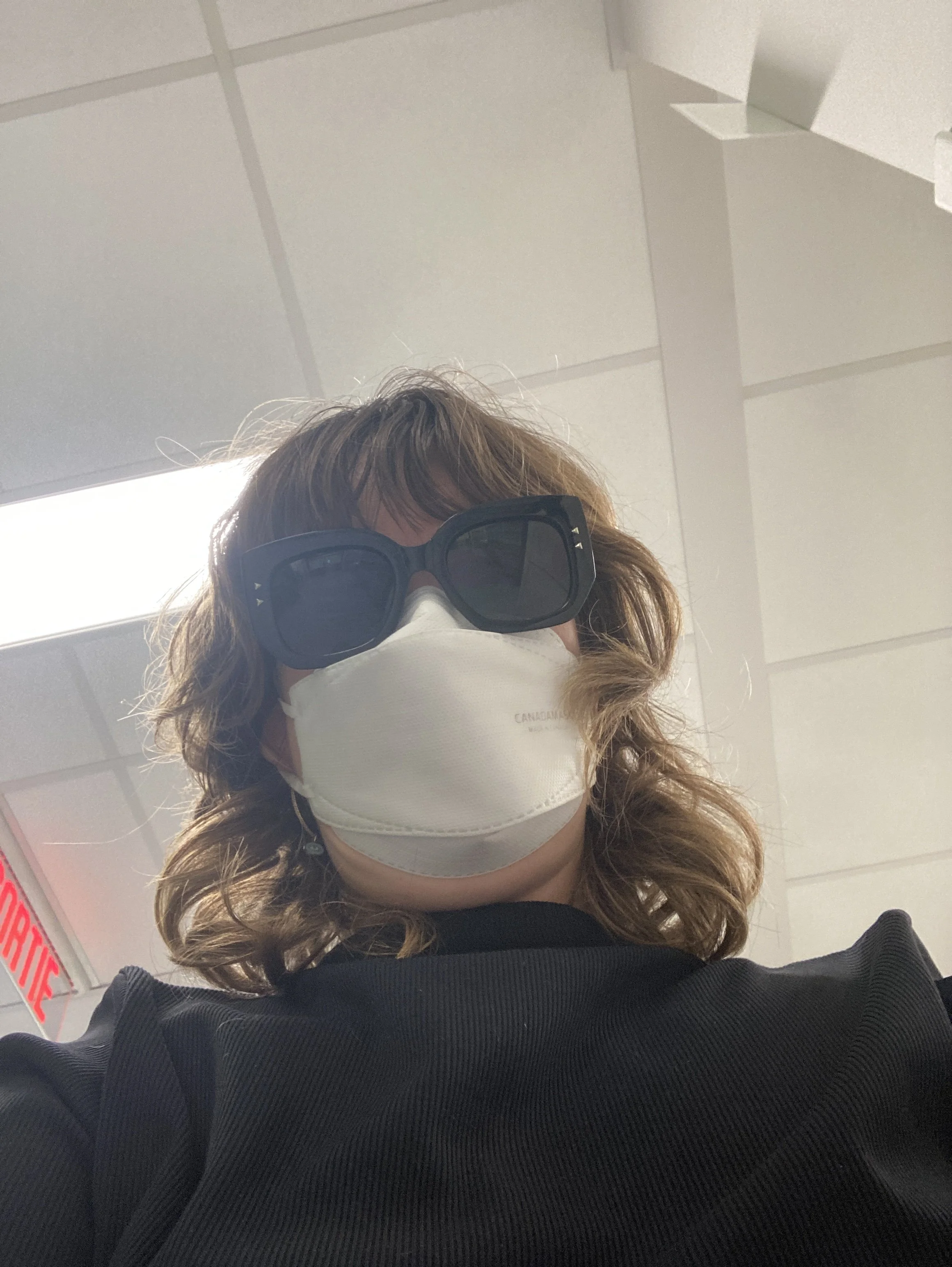
The lights in the waiting room are unbearable. I wear a baseball cap pulled down over my eyes with the darkest sunglasses I have. Noise cancelling headphones block out the sharp strangulation of chair legs scraped on the linoleum floor and a child’s cry or giggle of delight. I have to remind myself to exhale because my autonomic nervous system only inhales. I wonder if the doctor will attribute my wheelchair use and prior disability to these new and completely unrelated symptoms. Jotting the following few notes down for J takes the remaining energy I was trying to conserve for the appointment itself:
Priority: another week’s renewal of short-term disability leave.
Ask doctor if he thinks my voice will come back.
Why am I so dizzy when I stand up?
Can I take an antiviral now or is it too late?
When my name is finally called, the doctor listens to J, doesn’t doubt what he says at all. It’s empowering because my embodied reality is not questioned as it often has been. It’s also deeply disempowering because I question whether this is because my male partner is literally speaking for me. It is well-documented that cis white men are listened to in doctors’ offices more than me and other women and/ or BIPOC, queer, and trans people. I don’t have the mental power to process this.
The doctor takes my blood pressure.
“Is it always this low?” I shrug my shoulders.
“Is there anything she can take that would help?” My partner asks.
“Tylenol Cold or a nasal rinse, anything to treat the symptoms.“ Halfway through the appointment, I start to daydream of our bed, our pillows, but imagining takes too much energy.
I miss art.
During the weeks of forced rest following this appointment it struck me: I miss art. I miss covering stories about art in Montreal for CBC. I miss going to a show with a friend at a dank cafe-bar. I miss reading in the morning as I drink my coffee. I miss diving into an ocean of deep thought.
Prior to infection there were usually story ideas mulling around in my head; future guests for my column at CBC, lines of dialogue in my short stories, metaphors and observations for poetry. I’ve heard it said that writing is a constant preoccupation. It might look like you’re just taking a walk but actually the thoughts that you’re having are going to feed or challenge the work you’ve just written so once you go back to the work-in-progress you’ll have a fresher perspective on it.
How strange to have creativity amnesia.
I forgot the names of characters in my short stories. I couldn’t jot down an observation to then write a poem about later. I didn’t know that a few years later, I would be publishing calmly about it and leading writing workshops based on what I’d learned from this experience. It was just gone. But there’s not enough energy to grieve at this stage of the illness. I’m brought back into the moment and the pressing need to exhale.
At first, my appointments with the walk-in doctor were weekly. At the end of each, he handed me an 8 1/2 x 11 piece of paper that extended my sick leave from work.
Each week I worried that he wouldn’t think I was sick enough to maintain my leave. But in the first few weeks, as my partner literally spoke for me during my appointment, I was reassured that yes, I was in fact sick enough to not be able to work in the eyes of the doctor’s authority.
What it’s like to be spoken for when you lose your voice.
Speaking for me was not something my partner enjoyed, though he joked otherwise. He worried if he was representing me accurately. At this point I didn’t care. As long as I got the paper and the next medication to try, and went home to bed as soon as possible I was good. Normally I would be triggered beyond belief because feeling misunderstood is my kryptonite. It would only be years later that I would have the energy and brain power to put words to the alienating experience of being spoken for and about while also feeling the intimate, enveloping support of my partner and this doctor who has never even heard me speak, trying everything at their disposal to help me feel better.
Getting sick is spiritual.
The presence of observing symptoms and doing everything in your power to be OK in the moment brings you really close to the earth. The first few weeks I was sleeping 15 to 18 hours a day. And the other nine or six hours, I was scuttling to the kitchen or bathroom and then rushing back to bed to avoid passing out. Rarely could I even stand the radio. My main connection to world events was through things my partner told me.
Being in my own crisis felt at once screamingly urgent and exceedingly silent. It conditioned me to remove thoughts from my mind in order to preserve my energy for things like breathing and eating. It was a necessary kind of selfish.
The bureaucracy of illness.
A few months into my leave a lot was happening at once but it not the same kind of a lotThe only writing I was doing was bureaucratic. I didn’t observe the poetic. My word choice was narrowed to functional language at best. The words I said were not the words I heard leave my lips. I couldn’t hum, couldn’t tolerate music. With my voice coming back for 10 minutes at a time I used voice to text technology to:
Track symptoms for the doctor.
Track side effects of the first line of defence for migraine treatment to try and become eligible for the new, more effective injection medication.
Update the insurance company with every detail of what you’ve tried so far to prove that you’re a worthy and committed employee who would be working if it weren’t for your unruly body and it’s overreaction.
I’m relieved when the walk-in doctor offers to become my family doctor, because contrary to my initial fears, he actually listens very well, and can you imagine explaining all this to a new doctor every week, every month? It's a corrective experience having my doctor spend over an hour with me every appointment, willing to try treatments that might help.
Micro-joys were the highlights of my days.
My partner reminds me as he reads a draft of this essay that, as time went on, I did gain stamina. My voice came back to a whisper. I knew from years as a singer in choirs that whispering is harder on the vocal chords. So I spoke lightly, when I could. Whispered when I had to. Now I was able to take the dog out for a short walk in my wheelchair; my main energetic output for the entire day.
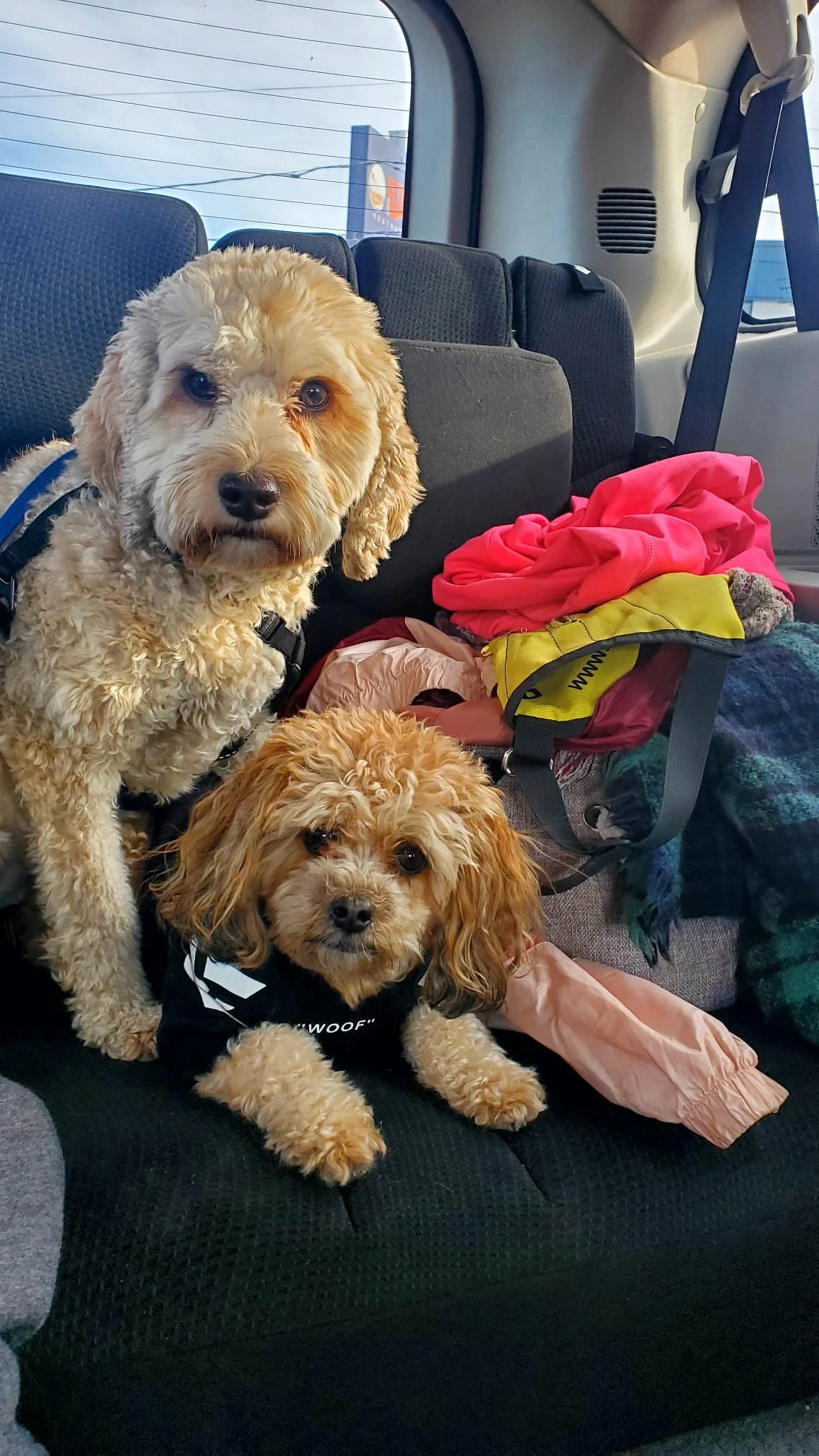
My memory emphasizes the appointments and loss of capacity while his emphasizes slow progress. Maybe I focus on the negative because it was such a drastic shock. But he’s right. Walking my dog in the fresh air, hosting rotisserie chicken nights with friends while our Doodles wrestled and barked in the living room — these are what I’d come to know as micro-joys and would years later become the basis of a new writing practice.
Breathe in pain, breathe out love.
In the fog of early winter I listened to a YouTube video on Tonglen meditation introduced on writer, Sonya Renee Taylor’s email list.
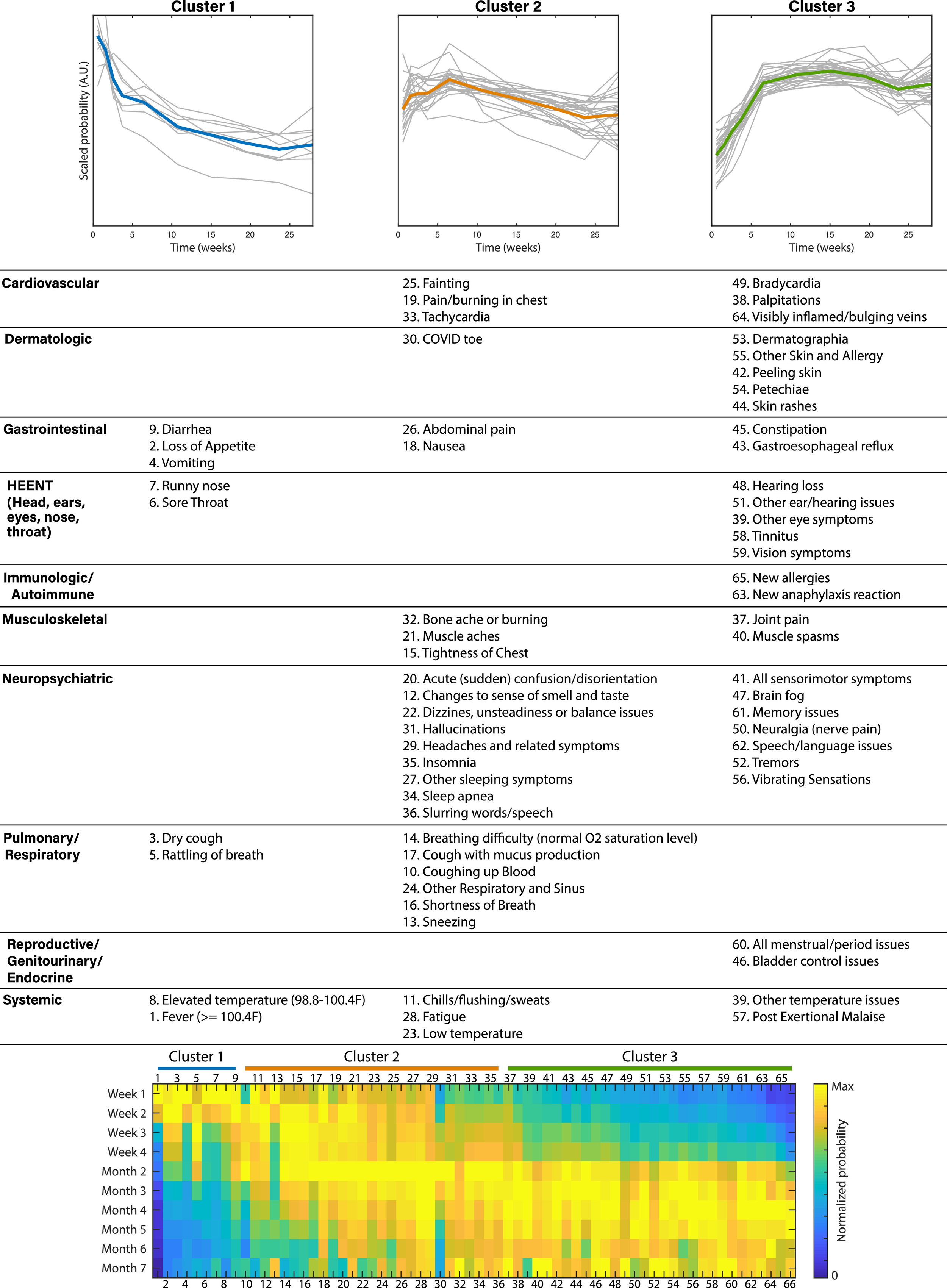
Research shows that post viral fatigue from Long Covid generally peaks at around seven weeks post infection, then gradually decreases and then increases again after six months. During my obligatory multiple rest times every day I started to practice this meditation, putting my focus on compassion for those around me and then on compassion for myself. Knowing that my regular coping techniques of talking to friends or writing poetry were not currently available to me.
Courtesy of The Lancet
Preserving energy by sleeping for days before weekly appointments and recovering by sleeping after to then save energy for monthly appointments were a big part of that first winter. My heart started racing to up to 105 bpm lying down. Research shows that cardiovascular symptoms peak around four months post infection.
Long Covid made me live in the moment. At a Christmas celebration at my partner’s aunt and uncle’s house I lied limp, heavy, and masked on the couch fading in and out of sleep as family members walked around me eating chips and opening presents. I breathed out for six and in for three, out for six in for three.
Compassionate loved ones who knew me as a silly dog person and auntie were the source of many micro-joys at this time. Close friends moved to our neighborhood. I Goldilocksed their place for a change of scenery, taking a mid day nap in their living room. I video chatted with my niece and sister to find out the preschooler gossip.
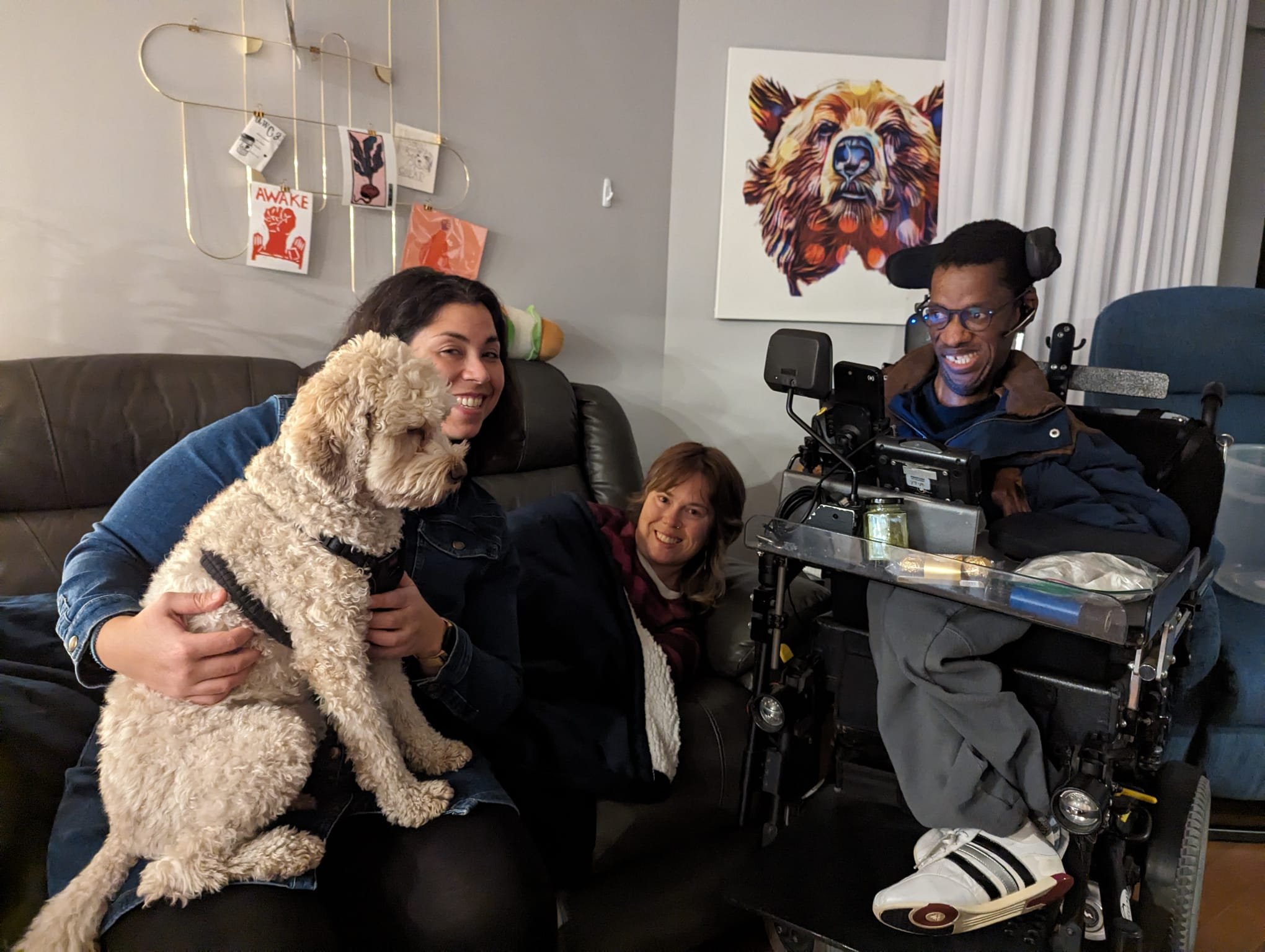
New Year’s was celebrated with close friends at our place. There's a photo of me on the couch, horizontal, with the dog on our friend’s lap, and friends crowding me on the couch. We rang in the new year together, a fragment of my former energy. Life went on.
If my job isn’t my identity, what is?
It becomes clearer with each month of being too sick to return to work that I need to untether my sense of self from my job-on-hold to stop the sinking feeling of failure from settling in. Meditation helps, I think.
I picture the ego’s grip releasing my self-understanding. I’m not what I do or how I contribute, I simply am. During my mandated rest I validate that it’s normal to identify with our jobs in this system we live in, but there is more to me than work.
And then, while walking my dog, a neighbour friend tells me his relative visiting from Toronto recognized me at the park from a TV report that aired on The National. We had both our dogs off leash. The sticky fingers of ego I’ve been trying to let go of grab my chin and direct my face back towards the urgent drive to produce the next story.
What’s the story that I tell about my body?
At this point, six months after infection, the story about my body is that I have Long Covid and I’m doing everything I can to get better. That I am on short-term sickleave, that I’ll get back to work and do those lined-up interviews soon. The story is no, I can’t currently work, but I do have a new part-time job: trying medications and tracking symptoms and talking to doctors and the insurance company.
The characters in the story about my body are my past self, current self, migraines, my dog, my partner, walk-in doctor, specialists being introduced. Shame was a character too. Our society devalues people when they can’t work and even though, intellectually, I don’t support this belief it was deeply entrenched in my body.
No as a baseline: What happens to your ambition when you get sick?
Long Covid made it very easy to say no. No was my baseline because there was absolutely no feasible way to, for example, work or do social outings.
I called family members on the phone and got used to saying no.
“No, I’m not feeling better.”
“No, I don’t know the prognosis.”
“No, there’s no actual treatment.”
“No, they don’t know why I got Long Covid and J didn’t.”
“No, I haven’t heard from work in a while.”
Being in a position now to be able to write about this has helped me realize that I have developed new skills because of this experience. Prior to getting this illness, I had a hard time saying no. I felt compelled out of guilt or responsibility. This has stayed with me years after that second infection. I have ways to politely but firmly decline things. I’ve learned that a no right now is not necessarily a no, permanently. For example, I didn’t know if I would ever be able to write again and look where we are. This is a yes.
I felt more like a series of symptoms to be tracked than a well-rounded human being.
In the spring, after three seasons of doctors' appointments and negotiating with my insurance company I knew I needed a way to come back to myself and the arts practices and scenes that I loved so dearly. I knew the story about my body needed to broaden from, ‘I have Long Covid and I’m doing everything I can to get better,’ to something more expansive. But what story was available to me now?
Over the next few months on Forget the Box(.ca) I'll answer this by exploring how art and creativity are part of my ongoing recovery with and alongside the illness.
Coming back to myself.
The new story began like this. Being the deadline-driven journo that I am, desiring an output but limited by my five minute max of creative energy per day, I assigned myself a short poem every few days for a year.
Here’s the first poem:
When 5 minutes is
The only guarantee
Of activity
In a day
Roll your shoulders
Stretch your neck
And write a fucking poem
