
Spatializing Consciousness: The Literary Mind of Immersive Theatre
We are blessed with plenty of Anglo theatre in Montreal, but quantity is no substitute for quality. What dominates our stages are safe, uninspired retellings, productions terrified of breaking the rules. It’s a scene suffering from a painful lack of imagination, resulting in a heartbreaking stagnation.
When a local production does attempt to take a risk, it almost always falters due to a lack of technical research and process. Without real experimentation, these shows collapse into gimmicks, dressing their PR up with buzzwords to pretend they are offering something new or challenging. You see this most clearly in many of Montreal’s Immersive Theatre offerings: misguided productions that mistake decoration for substance, leaving eager audiences alienated and disappointed.
True immersion isn’t a creative seating plan, ambient lighting, trick sound (oh, is it coming from behind us? how unique!), or set decoration creeping close to the audience’s feet. And it certainly isn’t breaking the fourth wall. The word itself, of Latin origin: immergere means to submerge, to plunge into water. To submerge someone, you don’t show them a picture of the ocean, you fucking throw them into open water until their lungs burn and their survival instincts kick in. True immersion requires the destruction of the liminal space between the subject and observer. It demands that the audience is not a ghost in the dark, rather an active, emotionally involved co-conspirator of the reality unfolding around them.
When I began developing my method, what I term Immersive Reality (IR), codifying it in my essay, Strategies of Immersion, I understood simply that I wanted to build theatrical experiences that carried real visceral weight. I knew I couldn’t look to traditional theatre for the answers. There is nothing wrong with trad theatre, of course, I just find it so limiting. That theatre is built on separation: you sit in a soft seat, the lights go down, a frame is illuminated, and you watch strangers pretend to live.
Instead, I found my structural blueprint in 20th century literature. Specifically, the wild experiments of steam-of-consciousness writers like Virginia Woolf, Faulkner, and Borges. These writers recognized long ago that human consciousness does not exist as a cute, linear play divided into three acts. It is a chaotic, sensory, fragmented, multi-perspective deluge. They broke the printed page to submerge the reader directly into the unfiltered interiority of the mind.
My experimental work in productions like Who’s Afraid and MONUMENTUM is the direct translation of those literary breakthroughs into a physical, navigable architecture. What Woolf or Borges achieved through prose, I achieve through space, through sound, lighting, scent, and human contact. I do not build a set, I spatialize consciousness.
Language as Environment and the Construction of Disorientation
When James Joyce published Ulysses in 1922, and later the dreamscape challenge of Finnegan’s Wake, he abandoned the comfortable convention of the omniscient narrator. Joyce understood that human thought does not occur in polished, grammatically complete sentences. No, he knew that when you walk down a city street, your internal monologue is constantly interrupted, bombarded by external stimuli: the screech of a tram, the smell of frying fat, the stray line of a song floating out of a pub, a sudden spike in financial anxiety, or a flash of sexual desire. In Ulysses, Joyce submerges the writer into unfiltered sensory disarray. He doesn’t plainly explain the context, he forces you to wade through the noise, to assemble meaning from fragments, puns, street signs, and emotional echoes.
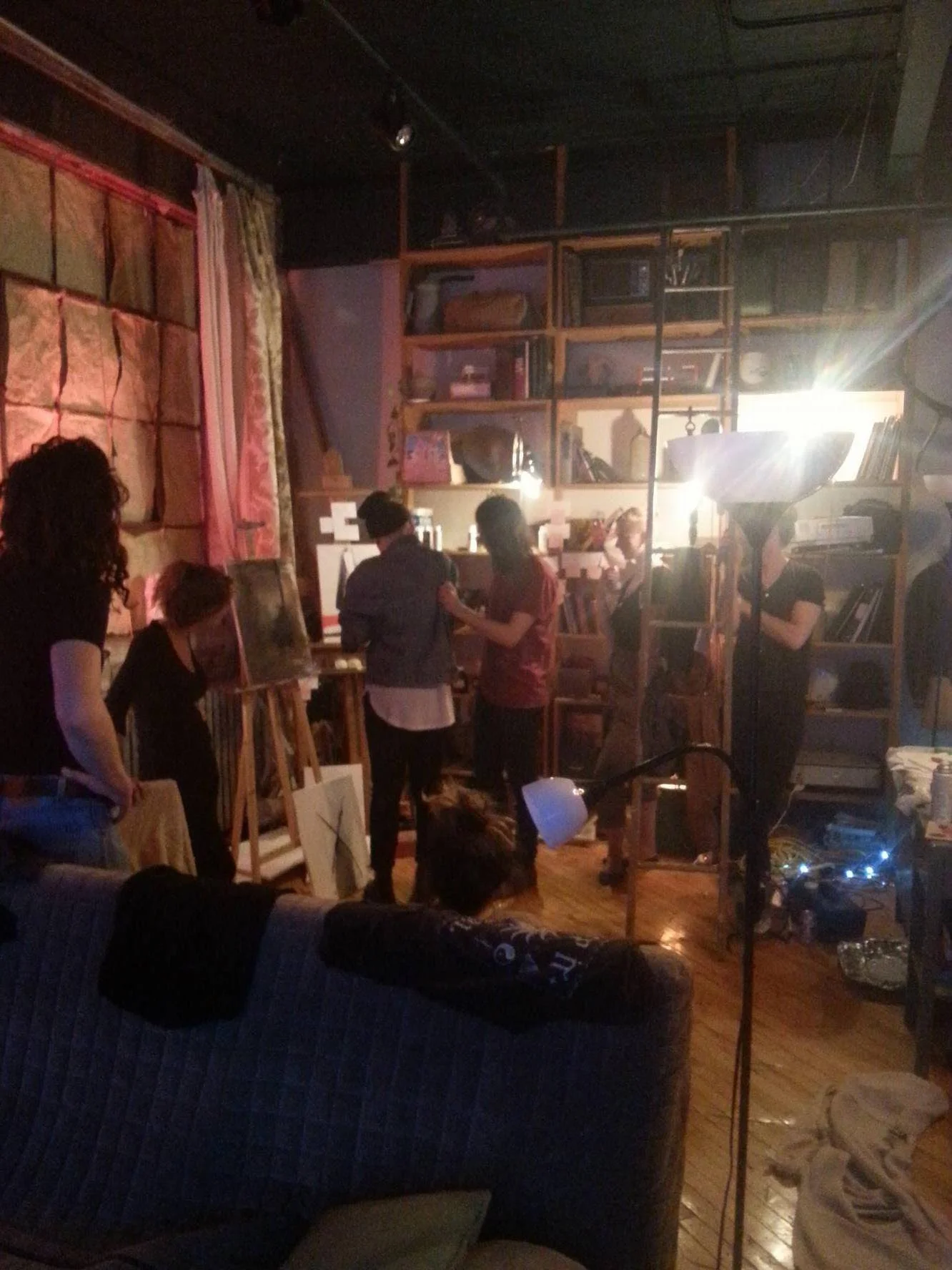
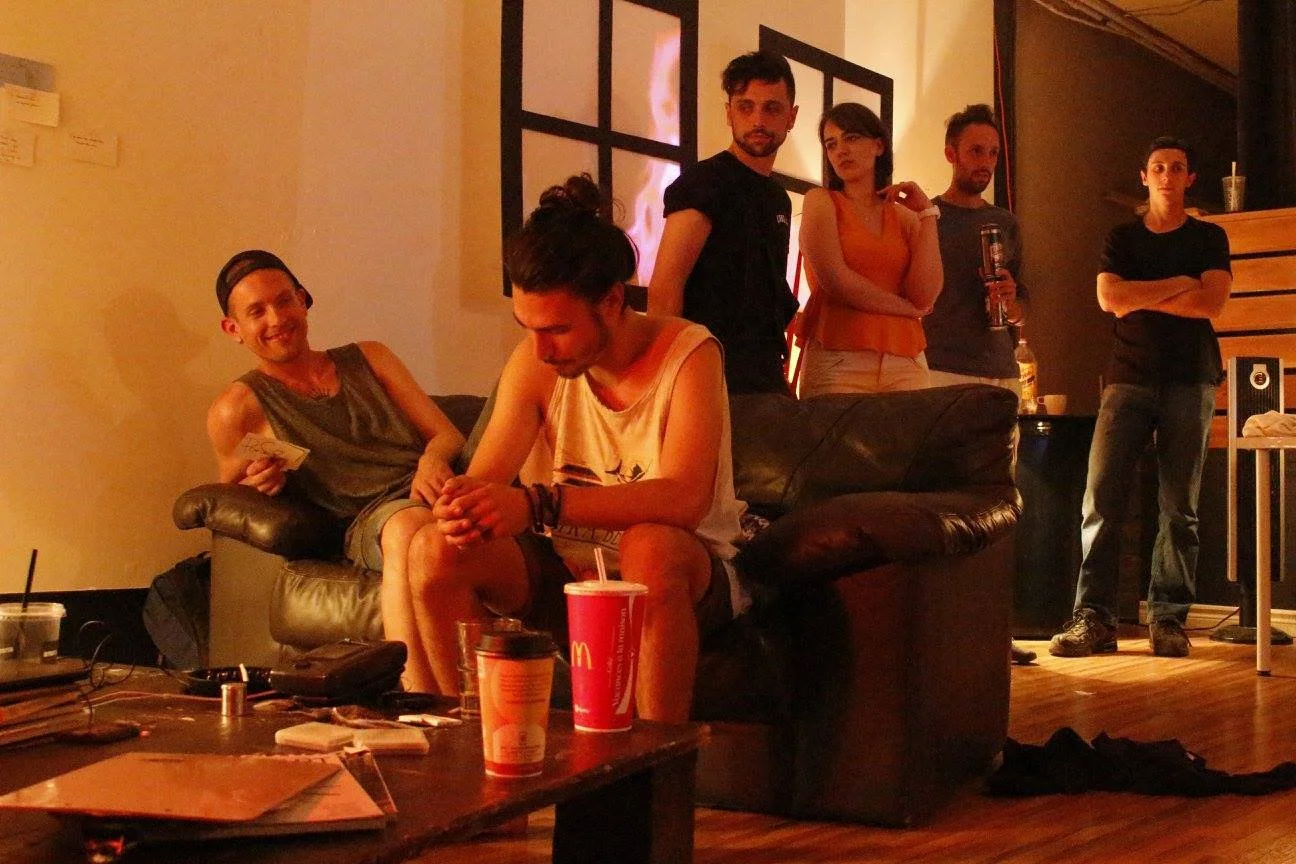
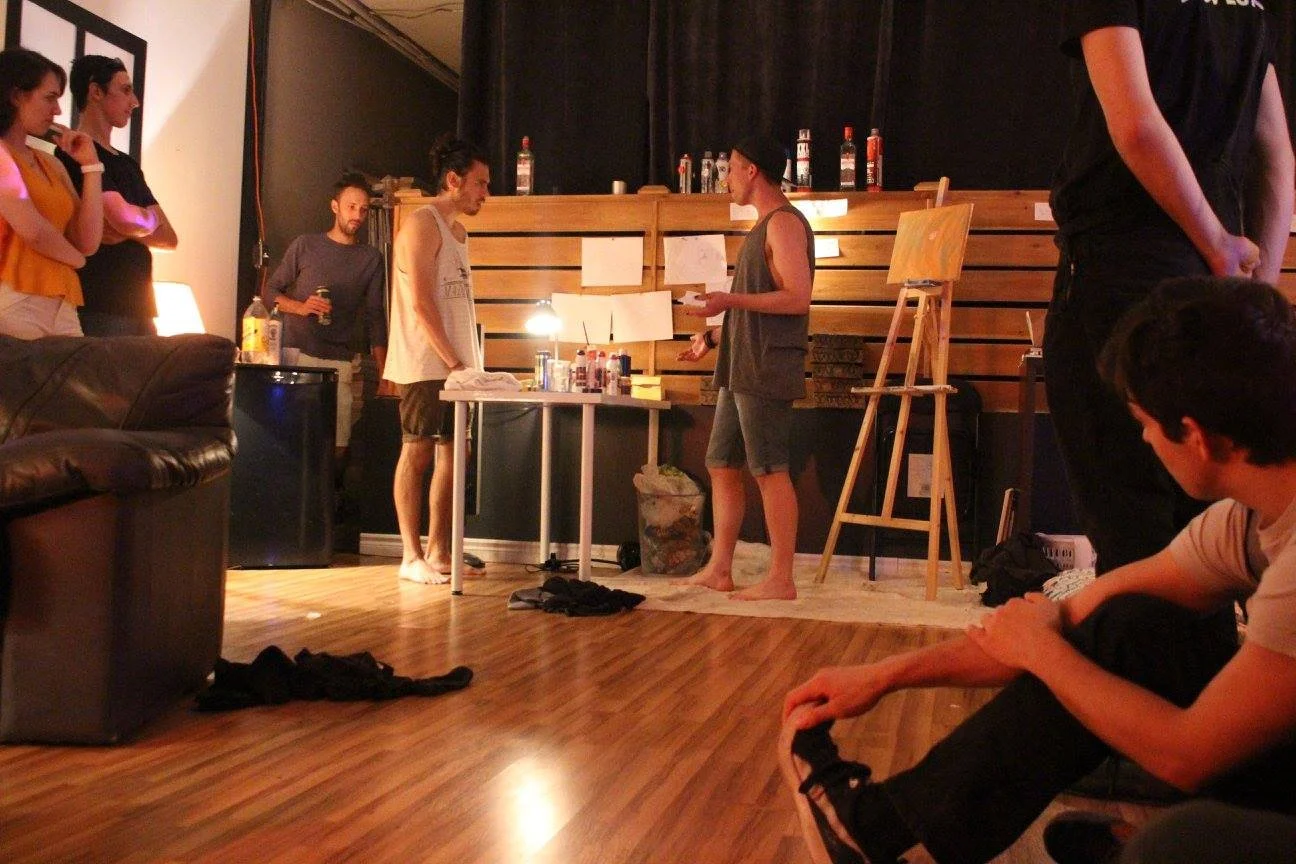
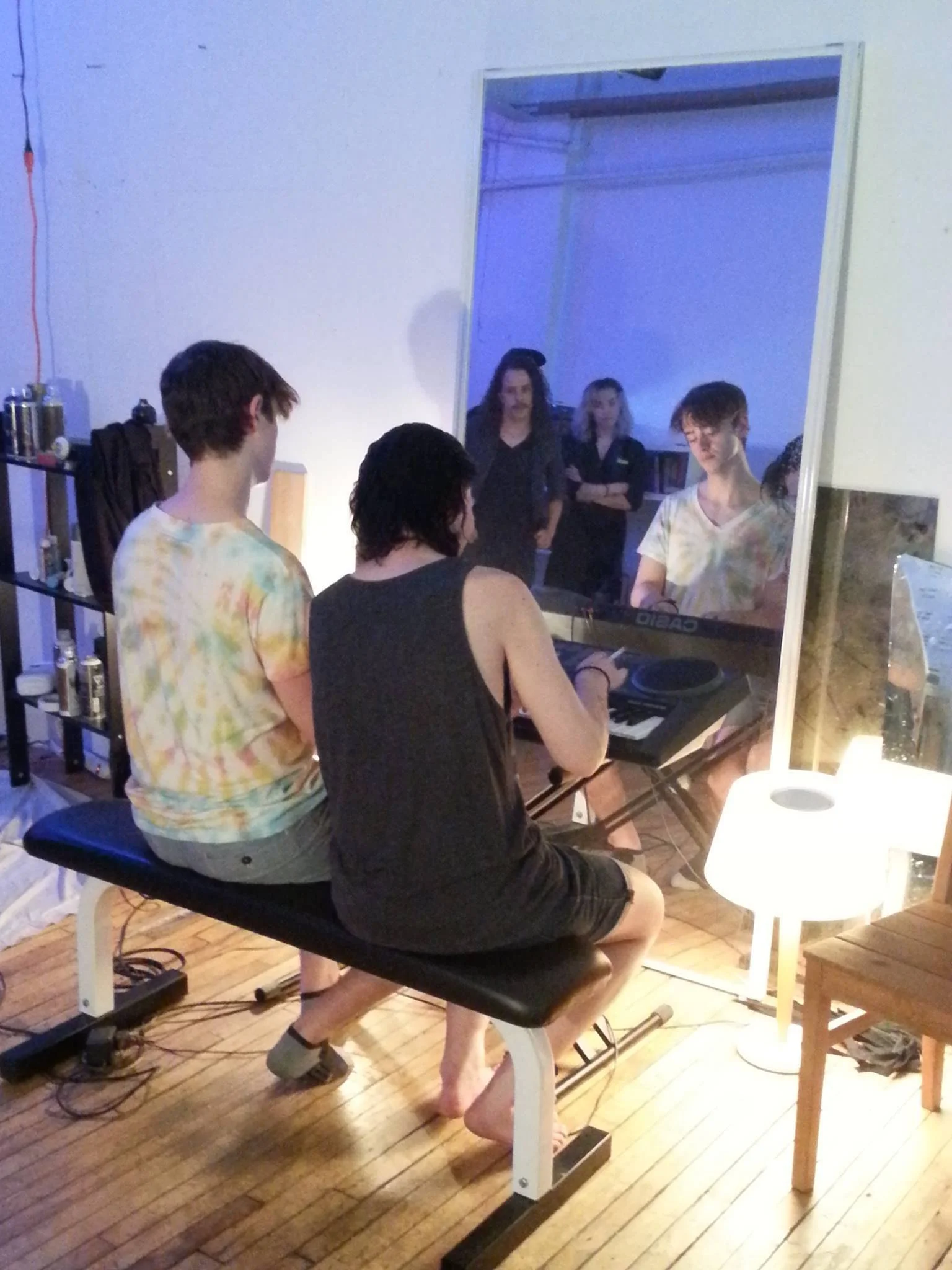
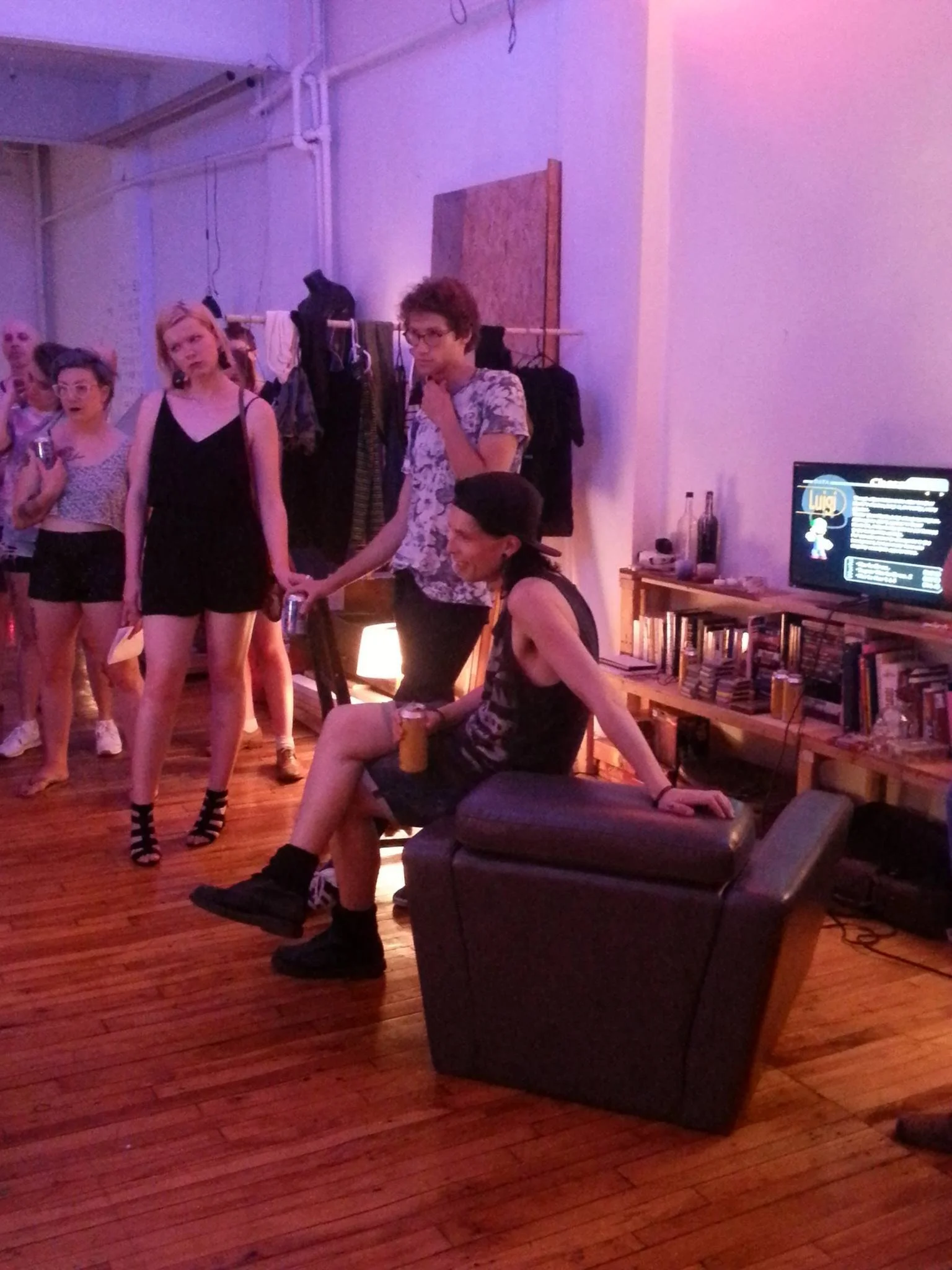
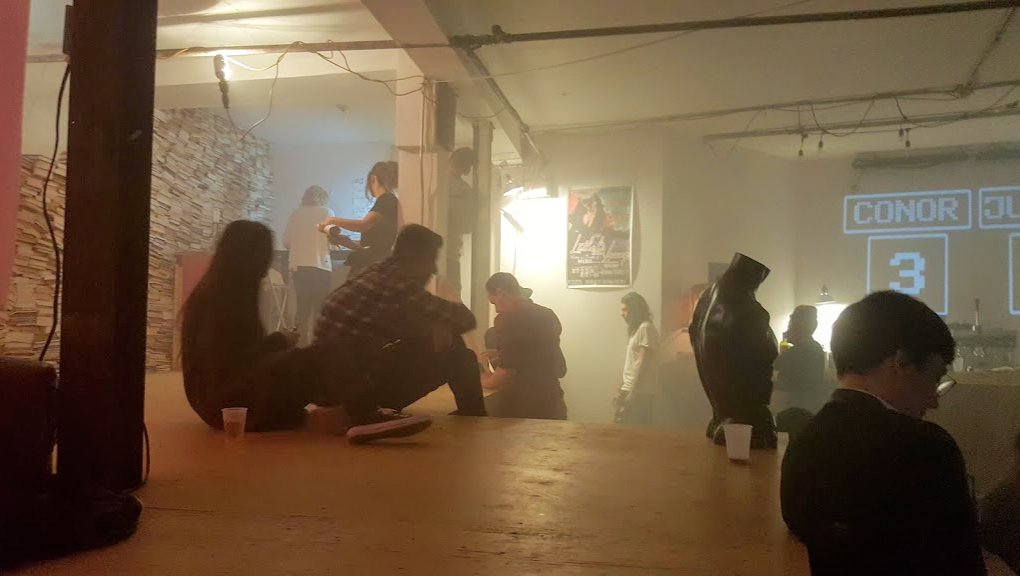
In my work, I translate Joyce’s linguistic overload directly into Disorientation, my first Strategy of Immersion. In Who’s Afraid when audience members step across the threshold into the apartment shared by the characters, Conor and Julian, they are not entering a theatrical set, they are being pushed into a physical stream of consciousness.
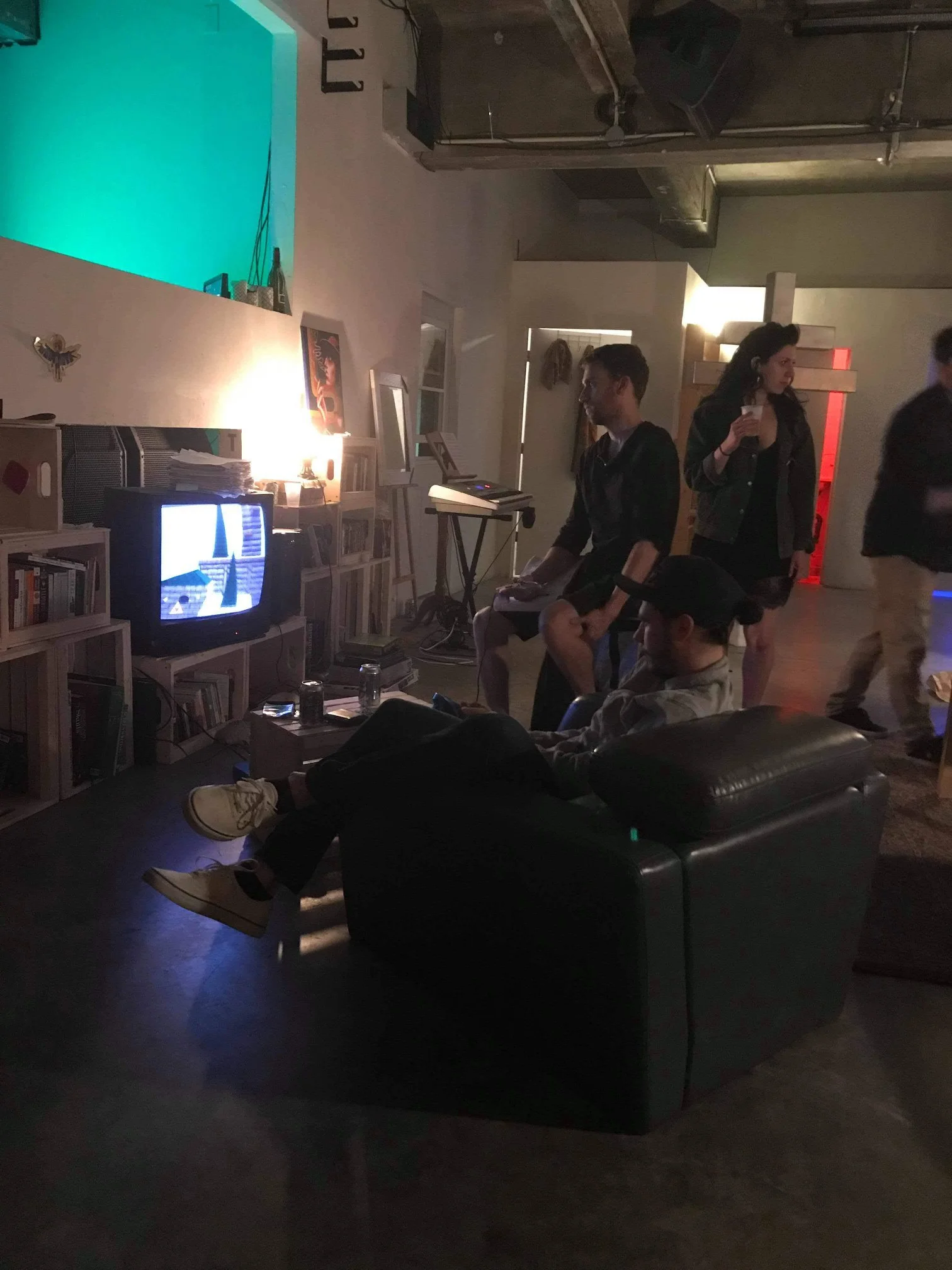
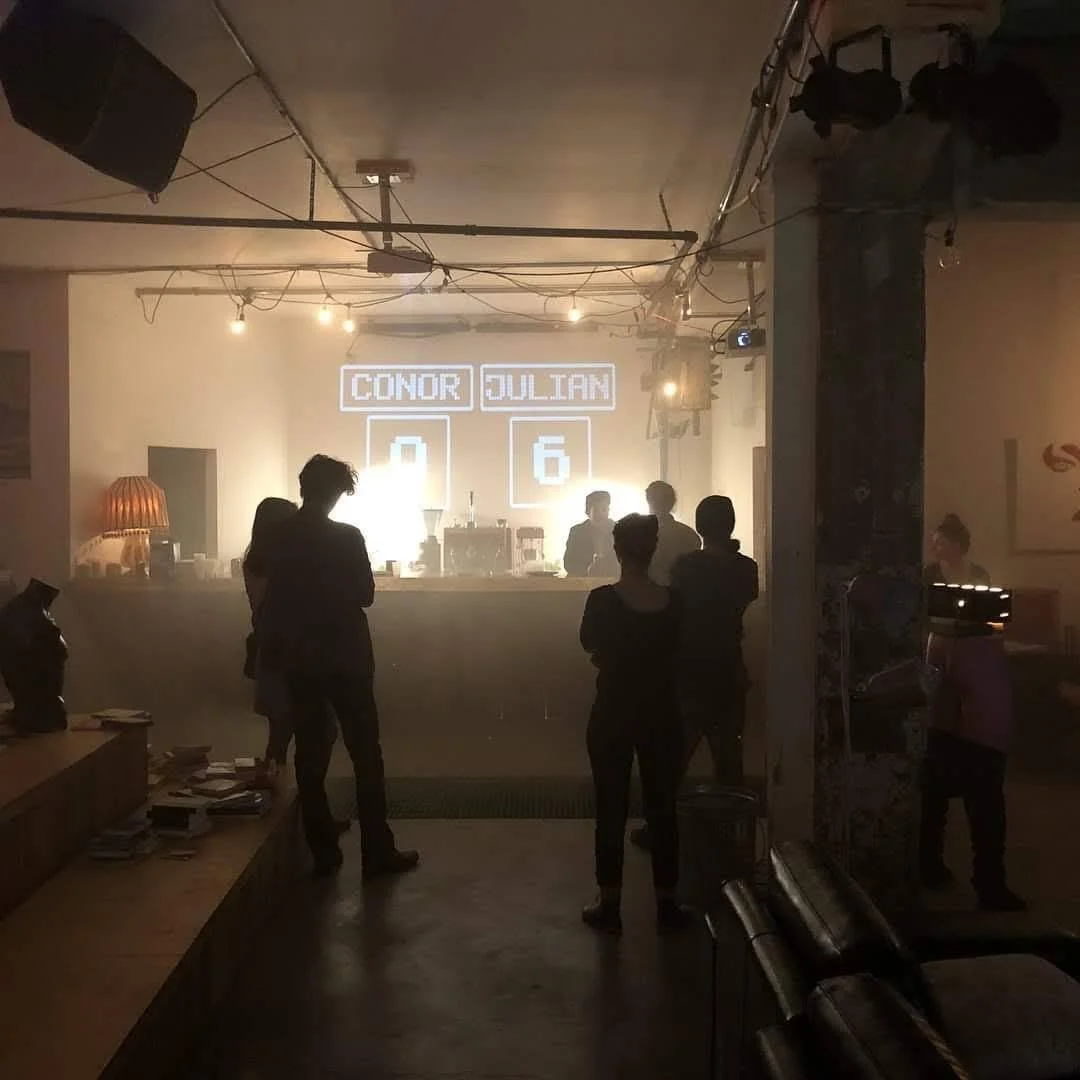
The room is saturated with competing signals: Bowie plays loudly from the speakers, projection lights flicker on the walls, books are everywhere, art scattered on the floor, and the air is thick with the smells of dirty laundry, stale takeout, and weed smoke. When the characters arrive, the dialogue is not delivered in clean, projected stage voices; it’s mumbled, shouted, interrupted and overlapped, Just as a reader navigating Joyce has to filter external stimulus through Leopold Bloom’s internal state, the audience in Who’s Afraid is stripped of expository hand-holding. They can’t sit back and wait for a character to deliver the convenient monologue explaining the plot, they’re forced to act as an emotional detective, sorting through sensory chaos to piece together the story of the toxic, decaying relationship between these two men.
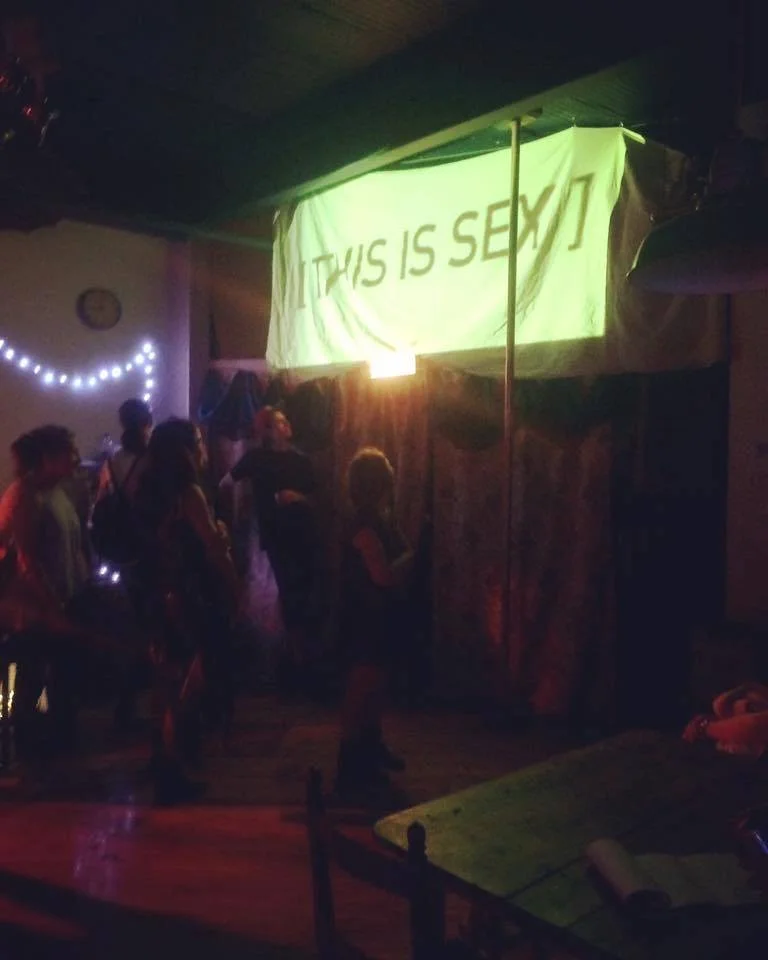
In MONUMENTUM, the sensory assault is on an industrial scale. The piece is set during the deceptive chaos of “Media Circus”, a launch event for the record label Lupus Nuda, hosted in a sexy Montreal gallery. The spectator is immersed in an event where live music, poetry readings, art displays, and whispering crowds collide simultaneously. The environment is the stream of consciousness. By withholding a linear, singular focal point, I push the participant to experience the disorientation of a real, unedited mind processing a world in real time.
Moments of Being and Metamodern Subjectivity
Joyce creates stream-of-consciousness through a torrent of stimuli, while Virginia Woolf perfects its emotional fluid dynamics. In Mrs. Dalloway and To The Lighthouse, Woolf achieves something breathtaking: her narrative voice guides seamlessly across space and time, slipping into the interior thoughts of one character before floating, with a single comma, into the mind of another, standing right beside them.
Woolf rejected the idea that there is a single, objective “truth” to any given moment. Reality, for them, consists of coexisting, subjective emotional truths. She focused intensely on what she referred to as “moments of being”, unremarkable, everyday instances where sensory impressions collide to reveal profound, hidden psychological revelations.
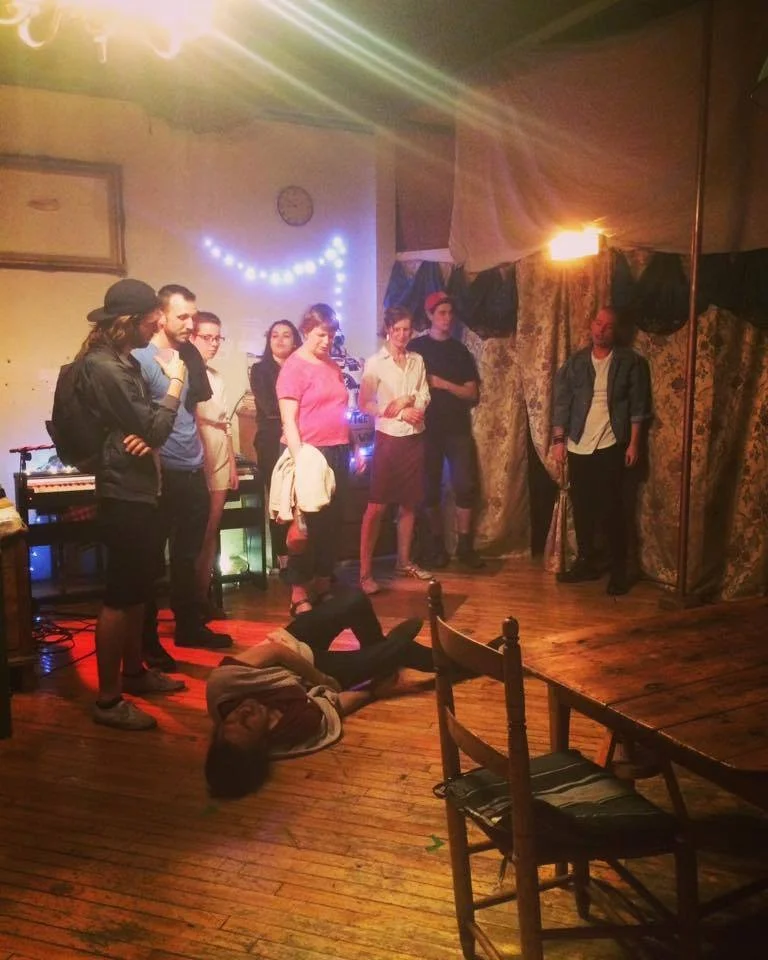
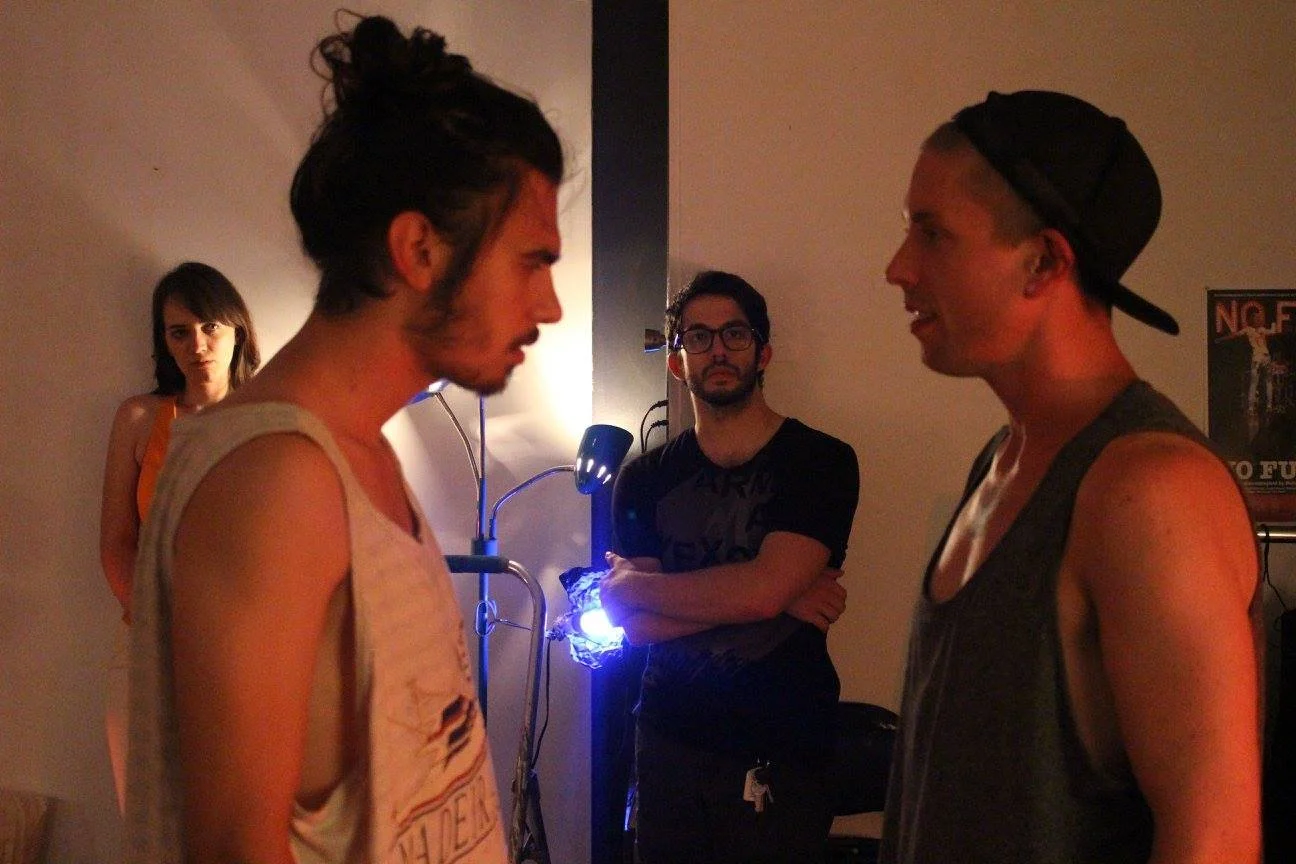
Consider the core dynamic of Who’s Afraid. The piece centres on the breakup of long-term lovers Conor and Julian, but their relationship to the room, and to the audience, is radically, and very intentionally asymmetrical. Conor is hyper-aware of the spectator’s presence. He breaks the forth wall immediately, the whole production making eye contact, demanding validation, asking for cigarettes, and casting the audience as confidants in his breakdown. Julian, though, exists in a state of realism, oblivious to the audience, moving through his internal exhaustion and heartbreak as though he were completely alone. Because he is.
This binary creates a living Woolf-esque tension. An audience member is forced to hold two completely conflicting subjective truths, two realities, in their mind at once. If they walk over to stand close to Julian, feeling his breath and watching him silently roll a joint on the couch, they are submerged in a quiet, voyeuristic, intensely realistic “moment of being”. If they turn around and walk to wherever in the room Conor is, they are instantly pulled into a manic, self-aware, often confrontational performance.
By physically moving through the space, the participants themselves execute Woolf’s narrative technique. They decide when to shift perspective, literally shifting from one character’s emotional stream into another, discovering that truth is not found in what the characters say or do, but in the fluid gap between their competing subjectivities.

Shattered Narratives and the Death of Omniscience
Of course, no discussion of literary stream-of-consciousness can ignore William Faulkner. Where Woolf bridged character interiorities with poetic fluidity, in The Sound and the Fury, and As I Lay Dying, Faulkner took a fucking axe to narrative structure. He conveyed trauma, familial decay, and obsession not as flowing smoothly, but splintering.
In As I Lay Dying, he divides the Bundrens' story across 15 narrators delivering distinct chapters without a neutral guide. You read the story through Vardaman’s raw, sensory leaps, Darl’s visionary, unraveling monologue, Addie speaking from beyond the grave, much like navigating Benjy’s non-linear mind or Quentin’s obsessive descent in The Sound and the Fury. Faulkner forces the reader to construct the narrative out of broken, wildly unreliable perspectives that frequently contradict each other.
When I designed MONUMENTUM, Faulkner’s polyphonic, fractured structure was my direct spatial guide. MONUMENTUM does not happen on a single stage, instead unfolding in an expansive, site-specific footprint containing a performance stage, a bar, merch tables, private rooms, and an outdoor smoking area.
The story follows Conor Blaine, the charming but manipulative Artistic Director of Wolfsburg, as he orchestrates a night of psychological mind games masked as a launch party. But Conor is not the only stream running through the venue. At the same time, his newly promoted right-hand, Margot, is managing crises and doing his dirty work, his anxious boyfriend Dorian is preparing to perform a new musical project for the first time, his colleague and ex-lover Veronica is looking for blood, the drunk musician Judas is unraveling, and the poet Amara is quietly revelling in the chaos. The author Flora seems to have no fucking clue what’s happening, and it’s up to you to decide if she’s also playing a game, or she’s just dumb.
Like when reading Faulkner, a participant in MONUMENTUM cannot be in all places at once. If you are standing in the middle of the room watching Dorian perform industrial noise, you are missing the vicious confrontation happening between Conor and Veronica at the back. If you follow Margot to the bar, you’re not going to see the fight happening outside.
There is no omniscience available. The narrative is fragmented (Fragmentation is another Strategy of Immersion) into simultaneous, competing interiorities. When audience members gather after the show, comparing notes, they realize they have had fundamentally different experiences. Like the readers of The Sound and the Fury, they are forced to synthesize a story out of the shattered pieces of evidence, realizing that any attempt to find a single, objective narrative is impossible.
Spatializing the Non-Linear
In 1963, Argentine writer Julio Cortázar published Hopscotch (Rayuela), a masterpiece of counter-design. Cortázar included his “Table of Instructions” at the beginning of the book, informing the reader that they had a choice: they could read the book in a traditional linear fashion, from chapters 1-56 and stop, or they could follow a scrambled sequence, jumping back and forth throughout 155 chapters.
Cortázar was making a radical political and philosophical point about literature. He explicitly condemned what he called the “passive reader”, the one who sits back, consumes a linear plot, and expects the author to do all the work. Cortázar demanded an active reader, a co-conspirator who engages with the book as a game board, actively constructing meaning through the choices they make.Another Strategy of Immersion is Participation and Agency. True agency is not letting an audience member press a button to choose “Option A” or “Option B” like a basic, choose-your-own-adventure video game. Real agency is Cortázar Hopscotch, rendered in three dimensions.
An attendee can choose to stand at the bar sipping a real drink, pick up a real book published by Veil Press, buy a Wolfsburg tote bag, strike up a casual conversation with other guests, eavesdrop on arguments between musicians, or follow a panicked staff member as they manage problems.
By granting the participant total physical freedom to move through the venue, I destroy passive consumption. The spectator cannot sit back and be entertained; their physical movement, their curiosity, their willingness to explore, or desire to withdraw, directly dictates the sequence of events, the story revealed to them. They become Cortázar active co-creator, and the path they trace through the space is their personal text, a unique narrative permutation that belongs exclusively to them.
The Fictional Collapse of Reality
The Argentine genius Jorge Luis Borges (The Garden of Forking Paths, Tlön, Uqbar, Orbis Tertius), was obsessed with the terrifying, beautiful meta-narrative paradox. What happens when a fictional world becomes so detailed, so aggressive, and so convincing that it leaks into the physical world and begins fucking subsuming reality?
Borges created stories about encyclopedias that describe non-existent planets whose artifacts start appearing in real-world hotel rooms, and a labyrinth where a man realizes he is merely a dream being dreamed by someone else. Borges wrote, “We lose our boundaries when the fiction we are examining begins to examine us back.”
In my work, the strategy of Mirroring Reality is pushed to its absolute Borgesian limit through what I would call total narrative deception. With MONUMENTUM, we do not advertise the show as a play. We advertise it as “Media Circus”, a real launch event and wild art party hosted by the real firm Wolfsburg for the real record label Lupus Nuda.
When participants buy a ticket, they are buying entry into a real event held at a real art gallery. They arrive, walk past real security guards (bikers, ask me about it later), buy real drinks at the bar, and receive real, functional in-universe promotional materials, music, and books. They experience real performances of real poetry and real music.
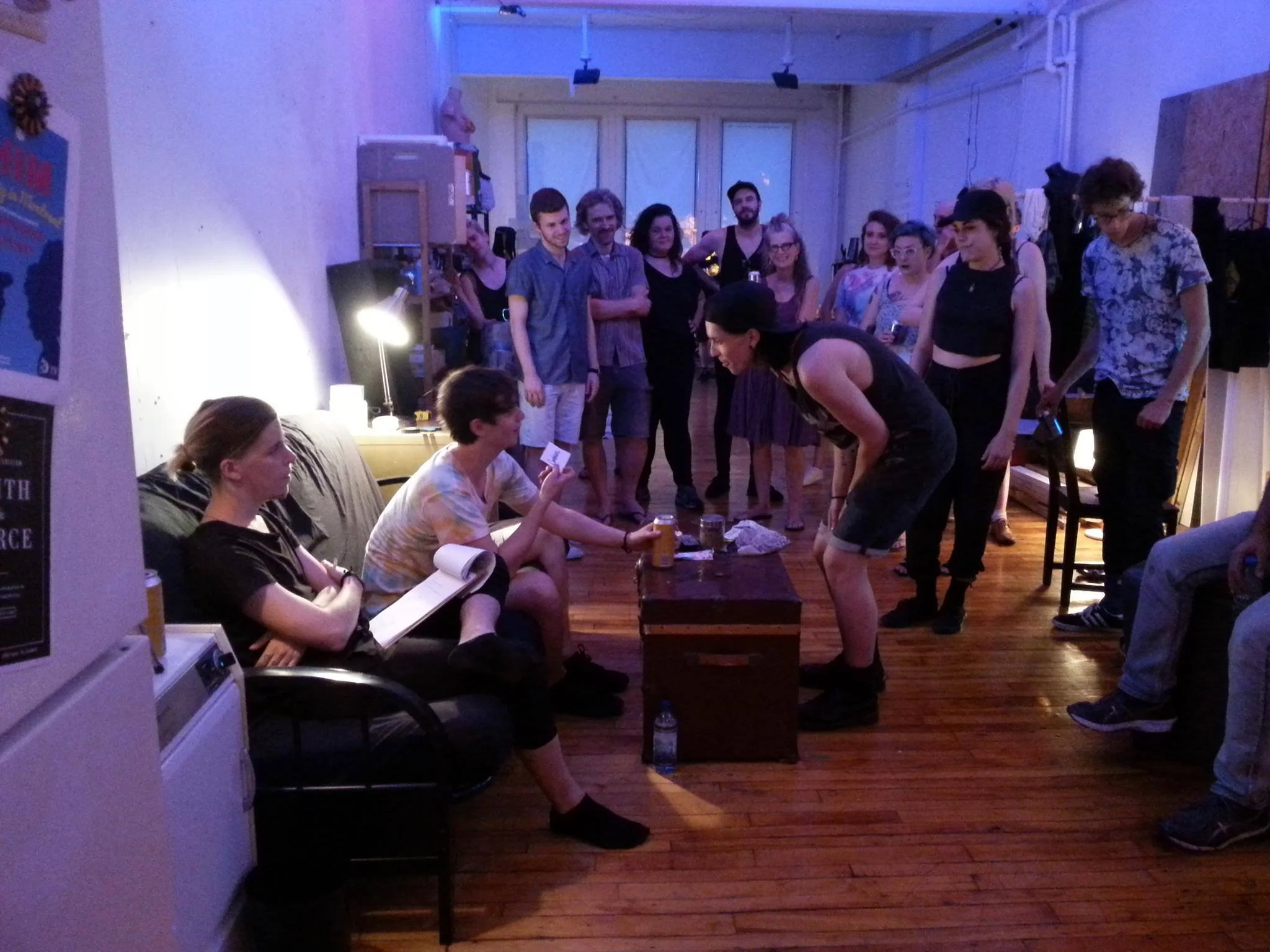
The magic occurs in the total destruction of borders. The actors do not wait backstage for an entrance cue; they are already in the space when the doors open. They are outside in the smoking area talking to guests; they are getting drunk at the bar; they are working the merch table.
As the night progresses, subtle psychological fractures begin appearing. A heated argument breaks out in the corner, a performer is wasted on stage. Conor Blaine begins casually asserting unsettling control over those around him.
The spectator experiences a visceral Borgesian panic: Where does the real event end and the fiction begin? Is that person standing next to me an actor or another paying guest? Am I an observer, or have I been folded into the narrative? By removing the borders of the fiction, I force the spectator to confront the terrifying realization that their reality has been entirely subsumed by the story.

Stripping Away Anonymity
In 1979, Italo Calvino published If on a winter’s night a traveler, a novel written entirely in the second person, “you”. From the first sentence, “You are about to begin reading Italo Calvino’s new novel, If on a winter’s night a traveler”, Calvino rips away the reader’s safe, anonymous distance. You are not reading a story about someone else, you are the protagonist, and your attempts to read this broken, fragmented book are the plot.
In trad theatre, audience anonymity is a sacred right. You take a designated seat in the dark, protected by an invisible, mostly unbreakable fourth wall. You are a ghost. You can watch anything unfold on stage, secure in the knowledge that no one can see you, no one will address you, and no demands will be made of your real-world identity.
Removal of Anonymity, another of my Strategies of Immersion, is my direct, physical equivalent of Calvino’s second person “you”. In my work, I have no time for the fourth wall, it is a theatrical convention that breeds emotionally distant consumption.
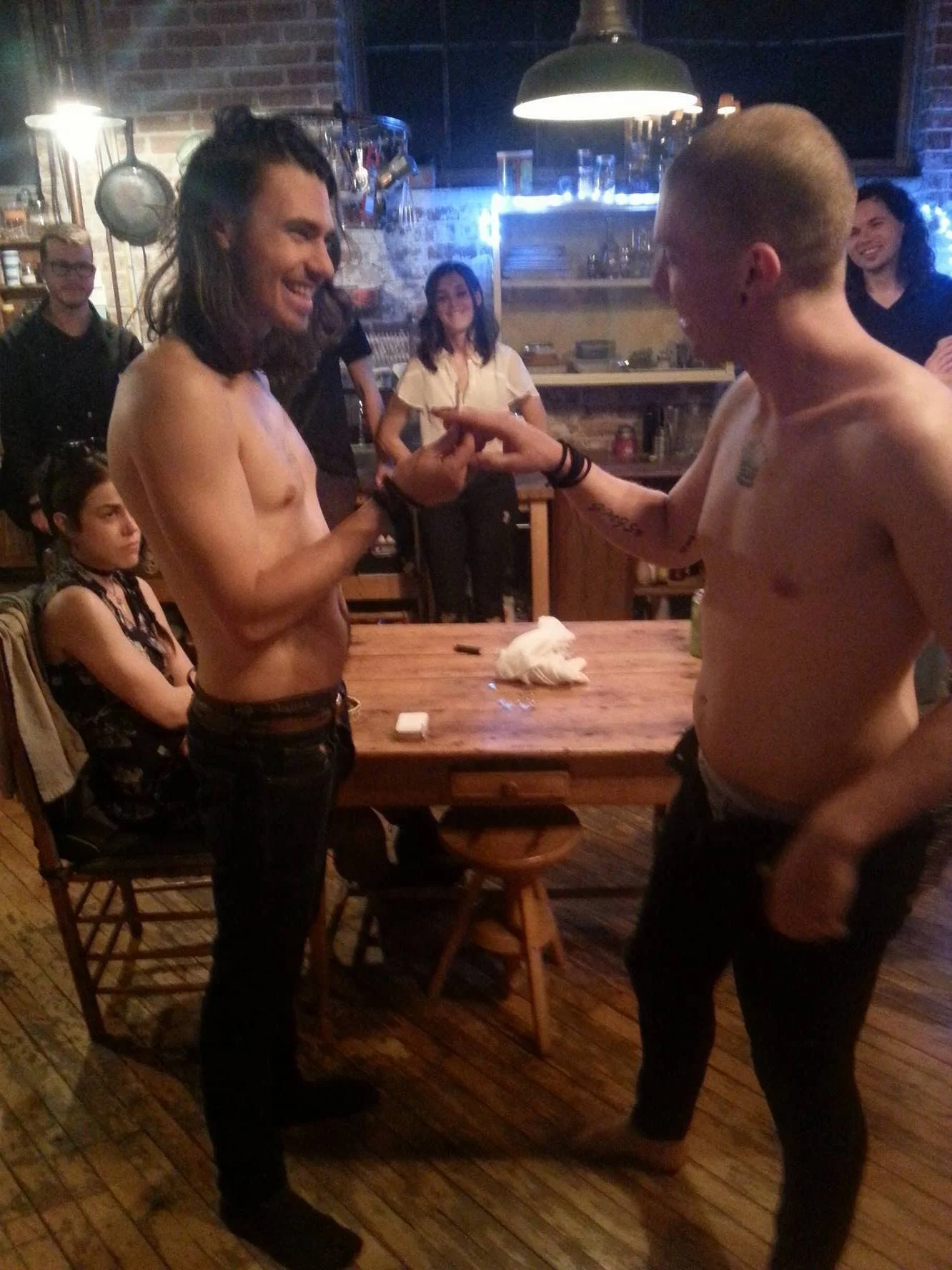
In Who’s Afraid, there are no seats. The audience stands, moves inside Conor and Julian’s apartment occupying the exact same floor space as the actors. And Conor Blaine will not allow you to remain an anonymous guest.
Conor walks up to spectators, looks them directly in the eye, and uses “you”. He asks them for a cigarette; he asks them for their names; he leans on their shoulders for physical support when he is too drunk to stand; he demands they validate his toxic arguments against Julian. If an audience member shrinks into the corner, Conor might move closer, bringing his face inches from theirs, forcing them to acknowledge his very real existence.
The moment Conor looks at an audience member and asks, “What would you do?”, their safety net vanishes. The passive spectator is instantly destroyed, and in their place stands an active, emotionally implicated person. They can no longer pretend they’re watching a play, they are physically present in this volatile domestic crisis, accountable for their body language, their eye contact, and their silence. They are inside Calvino’s second person.
Synthesizing: The Metamodern Imperative
To understand why translating these literary mechanics into physical space is so urgent for me, it’s important to understand the cultural moment we inhabit. We live in an era dominated by metamodernism, a philosophical condition defined by the oscillation between modern enthusiasm and postmodern irony, between hope and cynicism, between engagement and detachment.
Postmodern theatre spent decades deconstructing narrative, breaking down character, and mockingly telling the audience that nothing is real, nothing matters, it is all just an empty joke. But deconstruction without reconstruction is a dead end. It leaves us numb, alienated, and cynical.
Metamodernism demands that we take the broken tools of postmodernism, disorientation, non-linearity, multi-perspective structure, and we use them to rebuild genuine emotional connection, vulnerability, and transformation.
When I use the work of Joyce, Woolf, Faulkner, Cortázar, and Borges in Who’s Afraid and MONUMENTUM, I’m not doing it as a clever, intellectual flex. I am using these mechanisms as high-precision psychological instruments designed to break through the thick layer of cynical detachment that modern audiences wear as armor.
People spend hours scrolling through fragmented feeds on screens, disconnected from real physical contact, consuming curated, fake realities. To bring people into a room, strip away their anonymity, submerge them in sensory reality, and force them to physically navigate the complex, contradictory emotional interiority of another human being is a fucking radical act.
It forces the audience to move beyond passive consumption and into genuine empathy. In MONUMENTUM, when Conor Blaine justifies his ruthless emotional manipulations by claiming he can see every potential outcome across “multiple universes”, the audience isn’t listening to a sci-fi premise; they are witnessing a deeply tragic, very human attempt to control chaos and avoid heartbreak. Because the spectator has spent the night making choices while navigating the space, interacting directly with Conor’s victims, his moral failure becomes their lived experience.
The ultimate goal of Immersive Reality is not to trick an audience for two hours, or to permanently ruin traditional theatre for them. But once a spectator has experienced narrative as a living, spatialized environment where their own physical presence alters how a story is revealed, sitting passively in a dark room watching actors project from a proscenium, trad theatre can feel like watching an old film through a dirty window. The medium of Immersive Theatre must continue to move forward, must continue to evolve, to push the boundaries of what theatre itself can be. When we strip away the safety of the fourth wall and construct spaces that demand active psychological navigation, we force the audience to confront a fundamental truth about human connection: we are never neutral observers in anyone's reality.
This is why I believe that process must always be superlative to the product. If independent creators want to liberate live performance from stagnation, one that is painfully on display in Montreal's Anglo theatre scene, we have to stop treating narrative as fixed, as a linear script to be delivered and consumed, and start building architectures of mind that people can inhabit. Immersion is not just a trend or a buzzword to be used by companies to sell tickets. Executed with genuine theoretical rigor, it is a confrontation. It is the moment the theatre stops being a museum for dead stories, and becomes a living space where fantasy bleeds so deeply into reality that neither ever fully recovers, and we’re better for it.

