Capitalism, Culture, and Conflict
A Review of Sometimes Y Theatre’s It’s Time
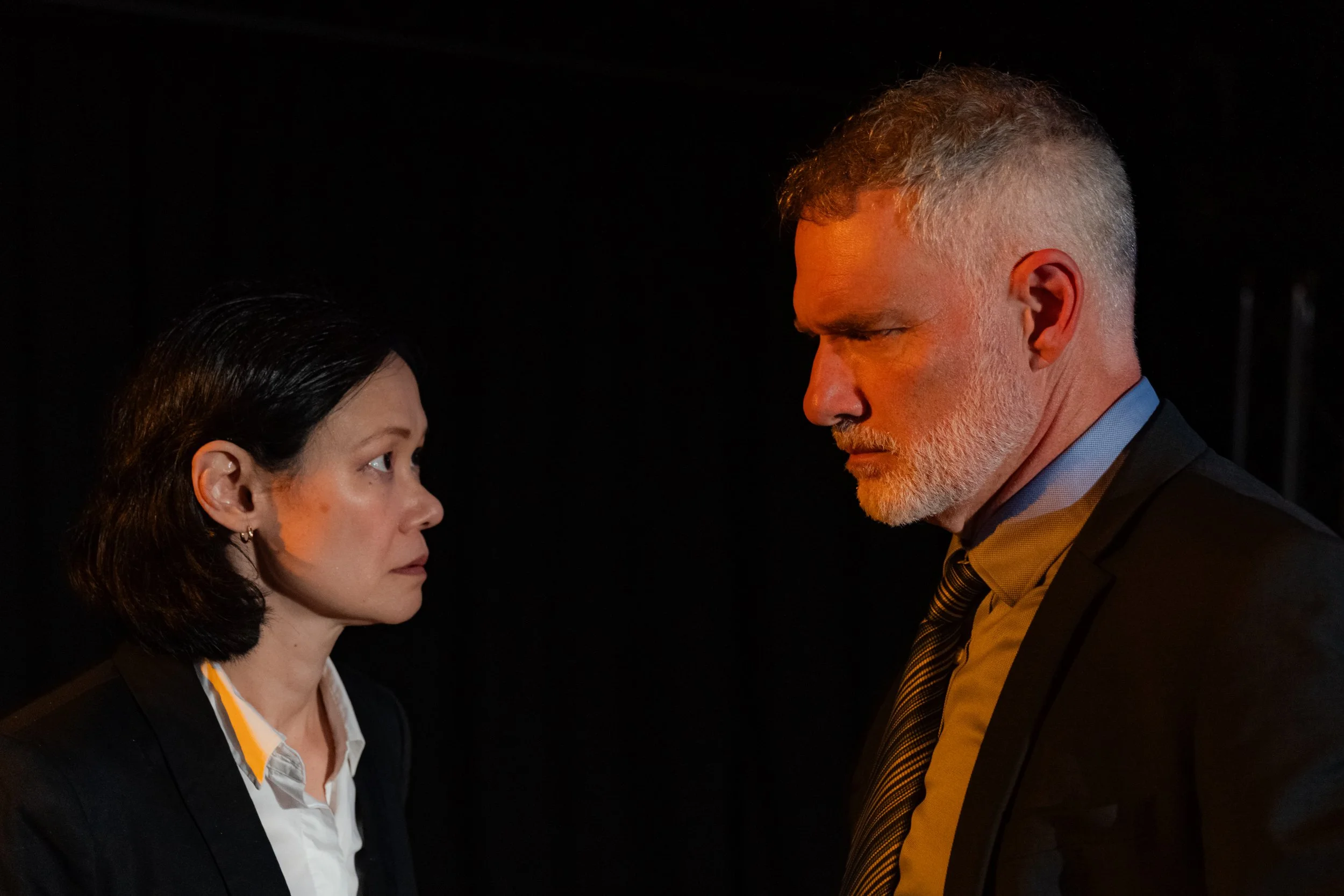
Photo by Houssem Mareghni
Teesri Duniya’s Rangshala Studio sits at the end of a long hallway on the second floor of the Cité-des-Hospitalières building at Des Pins and Parc. This unique space has been the stage of some of the best theatre I’ve seen in Montreal over the last two years. Blessed I was, then, to have the opportunity to witness It’s Time, and keep that streak alive.
I took a seat in the back row, as I always do. Arriving uncharacteristically early, I waited longer than I’d anticipated as we held the doors for those caught up in the STM bus strike. This gave me some time with the set, which fascinated me. The design is simple. Stage Right had an old metal office desk and a chair. A telephone and some business-looking papers and folders. In front of that, lingering closer to centre stage is a single chair. That’s it, save for two handbags, one placed on the floor, flanking the set. The floor, though, that’s what caught my attention. The floor was black, with a section of white running through the middle, horizontally. At Stage Right the white space was largest, narrowing to a small point on Stage Left, reminiscent of a crescendo, or a spotlight. I wrestled with the German Expressionism of it all. But once the show began I was pleased and challenged to discover that the white floor was essentially the playing space, with both actors avoiding the black floor until the end of the show. Why? I asked many times in my head, always giving myself a different answer. Sometimes it was about light. Sometimes it was about sound. Sometimes it was about Power. Sometimes it felt like many things. Sometimes it felt like nothing at all. Regardless of the creative team’s reasoning, there is something to be said for a well-executed abstract stage design, a production aspect generally lacking in Montreal’s Anglo theatre scene. And the Ranghala Studio’s design and flexibility truly allows for experimentation.
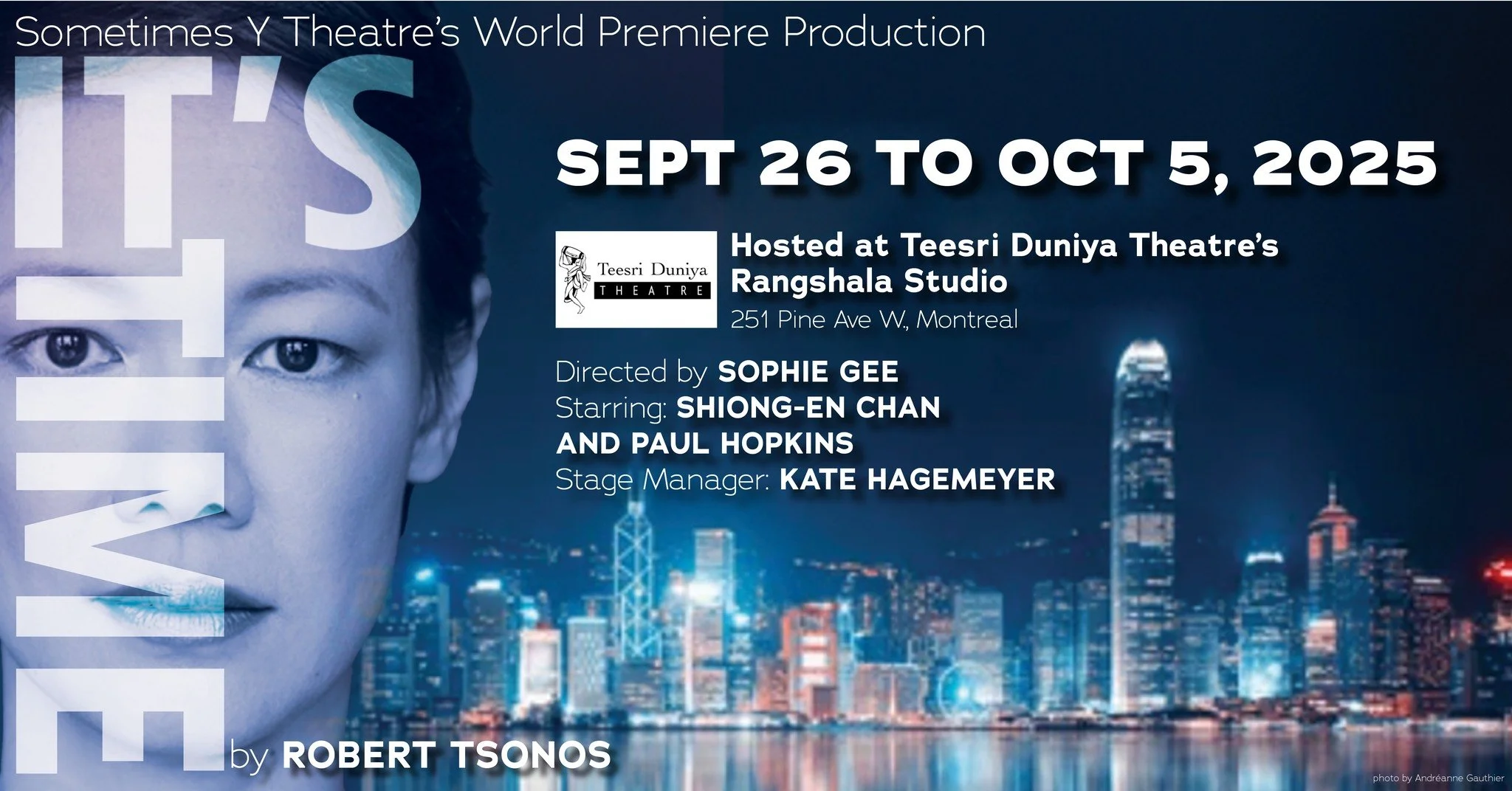
It’s Time was directed by Sophie Gee, featuring Shiong-en Chan and Paul Hopkins. These actors played multiple characters across two separate storylines. As a big fan of two-handers I’m usually extra critical of the actors onstage, with a play like this often leaving an unprepared or unskilled performer exposed. That wasn’t the case with this piece, as Gee’s direction holds a dynamic pacing, leaning into the natural tide of the stories throughout the scenes, allowing the actors plenty of space to play. Hopkins’ bravado gave sexist George an easily hateable quality, which was beautifully juxtaposed by his portrayal of a sensitive writer way out of his element. Chan, playing sisters in different industries, was a force, providing the audience with two strong female characters to cheer for. Although, any support felt for the characters came with a caveat, as this play was very clear that we are all conflicted, multi-dimensional people, we are not simply “good” or “bad”. In fact, some of the best people we know could easily have done some of the worst things we could think of. Not to worry you, though, I’m sure you’re stressed enough.
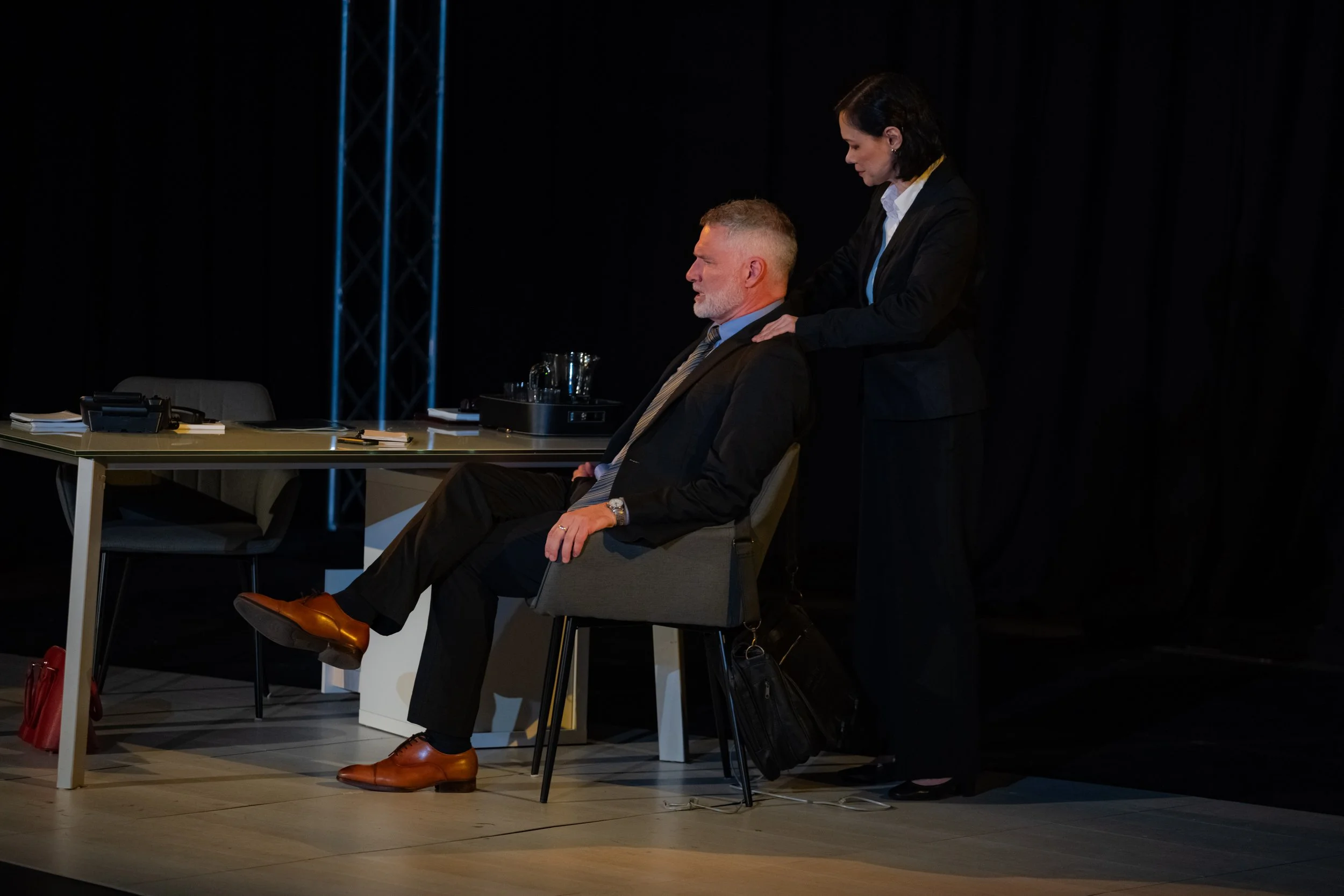
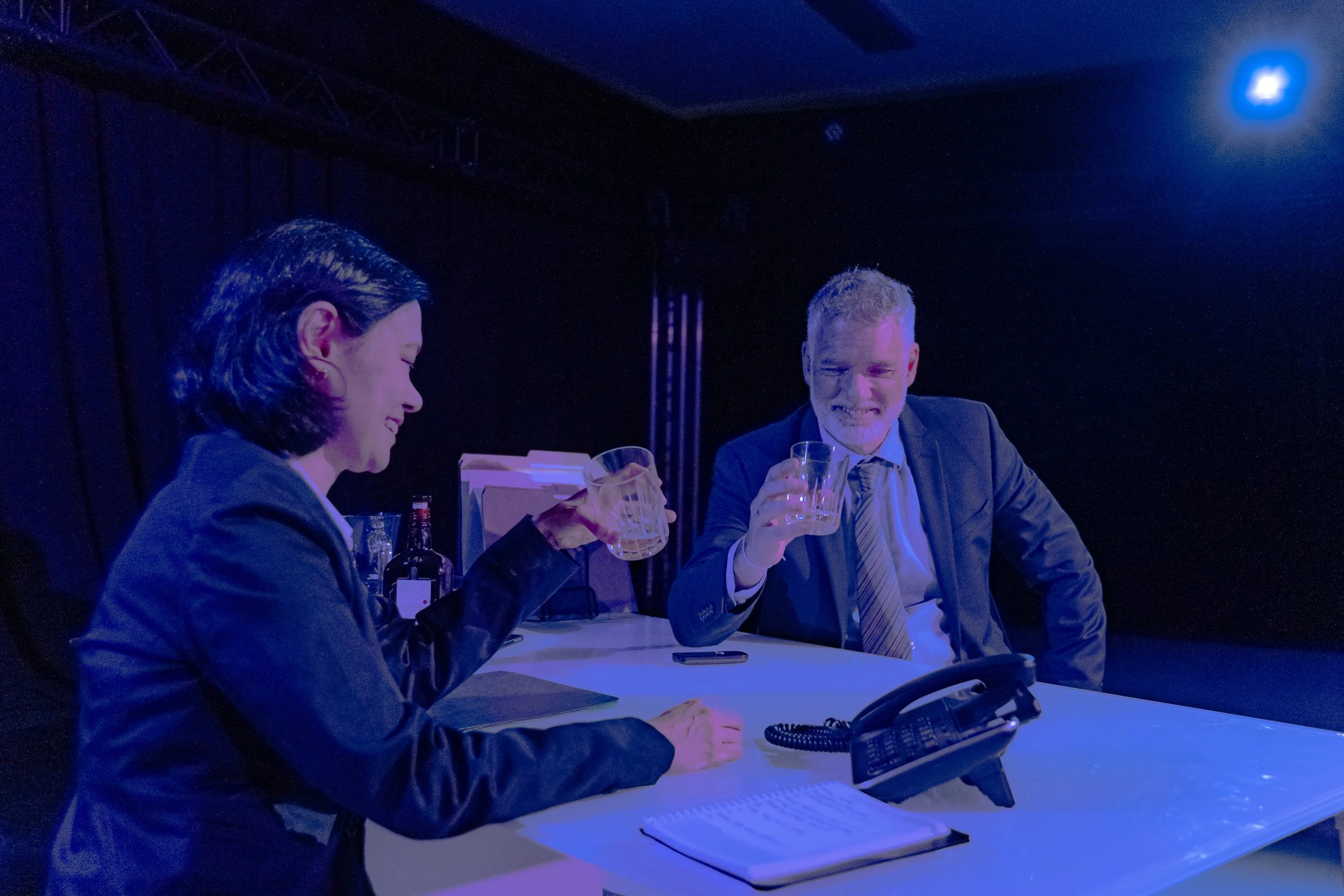
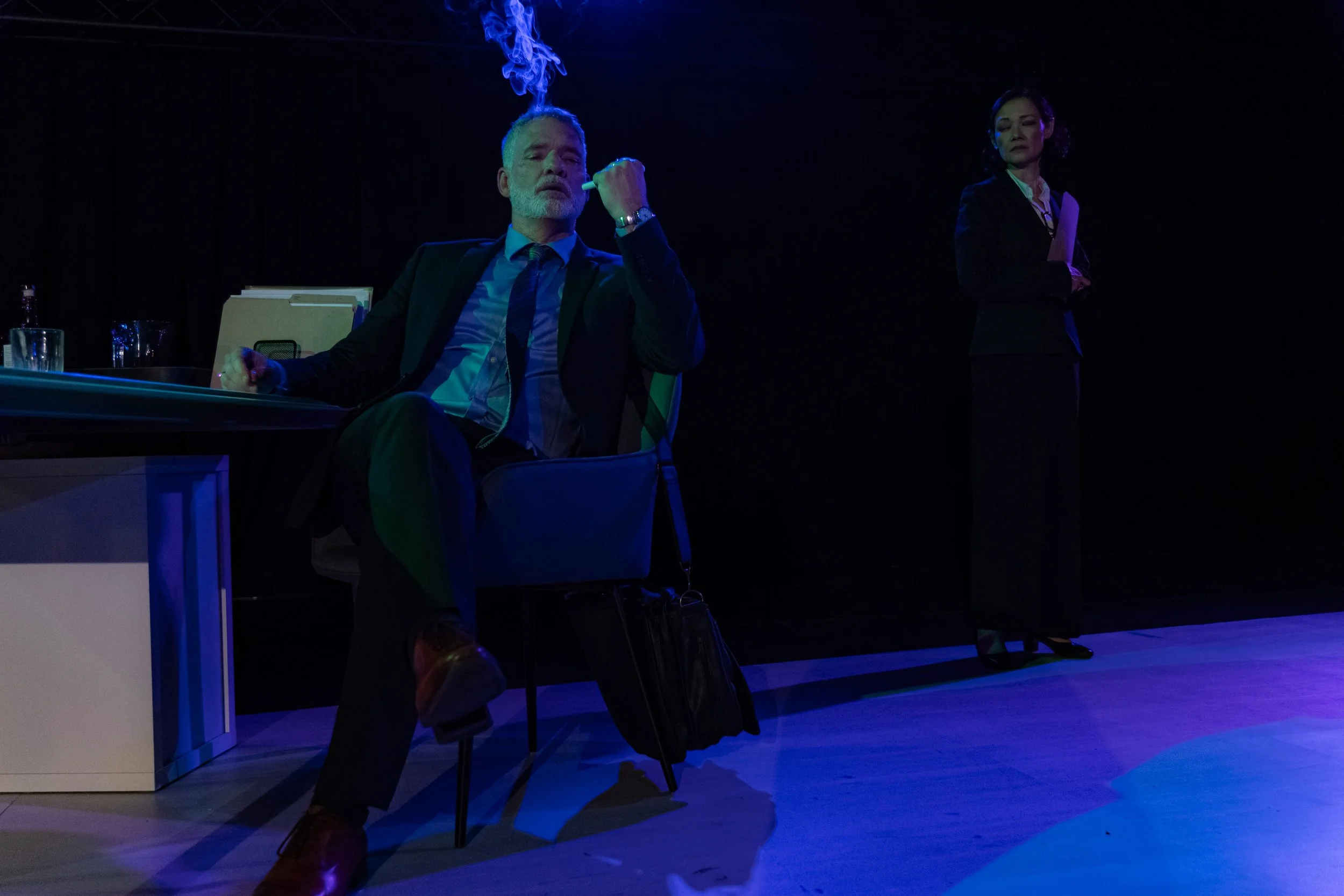
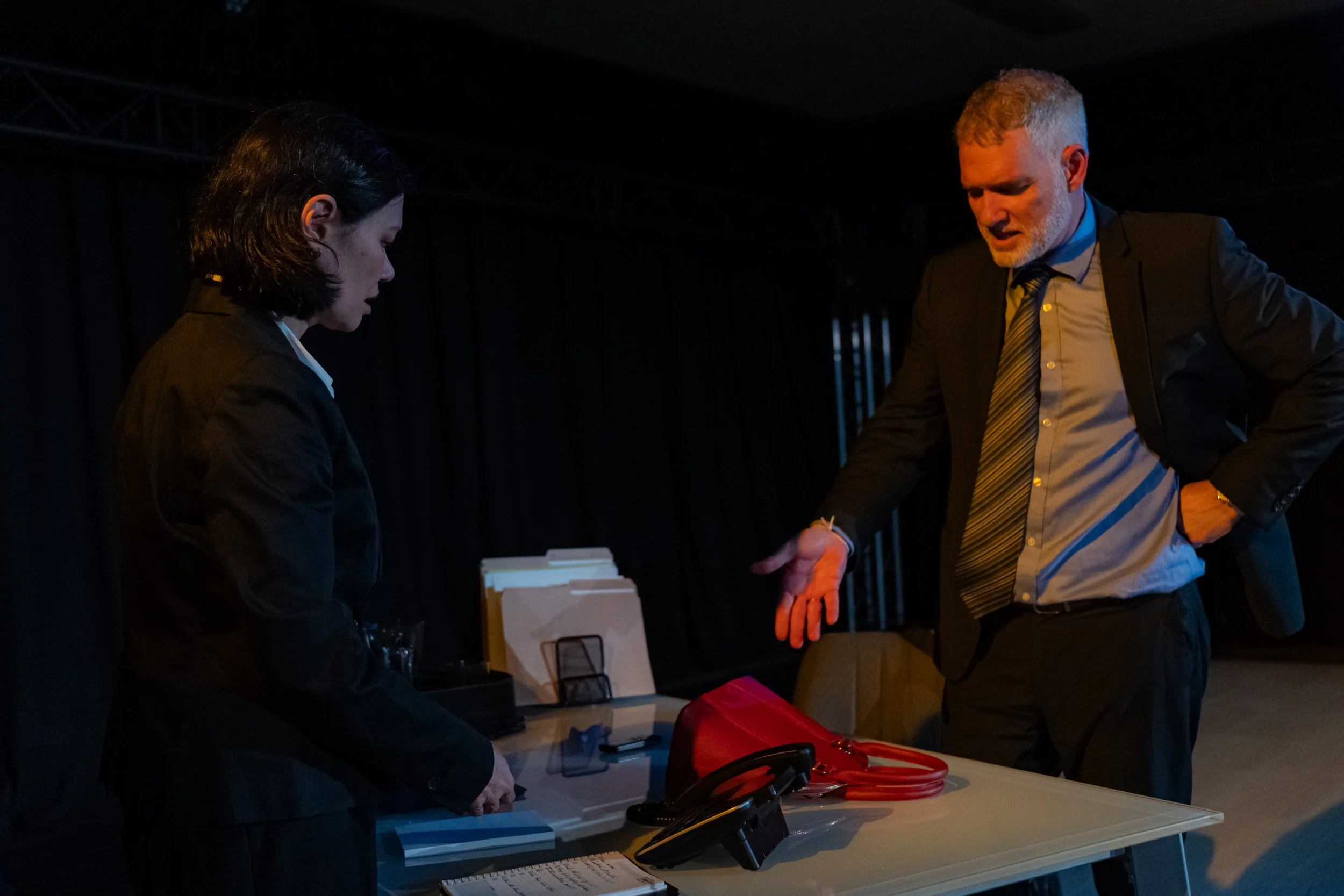
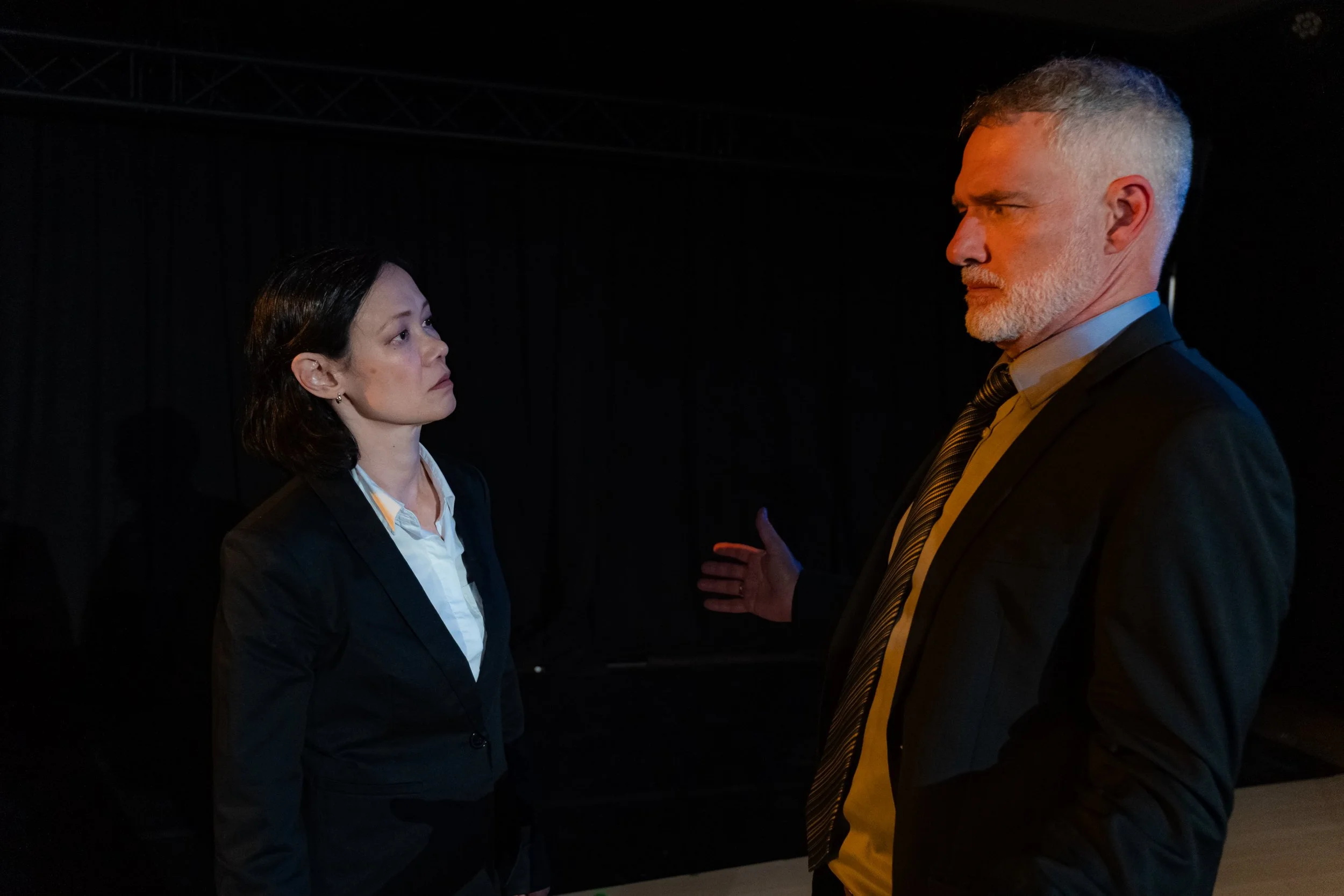
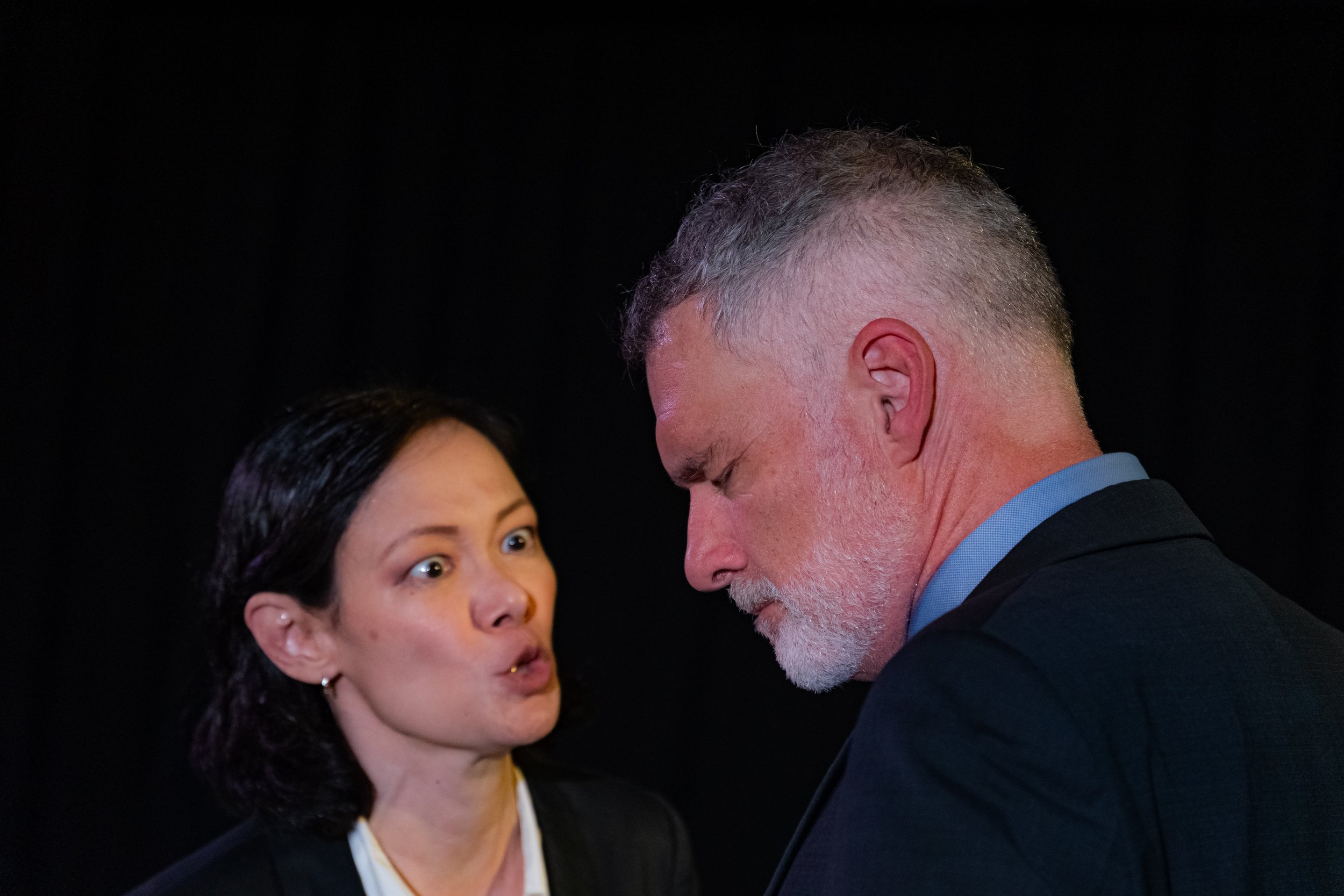
The play’s writer Robert Tsonos tells us a story of China, of America, of economy and business, of society, racism, sexism, and indulgence during the financial crisis of 2008. The story we open with focuses on a Chinese businesswoman and her male American colleague in Hong Kong. They are waiting for HR to arrive so their meeting can begin. This meeting, it’s clear early on, is to fire Hopkins’ George, due to the economic crash. This is a compelling narrative throughout the piece, with clashes of gender, class, culture, religion, and ethics fueling each scene. Tsonos wrote a second storyline into It’s Time, focusing on a woman running a handbag factory, and her somewhat incompetent male American colleague (and, needlessly, his brother). The actor’s portrayals of these alternate characters, in this alternate story, are compelling, but it’s hard to not wonder why this plot exists at all. The Chinese business women, played by the same actress, are sisters. Okay. But this is the only relevant tie between the plotlines. Sure, adding this second story provided the writer with more opportunity, an ability to add more clashes of gender, class, culture, religion, and ethics, but I was left wondering out loud, “was it necessary?”. Consider the publicity material for the production, with the synopsis reading: Large themes come in small packages in this two-hander about a Chinese businesswoman who fires an American businessman at an international financial services company in Hong Kong during the global financial crisis of 2008. There is no talk of the additional plot. If the press material finds it suitable to eliminate mention of the other HALF of the play, perhaps the play itself could have benefitted from the same editing.
To be clear, It’s Time is a compelling script, it’s brilliantly written, and this production was executed with precision by Sophie Gee, Chan, Hopkins, and the creative team. I simply can’t shake the feeling that this was two separate plays, stitched together with a loose thread, because they covered the same themes. Each of the plotlines in this production could easily stand on its own as a full piece, and I believe they should. I would have taken either story for the full duration of the show.
It’s important for me to note the strength that Sometimes Y’s lighting and sound design added to the production. Transitions between the aforementioned plotlines were magical, with swelling ambient sound, and intense lighting carrying both the audience and the performers into a new setting (with a special shout-out to the actor’s own physicality), into different characters. This existed in stark contrast to the dead silence that accentuated the dialogue, with the absence of soundscape leaving us to hear every word, hell, every breath, incredibly clear, bringing us into the scene.
It’s Time was both challenging and rewarding. You can’t really ask for more. The quality of production, the writing, directing, the creative team, the performers, it’s undeniable. This is a production with a bright future, one to watch. While the play is unfortunately done its run in Montreal, there is no doubt it will hit many more stages in the years to come. And hopefully it returns to our city. It would be a shame if it didn’t, I really think everyone should see this show.
If you’re reading Forget The Box, you’re a supporter of free, independent arts coverage. We ask you to take a moment to consider donating $1 to help us continue our mission to spotlight ground level, underground, and marginalized art in Montreal. Every little bit helps.