
Sapphic Songs at Sea
The Workshop Performance of New Musical Cutlass
Morrice Hall was unusually warm when I stepped inside the theatre on a wintry January evening, which was a welcome reprieve from the freezing winds outside. The set was decked out with old fishing nets, knotted rigging, and hanging rope ladders—paired with the heating and the venue’s telltale wooden paneling, I felt like I’d walked right into a pirate ship in the tropics even before the actors took to stage.
The pirate ship in question was home to the cast and crew of Cutlass, an original musical written and composed by Elise Holbrook. The story centers around two of history’s most infamous female pirates, Anne Bonny and Mary Read, painting a vivid picture of their lives as pirates and as lovers. For two nights only, the crew presented a workshopped version of the musical directed by Ruby Isaacs and produced by Tuesday Night Cafe Theatre, featuring ten songs and four scenes in between. A portion of all ticket sales went towards the Watermelon Sisters, a humanitarian organisation providing life-sustaining support to families in Gaza.
While the hook of “lesbian pirates in love” was already enough to get me on board, it didn’t long for me to become deeply invested in each character arc. The opening number, “Sweet New Providence,” serves as a perfect introduction to our full cast members before transitioning into our heroine Anne Bonny’s first song, “I Regret Nothing.” She is played to perfection by Elise Holbrook, who effortlessly embodies Anne’s irreverent sense of humour and firecracker personality, strutting around the stage in a way that simply demands the audience’s eyes on them. When Abby Wyland takes to the stage as Mary Read, the chemistry between them ignites instantly—Anne’s confident and commanding persona plays off brilliantly against Mary’s stoic and awkwardly charming nature. The audience can’t help but root for them from the second they lay eyes on each other.
Initially, their feelings for each other are characterised by nothing other than red-blooded passion; they can’t seem to keep their hands off each other after they kiss for the first time in “Walking the Wire,” embarking on an intense relationship that is played out brilliantly on stage with the actors’ use of physicality. The resulting slow burn as Anne and Mary navigate their changing feelings towards each other feels realistic, despite the constraints of being presented through the format of a workshop. “Nothing Comes Close” marks a turning point in their relationship, with a song that contrasts the high-stakes nature of their daily lives in piracy with the tenderness that they provide for each other. Holbrook’s deep tones and Wyland’s high, clear voice come together in a beautiful harmony that fills the entire room.
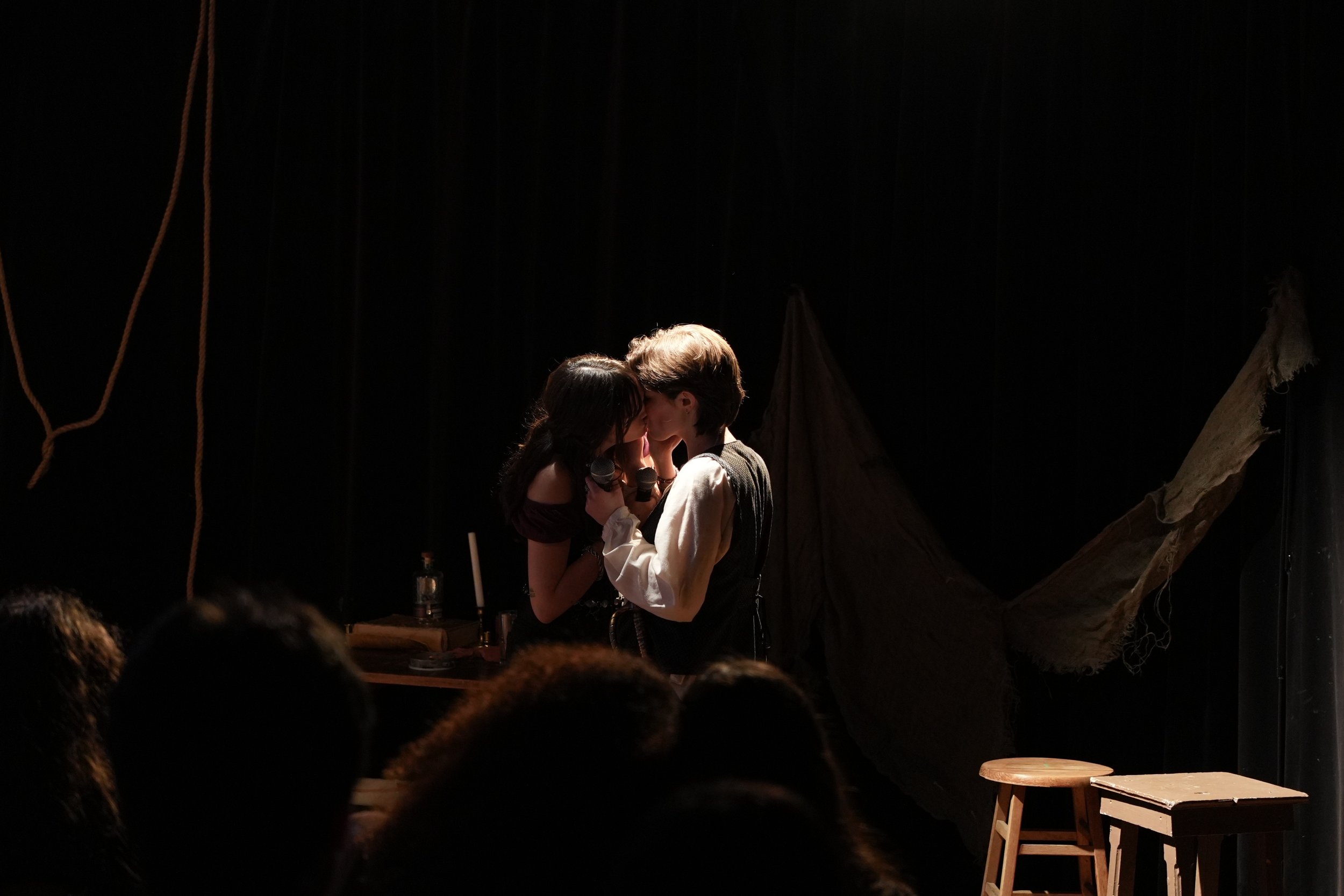
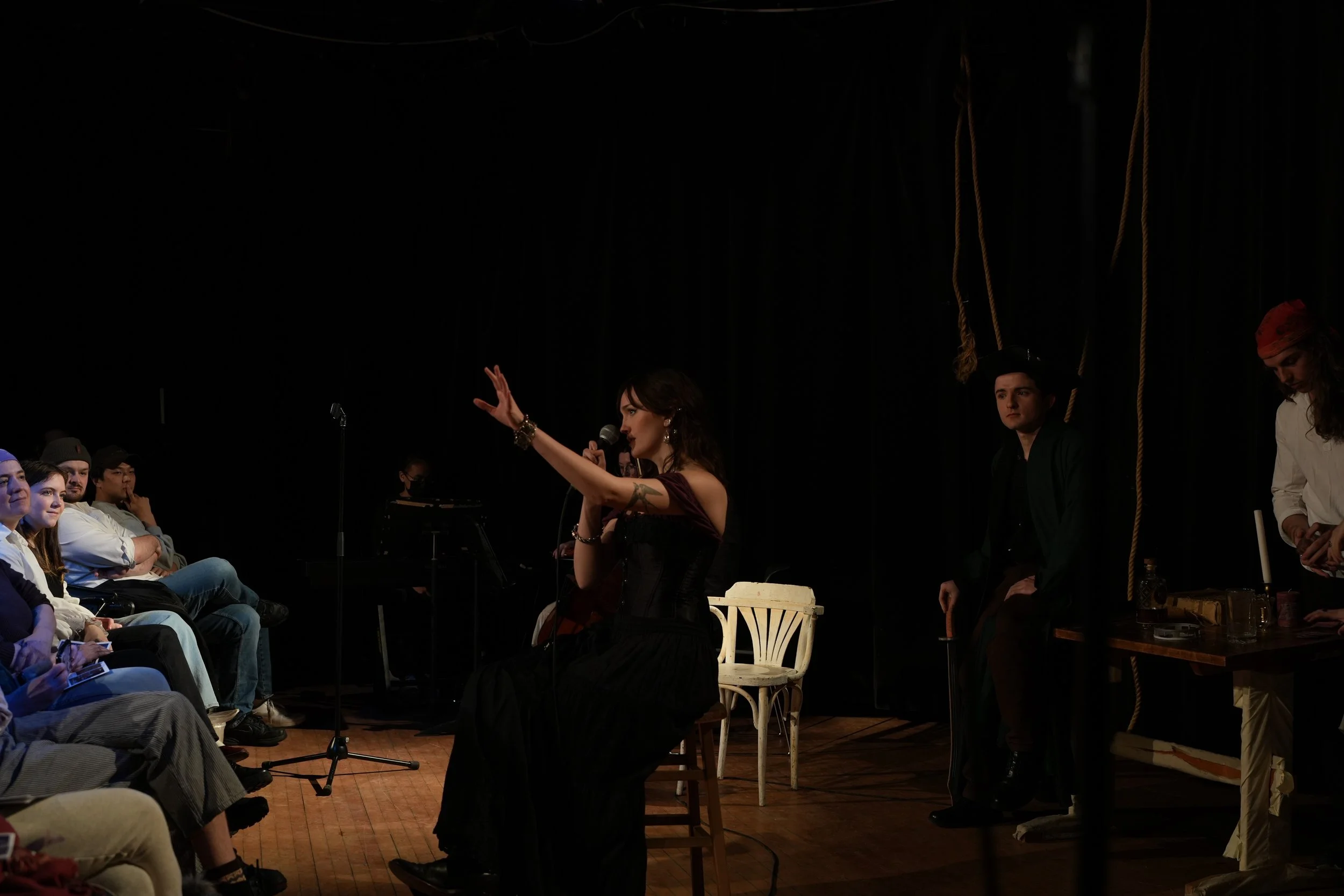
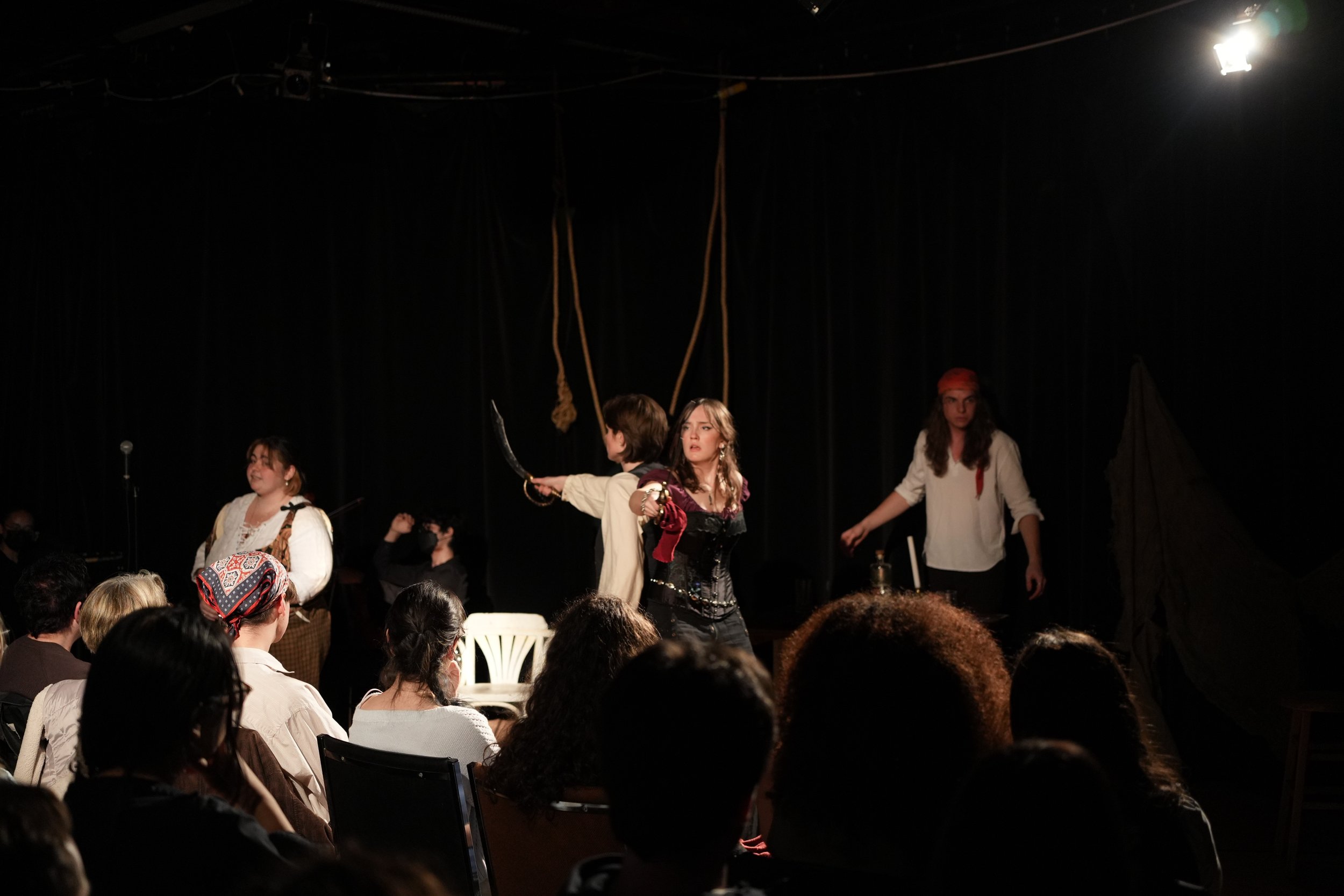
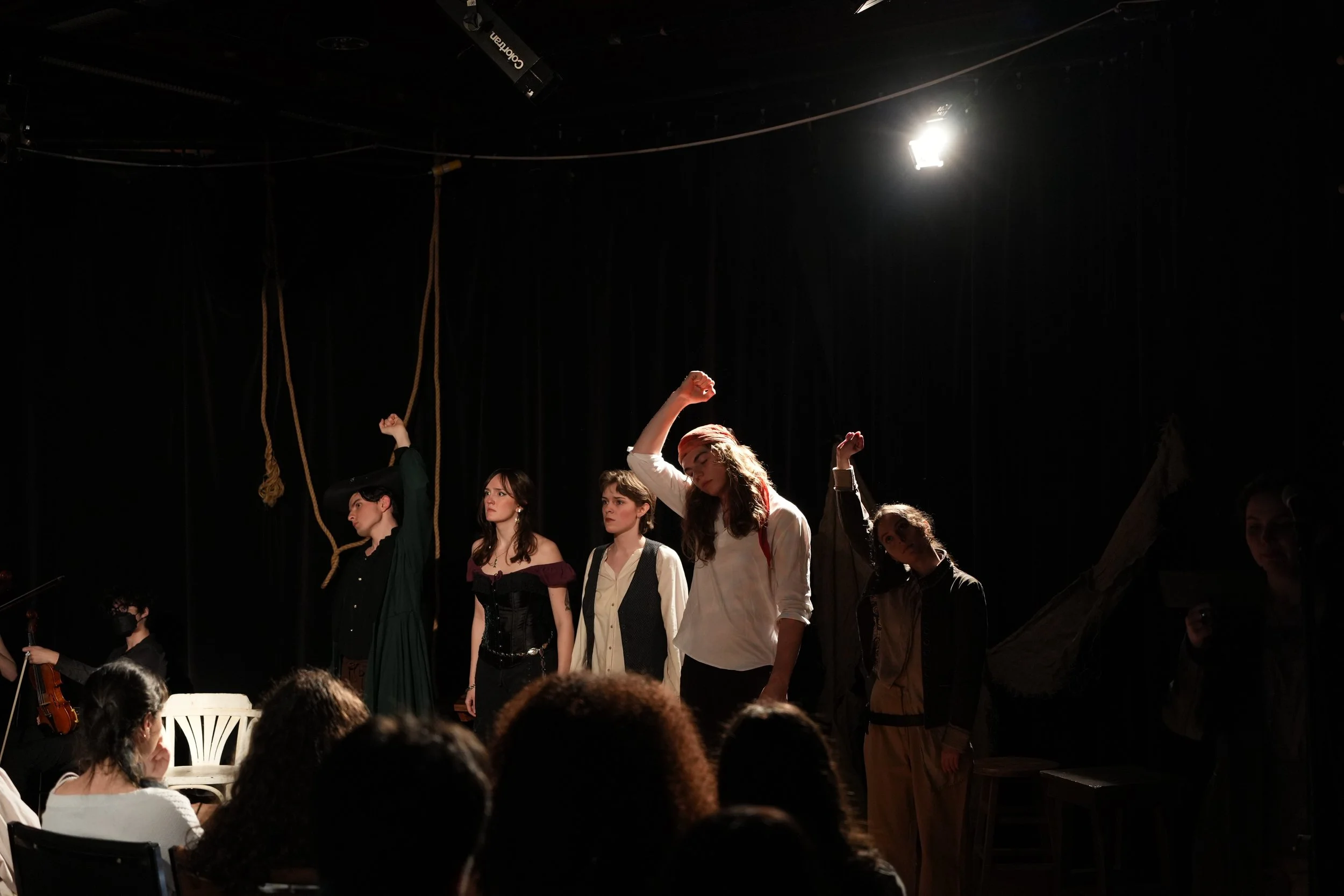
Anne and Mary’s love story is undoubtedly the heart that keeps the pulse of the musical beating, but Cutlass also has so much more to offer to its audience. In just ten songs, we are able to see the depth and breadth of how far this universe extends: from a truly terrifying villain monologue sung by Tristan Pritham as Jonathan Barnet, to Matthew Carlson’s emphatic performance as Captain Rackham in “Rackham, Alone.” The supporting cast of pirates—comprising of Robyn E. Ellison, Nathan Lippa, Scotia Millar, and Aniela Stanek—are invaluable in bringing the show to life through their physical humour and witty remarks. Ellison and Stanek’s performances in particular were standouts to me, since both of them had comedic timing down to an art in their roles as a wisecracking pirate duo. Each of these characters is deliberately written to make the world feel all the more lived-in and realistic.
The music was performed by a reduced ensemble of cello, violin, and piano, featuring Grace Perry-Howarth, Evan MacLean, and Jenny Zhang respectively. While the next step for the musical is to expand to a medium orchestra, I found that the use of a live ensemble for the workshop was crucial to my experience as an audience member. Not only did the instrumentals colour the songs with an added range of emotions, the moody, classical scoring helps to ground Cutlass in its 18th-century setting.
By the time we neared the climax of the show—marked by a blood-curling scream from Holbrook as Anne realises that her lover has just died—I was sat at the edge of my seat, not wishing for this experience to end but still needing to know how Anne and Mary’s story played out. “The Final Ballad of Anne Bonny” provides the exact kind of catharsis that a viewer would expect from a musical that spanned such emotional highs and lows. When Anne reprises her assertion of “I regret nothing” from her first song, inflected with a newfound desperation, it’s almost impossible to hold back tears.
After the cast walked back onstage to a standing ovation and lots of excited hollering, composer Holbrook took a few minutes to speak to the audience and encourage us to sing together. It was a lovely way to bring everyone together at the end of the performance, and remind us of the community that exists around us. That is ultimately what Cutlass is all about—celebrating rebellion and finding community even on the margins of society. I left the theatre with a full heart, and the words from the song echoing in my ear: “Tender lass, stay far away, from the swell of the tides, and the salty spray…”
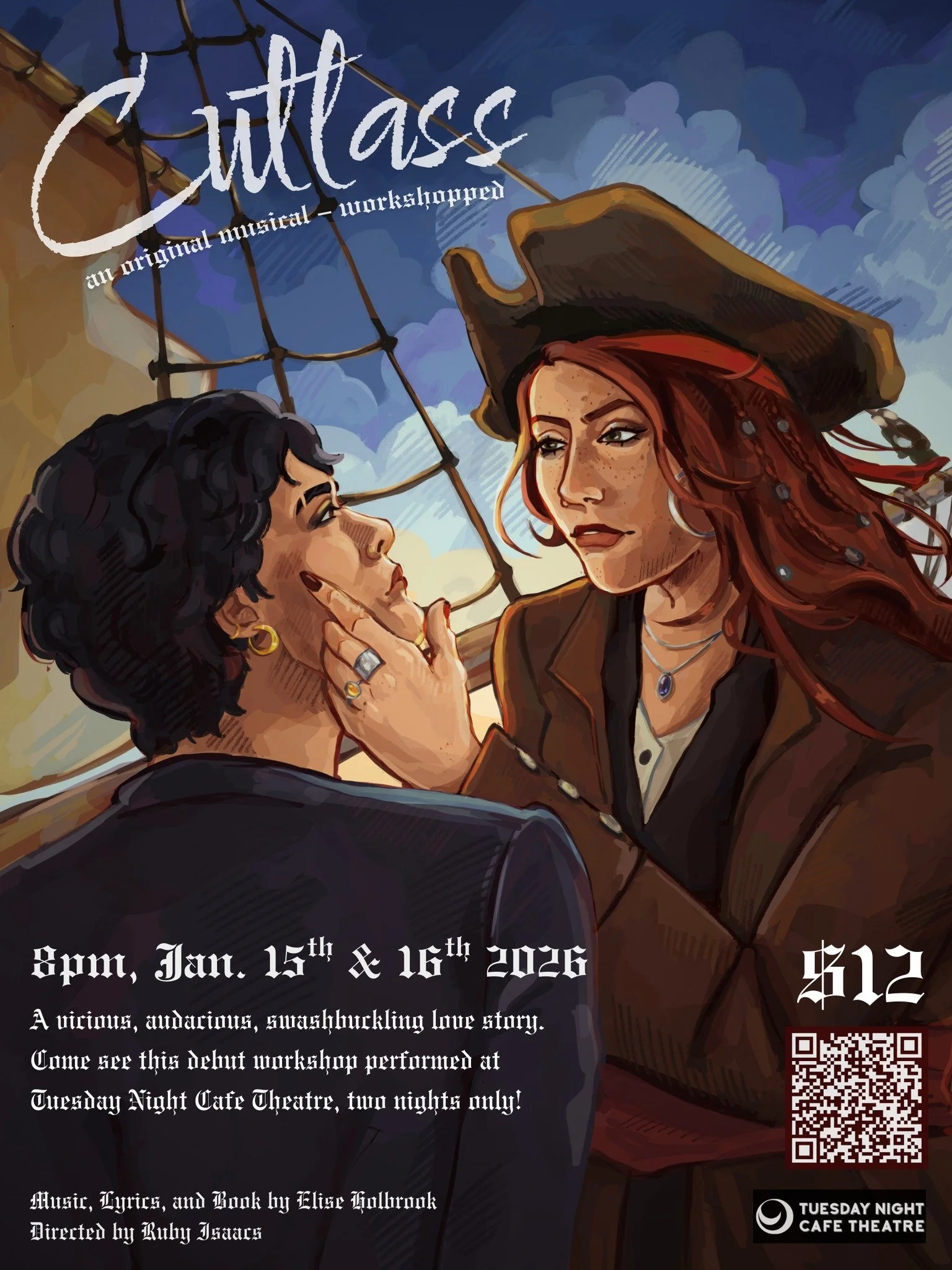
You can find Cutlass on Instagram (@cutlass_musical) for updates on cast recordings and to keep up with their journey towards Broadway.
