Contact Theatre’s Falsettos
Sophisticated and Emotional Musical Theatre
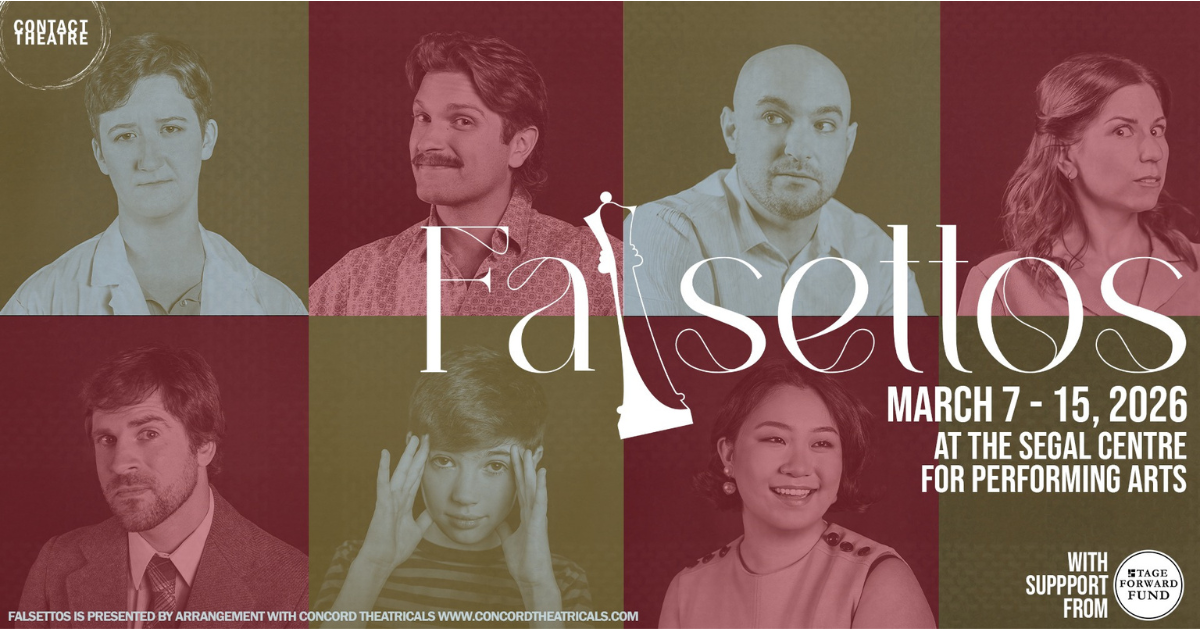
Thanks to a Lyft referral discount, I arrived at the Segal Centre just in time for Contact Theatre’s Falsettos. Most of the audience was already seated by the time I stepped into the venue and claimed my preferred back row seat. The house lights were still up, but the musicians were in place and the stage was already live, with two characters engaged in a quiet conversation over a game of chess. A subtle, effective addition to the pre-show environment was the radio playing over the speakers, blending songs of the era with brief DJ interludes clearly created specifically for the show. It was an effective bit of world-building that established the period before the first note was sung.
For the uninitiated, Falsettos is the product of two one-act musicals by William Finn and James Lapine, eventually united for a Broadway premiere in 1992. The cast is intimate, a mere seven performers, two of whom only appear in the second act. The first act, set in 1979, follows Marvin as he navigates the fallout of leaving his wife and son to shack up with his lover, Whizzer Brown. Marvin’s actions eventually catch up to him, forcing a realization that he must change or risk losing everything. The second act, set in 1981, views the story through a wider lens; the "lesbians from next door" are added to the fold, and while the focus remains on identity and family, the narrative bravely turns to face the encroaching AIDS epidemic. Perhaps the most captivating aspect of the play, its sturdy foundation, is that it is entirely sung-through. With no spoken dialogue to lean on, the music does all the heavy lifting. More on that later.
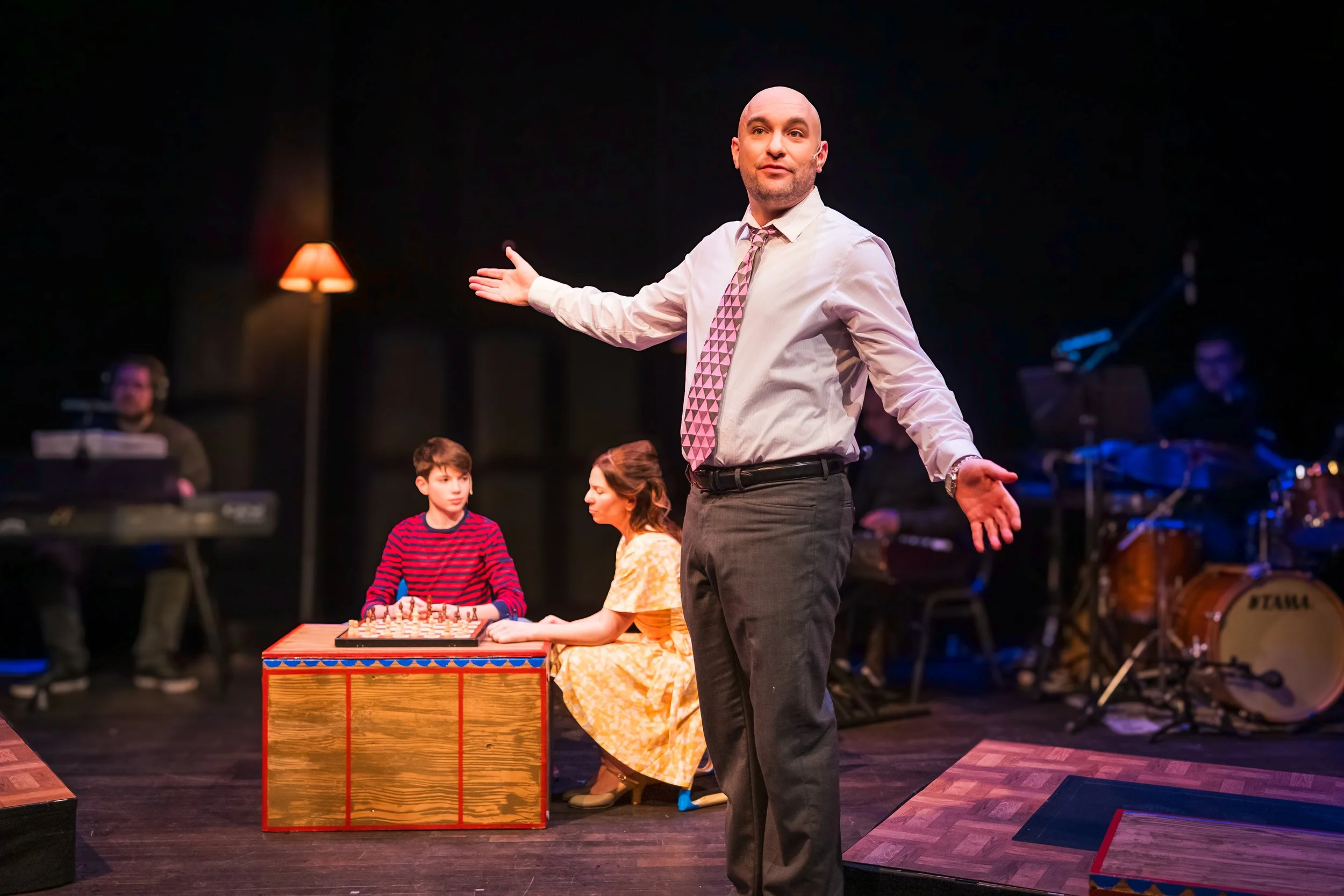
The physical world of this production of Falsettos serves as an evolving metaphor for the characters' internal growth. Occupying a tight space with the audience on three sides, the staging, directed and choreographed by Debbie Friedmann, intentionally blurs the linear boundary between performer and observer; by having the characters frequently stand or sit among the audience, the production collapses the traditional distance. This proximity makes the initial clutter of the first act, a stage littered with children’s toys like small chairs, a kitchen set, and a chess board (curated by Set and Props Designer Nikki Mabias) feel almost claustrophobic. It is a strange effect, considering these objects are smaller by nature, but it successfully creates the sense that we are sharing a cramped playroom with the cast.
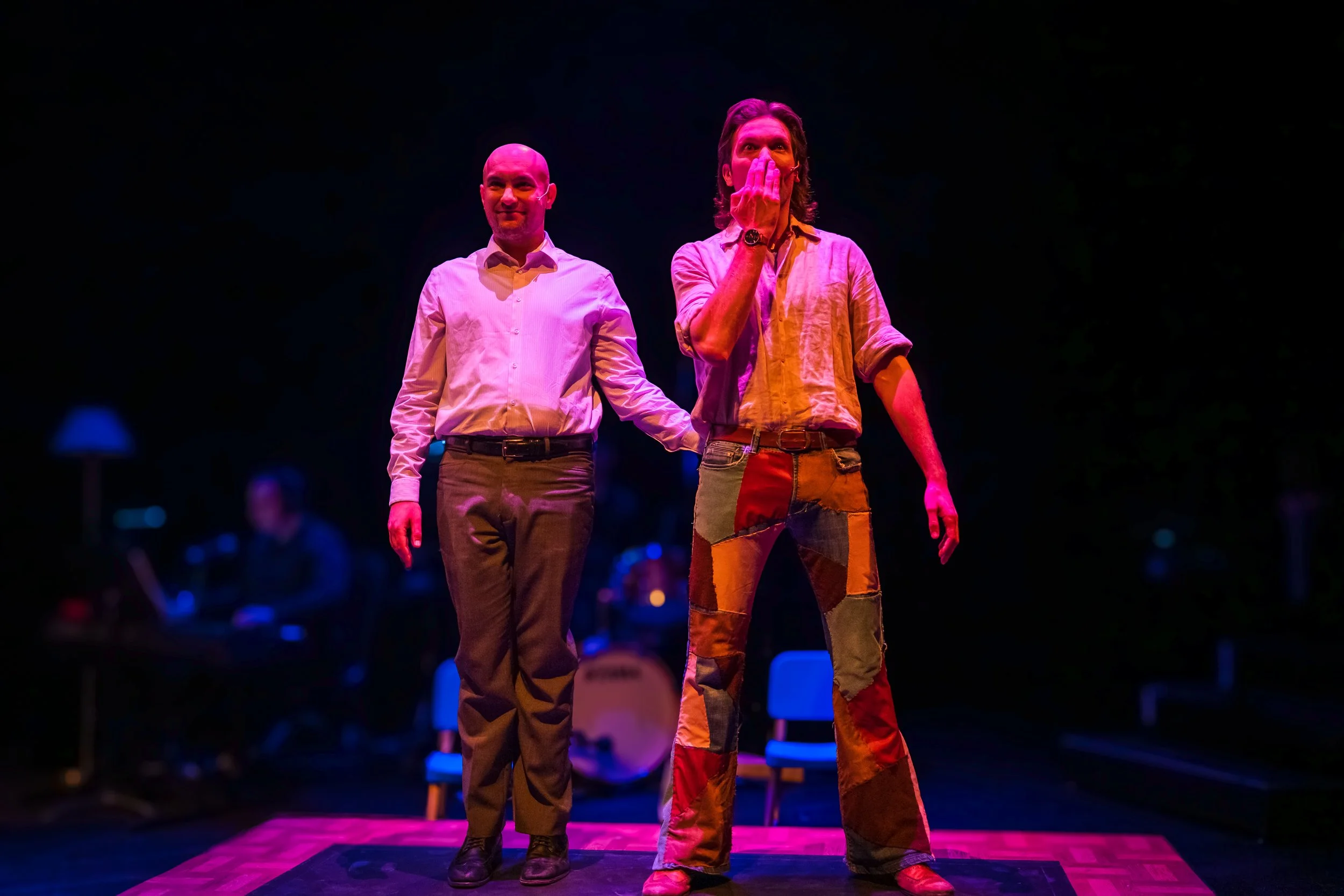
As the narrative matures, this playful aesthetic surrenders to the gravity of adulthood. The toys vanish, replaced by more adult furniture and a newfound sense of negative space. By the second act, the stage is cleared of its literal and figurative baggage, finally giving the characters, and the story, the sole focus and the room they need to breathe. This evolution is bolstered by a shifting color palette, moving from the neutral browns of the first act (special shout out to Whizzer’s pants) into the brighter, more vulnerable pastels of the second.
The technical execution by Technical Director Katie Dodd and Lighting Designer Chris Wardell is simple and effective, never drawing attention from the story or the music, but importantly contributing to the whimsy scattered throughout the play. Most impressive is the lack of traditional scene transitions; there is no darkness for stage hands to work their magic under. Instead, through Friedmann’s seamless choreography, the actors inhabit the space as their own stagehands, moving the furniture or introducing props themselves. The fluidity ensures the transition of the stage from the first to second act goes almost unnoticed, feeling less like a set change and more like a natural passage of time.
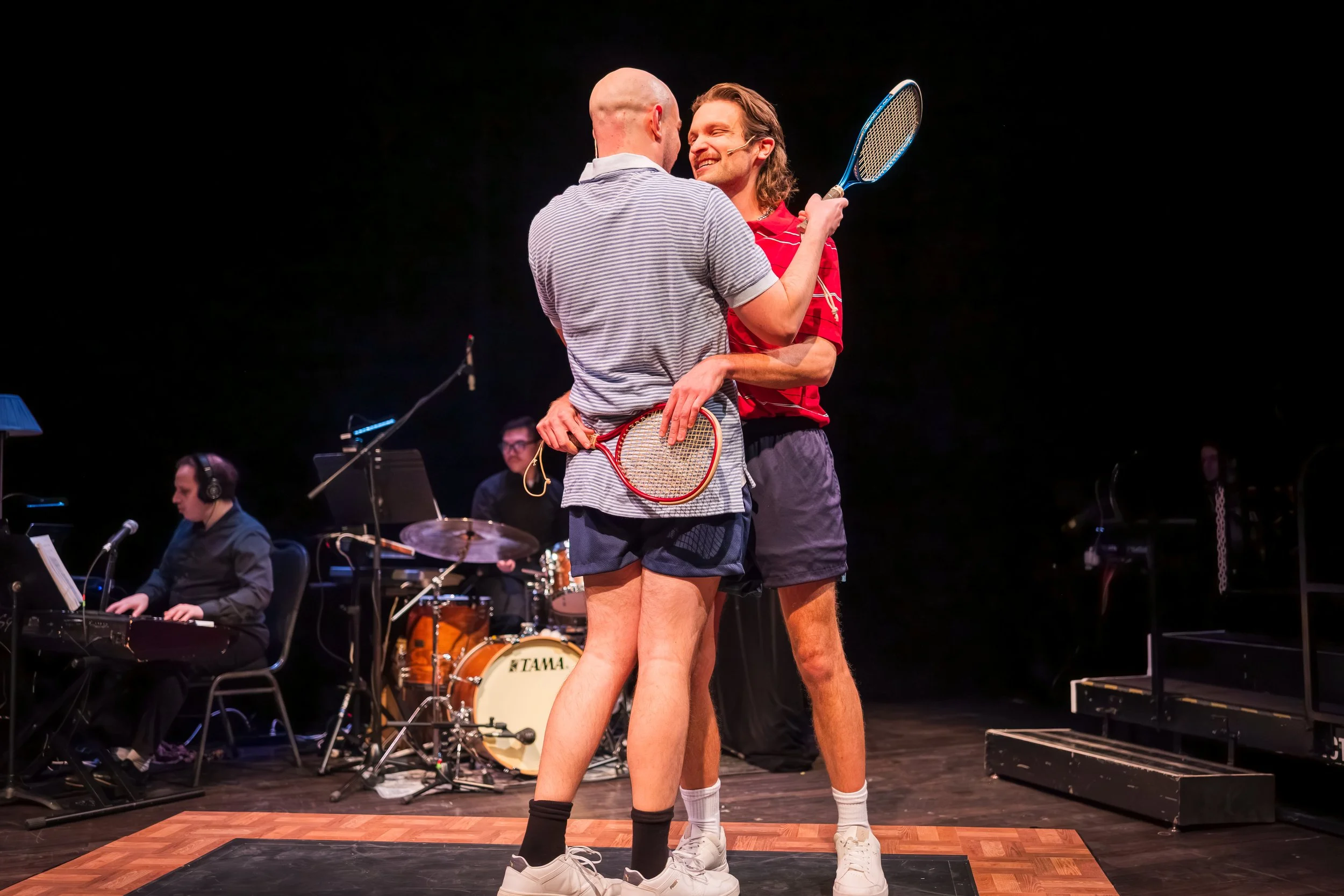
The true foundation of this production is the music, which is particularly impressive given the layout of the space. The band, consisting of Noah Century on Synthesizer, Eric Wallace on Reeds, and Jason Ma on Drums, is arranged in a line at the back of the stage. This puts Conductor and Pianist Giancarlo Scalia in a uniquely challenging position; in a production this intimate, a conductor’s ability to see an actor’s face is vital, but the geometry of the room doesn't always allow for it. With Scalia facing the backs of the performers and conducting his ensemble on a horizontal axis, the execution was remarkably steady.
The score for Falsettos is complicated, detailed, challenging, and unforgiving, yet the band led by Scalia was nearly flawless. A special acknowledgement is owed to Eric Wallace on Reeds; the position is so varied that every time you glanced his way, he seemed to be playing a different instrument. Their performance ensured that the music remained the driving force of the evening, maintaining the momentum required for a show with no spoken dialogue.
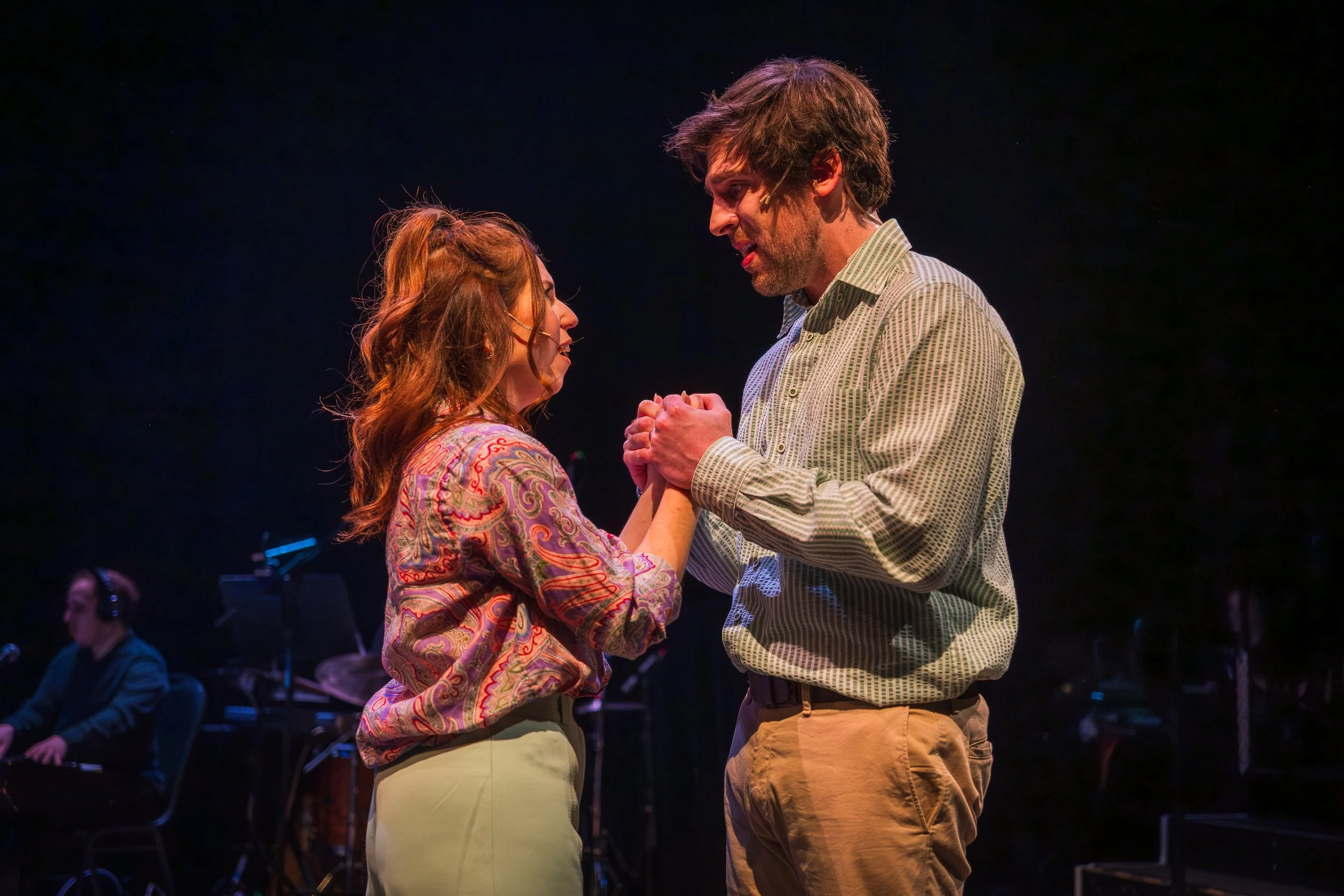
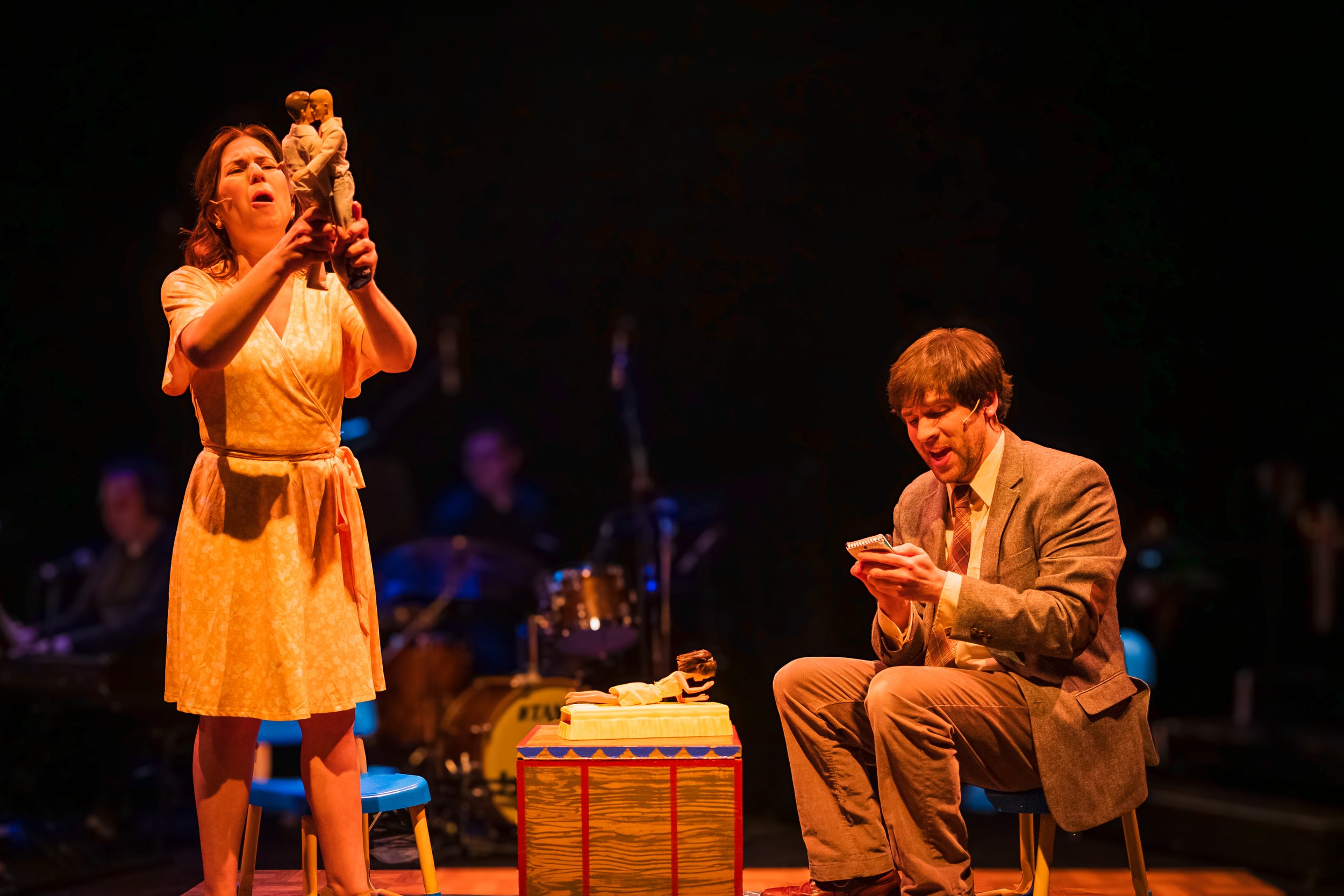
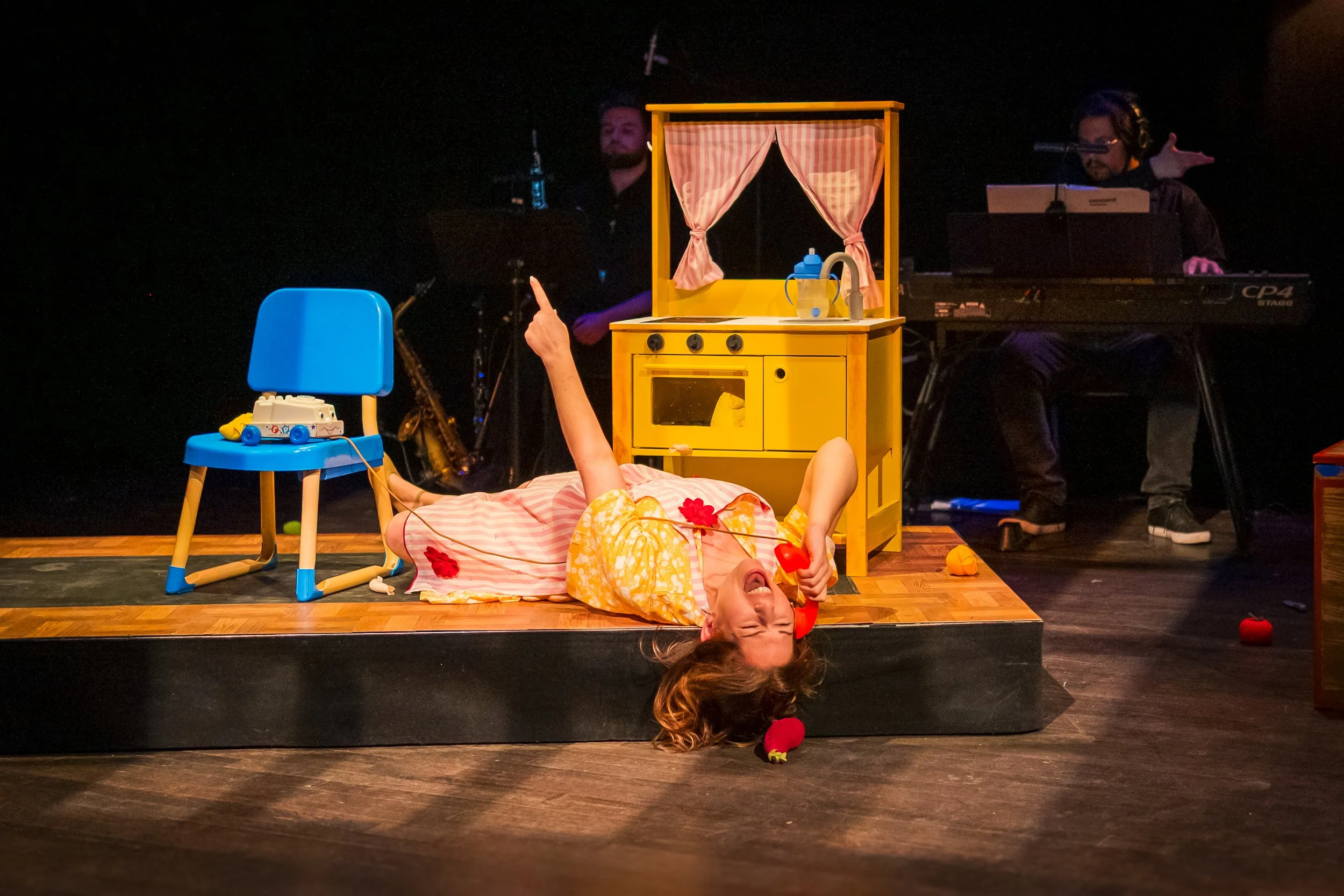


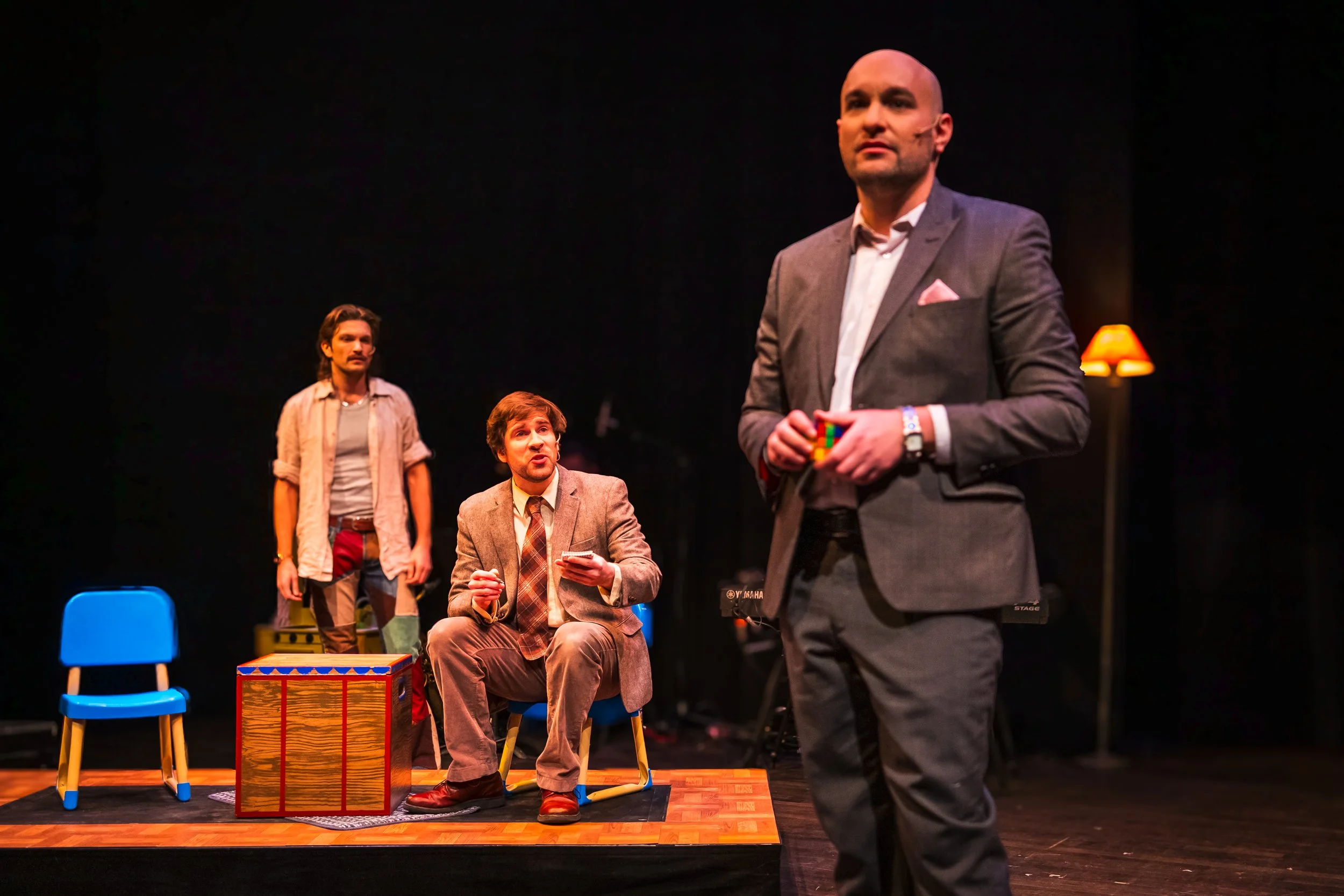
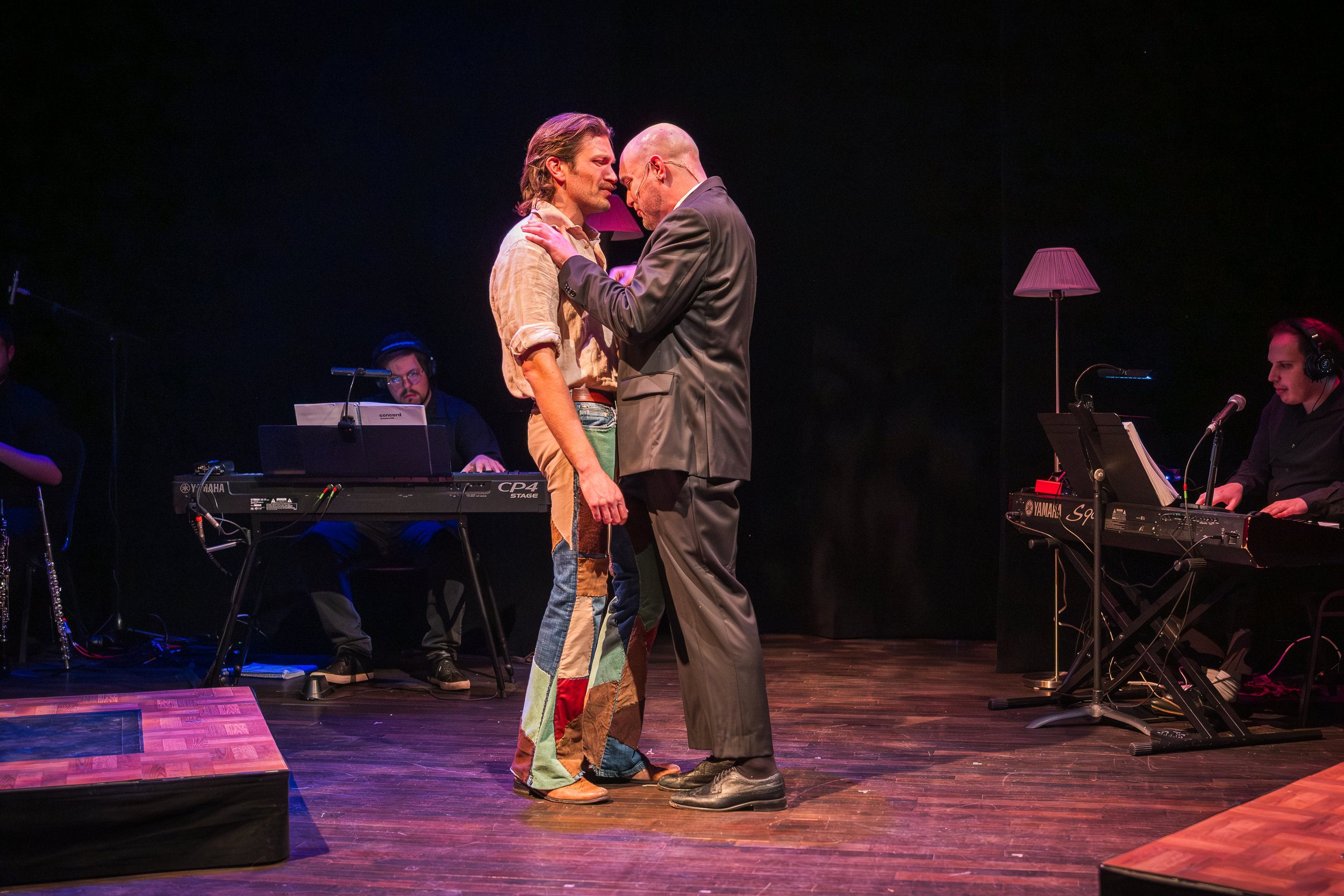
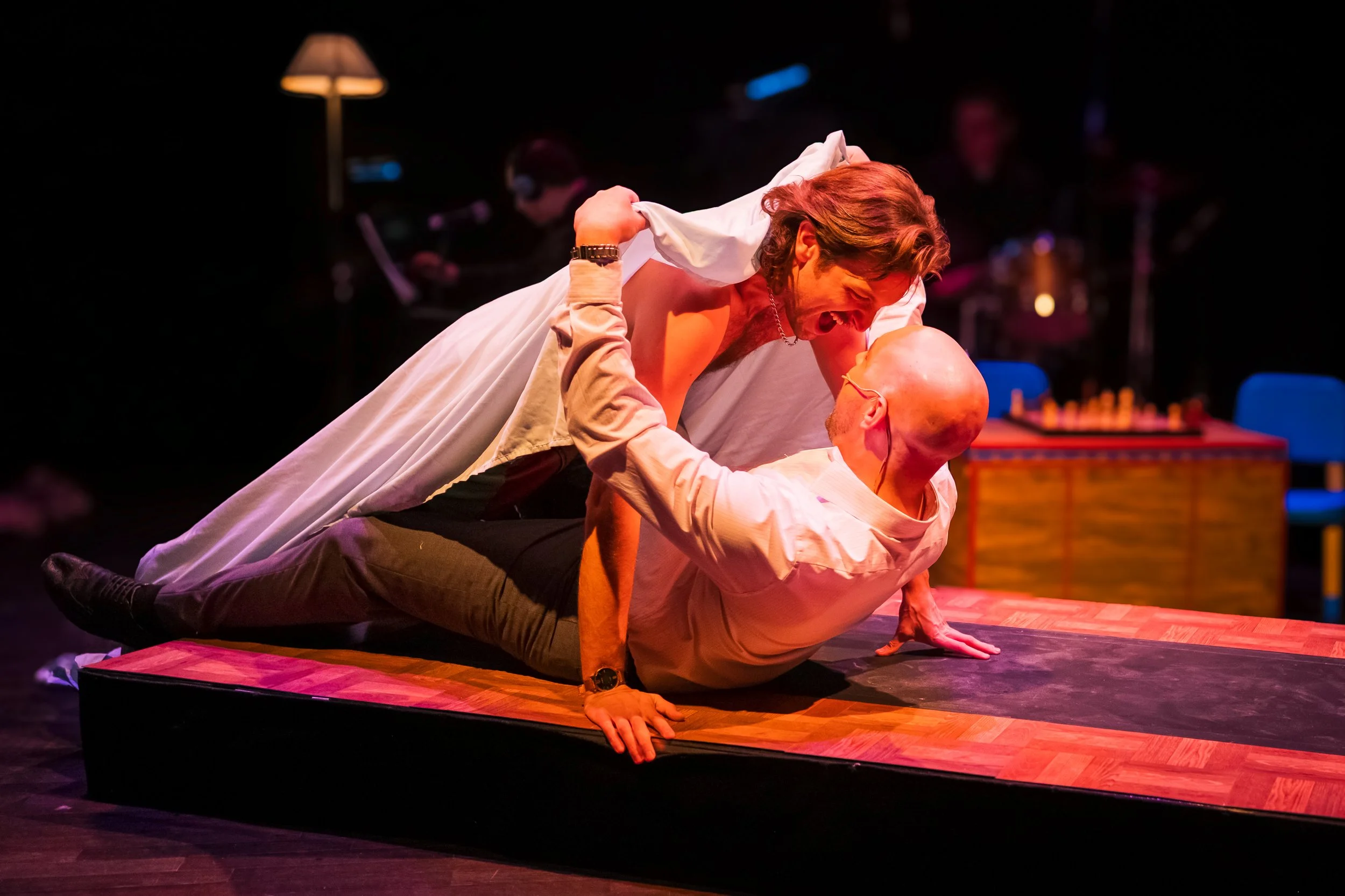

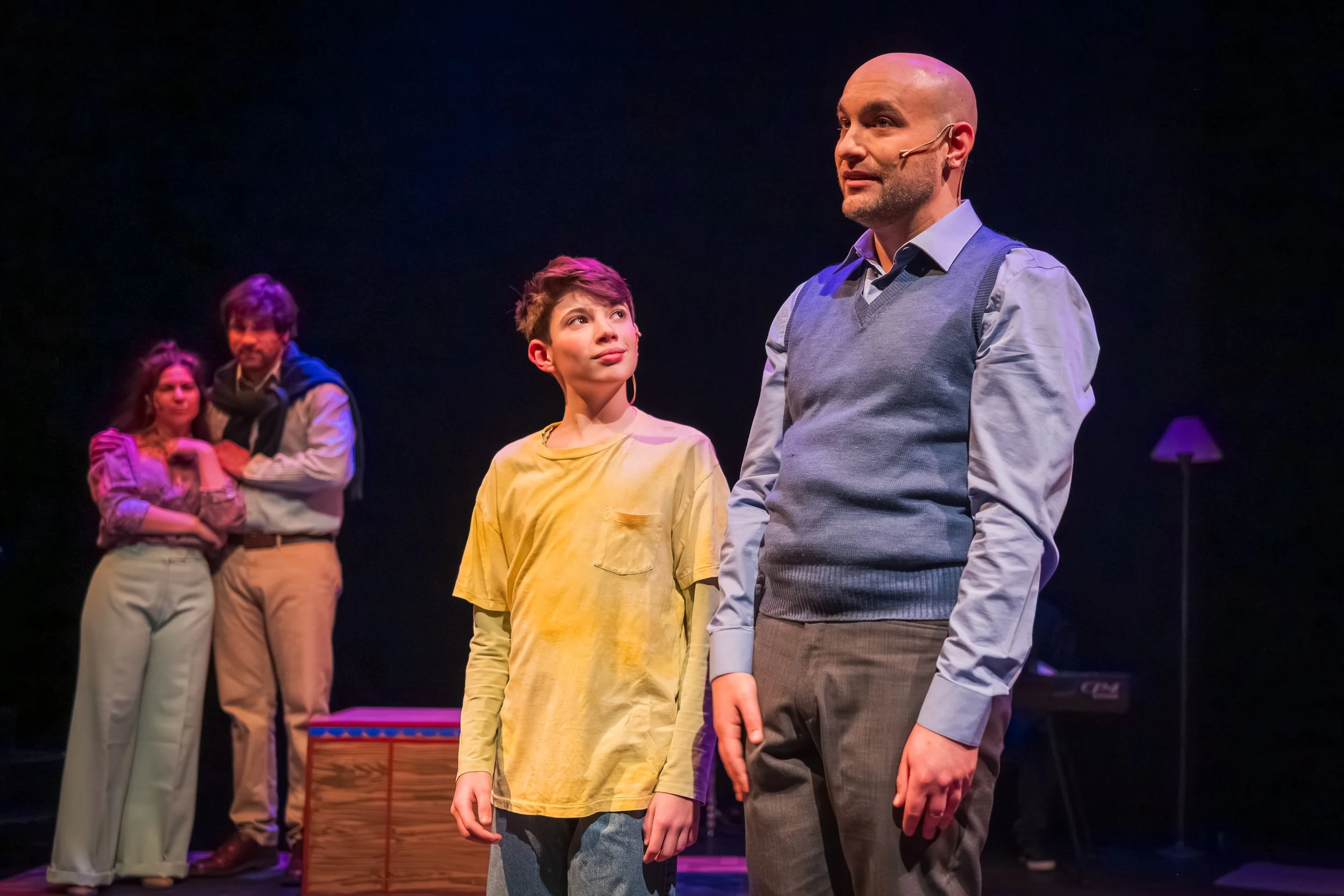
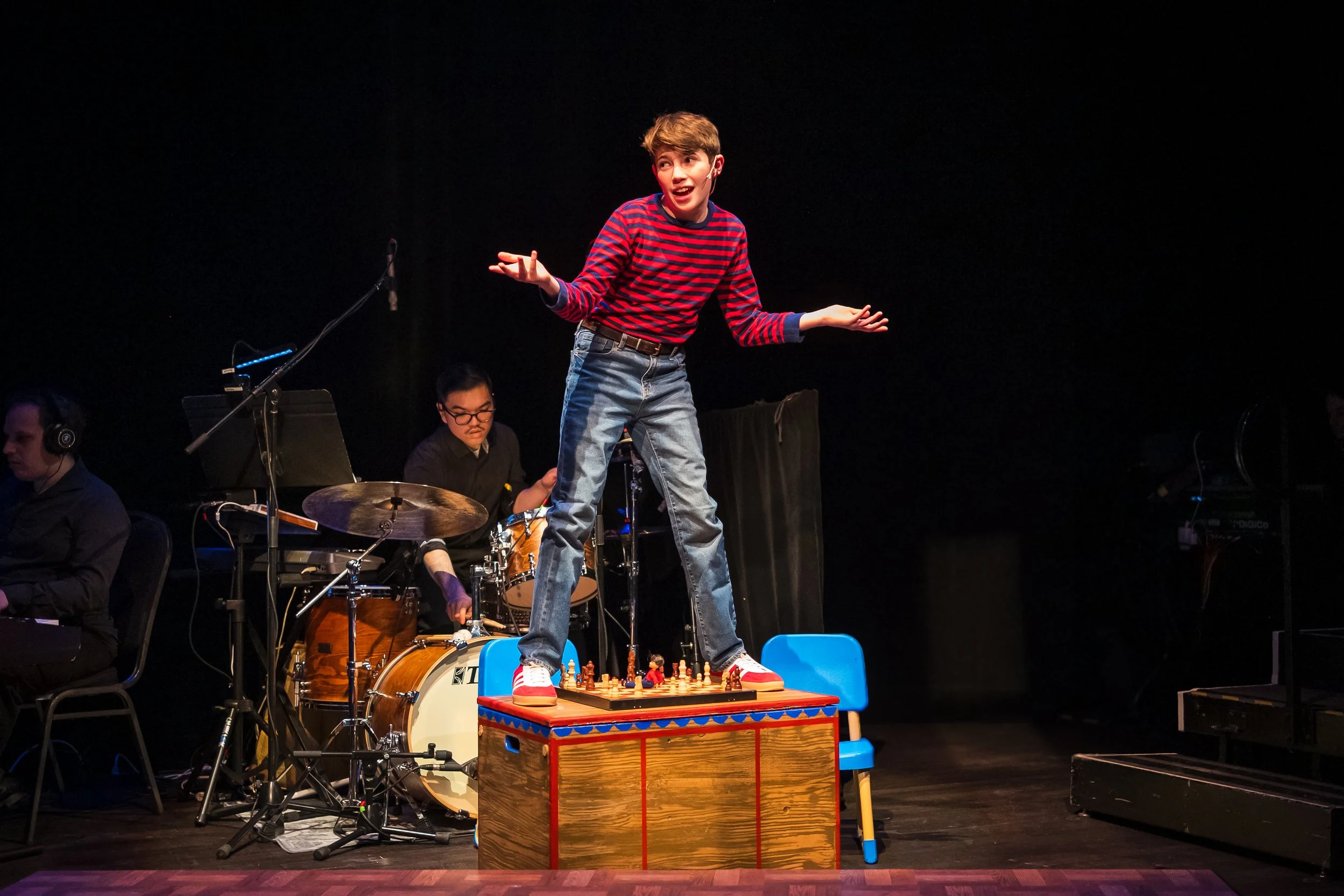
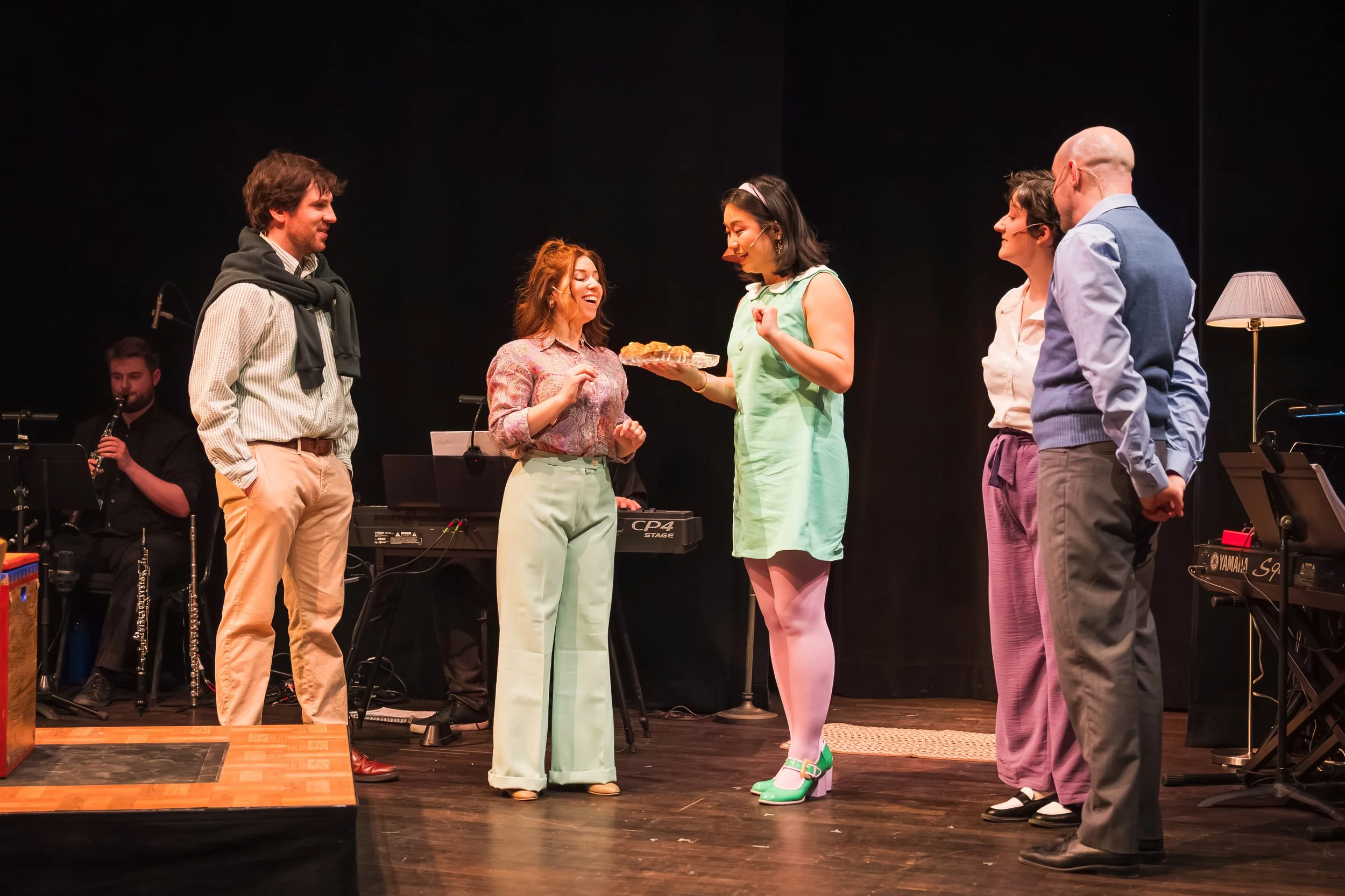
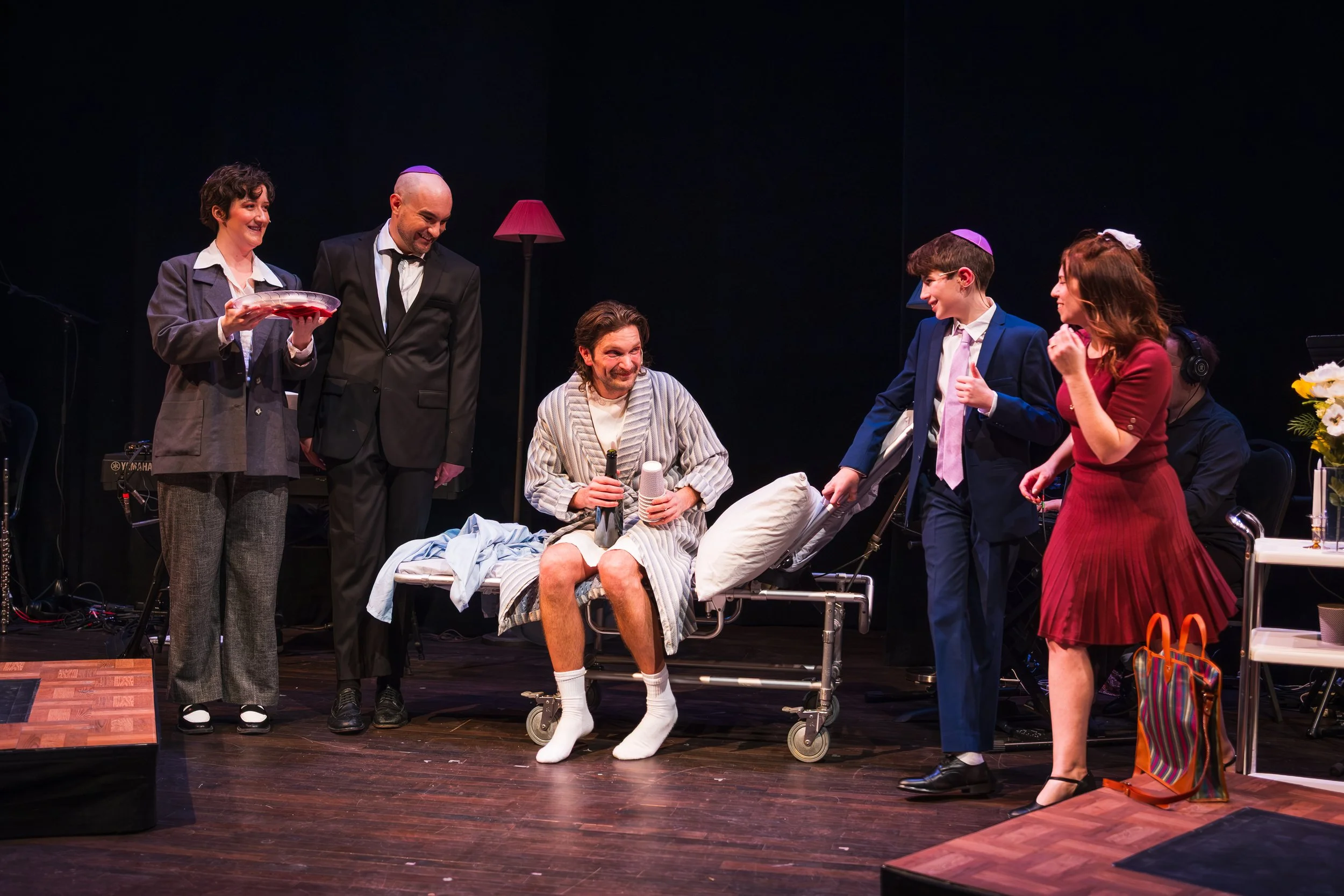
Famously difficult material, Falsettos is a vocal marathon that requires technical precision and emotional stamina, and is not a show to be handled by amateurs. Contact Theatre met that challenge head-on, assembling a cast that demonstrated a high level of excellence across the board.
The production is anchored by Daniel Wilkenfeld, whose beautiful, clear voice and undeniable leading-man energy make him a natural center for the story. While the character of Marvin is essentially an asshole in the first act, Wilkenfeld occasionally feels almost too likable; his natural warmth softens some of the character's sharper, more abrasive edges. However, this inherent decency pays dividends in the final scenes, allowing him to navigate the deep emotional territory of the finale with genuine heart. Opposite him, Jonathan Vanderzon is a formidable Whizzer Brown. Vanderzon is a powerhouse actor with even stronger vocals, perfectly capturing the delicate balance of arrogance and vulnerability that defines the character’s arc.
The family dynamic is rounded out by Amanda Caron and Joel Bernstein, both of whom deliver standout performances. Caron is a revelation as Trina; she possesses incredible pipes and a stage presence that is nothing short of brilliant. Her execution of "I’m Breaking Down", a song that has become a legend in the musical theatre zeitgeist, was a masterclass in vocal control and comedic timing. Bernstein is incredibly fitting as Mendel, the psychiatrist caught in the middle. His voice shows expert control, particularly in his scenes with Jason, played by Lucas Crenlinsten. The role of Jason is notoriously difficult to cast, yet Crenlinsten delivers what may be the strongest vocal performance I have ever heard from an actor his age. His tone and control are exceptional, and he shines brighter in the role than many professional actors I’ve seen tackle the part.
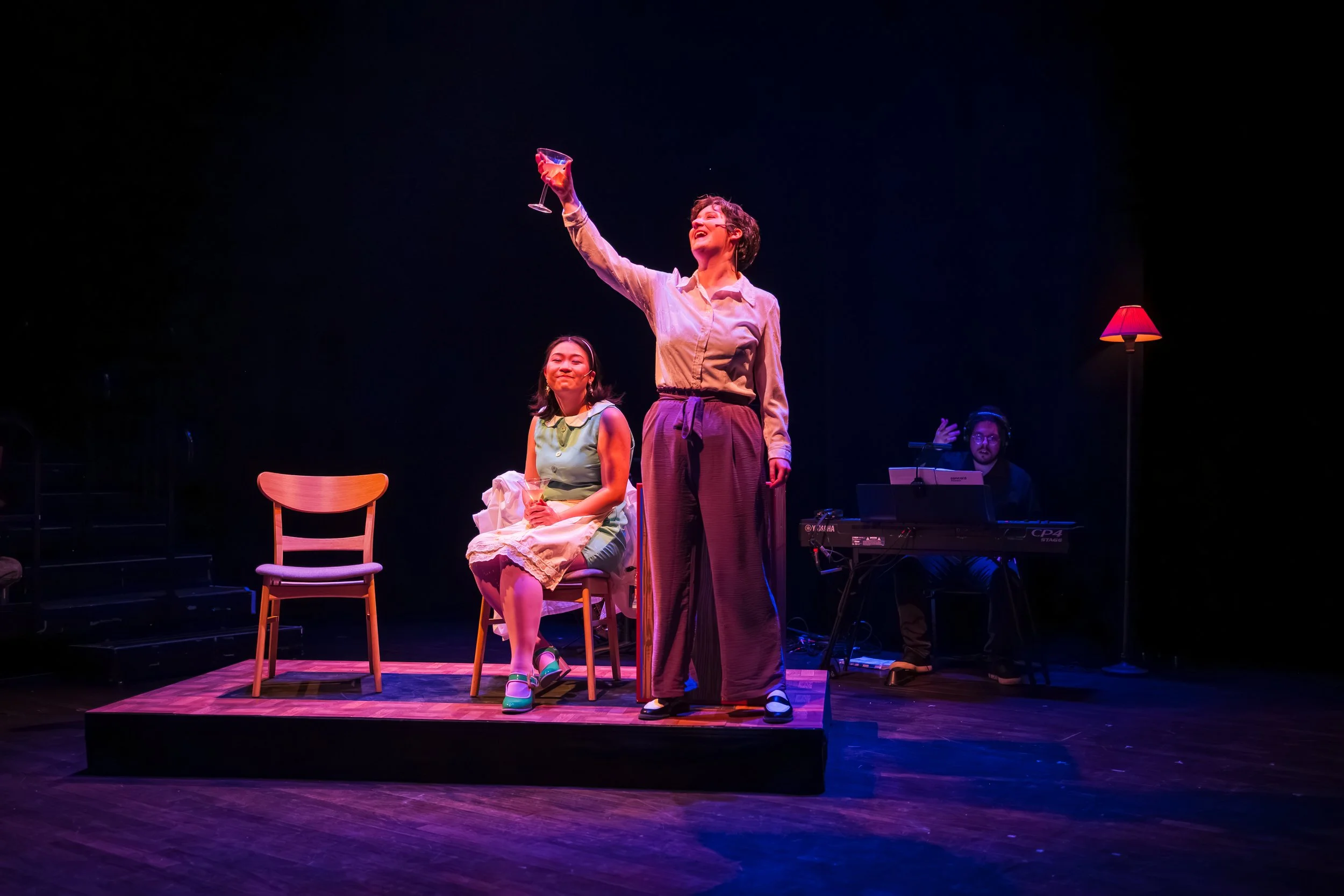
As the lens widens in Act 2, Emma Yee and Lily Lachapelle enter as the "lesbians from next door," providing the necessary shift in tone. Yee clearly understood the assignment as Cordelia, bringing much-needed comic relief and a talented voice to the more dramatic storylines. Lachapelle, as Dr. Charlotte, provides the audience with the vital narrative weight surrounding the AIDS epidemic; her crystal-clear voice and powerful belt demand attention, grounding the production's final moments.
Throughout the show, this fantastic cast handles Debbie Friedmann’s choreography with an ease that contradicts its complexity. Their collective talent ensures that the challenging score never falters, proving that this ensemble is more than capable of carrying the weight of such a legendary piece of theatre.
This production is a remarkable achievement, balancing the demands of a complicated, sung-through score with a deeply moving, intimate narrative. From the customized pre-show atmosphere to the clever, evolving scenography, every element felt intentional. By clearing the childish clutter of the first act to make room for the gravity of the second, Debbie Friedmann’s team created a space where this exceptional cast could truly shine. The combination of Nikki Mabias’s metaphoric set, the steady leadership of Giancarlo Scalia’s band, and a powerhouse ensemble capable of navigating such demanding vocal territory resulted in a production that felt both raw, and remarkably polished.
Ultimately, this is not just a successful run of a difficult show; it is a statement of intent. Contact Theatre has taken one of the most challenging pieces in the musical theatre canon and executed it with a level of professionalism and emotional honesty that is rare to find. By prioritizing high-caliber talent and sophisticated storytelling, they have moved beyond being a local company to watch. With this production, Contact Theatre has firmly established themselves as the gold standard of musical theatre in Montreal.
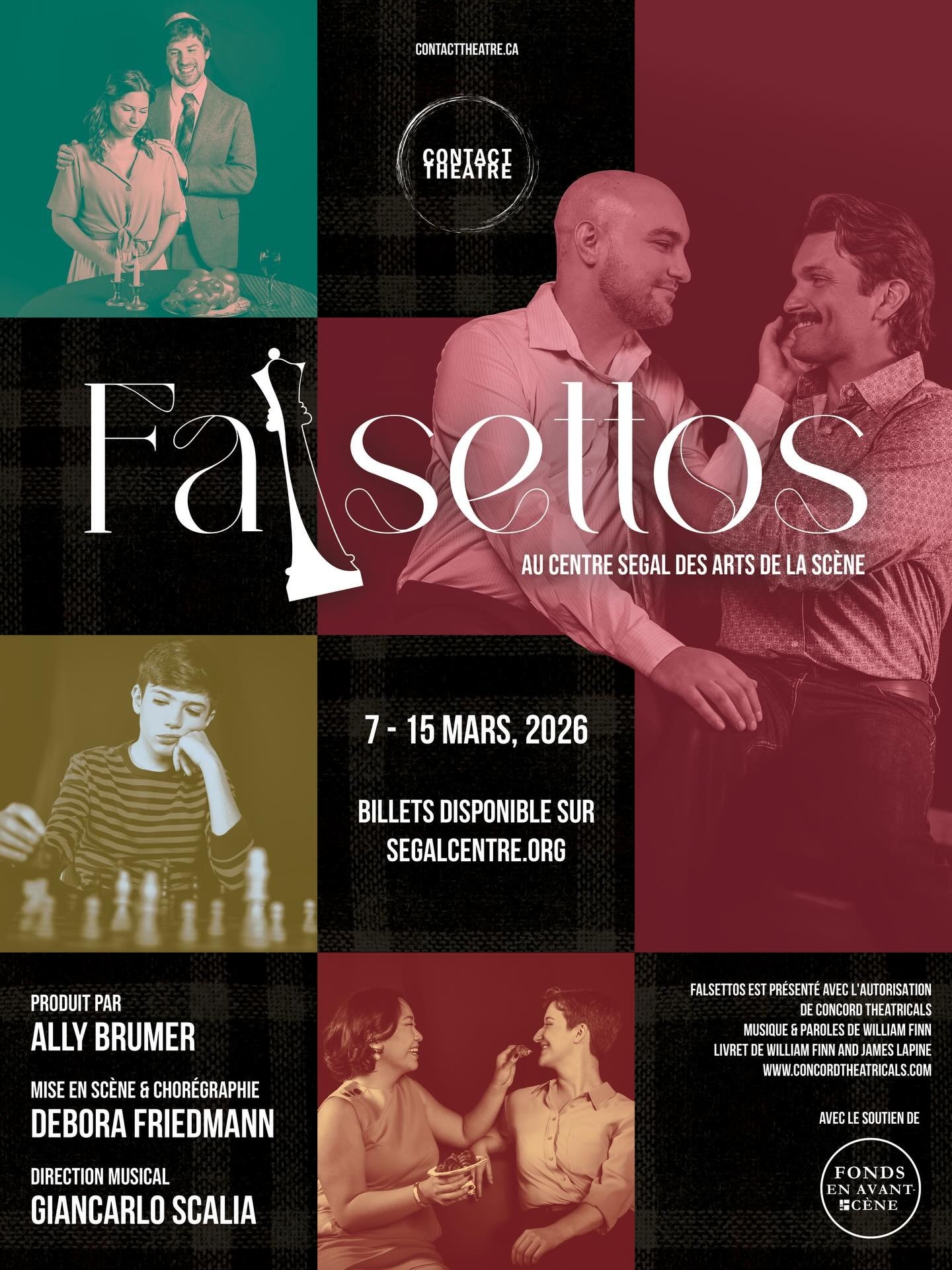
Contact Theatre’s Falsettos runs til March 15, 2026 at the Segal Centre. Visit their website for more production information, and buy your tickets now.