What We Leave Behind
A Review of Teesri Duniya’s Behind The Moon
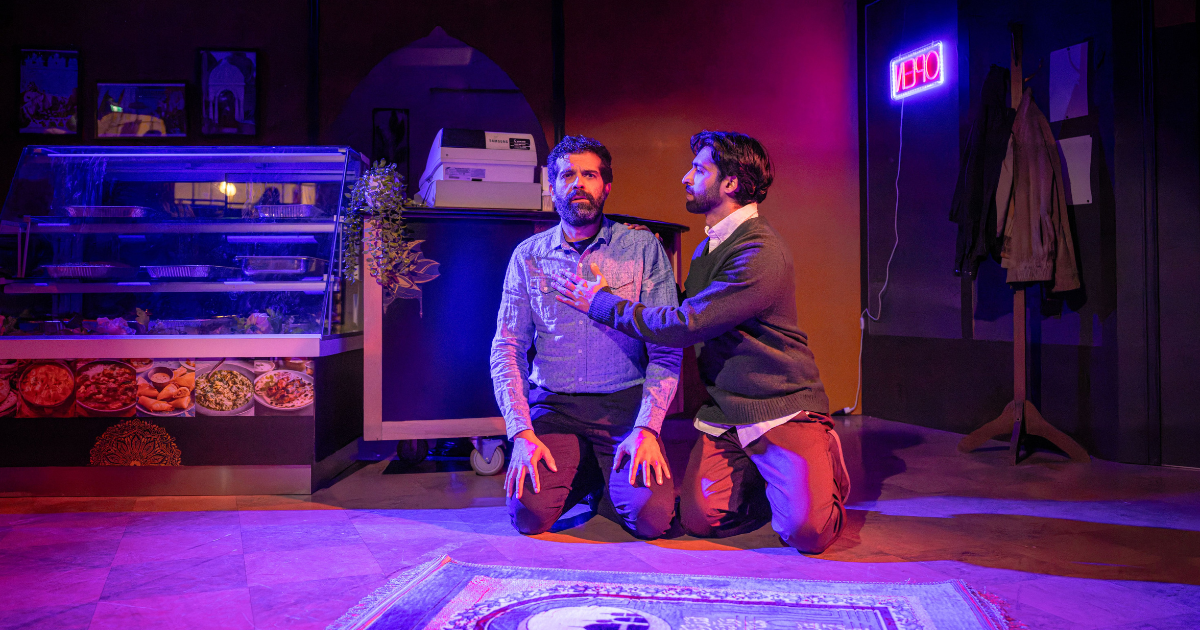
Photo by David Wong
Teesri Duniya Theatre’s production of Behind The Moon delivers an emotionally charged meditation on the immigrant experience that holds the audience in a space of shared reflection. While the production navigates directorial hurdles and inconsistent technical execution, the raw power of Anosh Irani’s script and the dynamic energy of the talented cast of actors keep the heart of the story firmly intact. Captivating and deeply educational, this exploration of migration and connection is a must-see experience for Montreal theatre lovers before it closes on April 19.
Teesri Duniya’s Rangshala Studio on the second floor of the Cité-des-Hospitalières is one of the more versatile independent theatre spaces in Montreal. In the expansive room, featuring tile flooring, the company has constructed bleachers for seating and a “tech booth”, along with an impressive lighting truss, created and maintained by Aurora Torok. This is by no means a traditional performance venue, so comforts like backstage space must be considered by production designers with as much intention as the audience-facing set design. Rangshala Studio is prime theatre real estate in a city with a dwindling number of performance venues. Of course, as evidenced by the recent addition of cushions to the seats, the space has plenty of room for improvement, much like the fantastic independent theatre produced on its stage, the company’s current production of Behind The Moon being a prime example.
The play, written by Anosh Irani, experienced its world premiere at the Tarragon Theatre in Toronto in 2023. Set in a Mughlai restaurant, the story focuses on Ayub, the only employee of the Mughlai Moon, his boss, and a mysterious stranger. A story about loneliness, longing, love and connection, migration, and the desire for a better life, the piece is ideal for Teesri Duniya, a company that strives to “change the world, one play at time”. While the script, especially in the first act, sometimes felt like it was written with a heavy hand, the second act opens up to confidently present its expanding themes, with Irani providing numerous arresting lines that linger long after the lights dim.
Diana Uribe’s set design, the Mughlai Moon restaurant, is a powerful element of the production. Purples and oranges cover the walls, pointed archways over the doors, with accents of gold scattered throughout the space, including lighting fixtures hanging from the ceiling, occasionally casting beautiful shadow patterns on the walls. The set was completed by a counter with a cash register, a (very clean) food display case, and a single table with two chairs Stage Left. Frosted windows flanked the front door of the establishment, intended to allow ambient light into the space, although this ended up mostly ineffectual. In fact, while the set held its own, the technical execution faltered; the lighting (Jordana Natale) and sound design (Rehan Lalani) had the distinct feeling of a high school theatre production, complete with jarring lighting shifts, poorly mixed music, and abrupt sound cues. This could have been incredibly detrimental, however, Uribe’s design brought the Indian restaurant to life, and gave the three characters an authentic space to tell their stories.
These three characters are Ayub, the focus of the piece played by Adolyn H. Dar, the owner of the Mughlai Moon, Qadir Bhai, played by Andrew Joseph Richardson, and the previously mentioned “mysterious stranger” Jalal, portrayed by Aladeen Tawfeek. The three actors, each very appropriately cast, brought an infectious energy to Irani’s script. In a play with broad and expansive themes, Dar is able to keep the audience focused on his immediate story as the sole employee of the restaurant, living in Canada for four years, desperately missing his wife and child. He expertly navigates Ayub’s sadness, anger, and fear. Richardson, as his boss Qadir, provides us with the most comprehensive understanding of the world outside the Mughlai Moon, and a place for our frustration over Ayub’s situation. Tawfeek as cab driver Jalal completes the cast, and introduces the abstract elements of the story, like spiritual faith. In the second act of the production, his command of the text provides the audience with a few incredibly powerful moments.
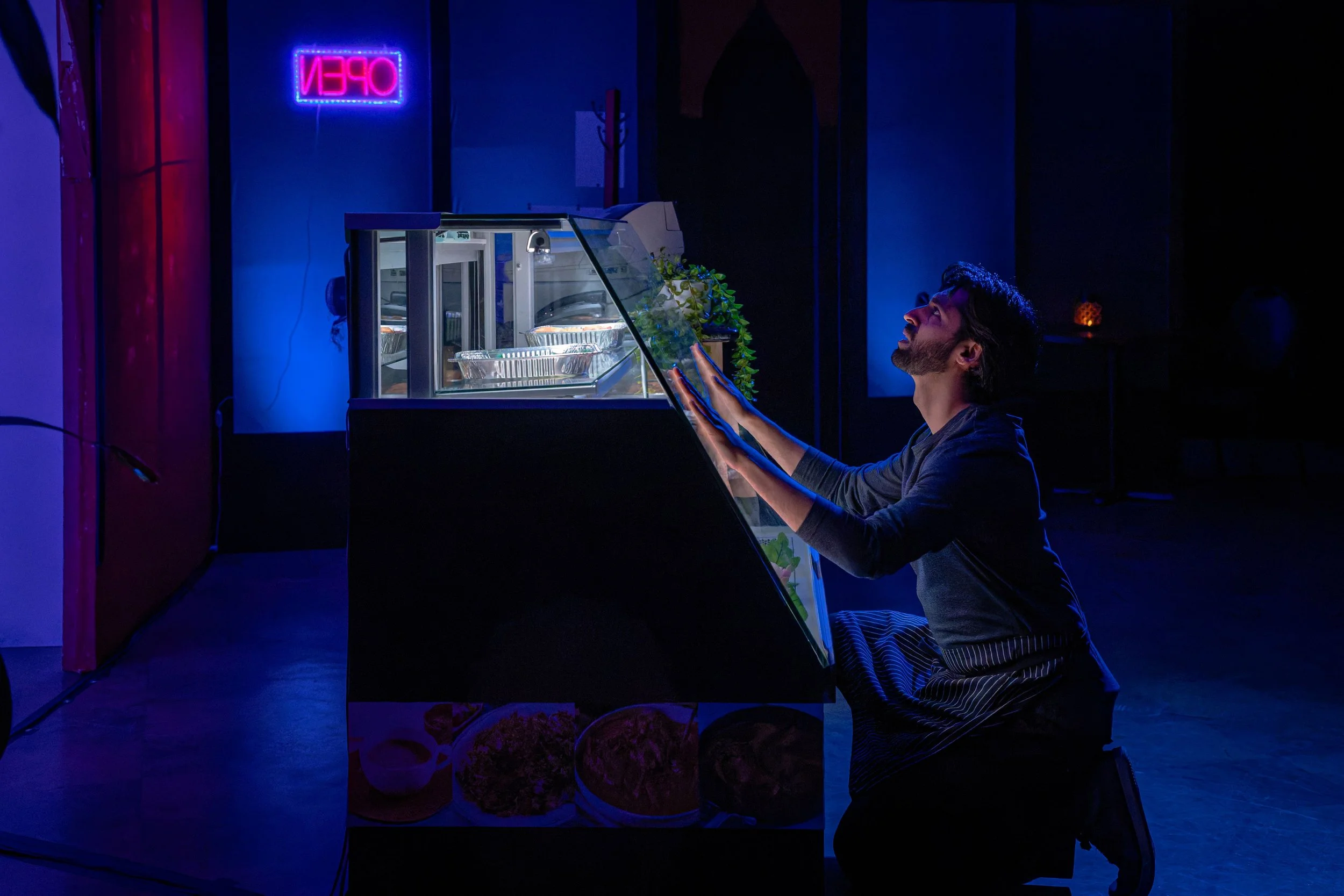


Ultimately, though, there is room for improvement, and I think it begins with the interpretation of the text. To be clear, I’m not talking about the designers, or the actors, but the director herself, Chelsea Dab Hilke. I’ll admit, at first, I held some judgement. I was curious why this director was directing this production, as it isn’t her story to tell, particularly from a cultural standpoint. While I don’t think migrating between Newfoundland and Quebec is exactly what Anosh Irani was writing about, Hilke handled the themes within the material well. What baffled me, particularly from a graduate of NTS’s prestigious directing program, was the mishandling of basic theatre conventions. A prime example of this would be the frosted windows on Uribe’s set. Three window panes were present, clearly meant to be a view to the street. However, these windows were almost never used, instead when characters referenced the outside world, the blocking would have them point out over the audience, or off Stage Left, through what obviously should be walls. Mistakes like these not only confused the action, but also slowly stripped away the significance of the production design itself.
Further, I struggled with Hilke’s choices regarding character. I’ve worked with plenty of directors with various styles, some more involved, some are very hands-off. However, all of them took great strides to ensure that character choices were aligned with the universe of the play, the story, the action. That’s their job. The director’s choice, then, to have Richardson as Qadir, the only “villain” on stage, a truly bad man, play the boss as mostly comic relief, left me incredibly confused. Qadir is not a good guy, not at all. So, why are you trying to get us to laugh at him? Now, it’s important to make the distinction: this does not fall on the shoulders of Richardson, the actor, but rather the director, Hilke. It demonstrates a tenuous understanding of the text, and considering the NTS training, I expected better.
Thankfully, while the production’s direction lacked cohesion, the heart of the story remains intact. Anosh Irani’s play is captivating, heartbreaking, inspiring, and immensely educational, particularly for an audience who has never experienced migration and separation, or for an audience that has never truly experienced loss. The piece culminates in an emotionally charged, touching finale that held the room in a state of collective stillness; the audience sat silent and unblinking, holding their breath and their tears, only to find a sense of optimism and relief as the lights went down. Behind The Moon runs at the Rangshala Studio until April 19th, and is exactly the experience every theatre lover in Montreal longs for, and deserves.
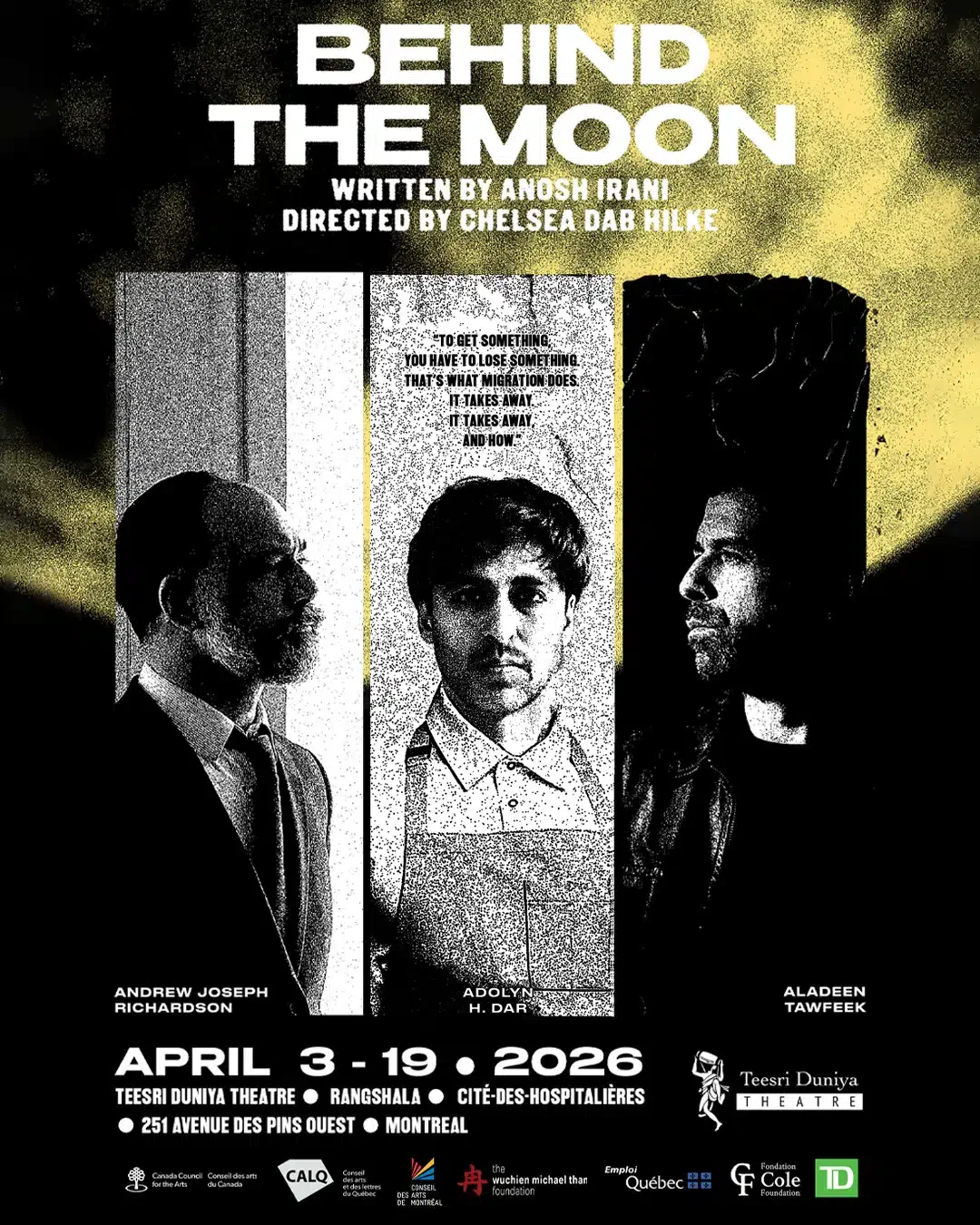
Behind The Moon closes April 19, 2026