The Labour of Love
A Review of Wine & Halva at Teesri Duniya Theatre
“Make yourself as comfortable as you can,” says the narrator in greeting, “because we will make sure that you’re very uncomfortable very soon.”
This is the promise made, and kept, by Wine & Halva: a biting comedy written by Deniz Başar and directed by Art Babayants, returning to the stage in May 2026 after its first run in 2024. Stepping inside the Teesri Duniya Theatre on the play’s opening night felt like stepping into a warm coffee shop, right down to the Turkish coffee and halva served before the show began. The play, however, does not begin in a coffee shop; it begins in Berlin, which is the first city in a string of many that the three narrators take us to.
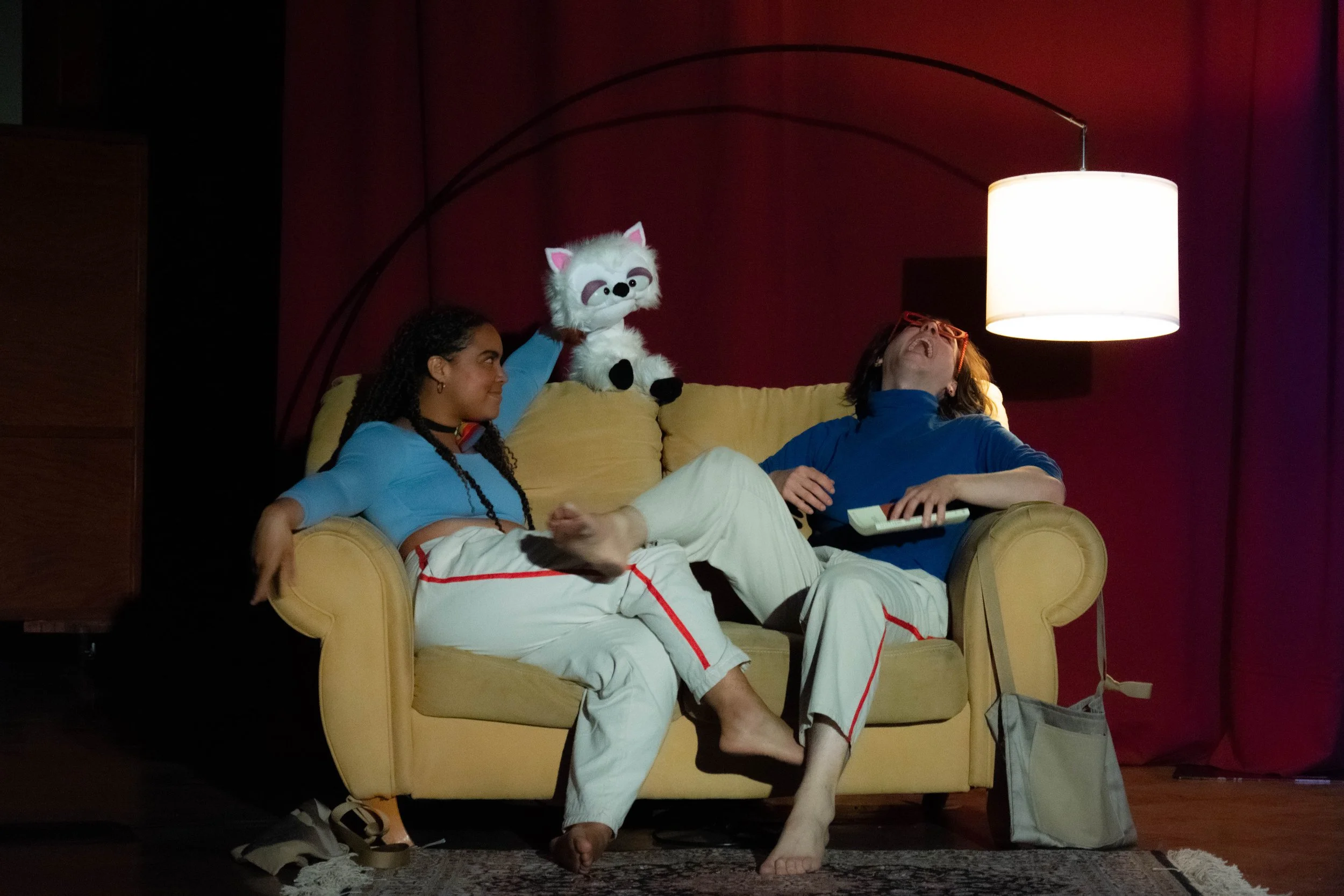
Though it may not seem like it at first, Wine & Halva is a love story. It chronicles the unlikely yet long-lasting love between two friends: Farias, a white, North American gay man struggling in a low-paying service job, and Derya, a Turkish woman completing her PhD in North America while constantly fighting back microaggressions from colleagues and classmates. Though they have next to nothing in common, they’re somehow drawn to each other during a university trip. What begins as small talk turns into a conversation that lasts for the rest of their lives.
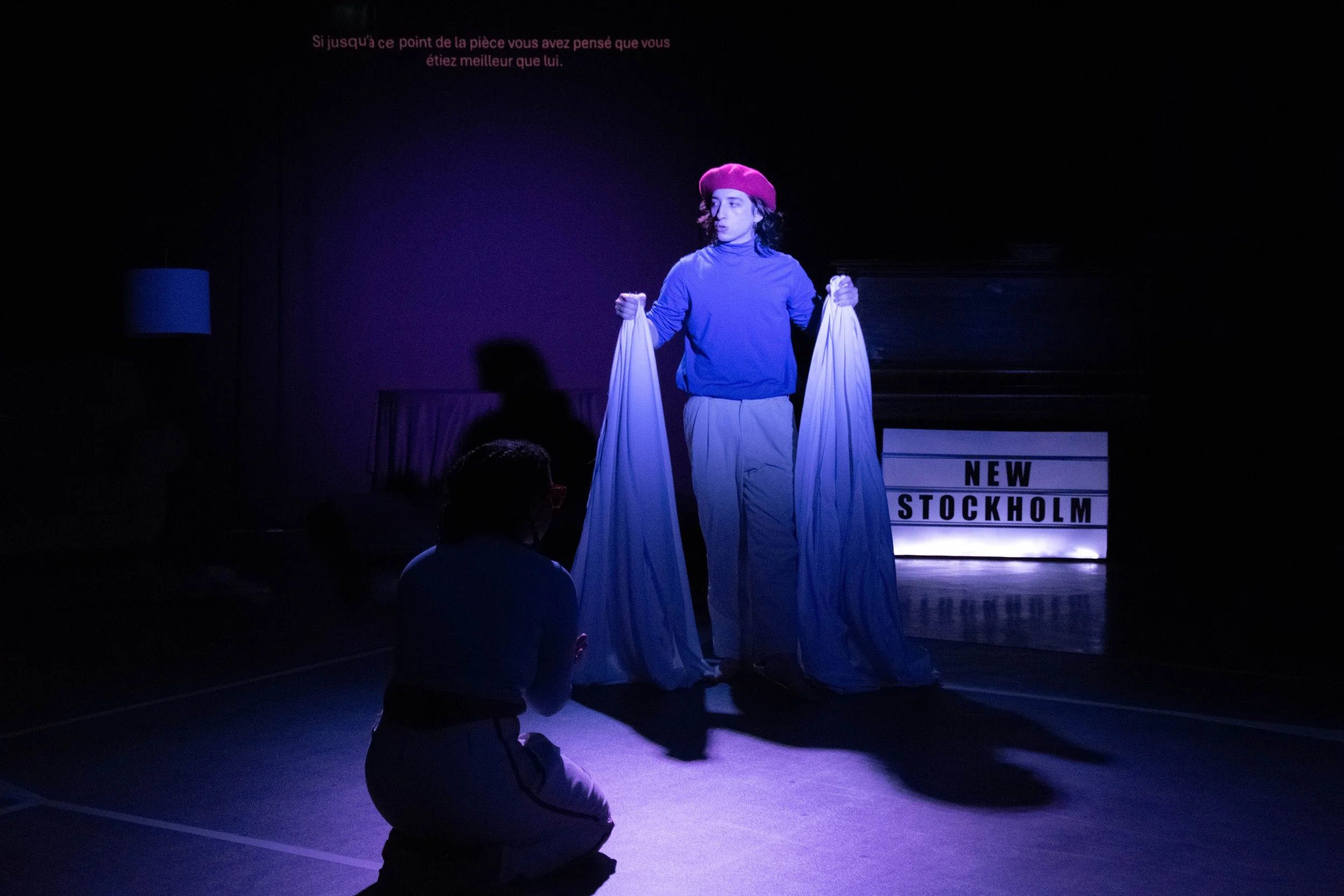
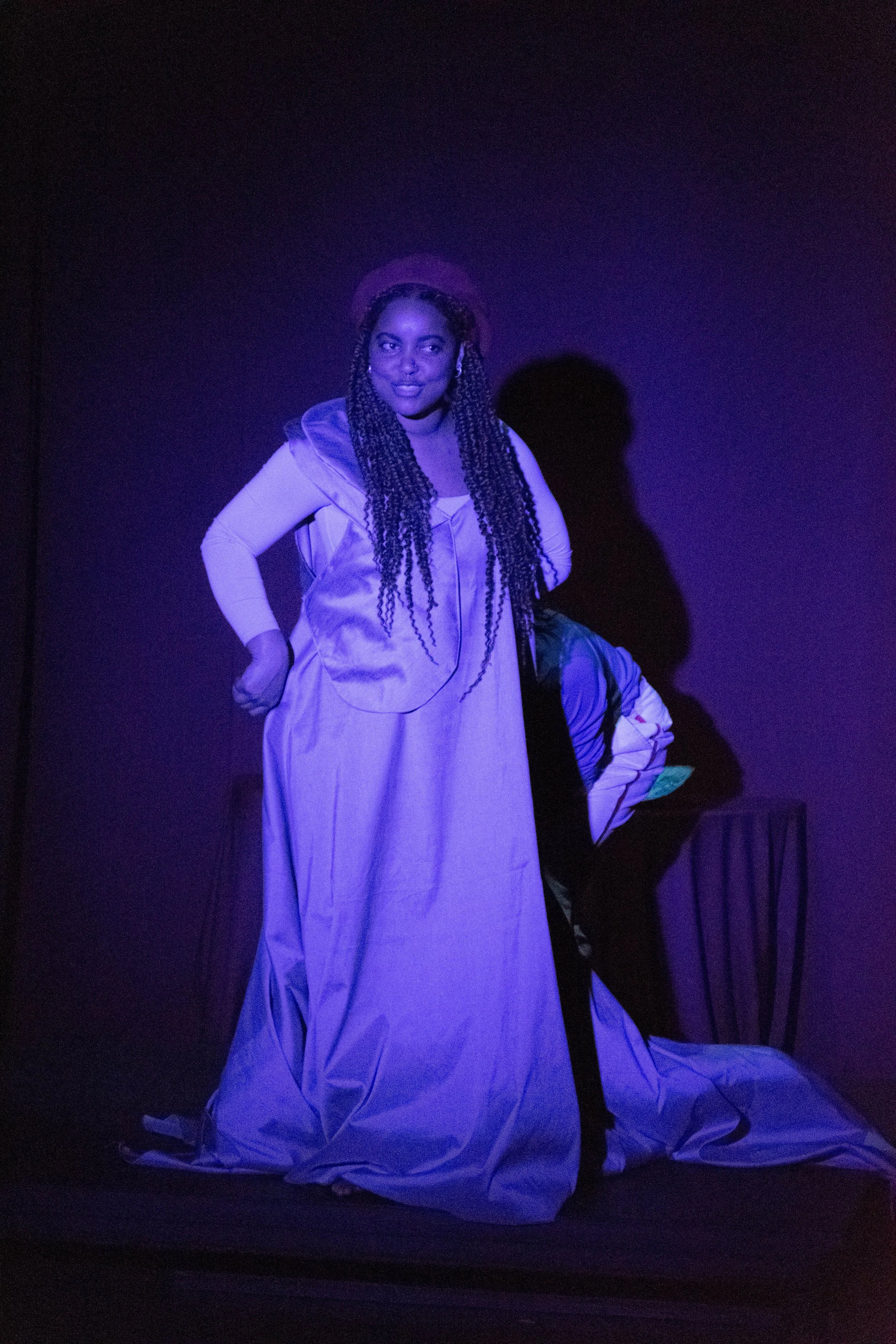
Each of the three performers—Corbeau Sandoval, Banafsheh Hassani, and esi callender—take turns playing the characters, switching between Farias, Derya, and the omnipotent narrator. Rather than embody a specific character, they become vessels for the story, adapting to its constant turns with every new scene. All three performers wear the same costume to further emphasise their role as blank slates. They differentiate between characters through an accessory that symbolises each one: a rainbow necktie for Farias, glasses for Derya, and a hat for the narrator. This allows them to adopt a distinctly anti-realism acting style, relying instead on physical gestures and choreography to get across each character’s essence.
In addition to the distinctive acting technique, the play borrows many elements from the epic theatre style to exacerbate the audience’s discomfort and alienation from the show. Wine & Halva is not a play that wants the audience to relate to its characters. It wants the audience to be deeply aware that they are watching a production—which is also where the set design plays an ingenious role. The seats take the form of shared tables wrapped in a circle around the ‘stage,’ making it so that you can see other members of the audience at all times, so you never forget your own position as an audience member.
When combined with the signs announcing each setting, the complete demolition of the fourth wall through direct audience address, and the episodic, non-linear nature of the play, it would be remiss to not discuss (what I interpreted as) the play’s clear Brechtian influences. The actors constantly remind us that we are watching a play, emphasising the metatheatrical aspects and inviting us to view the show through an analytical lens. It’s a refreshing break away from most North American theatre’s emphasis on realism and escapism.
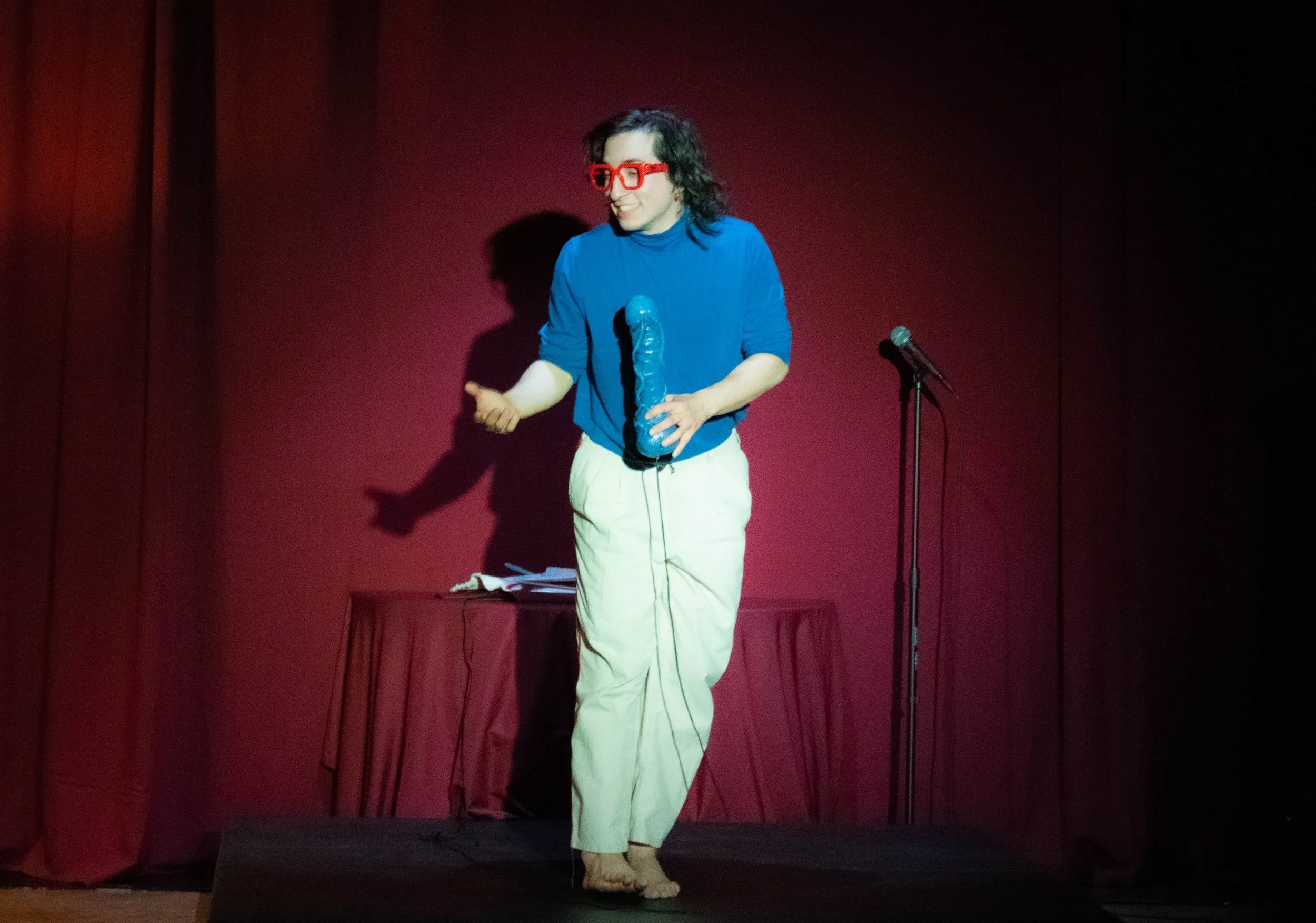
The play is also rife with allusions, from poetry to literature to philosophy. The title itself is borrowed from “Hello, Darling” by Arkadaş Zekai Özgür, a queer, communist poet from Turkey, who writes: “I’m made of few words and deep fatigue / I love sipping wine with some halva.” In the opening scene, the narrators compare themselves to the three Fates, or even the three witches from Macbeth; they then proceed to read out an entire passage from Ursula K. Le Guin’s “The Fliers of Gy.” Instead of stretching itself thin by clarifying the context behind each reference, it lets the work speak for itself. The play draws on a wide range of material, and it is all the stronger for it.
Wine & Halva doesn’t believe in dumbing itself down for its viewers. “Come on, you get the joke, right? You’re a smart audience!” quips the narrator in one of the early scenes. It is definitely not a play that is intended for all audiences, and it doesn’t try to be; it wastes no time in trying to explain itself. You have to work to understand some of its better jokes, and that is where Wine & Halva shines brightest. The jokes that make you pause and think are the hardest hitting ones, rather than the ones that are just handed to you on a plate.
For a play which revolves heavily around resistance, labour, and class, I think that taking this kind of analytic, almost didactic approach to presenting it is the best way to engage with its themes. It encourages critical thinking rather than surface level empathy and relatability, something that most theatre spaces in North America sorely lack. Crafting an escapist story that viewers can lose themselves in for two hours has its own merits, but creating a production that engages everyone’s intellectual ability and makes them reflect even beyond the theatre is what I find most impressive.
I left the theatre with a whirring mind; not just thinking about Ferias and Derya, but also about my friendships, and my place as an immigrant in North America. Wine & Halva wants us to acknowledge the work it takes to maintain an equal friendship in an unequal world, but it also wants us to work towards a better world. For all its cynicisms and biting commentary, the play leaves the audience on a hopeful note—one that will, I hope, leave all its viewers reflecting on their own positionality in the world.