
The Fool’s Journey
An Anti-Pageant Revolution
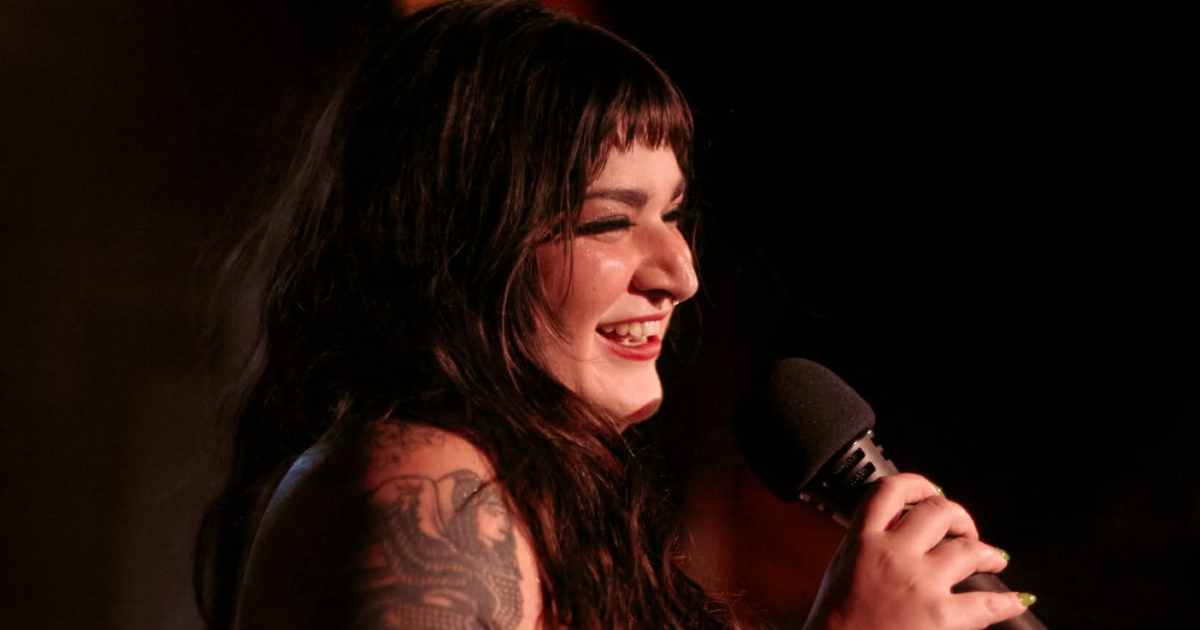
Photo by @eroticomplex.x
In a city that often tries to polish burlesque into a sanitized, corporate-friendly product for the tourist agenda, Mina Minou is throwing a massive wrench into the machine. As a multidisciplinary artist with over a decade of skin in the game, she’s the architect of The Fool’s Journey, a sprawling, five-show competition series that ditches the “prettiness" of traditional pageantry for a chaotic blend of radical absurdity and experimental play.
I sat down with the legend herself to dig into how this project, inspired by the gritty anti-pageant movements of New York and Philly, serves as a middle finger to the high-cost, ableist standards that often gatekeep the mainstream stage. By swapping out expensive rhinestones for dollar-store challenges and raw storytelling, she's turning iconic fringe venues into spaces for "playful politics" and genuine liberation. For Minou, this isn't just about a show; it's an inquiry into the barriers facing racialized performers in Montreal and a reminder that when the joy disappears, it's time to find a new way to fight back.
Atlas Reed: So starting in April, the Fool's Journey competition is going to be coming to Montreal. Tell me a little bit about the premise of the series.
Mina Minou: It’s a five show competition that is inspired by anti pageants, absurdity, and the fool tarot card, which is all about adventure and trying things. Essentially, I'm going to have 13 participants whose applications were all randomly selected by a name generator. I did have some spots specifically reserved for racialized people, but other than that it was a random generator. Each show will have a different little challenge for them that they're not going to know about until the end of the previous challenge. The first show comprises a “short and sweet”, so they have two and a half minutes to do something of their choosing. The following challenge is then revealed at the end of each show. Each show is a fundraiser outside of show expenses, so my tech, my kitten, my photographer, and sometimes venue fees are calculated. Other than that, all ticket sales will be going to whatever charity organization the eliminated contestant from each show chooses. Everybody who participates gets something out of it, whether they win or lose.
AR: Your audience is likely going to be a mix of burlesque aficionados and some newbies. What would you tell someone with little to no knowledge of burlesque what they're looking forward to?
MM: Part of the inspiration for this is that the burlesque world gets put into little boxes a lot. Especially in Montreal, there are corners of the community and the industry that are queer and alternative and edgy, but a lot of it is done for the tourist agenda. That can be really limiting to the creative process, and burlesque is such an expansive art form. People can expect to be surprised and to witness artists exploring the medium. It really is meant to help people find joy in the creation process. I want to push a wider experience of what people think burlesque is; I want to counter the “Burlesque” movie narrative, and I want to counter the touristy industry narrative that often happens. I'm really trying to create a space for experimentation and playfulness and absurdity in the face of fascism.
AR: So from what I understand, it’ll be challenging people's preconceived notions of what that is.
MM: Yes. And this is important to note, all of the audiences are voting at each show. I think I'm going to be using a Google form and a QR code for voting. The categories are going to be innovation, storytelling, stage presence, and general execution. And I'm being very deliberate with the categories because especially in burlesque, and even in drag, we get so caught up in costuming, in the prettiness over the actual substance of the act. That criteria can often be really inaccessible, it can be ableist, and it can be ageist. It can prioritize somebody who has the budget for rhinestones over somebody who doesn't have that budget but has amazing stage presence. I think both in the burlesque world and in the drag world, there’s a criteria to be able to do acrobatics, to do splits, etc. Those are all very impressive things, but that's not the landmark of what makes these performing arts what they are. I've seen performers with different physical abilities just totally dominate a stage standing still or sitting still! And I want to give space for all sorts of performance rather than putting a priority on who has the sparkliest costume and who can do the most backflips in three minutes.
AR: I know you're a very well-known performer in this scene. You have over 10 years of experience as an artist, but for those that are just starting to get to know you, how would you describe yourself as an artist and the types of acts that you enjoy putting together?
MM: I'm generally most well-known for my breadth of character work. I do a lot of non-human things; I like to be slugs, mushrooms, flowers, clowns, witches, and all sorts of things. I really lean into a kind of surrealism and absurdity, character play and emotional resonance. I would describe my work as eclectic. I can do a corporate look if I need to, but nobody ever books me for corporate because I'm fat and brown. But I could do it. My work is colorful and very emotional, it’s very founded in mythology and folklore storytelling. I'm also a multidisciplinary artist and I think if you get to know me as a performer, then you also get to know me as a painter and as a storyteller. You do find the ties between all of my work. And I tend to just tell similar types of stories through different mediums. My tagline is: surreal fairy tale comes to life.
AR: You had mentioned earlier that your event is said to be inspired by anti-pageants. What aspect of anti-pageants became the source of inspiration for Fool's Journey?
MM: I originally am from the States. I lived a few years in New York City where I was performing for a while. And they have in New York and also in Philly something called the Mx Nobody pageant. That was my first introduction to an anti pageant concept. I'm also a big fan of the Coney Island pageants, which aren't anti pageants but are Coney Island absurdity, silly, off the wall things. I love competitions that provide containers for exploration. I like them when they're pushing against mainstream, heteronormative, capitalistic bullsh*t. Another big thing for me is the financial accessibility aspect, which I think a lot of people get priced out of drag and burlesque. There will be a couple of upcycle costume challenges in Fools Journey. There's one challenge that's like a thrifting dollar store type of a challenge, where all of my participants will have $35 maximum, and I'm gonna be offering a $25 stipend to anybody who needs it to make sure that it's accessible for my participants. I'm trying to keep the financial weight really light. And then of course I've hired photographers so that they leave with at least some photos and footage of their experience.
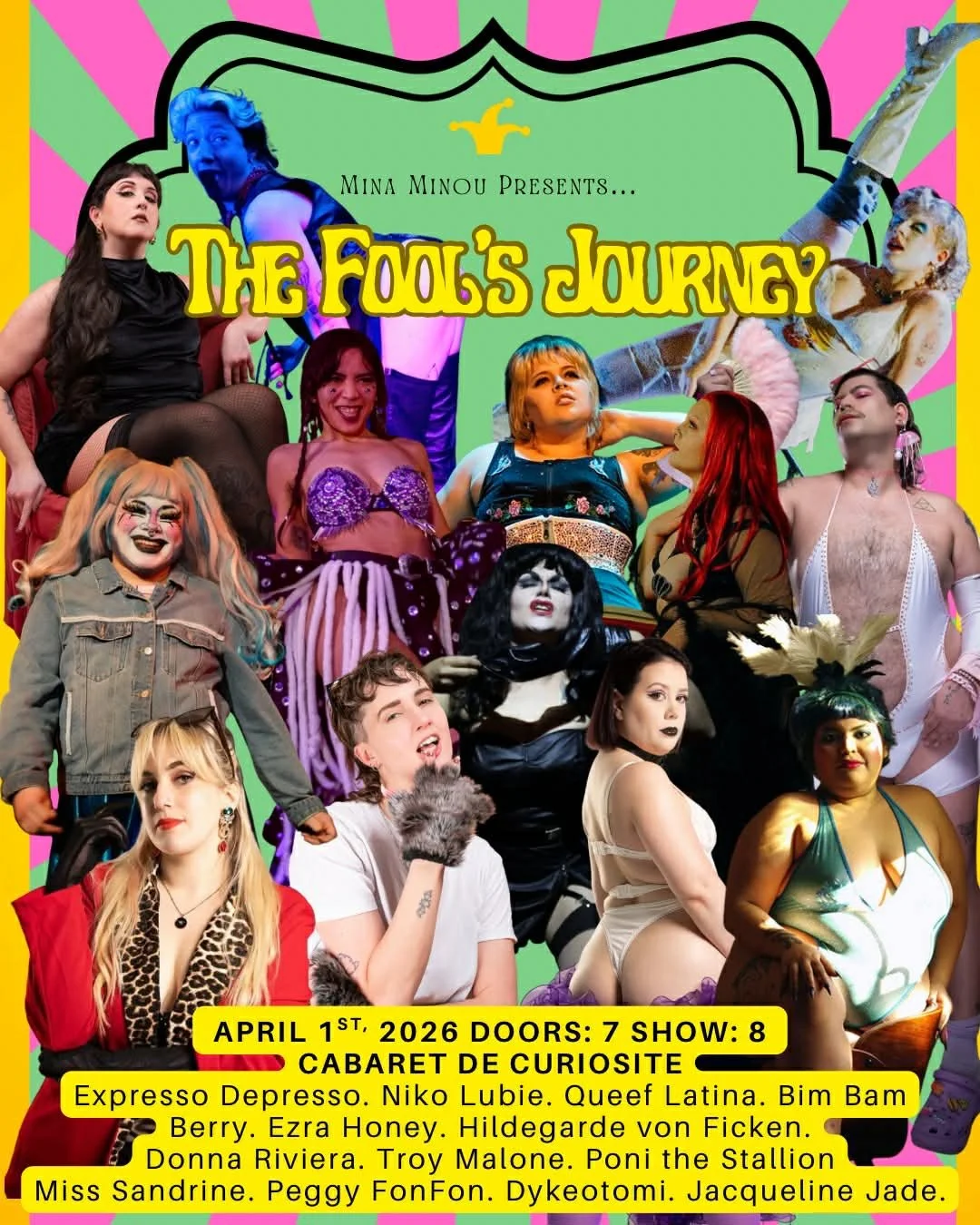
AR: You did mention it a bit before, but your project highlights the desire to make burlesque more accessible. You mentioned the financial aspect and the physical accessibility. What is the extent of those barriers that artists face? Are there other challenges that you feel are barriers to starting burlesque, and how would you aspire to change that?
MM: Racism is definitely a huge barrier. And that's not unique to Montreal, but it definitely has a unique flavor here in Montreal. I initially said that I was going to reserve seven spots for racialized people in the show. Unfortunately, only four applied. So that's just a challenge that we're facing. Part of it is scheduling, you know, asking people to commit to five shows over two and a half months is not a small thing. But there's a lot of anti-blackness, anti-racialized individuals, and anti-indigeneity embedded culturally in Montreal. Burlesque is a microcosm of society. We see it not just in performers, but in our audiences. It can be a challenge to diversify audiences and it’s something that I've put a lot of work into in my own productions. But it's a hot topic to have diversity in a lineup. Racial diversity, but also physical, age, sexuality, and gender. I'm the only Iranian performer in Montreal that I know of. In terms of SWANA (Southwest Asia and Northern Africa) performers, there's like four or five of us.
AR: I had noticed that there was going to be a sort of change or switch in venues throughout the different performances. And that seemed to be a very intentional and deliberate choice. What was the reasoning for that? And what went into the decision of what venues to pick?
MM: I wanted to provide an opportunity because being a working artist means you're never going to know what venue you're going to deal with. So you need to be prepared for being able to adapt yourself to different stages, audiences, and backroom setups. So I really wanted to do as many different venues as possible to show and give the opportunity for people to know that. I also wanted to get people to travel to different parts of Montreal and know more about their city. In terms of picking the venues, it’s a mixed match of availability and venues that were financially accessible for me as the producer. I really had to try a bunch of places; I really wanted to do NDQ but the timing didn't work out. I really wanted to do the NDQ venue because I really wanted to put 13 people into that tiny spot. It's a small venue, so it'd be interesting to create a clown car type of chaos. I picked Cabaret des Curiosités, which is in Hochelaga for the first night. The Wiggle Room is just a classic staple place. And my Fool's Journey for the Wiggle Room aligned with a quarterly event I produced there called Solidarity Sundays, where is already an ongoing fundraising project. The third show is in Verdun at Barre Sociale. The fourth venue is Tuscadora, one of the Sala Rosa venues. And then the fifth and final show is at Cafe Cleopatre.
AR: The criteria that you set for the audience for voting was innovation, stage presence, storytelling, and absurdity. What kind of burlesque performers and characteristics are you hoping to see more of within the new generation of burlesque artists?
MM: Honestly, I'm just hoping to see people not take themselves so seriously. This art form is an art form about liberation. It's about community. It's about being critical of our society so that we can improve ourselves. It's not about fitting into boxes or performing for any other reason than our own pure joy. The second you stop having fun, you need to reevaluate why you're doing this. It is an expensive hobby, even in the most financially accessible paradigm possible; it is still something that you are investing money, time, energy and mental thought into. And if it's not giving you joy, you need to pull back. And I think people get so stuck up in their ideas of other people's opinions of success and of what's beautiful. So I really want to see people who are just having fun, and who are just doing it for themselves. Of course there's a balance of external and internal validation, and I respect that everybody wants recognition and applause. But if that desire is higher than your joy, something's wrong.
AR: Last but certainly not least, the proceeds of the show go back partially to the artists and partially to the different charities that the eliminated contestants can choose after each show. What are some local community initiatives that you would like to just give a shout out to?
MM: I love the Black Healing Center. We will be donating the second show's proceeds to the Native Women's Shelter because that was pre-established with the Wiggle Room for Solidarity Sundays, but that eliminated person gets to pick who I fundraise for later in the year. Defund La Police is an organization that I would be happy to uplift and donate to again. I would uplift Young Roots Farms which is an organization that brings kids out to camp to do farming activities with mostly kids of color. I would uplift Press Start, which is my old organization, who does really great work in Point St. Charles. There are a lot of really great organizations, and one thing that I'm working on for all of my fools is a little toolkit that's going to come with some resources for costuming and creative ideas. It's also going to include a breakdown of a bunch of different organizations that they can kind of choose from, because I do want people to get to know their city more. There's so many great initiatives happening here!
AR: Do you have a link in your bio to get tickets?
MM: Yes, there's a link in my bio at @ghost_magick. There's a Facebook event, all the tickets are up and ready to go. And if people buy tickets to all five shows, they'll get entered into a celebration raffle at the very end, which will include some of my art and whatever else I can put together from sponsors and merchandise. I'm silk screening thrifted shirts that have a little clown image. I'm also going to order stickers. And the money from those things will go to cutting costs on all of the production and supplies. In the fifth show, there's gonna be the audience but I'm also having three paid special judges on the panel. So there's the performers, the judges, kitten, stage tech and photographer that will be paid. It adds up, you know? I'm gonna do what I can to alleviate costs. That's a really big part of my philosophy of production: it's really important to pay it forward. And anytime you have a platform, I think you should use it to do some good. The only thing I really want to hammer down is that absurdity is a response to fascism. I am on a quest for joy. And I'm on that quest as an Iranian American in an immense amount of pain. Politically this, I believe, is the solution for me. And I want that to inspire other people to stay engaged and to get silly and to be playfully political in the times that we are in.
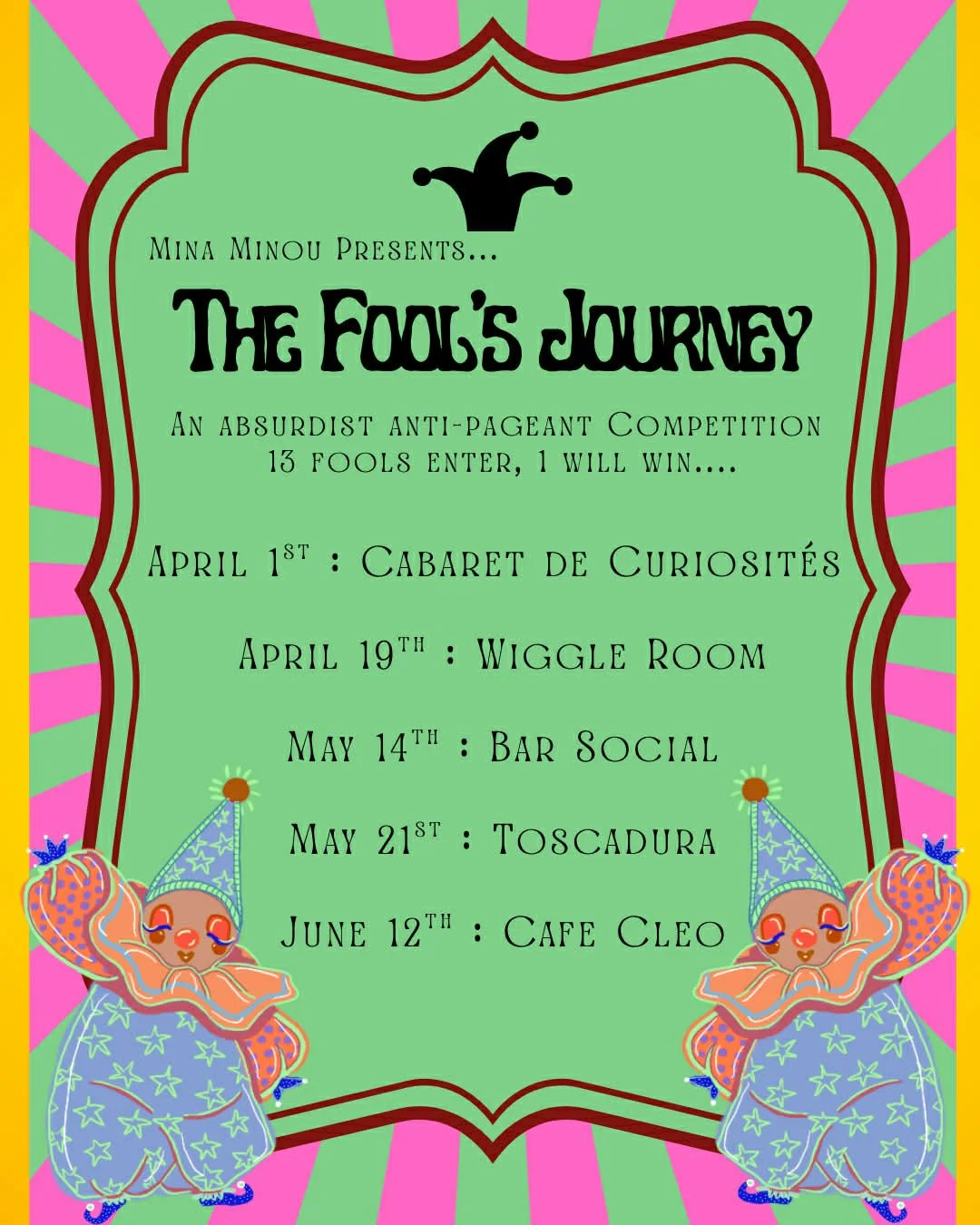
TICKETS ON SALE NOW
APRIL 1: https://tr.ee/kFwLwyawNW
APRIL 19: https://tr.ee/0_3TSGseD9
MAY 14: https://tr.ee/8jevM5fCJu
MAY 21: https://tr.ee/eVJve62gnO
JUNE 12: https://tr.ee/yssTxFiTGz
