
Proud Out Loud
An Exploration of Montreal’s Queer Music Scene
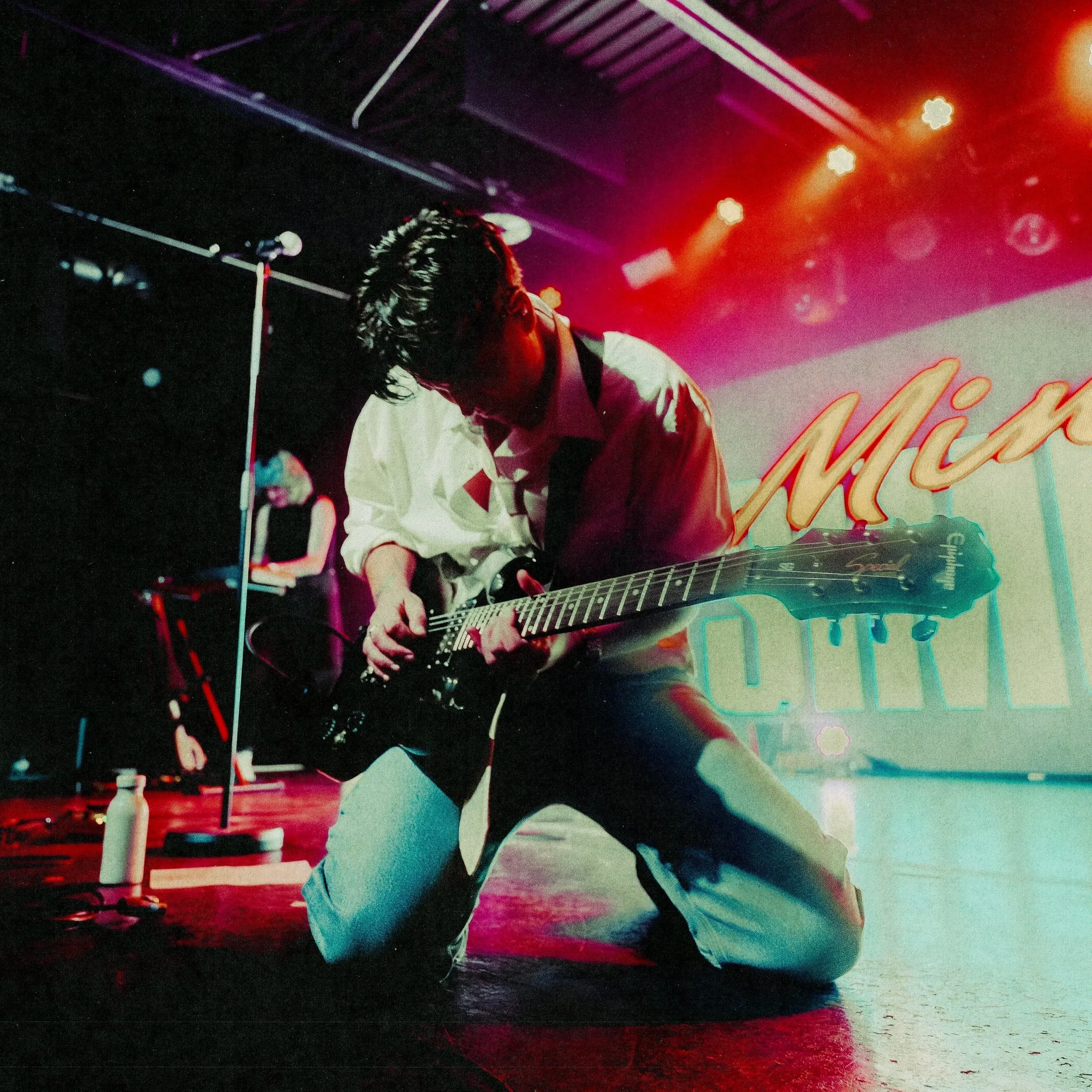
Photo of Caveboy by Sarah Evangelista
If you’ve ever walked the streets of Montreal, you’ll recognize the languages and sounds that define the city. Some of the sounds that make our city’s music culture were created by the queer community, enriching the scene with distinct subcultures, life-experiences, and fascinating rhythms.
At the heart of this creative ecosystem are venues; spaces that have been acting as sanctuaries for the queer community since the 50s, when homosexuality was still criminalized. These gathering places brought people together under a blanket of music and acceptance, yet their rich history has recently been marked by closing doors. From Le Drugstore to Nouvel Établissment and the Diving Bell Social Club, spaces have been shuttering, tacked with excessive fines, noise complaints, and legal disputes over signage and permits. This unwelcome shift in venue culture is only growing as more spaces are forced to close their doors due to gentrification.
Despite the uncertain future of Montreal nightlife, pockets of the community still thrive, creating stellar music and initiatives that bring people together. I had the opportunity to interview four unique queer voices across the city, collecting stories from musicians, a record label founder, and the owner of a local gay club in an attempt to understand what makes the queer music scene so special. Together, their stories paint a picture of the ways that queer artists make the music scene their own, all while coming together as a community.
Since last fall, Club DD’s, a vibrant venue tucked just below the corner of Saint-Laurent and Duluth, has been hosting a variety of live events from sapphic DJs to drag shows. In a time when so many formerly queer venues have been shutting down, DD’s provides a safe space for enthralling self expression. While exploring what the Montreal scene has to offer, I had the pleasure of chatting with Mint Simon, one of three Montreal musicians who own the club, about the inspiration behind DD’s.
“We just wanted to tap into something that was missing in the city,” Mint tells me. The bar was created in the hopes of contributing to the Saint-Laurent Village, and “just having a space that is very unabashedly gay.”
In that mission, Club DD’s has succeeded, having truly made a name for itself as a staple of queer music and nightlife in the city. Alongside DD’s, Mint has had a successful music career of their own, performing as a member of Caveboy for the last 15 years while recently expanding into solo work. Many of Caveboy’s songs truly embody the feelings of nostalgia that shape Mint’s experiences, smooth lyrics drawing you back into a memory you didn’t know you missed. Their solo music is a unique pair of thoughtful lyrics and energetic rhythm that entices you to add their songs to your favourite playlist.
“I think growing up in a queer band, it wasn’t cool to be queer for a long time,” they shared with me. As time passed, they describe watching the city transform into a more inclusive space for queer musicians over time, where they can be seen not only for their identity, but for their art.
“Being able to be a queer artist and not feeling like you need to hide, and not feeling like you need to dull your voice, or y’know the things that you wanna say, or the things that make you feel like you,” Mint says, “that’s really special.”
The freedom to exist and create art without having your identity questioned or judged is powerful. Venues like DD’s that provide such a joyful stage for this self-expression create worlds of vibrant and unconditional acceptance.
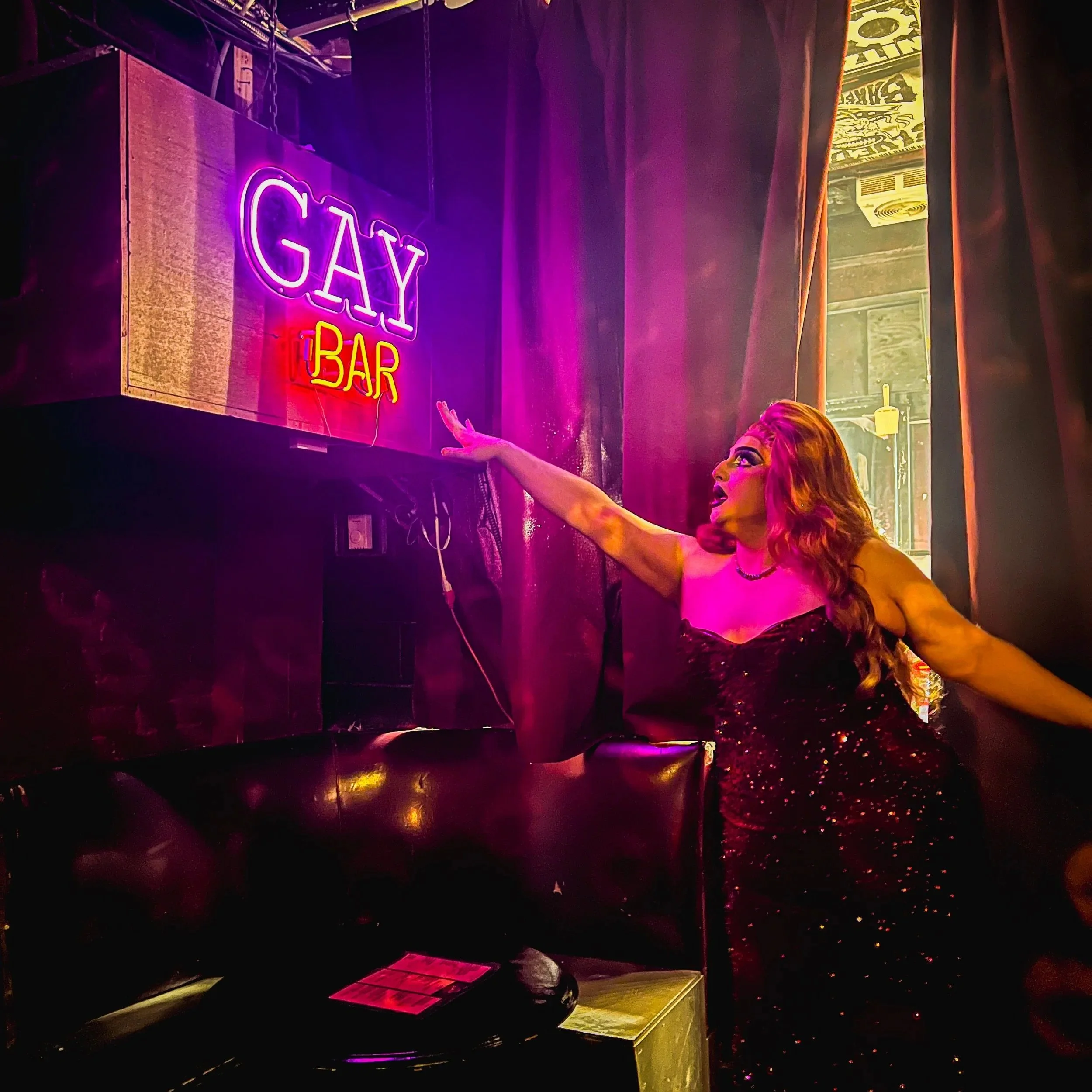
Photo of August Wind at Club DD’s by Mindy Stamper
While these spaces allow for dynamic live performance and community, exploring the wide variety of local music can be as simple as turning on the radio on a commute to work or from the comfort of your own home. If you happen to turn your dial to 90.3 FM on the second Thursday of the month, you might hear the voice of Blxck Cxsper, a multimedia hip hop artist and the host of Tranzister Radio, a trans talk show. Blxck Cxsper’s music explores feelings of loneliness and taking on the role of a vigilante trying to make the world a better place while villainized for their identity.
“Being a vigilante is like doing the work of a superhero, but people see you as a super villain. That’s kind of how I see myself, and that’s kind of how I see trans people, especially Black trans people, because that's my community. A lot of people look at us like we’re the villains, but lowkey, we’re the ones doing the superhero work.”
Mainstream representation for the queer community within popular media has historically been few and far between. Blxck Cxsper’s experience highlights this–particularly after transitioning from identifying as a lesbian to identifying as trans– and they reflect on this lack of representation “especially in the music scene.”
After meeting with record labels, it was clear to Blxck Cxsper that there wasn’t a market for trans musicians in this “cis het world,” so they decided to pave their own way by founding Transtrenderz: the first record label for trans artists.
“I’m not going to wait for other people to be ready,” they shared. The label supports a Transmasc choir alongside a music platform that is currently underway, creating a vital pathway of support for trans musicians.
Blxck Cxsper has further deepened their relationship with the queer community by hosting Tranzister Radio on CKUT, a community-run alternative radio station in the city, for over two years. They describe the talk show as a chance to centre queer music, citing the excitement expressed by artists hearing their music played on radio. CKUT has been running in Montreal since 1987, bolstering community voices, news, and tunes.
Representation truly makes a difference. It not only promotes acceptance, but allows us to see ourselves reflected in the world we interact with every day. It gives a platform for people to share their experiences of life, deepens communal knowledge through diverse perspectives, and perhaps most importantly allows children to have people like them to look up to.
“I feel like CKUT is so important for any marginalized community in Montreal,” Blxck Cxsper shares, “unless we’re gonna give each other a voice, it’s not gonna happen.”
They expressed the importance of having a space to share their experience and opinion, especially when marginalized communities are so often spoken over. “It’s not a platform that you get often, and I feel like it’s super important. Not even for queer music, but for queer voices in general. It’s putting us in power and in charge of what we wanna say without, like, censoring us.”
CKUT is not only a hub of creativity and underground tunes but a platform for connection and storytelling. It is listened to and created by artists: hundreds of volunteers who amplify the voices of the community through its blogs, podcasts, radio-shows and news. I had the chance to speak with Onyx Borysewicz, another member of CKUT, who has hosted the radio show Queercorps for the last two years interviewing community members, organizers, and artists to paint a picture of Montreal news. He also previously hosted Venus Radio, a collective music show showcasing work from feminist, queer, female, trans, and gender non-conforming perspectives. In his eyes, the scene is not just about music, but connection through live shows and dynamic stages: “I feel like I can be most myself when I am at a show.”
When it comes to CKUT’s role within the movement, Onyx notes “a real reciprocal relationship between the music scene and CKUT, especially when it comes to the queer community.”
He reflects that “music, especially in underground/DIY spaces, is the primary way I connect with the queer community in Montreal.”
Venues like Club DDs and initiatives like CKUT are integral to queer music in the city, building community from a shared love of local music. Underground and DIY spaces provide a special kind of in person-connection that cannot be replicated, rooted in shared experiences and a sense of belonging. These spaces exist not only in the streets of downtown Montreal, but also in neighbourhoods around the island, waiting to be discovered.
The next artist I encountered goes by the name of Ekka, a powerful musician heavily influenced by gothic and alt-rock culture. The first time I heard her play was at the release party for her new single, Apple In My Eyes, her signature haunting yet commanding vocals floating out of the venue’s open doors. The show was illuminated by the laughter and chatter of an excited crowd sporting handmade and thrifted jewellery. It swung back and forth while they danced, leather cuffs and spikes clinging to swaying arms.
After the show, I got the chance to speak with Ekka about their first encounter with queer music in Montreal.
“[I] absolutely fell in love immediately with everything and all the people and all the music,” they say, sharing what first drew them to the scene. We are standing in the parking lot of a Skybird Grill in Pierrefonds, the venue of the show. “It doesn’t matter what genre of show you go to–you can come dressed however you want, you can bring whoever you want, like, it’s kind of boundless in that way.”
To me, the boundlessness Ekka describes is not only the boundless expression that lives within each song, but the boundlessness to be free. I am standing here today because of the work of advocates, community members, and musicians that defended the right to love. I am standing here with the freedom to dress and be and exist thanks to the millions before me that were forced to hide. Queer music as it is today is not only a demonstration of the talent within the queer community, but proof of the unwavering resilience that lives within us all.
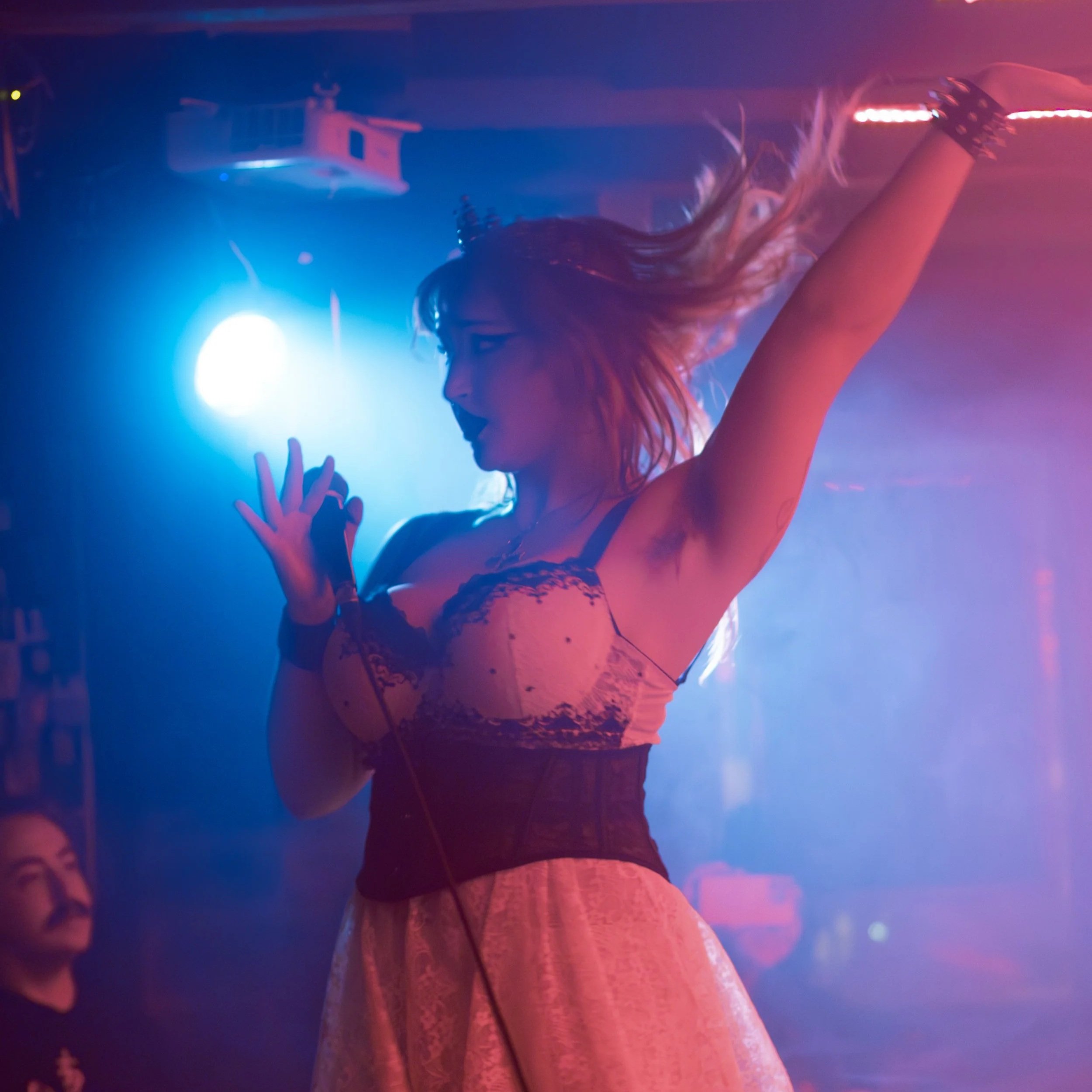
Photo of Ekka at L’Escogriffe by Michael Shintani
