
The Recipe for Connection
Jugaar Popups Building Community With Food and Sound
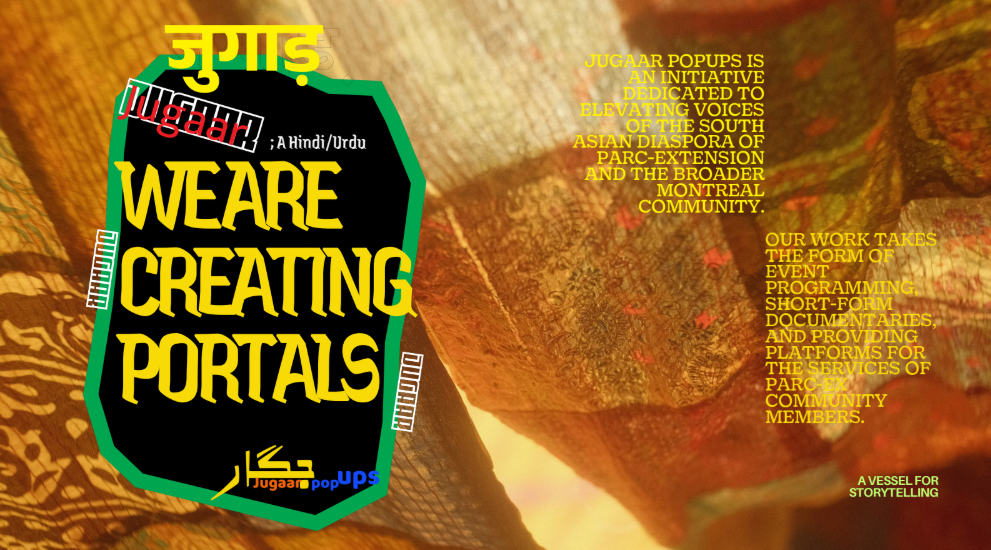
Jugaar is a word in Hindi and Urdu that describes something that all South Asians are undoubtedly familiar with: an unconventional fix, an innovative and makeshift solution that bends the rules of possibility with whatever is available on hand. It’s idiosyncratic to us desis, a way of solving problems by simply making do. It speaks to years of learned resilience and resourcefulness, both in the homeland and the diaspora.
This idea of doing more with less is the driving force behind Jugaar Pop-Ups, an initiative started by Asad Kamran and Amber Goveas in service of the South Asian community in Montreal. Their pop-up events range from dance nights filled with music to cozy evenings spent sharing food. After going to several events myself, I had the chance to sit down with co-founder Asad and music coordinator DJ Jon Raja for a long conversation about Jugaar, community, and how we tell our stories.
“We’re interested in creating portals,” Asad explains. “We want to be a vessel for individuals who have stories to share but are pushed to the margins of society.”
At Jugaar, this means being dedicated to uplifting South Asian voices. They were initially incubated by Brique par Brique, a community organisation based out of Montreal’s Parc-Extension neighbourhood. It was through their support and collaboration that Jugaar came to fruition as a way to support community members from Parc-Ex and beyond.
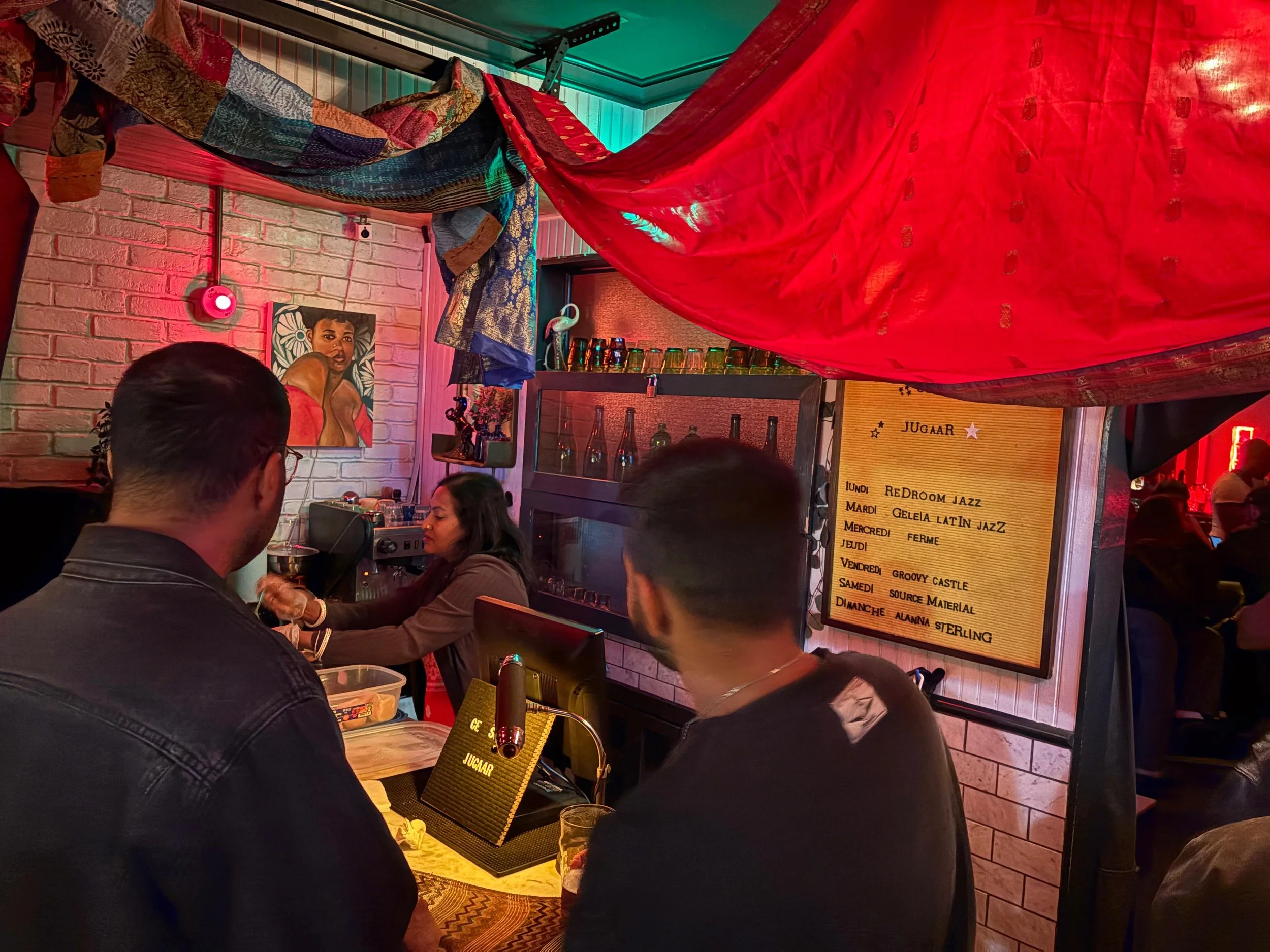
“The formula for a Jugaar pop-up is simple: comfort food, articulated sound, and meaningful conversation,” says Asad. “This combination promotes connection through movement and dancing.” He emphasises the multi-sensorial nature of their pop-ups, which is what allows for people to get out of their heads and into a physical space where personal connection can truly bloom.
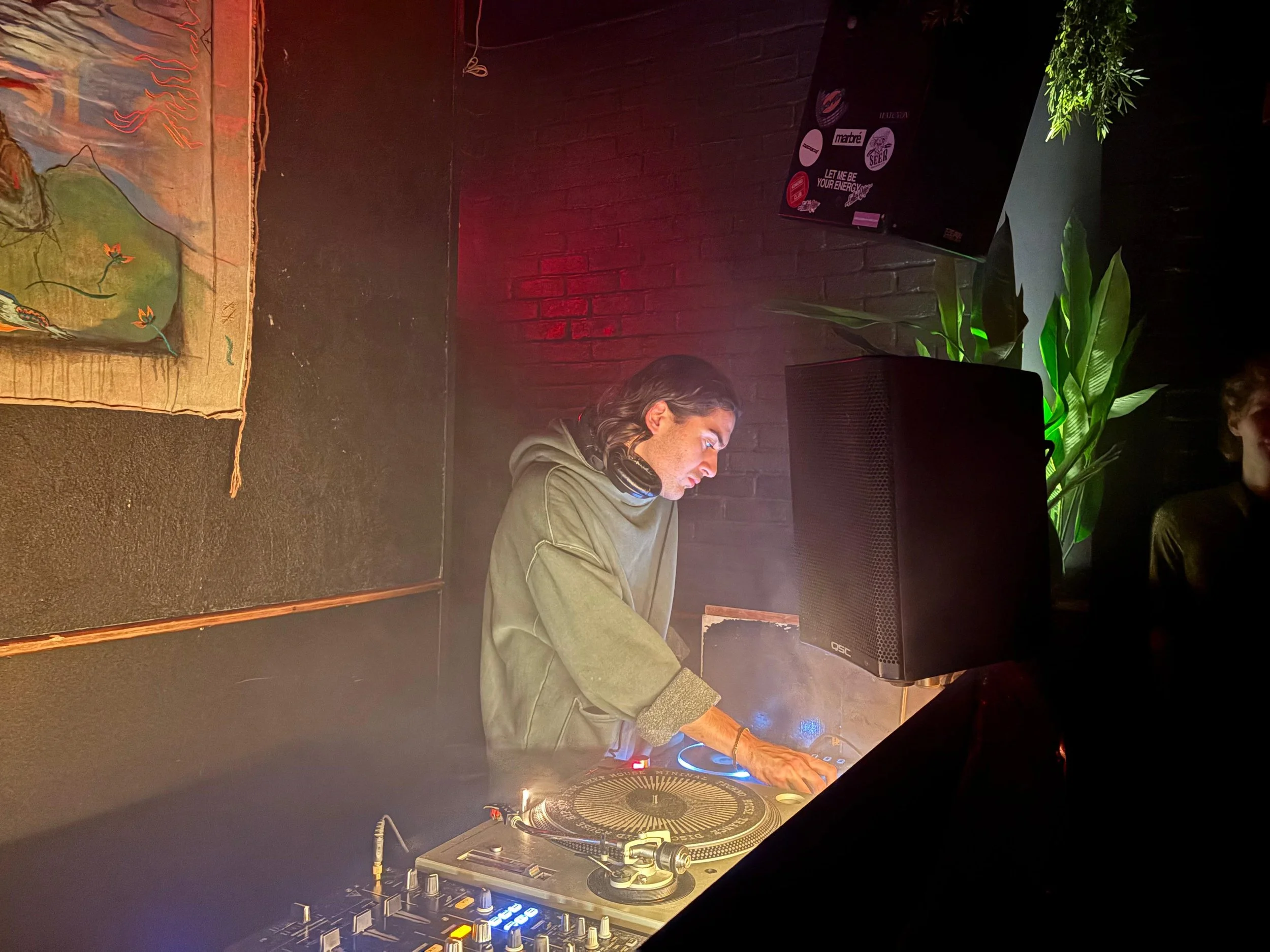
Music plays a key role in creating this environment. As an artist collective, Jugaar is deeply invested in uplifting all kinds of artists, including DJs and other musicians. Jon Raja (who also goes by Kiran Maharaj) spoke about the responsibility he feels as someone who comes from a family of South Asian DJs.
“I was born into DJing. My dad and uncle were both DJs, so I inherited their music collections and their equipment,” shares Jon Raja. “I want to use this background to give back to the music community in Montreal. [...] A lot of the South Asian DJs I’ve spoken to grew up seeing things like Boiler Room, Yung Singh, and wished we had something like that here. Everyone’s hungry for a platform. I’m recognising that shared experience and trying to build on it.”
Jon Raja spent the last few months creating Jugaar’s first event outside Parc-Extension, a pop-up spotlighting four South Asian DJs, held at Barbossa on St-Laurent. It was a night of endless dancing, with music pulsing through the air as everyone’s bodies moved in tandem on the dance floor—the perfect embodiment of Jugaar’s mission. Mikal Nazarani, another collaborator at Jugaar, described the event as a way of “spotlighting brownness within white spaces, in all its texture and vividness.”
When I congratulate Jon Raja on the success of the event, he smiles earnestly and tells me that it wouldn’t have been possible without everyone who was working behind the scenes. “It’s all about building the community connections,” he says. “Boogaloo Jones was one of the first DJs I saw in Montreal, and we also knew each other through mutual friends. He helped us get in touch with Barbossa and they were also very into the idea of having a desi event in the space.” These connections become bridges, a way for Montreal’s South Asian community to exist beyond just the borders of what is labelled an “immigrant neighbourhood.”
Everything at Jugaar is this kind of exercise in creating community. Alongside the artists and musicians, Jugaar is completely indebted to the aunties from Parc-Ex that make up its core team. This group of community chefs—including Chef Soma, Parveen, Jyoti, and many more—are vital to Jugaar’s flagship event series, “Food Stories.” Each of these chefs has the opportunity to share their own narratives of immigrant experience through the universal language of food.
“Desi aunties just embody the meaning of jugaar,” says Asad. “Some days, when I’m feeling jaded or depressed, Soma is the only one who keeps me going. She has this fire and this energy that keeps her super active in the community.”
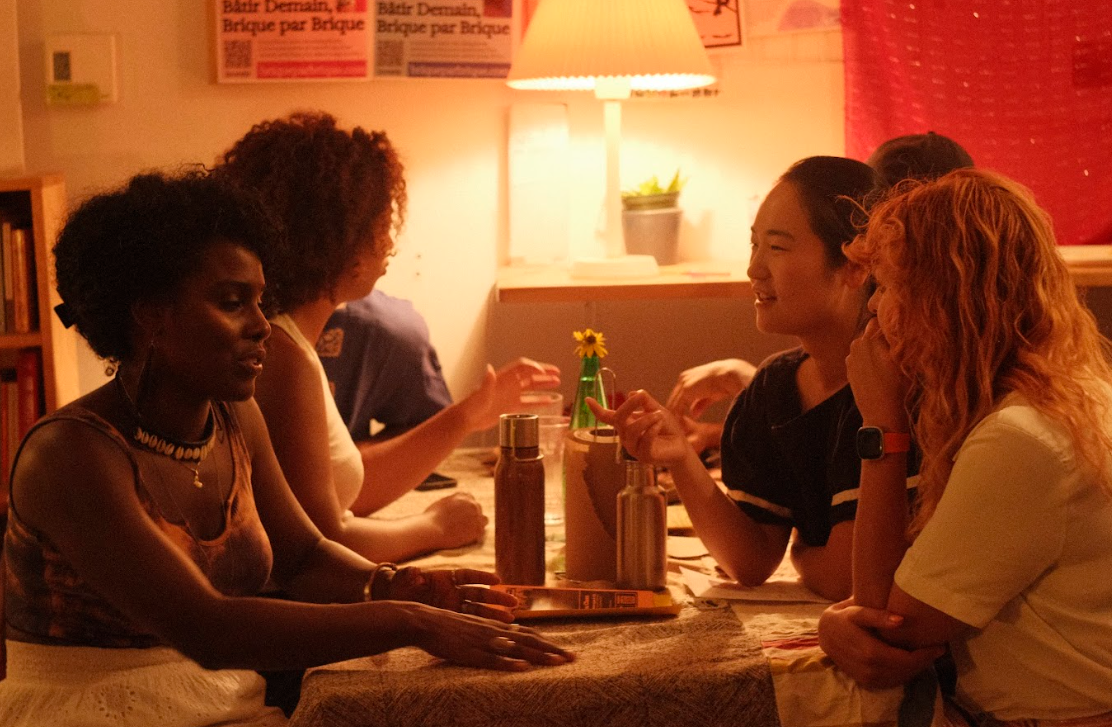
By actively creating inter-generational and cross-cultural spaces, Jugaar aims to bridge the gap between younger and older immigrants in Montreal. You’ll find older aunties dancing right alongside everyone else near the DJ booth, laughing and chatting with college students like they were old friends. Through these events, Jugaar is bringing wisdom from the kitchens of desi aunties into the mainstream.
Jugaar also provides an invaluable platform for these women, as cooking for the pop-ups serves as an important way for them to make money and support themselves. By nature of their status as immigrants, they are often put in a precarious position that limits the kind of work they can do. Jugaar acts like a small business incubator to help generate income for those who otherwise wouldn’t get a chance. Chef Soma and the others keep all the money they make from the food, and Jugaar ensures that all their events in Parc-Ex are free of cost to be as accessible to the community as possible.

When Asad first moved to Montreal, he came alone, like many other first-generation immigrants in the city. He remembers “yearning for an essence of home,” wanting to recreate the fantasy of being in his mother’s kitchen once again. Jugaar is a physical manifestation of this fantasy—not just for Asad, but for anyone who can relate to this feeling.
“Jugaar lives in the intersections,” Asad explains. “If you’re desi and queer, for example, you might feel like you don’t belong in either space.” Jugaar actively fights to bring down these walls. Queer people both in the homeland and the diaspora often find themselves isolated from desi household systems; by actively nurturing intergenerational spaces, Jugaar creates a chance for queer desi immigrants to experience a taste of home away from home.
As our conversation reaches its tail end, there’s one more thing that Asad and Jon Raja want to emphasise about Jugaar’s mission. While they are grounded in art and aesthetic, creating events that celebrate life through dancing and food, they make sure not to stray from their goal of nurturing community. An essential part of this is by centering resistance movements from various parts of the world.
“The nature of what we’re doing is facilitating social mobility,” says Jon Raja. “There are countless social and geopolitical crises that we care about happening globally, many of which are intertwined with the more localized issues we’re trying to address through Jugaar Pop-Ups. What we can do within the scope of our work is encourage conversation, exercise resistance in every way we can.”
“All our struggles are connected,” Asad adds. “The future is not created in silos. We are nothing alone. [...] The more we collaborate and understand others of different communities, the better we understand our own struggles.”
This belief in the power of collaboration and solidarity is evident in every aspect of Jugaar’s events. One of their newer event series highlights the importance of inter-cultural wisdom by pairing South Asian chefs with chefs from other cultures to draw on this shared knowledge. They previously paired Chef Soma with Chef Rose, a Haitian chef, and are soon planning on hosting an event with a Tunisian chef. The aim of these collaborations is to show how we are all more similar than different, and build solidarity wherever possible.
Amidst increasing anti-immigrant rhetoric in Quebec and around the world, initiatives such as Jugaar that are dedicated to fostering community are more important than ever. Stepping into a Jugaar pop-up is like stepping into a portal where everyone comes together freely over music and food. “Every time people come out to our space it fills my heart beyond belief,” says Asad. “I’ve realised that love is possible in ways that were previously unknown to me.”
To keep up with Jugaar’s latest events, follow them on Instagram.
