It’s About Time To Grow Up
Contact Theatre Reaches Maturity with Falsettos
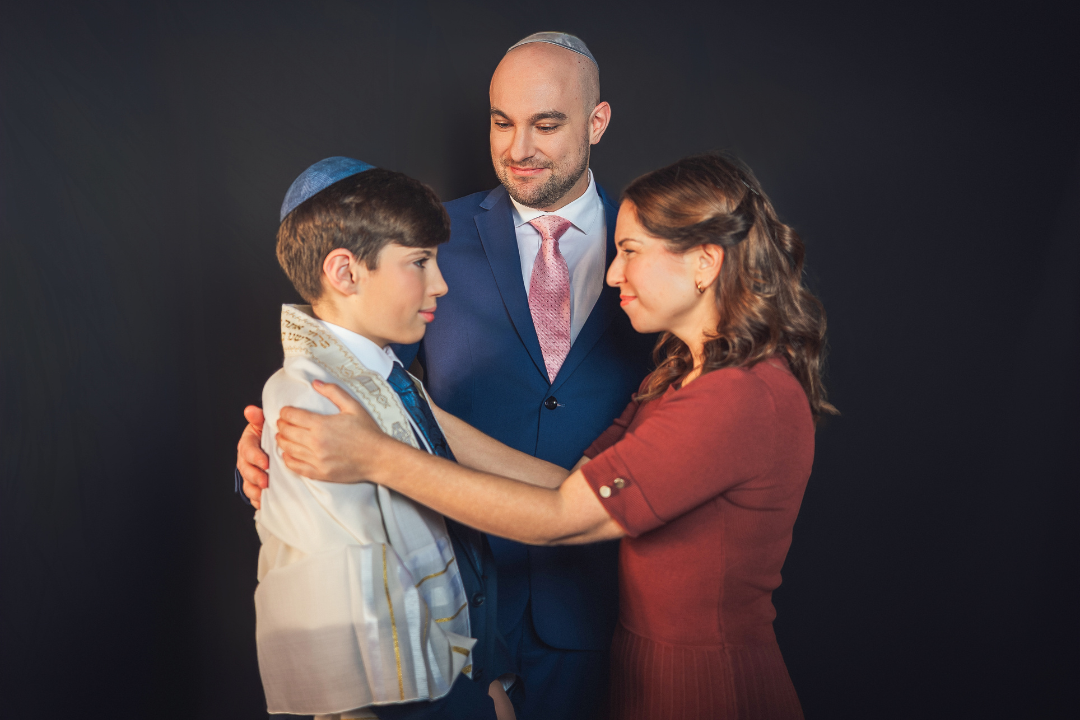
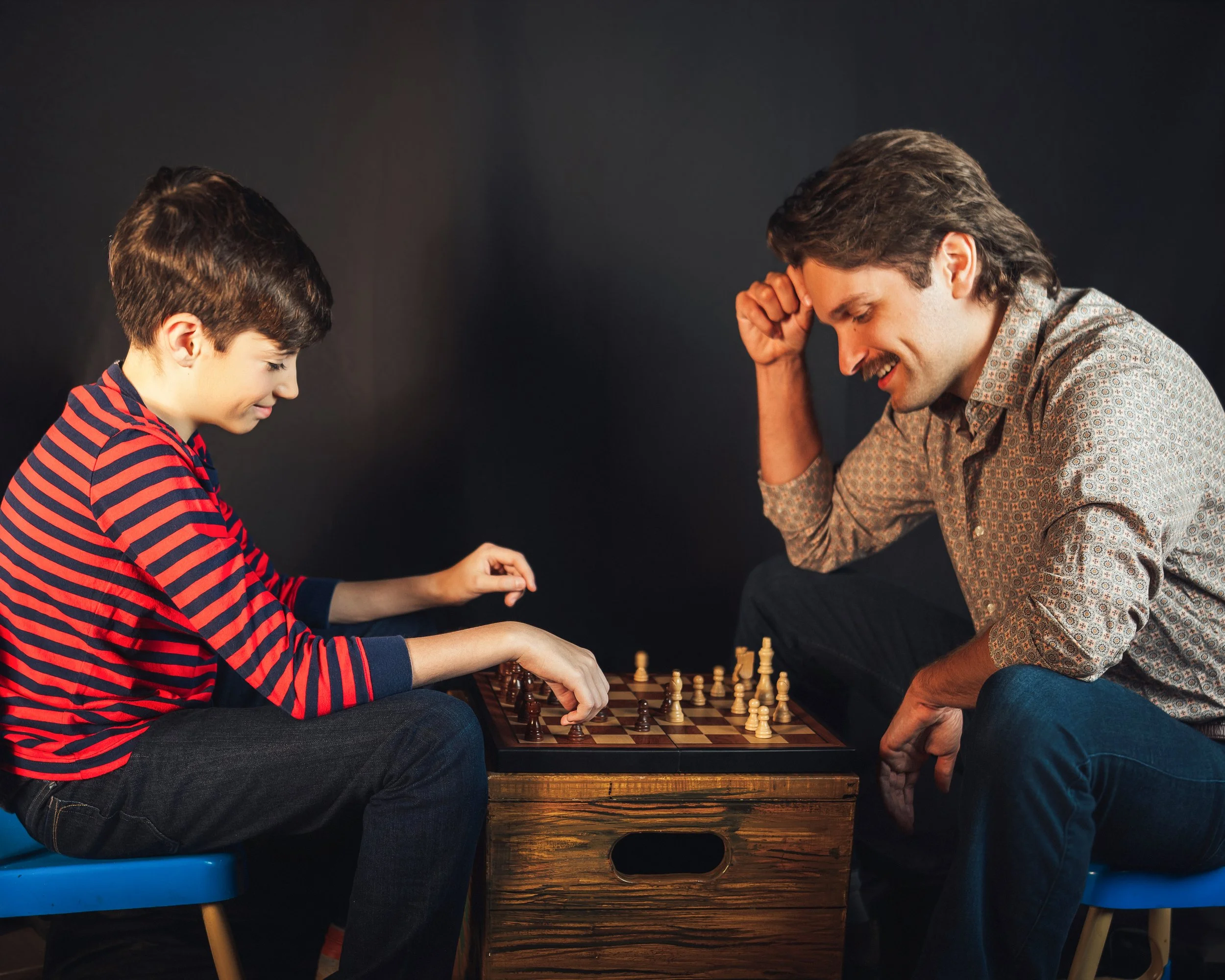
Lucas Crelinsten (Jason), Daniel Wilkenfeld (Marvin), Amanda Caron (Trina)
In 1981 a one-act sung-through musical called March of the Falsettos premiered, created by William Finn and James Lapine. The story focused on Marvin, his ex-wife Trina, their son Jason, Marvin’s psychiatrist Mendel, and his lover Whizzer. Nearly a decade later, the pair collaborated again on a follow-up, another one-act musical titled Falsettoland, premiering in 1990. The composer and playwright then set out to combine the two shows into a full-length production simply titled Falsettos, which made its Broadway premiere in 1992. The complex characters at the centre of the story are Jewish, and the play tackles gender roles, homosexuality, divorce, maturity and growth, chosen family, and most importantly, the AIDS epidemic (a topic that is far more relevant to today than many know, or are willing to admit, unfortunately).
Falsettos enjoyed some success, but largely remained a cult favorite, until a 2016 revival starring Andrew Rannells and Christian Borle, with a high-quality production film, pushed the show back into the spotlight.
Coming off a massively successful run of Cabaret in May 2025, local Montreal production company Contact Theatre announced Falsettos as their next production, supported by the Segal Centre’s new Stage Forward Fund, in the fall of 2025.
With their March 7 premiere fast approaching, and Falsettos being my own favorite musical, I jumped at the opportunity to meet with the brains and talent behind Contact Theatre, Debbie Friedmann and Ally Brumer, at the Segal Centre before a rehearsal, to discuss their latest production.
Let’s start with the most obvious question: how did you come to choose Falsettos?
Ally: We have a list of shows that we want to do, and kind of the order that we want to do them in, for the next few years, at least.
Debbie: A dream guide.
Ally: And Falsettos is a show we’ve been thinking about doing for awhile. It’s been on our list since we started eight years ago, nine years ago. It’s a very specific show, and we always wanted to do it here at the Segal, they’ve always been so good to us. We had conversations eight years ago, and they gave us advice and mentorship, guidance in navigating the industry. But obviously at that time, it was too soon to think about doing a collaboration with them. They reached back out to us around the beginning of 2025, and we reignited the conversation. We brought to them a proposal, we said “Hey, we’re now in our eighth year, we’ve done some things, we’re pretty established, we think there are ways in which we help each other, and we’d love to establish more of a partnership here. Here are some ideas, some shows we think could work, with your audience and our audience”, and Falsettos was among that. They took some time to think about it, and when they reached back out they said, “We’re also launching this new initiative for next year, the Stage Forward Fund, and we’ve been thinking about you for this”, so it was really a kismet situation.
Debbie: We’re really really excited to finally do a show here, and this show is very special, and it fits the space very well, it’s a smaller, intimate space. And, of course, it’s also a very Jewish show, so it’s also exciting to do it at a theatre where that’s part of their mandate. As Ally said, it’s been on our dream list. It’s been a dream to do Falsettos, really, since we started the company.
Company aside, how long has it been a personal dream to do Falsettos?
Debbie: It’s been near the top of my personal list for a long time. It’s a special show to me, I connect to it deeply. The 2016 show in particular, it really impacted me. There are themes that, as a director, I’m really interested in. It’s a challenge, it’s a challenging show, and I knew that going in. Even though it’s been on my dream list for a long time, I did want to wait til I was ready as a director to take it on. Over the past few seasons, with something like Next to Normal, I could see us start to move in that direction, I think we can start to think about Falsettos again. I started to have more of a vision of how I wanted to play with it, what I wanted to say with it. Like Ally said, it really was kismet that it happened now, because even though it’s been on my list of shows I’ve been dying to do, in the back of my mind I knew “this is not the thing to do as a baby director”.
Previously you’ve done shows like Reefer Madness and Spring Awakening, both with a decent size cast. You’ve also produced Next To Normal, which has a cast of six. Your last production, Cabaret, had a large cast, as well, while Falsettos is seven. Is this a balance that Contact is looking to refine? Is this intentional?
Ally: We are more focused on the size of the production itself, I think, rather than cast size. But what’s hard about cast size in Montreal, in musical theatre especially, but theatre in general, casts sell shows, nobody is oblivious to that fact. So having a smaller cast, my producer brain immediately thinks, “this will be more work. The marketing machine, the comms machine, will do more work, just because I’ve got half the amount of cast to sell tickets. That can be a struggle. But we focus on the scope of the production. Cabaret was this larger than life show, the production was almost a character itself. With this show, the production elements aren’t so big, they’re more of an enhancement to the story, rather than being an integral element in itself. Of course, finances dictate that, as well. Shows that do well for us definitely dictate what we do as we move forward.
This production is happening much earlier, months before Contact typically mounts a show. Has that affected the audience response? How are ticket sales?
Ally: Really well. We sold out opening night earlier than we’ve ever sold out before. We just sold out another night today. I think what we’ll miss most, though, is the foot traffic. When you’re at a venue like Monument Nationale, we had a lot of people that came to Cabaret saying “Hey, I just saw your poster and decided to check it out”, and that really helps. Ultimately, though, ticket sales are actually outpacing Cabaret, which is awesome.
Especially for a show that’s arguably less recognizable.
Debbie: That was definitely a concern going in, the marketability of the show, even as a director, you know, you want people to see your show.
Of course. From a director’s perspective, talk to me about the challenges of a show so intimate in comparison to Cabaret.
Debbie: Yeah, I think it’s definitely a very different way of working. The bonds you create with the cast and the production team are, in some ways, much tighter, because it’s smaller. So you’re together all the time, especially the actors in Act One, we’re together all the time, they’re at every rehearsal, right? Something I miss about bigger productions, though, maybe as a choreographer more than a director, is not having an ensemble. I love an ensemble, it’s such a fun place in theatre, and this show doesn’t really have that. I actually love the intimate process, though. It can shift into these really deep, meaningful conversations each rehearsal, and we get to know every character so well. And really, in a space like this, it’s somewhat smaller, so seven bodies on stage can definitely feel like a lot, you can still get that rush.
The music definitely helps fill that out, as well. Falsettos has a phenomenal score.
Debbie: The music is so beautifully written, it’s something I really love about this show. That’s been one of the joys of this show, too, I’ve been able to be present at all the musical rehearsals. Normally we divide and conquer a bit, but with this show I knew I needed to be there for the music, and that’s been so special, to see them work through that material, to watch them grow into it.
Can we pivot for a moment? I’d like to discuss the Stage Forward Fund?
Ally: Lisa Rubin [Segal Centre Artistic Director] has been in her position here for ten years now, and she was looking for a way to give back, from a legacy perspective. She told us that she was afforded a lot of grace early in her career, had a lot of opportunities, with people helping her find her place. As she approached her tenth year, she knew she wanted to do something, but wasn’t sure what. Then she came up with this idea of creating this fund to help the next generation of artistic leadership in this city. What’s interesting about the emerging arts, from my perspective, there’s few resources on the production side of things. Of course, there are almost no resources for designers and artists, as well, but if you're an emerging Artistic Director, Producer, Production Manager, or Technical Director, what do you do?, where do you go? You can pick up tech shifts here and there, but the mechanics of creating theatre and guiding a team, there’s no course. I think it’s great that Lisa has recognized that need and is trying to address that.
Can you tell me in your own words what the fund is, what the purpose is?
Debbie: I think it’s evolved to be a few different things. For us, it’s financial help with creating this show, to pay people better, to be able to afford the design elements we want. But beyond that it’s developed into a series of workshops they’re facilitating, and they’ve hired people like Trevor Barette and Jonathan Patterson to address that lack of educational space. Jonathan is doing an audition workshop for actors, which is helpful, because I think that is lacking in some of the programs that do exist. Trevor is doing a directing “from the page to the stage” workshop, which I think he just started last week.
So the fund has a few arms, there is no one single aspect.
Debbie: Yeah, exactly. Supporting Contact right now, that is one arm of it, but it’s branching into a few different things. Again, it’s trying to fill a gap, to help emerging artists, and help artistic leadership grow in this city.
Ally: The way that they’ve explained it to us is that once a year they’ll “grant” someone as part of this fund, but the other programs will continue year-round. So they’ll host these various activities, and one of those will be finding an artistic leader who has a project and funding that.
“The future of theatre depends on our willingness to invest in the artists who will shape it. The Stage Forward Fund was created to do exactly that - to support the creation of new works, to nurture and develop emerging artists, and, in keeping with the Segal Centre’s commitment to Jewish identity, to champion and strengthen Jewish creative leadership. Through these three pillars, we are actively securing the next generation of storytellers and ensuring a vibrant future for our art form.”
This show, Falsettos, is written by William Finn and James Lapine, two creative powerhouses. And it’s not a simple production, the material is complicated, it’s challenging. Because of the timing of the Stage Forward Fund, your usual production schedule was pushed ahead. How did that affect your rehearsal process?
Debbie: With this show we did start a bit earlier, but we’re still on a slightly more condensed schedule than we usually are, which is tricky with this show, because it is so intense. The main thing I love about Contact, and what’s fun about the company, is that we get to choose our own structure. That allows us to take more space with the shows. That’s something with me, for musicals, that I think is really hard in the industry. You don’t get the time in rehearsal to really grapple with the music, grapple with the themes, to really have those big, long conversations asking “who are these people?”, “why are they doing the things they’re doing?”, “how do the relationships evolve and change?”. That’s something I really love about our process, because we have a longer process, and we rehearse less often, we’re not doing 9-5’s every day, it gives the actors, and me, some time to digest and think, and the show benefits from that.
It has some time to congeal.
Debbie: Yeah, congeal, I like the way you put that. It has time to become something really special. Especially with a kid this year, it was really important for me that we had time to help him grow, and learn along with us, to figure out the material, because it’s hard for a 13 year-old.
As soon as you mentioned to me that you were doing Falsettos, that was the first thing that came to mind: the character of Jason, casting a thirteen year-old.
Ally: Funnily enough, our first show, Bonnie and Clyde, had two kids in it. But they’re only in the first scene and last scene. They were also younger kids, they were 10 and 8. So when we decided to do this show, as a more established company, we needed to figure out the ins-and-outs of working with a kid. That was something the Segal really helped us with, we found Lucas through the Segal Academy. It’s been interesting. He has a great support system, his parents are at every rehearsal. He’s got a vocal coach to work on the music a bit more, separately. I think because we “play” a lot in the show, he really brings that to the environment automatically.
Debbie: I joked a lot in the early days of rehearsal that I thought that being around a bunch of adults would bring out the adult in the 13 year-old, but it did not do that. He brings a really fresh energy.
So, Falsettos is my favorite musical, and I lamented for years that it was next to impossible to actually see the show. Theatre companies aren’t necessarily rushing to mount this one. And, I mean, now there are a few janky production videos on Youtube, but it really wasn’t until the 2016 Broadway show that we got an adequate look. In the 90’s, the show was staged with Mandy Patinkin as the lead, and the artistic direction was fairly grounded, featuring real furniture and quite a few props. The 2016 production, in comparison, went for a minimal, functional but abstract set design. Props were present, but few. Talk to me about your art direction for this production.
Debbie: As a director, I tend to lean toward more minimal sets, I prefer them. Even if I had all the money in the world, I’d lean toward that minimal vibe. I think it lets the art speak more than the set pieces. In this show we really leaned into the props. I wanted to explore this idea of the inner child, especially in Act One, all these grown men are acting like children, or teenage boys. So in the first act most of the props are like toys, they even have little kinder chairs to sit in, instead of regular chairs, but gradually throughout Act One, we incorporate more functional, realistic, era-appropriate set pieces. These are juxtaposed against these toys.
What do you mean by toys?
Debbie: Dolls, for instance, for play therapy. When my parents got divorced when I was ten, all I did was play therapy all the time, and I thought that was such an interesting image to bring into this. How can these adults be playing with dolls of themselves as they’re telling the stories, which is zany and silly.
The show, due to its development as two separate pieces that were later joined, shifts heavily in Act Two. How does your artistic direction follow?
Debbie: In Act Two I wanted to bring in more realism. There are less toys, and the ones that remain are more real, like the chess board, but aren’t the central focus. There’s less play for play’s sake. It’s growing up. That’s what has happened a lot to Marvin during intermission, he’s been forced to mature, to grow, and realize some of his mistakes, so I wanted to mirror that journey. Props do a lot in the show, while the set remains minimal. It’s been a lot of fun having toys in the space, figuring out how to use them, how to play games.
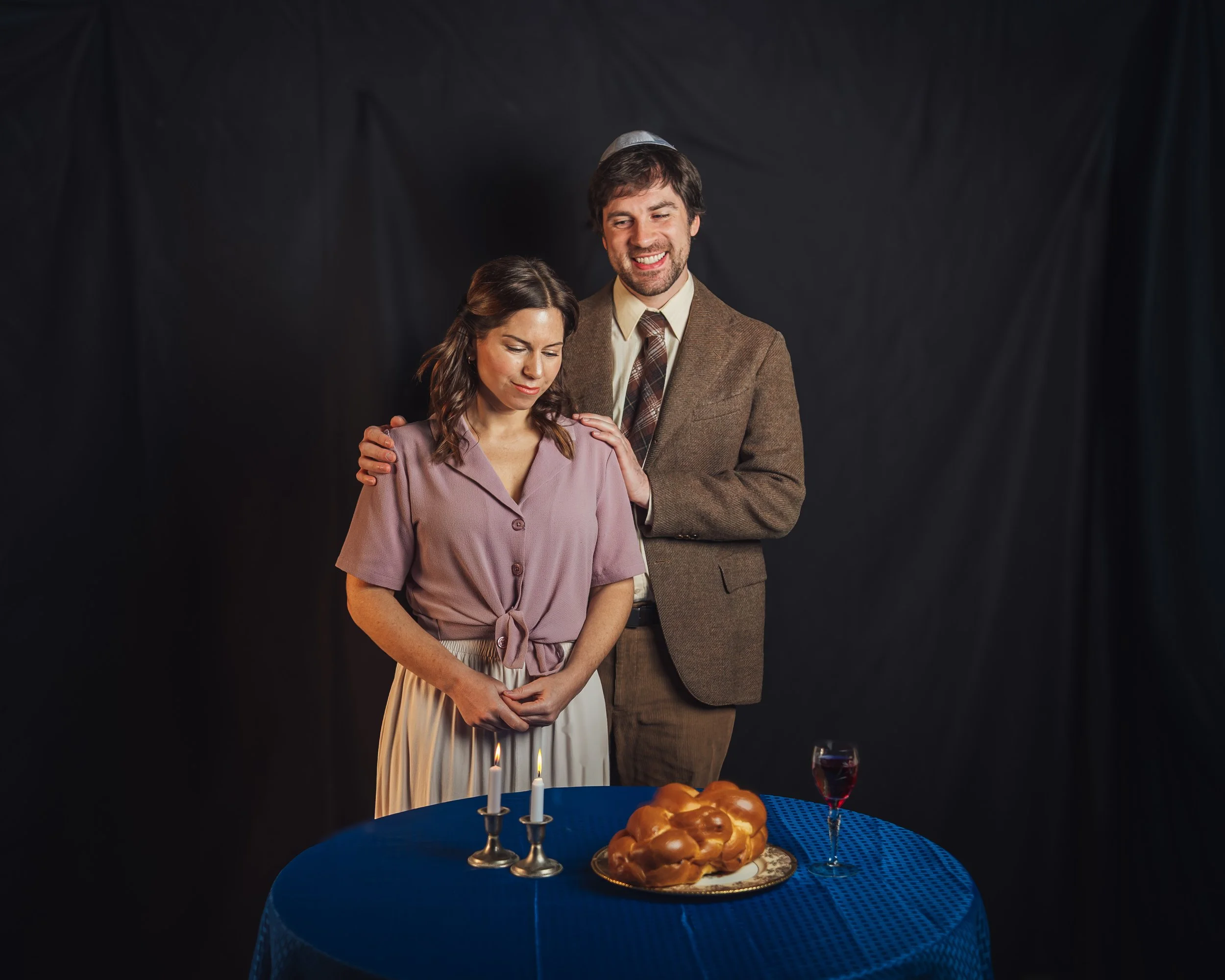

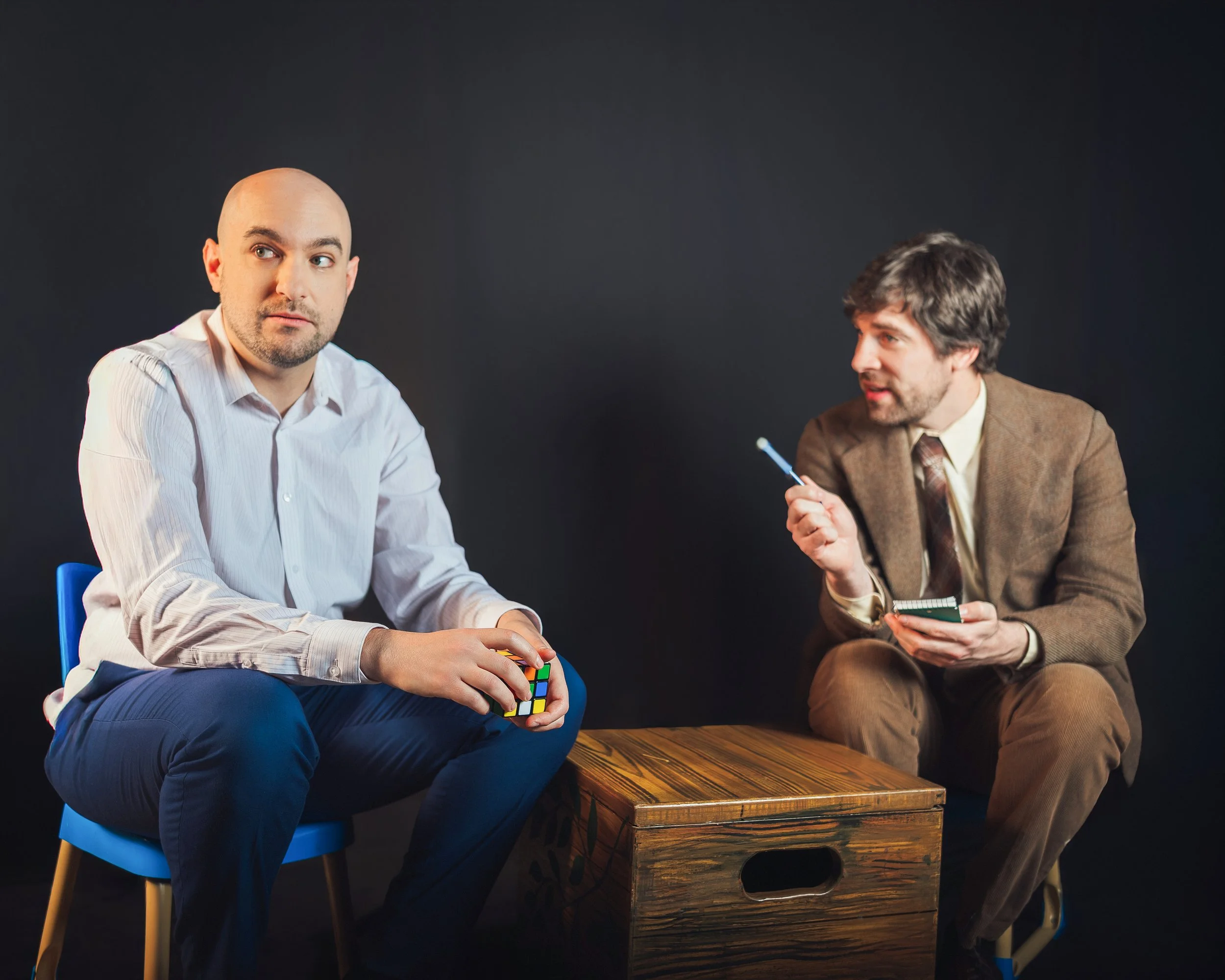
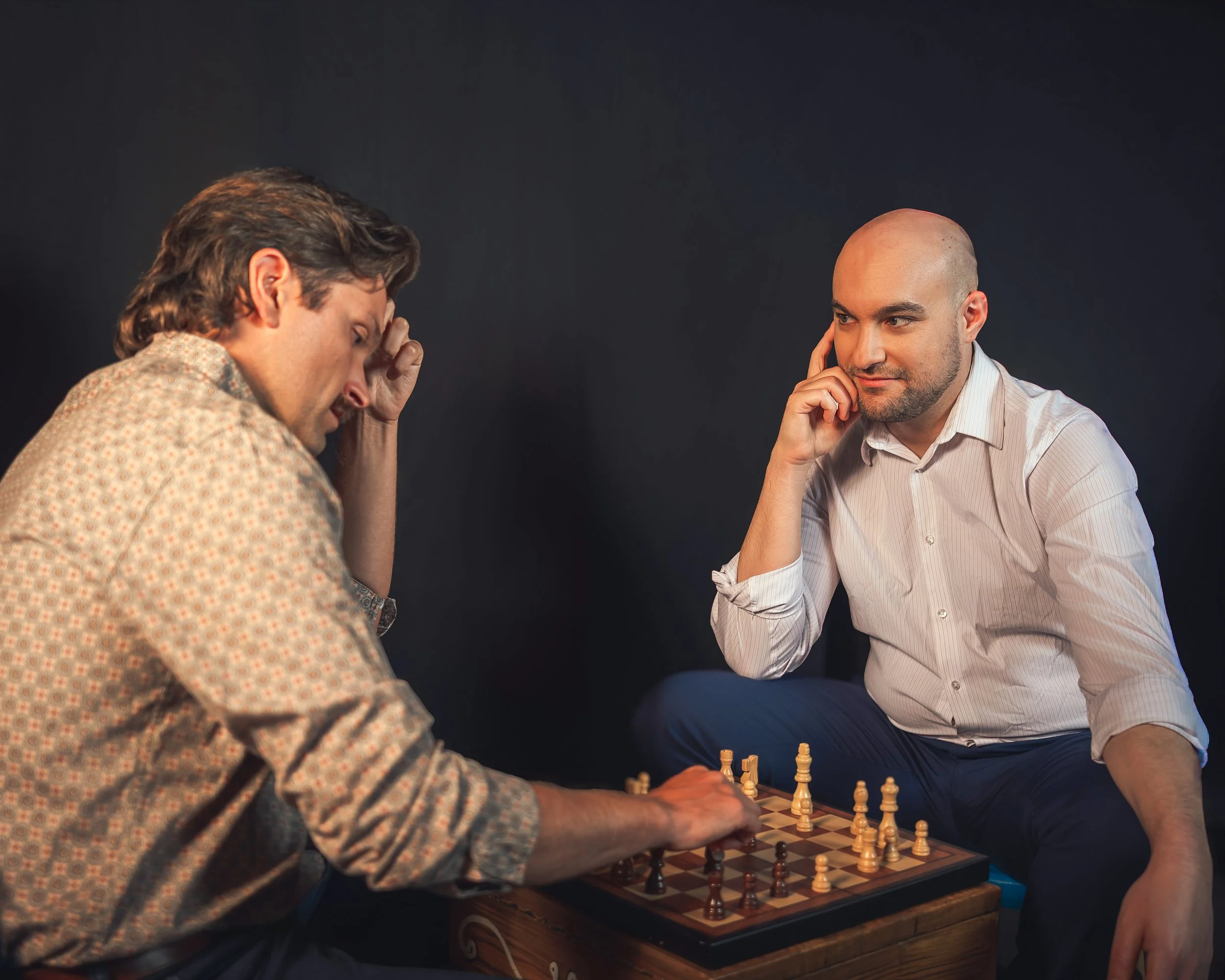

Let’s talk about the cast. We’ve discussed Jason, played by Lucas Crelinsten, but there are 6 others in the cast, the adults. Who are they? Have you worked together before?
Ally: We worked with both Joel and Daniel with WISTA, and we’ve done a few shows with them. Joel and Jonathan were in Reefer Madness, and Daniel and Joel were in Next To Normal. Actually, they were playing opposite, Daniel was the therapist, and Joel was the father, and now they’ve reversed those roles. All of our femme cast is new to us, we’ve never worked with them on stage before.
Debbie: It’s fun because Lily, playing Dr. Charlotte was actually our props designer for Spring Awakening, so that’s very fun to work with her in a different capacity. I always like a balance of actors I’ve worked with, I’m familiar with, and new actors. You want to keep working with new people. But it’s also special to have that bond, like with Daniel, we’ve been working together since 2016.
It’s important to have a vocabulary with performers, to be able to streamline the rehearsal process a bit.
Debbie: Especially with the vocals of this show. That’s something we had to consider. It’s a vocally challenging show, so with people who have the skills, like reading music, it’s important to consider that. It’s such a difficult show, and there’s so much material, we don’t really have the time to be teaching, necessarily. And aside from music, the main thing with Falsettos is chemistry, making sure we found that family, found those couples that really felt believable. Chemistry is a priority when casting because that’s really a hard thing to pull out of nowhere.
Can you tell me a bit about your production team for Falsettos?
Debbie: Obviously I really trust Ally, and I trust our designers. We have a fantastic Tech Director and Production Manager this year, and our stage management team has been so great with this very difficult show. They have really enabled me to do some of my best work (I’m hoping), but it was definitely one of the most challenging shows I’ve done, so that support has been so important. Especially because this show resonates a lot with me personally, so sometimes that line for me was blurrier than in past shows. Usually I’m pretty good at separating myself from the material and not getting too emotional, but the amount of times I made myself cry on the metro when I had an idea, just bursting into tears really publicly. It’s embarrassing, but hopefully it translates nicely in the work.
Is there anything specific you might want the audience to know before attending the production?
Debbie: I think it’s a lot zanier than people typically expect. I think people need to be prepared to come into something that almost feels like absurdist theatre. What is life? What’s going on? It’s a wild ride! It’s zany, it’s silly, and then it’s really sad. It’s all those things. But in reality, my favorite audience are people who either know nothing about the show, or they’re super fans. They’re my favorite people to talk to after a show to see what they thought. Like people who have seen every single production of this, and know so much about it, and people who just wandered in one day, didn’t read the program, just here to watch the show knowing nothing. They’re super fun, because then you can see, especially in a show like this, what comes out without context. It’s hard, because the context is mentioned, but briefly, so you’re really leaning on the design, and the audience’s intelligence. I think I like that about the show, it challenges the audience to think, and to engage.
Ally: The one thing I would tell the audience is to trust their journey in the show. If they overthink, they’re going to lose it. You can’t be in your head. It’s going to be weird at times, but just buckle down because you’re in for a night of weird, incredible, heartbreaking theatre. Trust the journey we’re going to take you on.
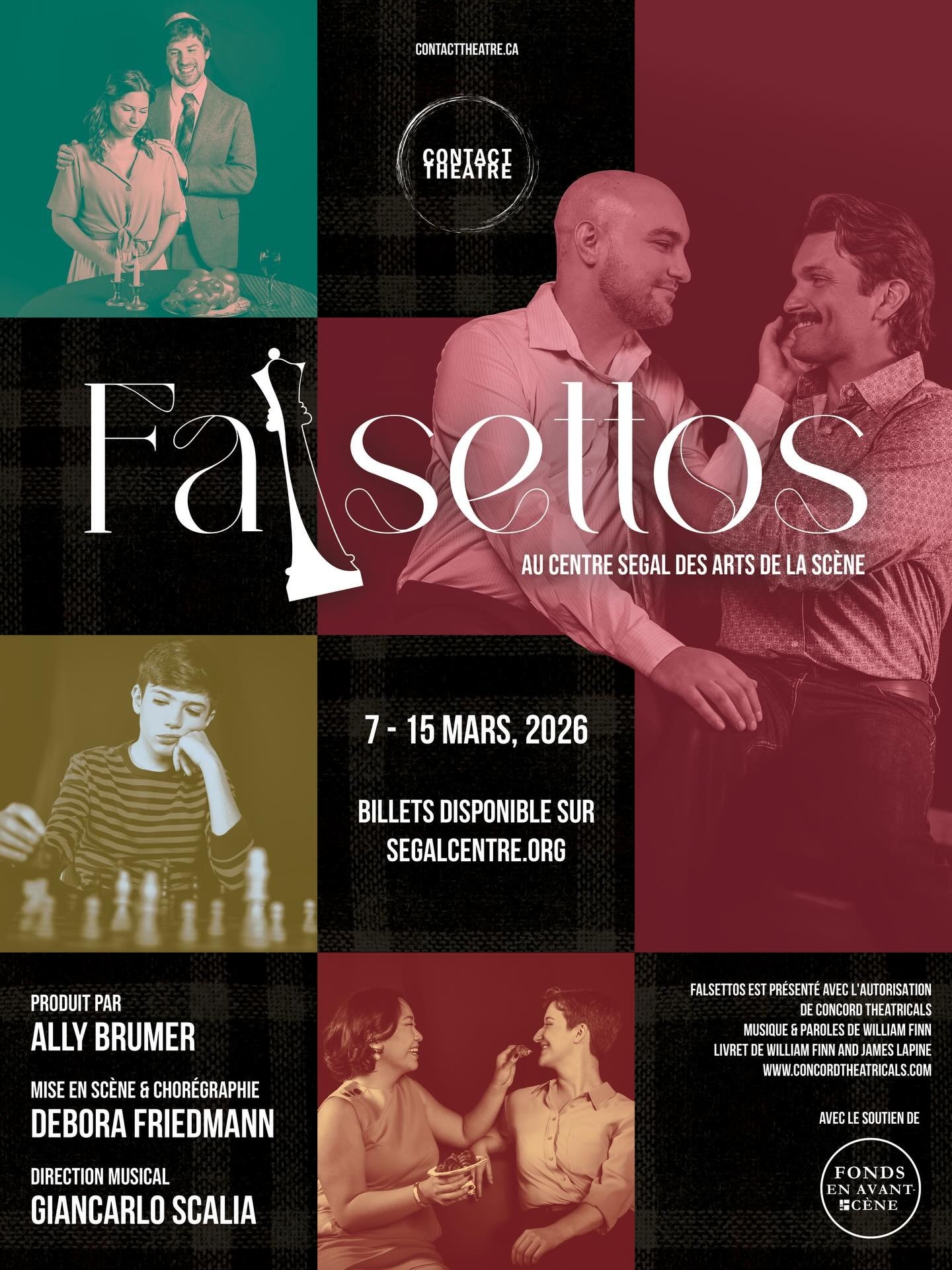
Contact Theatre’s Falsettos opens March 7, 2026 at the Segal Centre. Visit their website for more production information, and buy your tickets now.